Winter along 30A offers a quieter, nature-filled experience perfect for spotting wildlife. With mild temperatures and fewer visitors, it's an ideal time to observe migratory birds, marine life, and elusive mammals. The area's rare coastal dune lakes, wetlands, and forests create habitats for over 200 bird species, dolphins, rays, and even Florida black bears. Early mornings are the best time for sightings, especially with binoculars in hand.
Key highlights include:
- Birds: Great Blue Herons, Bald Eagles, Ospreys, and American White Pelicans.
- Marine Life: Bottlenose Dolphins, rays, small sharks, and diverse fish species.
- Mammals: White-tailed deer, red foxes, and rare Florida black bears.
For the best experience, stick to marked trails, keep noise levels low, and bring binoculars. Parks like Topsail Hill Preserve and Point Washington State Forest are top spots for wildlife observation.
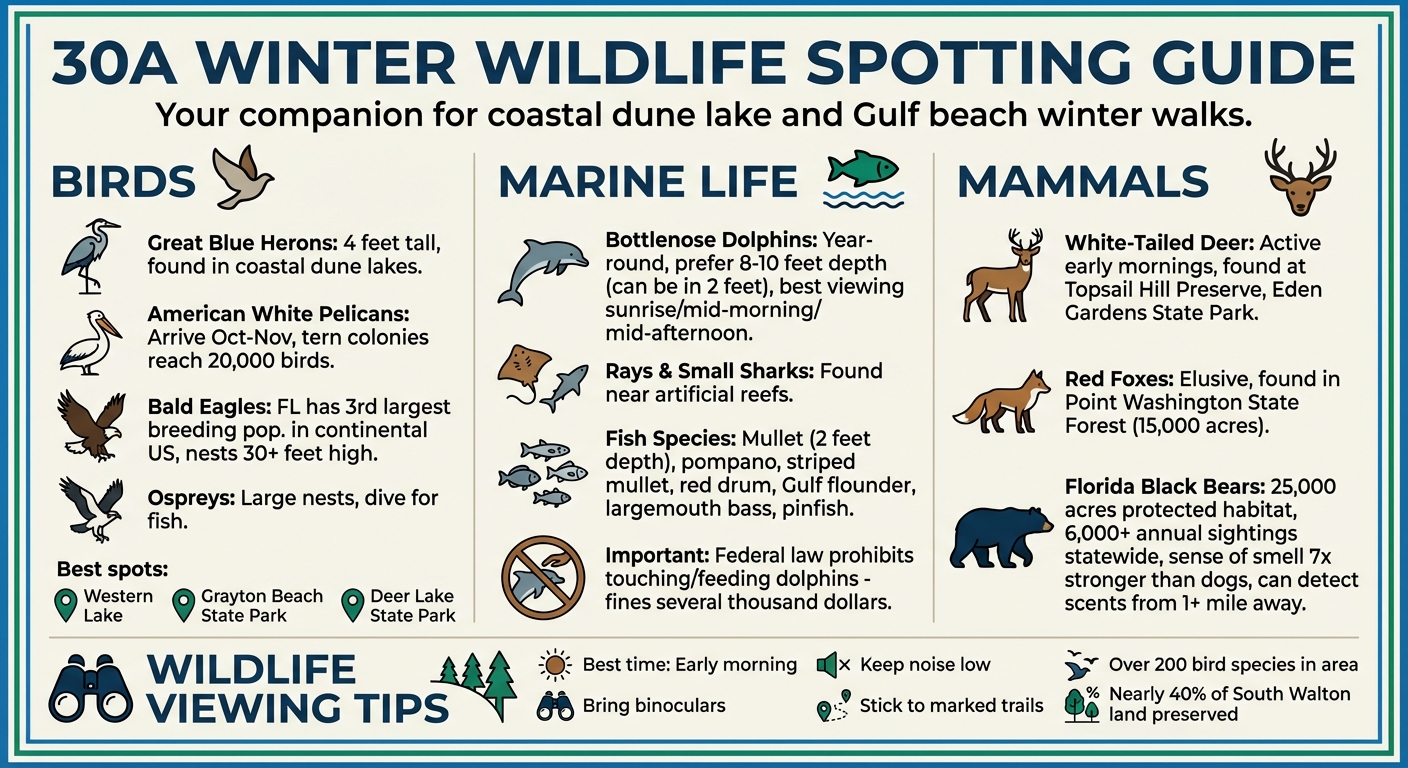
Winter Wildlife Guide for 30A: Birds, Marine Life, and Mammals to Spot
1. Birds
Great Blue Herons and Wading Birds
Standing at an impressive 4 feet tall, the Great Blue Heron is a striking winter resident along the coastal dune lakes of 30A. These long-beaked wading birds prefer the stillness of shallow waters, where they hunt undisturbed by passing walkers. You’ll often spot them alongside Great Egrets and Snowy Egrets, especially around Western Lake and Grayton Beach State Park, where they forage during the cooler months. For the best chance to see these elegant birds in action, head out for an early morning walk - feeding time is when they’re most active. And as fall sets in, keep an eye out for the lively migration of pelicans that brighten the coast.
American White Pelicans
During October and November, American White Pelicans make their way to Florida's Gulf Coast, staying throughout the winter. These majestic birds gather along the shorelines and near piers, creating a breathtaking scene. Their arrival transforms 30A into a haven for birdwatching, with tern colonies swelling to as many as 20,000 birds during the peak season. Adding to the drama are the raptors - eagles and ospreys - that bring an exciting aerial dimension to the winter landscape.
Bald Eagles and Ospreys
Florida is home to the third-largest breeding population of Bald Eagles in the continental United States, and the 30A area offers excellent opportunities to spot these iconic birds. Look for their nests - often built at least 30 feet high - in the pine and oak canopies near water. Meanwhile, Ospreys are a common sight, constructing large nests and diving dramatically into the water to catch fish. For a closer look, visit Deer Lake State Park and explore the 1.5-mile nature trail that winds through pine forests. It’s a prime spot to observe these raptors in their element.
2. Marine Life
Bottlenose Dolphins
Bottlenose dolphins, one of the most familiar marine species, are a year-round presence in these waters. Winter, with its calm and clear Gulf conditions, offers the perfect opportunity to spot these lively creatures. The best times to catch them in action are at sunrise, mid-morning, or mid-afternoon. You might see them performing flips or hear their distinct whistles as they hunt schools of mullet near the shore. They’re often found in shallow waters as little as 2 feet deep, though they generally prefer depths of 8 to 10 feet. Keep in mind, federal law strictly prohibits touching or feeding wild dolphins, with violations carrying hefty fines of several thousand dollars . These tranquil waters also provide a haven for other marine life to thrive.
Rays and Small Sharks
The Gulf’s winter waters are home to more than just dolphins. Rays and small sharks are frequently spotted, especially near artificial reefs just off the coastline. The cooler temperatures and crystal-clear conditions make it easier to observe these fascinating creatures whether you’re strolling along the beach or paddleboarding. For a closer look, binoculars come in handy, and the elevated dunes at Grayton Beach State Park offer a great vantage point .
Schools of Fish
This winter, the Gulf and nearby bay areas are alive with schools of fish. Mullet dart through shallow waters just 2 feet deep, while pompano are most active along the surf . Coastal dune lakes, where fresh and salt water mix at their outfalls, create ideal conditions for a variety of species. Here, you might spot striped mullet, red drum, Gulf flounder, largemouth bass, and pinfish. Visiting these outfall areas provides a chance to witness the remarkable blend of life between brackish and saltwater environments .
sbb-itb-d06eda6
3. Mammals
Mammals add another layer of excitement to the winter wildlife experience along 30A.
White-Tailed Deer
White-tailed deer are a common sight in state parks like Topsail Hill Preserve and Eden Gardens State Park. These graceful animals are most active during quiet early mornings. To catch a glimpse of them, move slowly and keep your voice low - they’re known to continue feeding even when humans are nearby, as long as they don’t feel threatened. The Pine Flatwoods Trail at Topsail Hill is one of the best spots for deer sightings.
As Coastal Coffee 30A notes:
The deer here are accustomed to quiet human presence – move slowly and speak softly, and they'll often continue feeding while you watch.
Their tan coats and signature white tails make them stand out as they wander through forested areas.
Red Foxes
Red foxes are another elusive mammal you might encounter along 30A. They often roam through parks like Topsail Hill Preserve and Point Washington State Forest. With over 15,000 acres of habitat, Point Washington State Forest offers plenty of space for these shy creatures. Trails such as the Eastern Lake Trail and the Longleaf Pine Trail are excellent places to spot them, especially during early morning or evening hikes. Red foxes are naturally cautious, so keeping quiet and moving slowly will improve your chances of seeing one.
Florida Black Bears
Florida black bears call the 25,000 acres of protected habitat along 30A home, including Point Washington State Forest and areas near Grayton Beach. While they experience a state of "winter lethargy", they don’t fully hibernate and may still be active in search of food. With over 6,000 black bear sightings reported annually in Florida, encountering one is possible but remains rare.
When hiking in bear territory, it’s a good idea to make some noise - wearing bells, for instance, can help avoid startling them. These bears have an extraordinary sense of smell, seven times stronger than a dog’s, and can detect scents from over a mile away. If you do come across a black bear, remember to stay calm: stand your ground, speak softly, and slowly back away without making direct eye contact.
Conclusion
Winter walks along 30A offer an incredible chance to experience nature up close. With the rare coastal dune lakes - found in only a few places on Earth - and nearly 40% of South Walton's land preserved for wildlife, this area provides a unique setting to observe animals in their natural habitats. Picture bottlenose dolphins jumping against the morning light or rare wading birds searching for food in the shallows - it's a scene you won't forget.
At dawn, deer quietly move through wooded parks, ospreys dive for their prey, and shorebirds gather along the shoreline. To make the most of your outings, bring binoculars, stick to marked trails, and keep noise levels low to avoid disturbing the wildlife. Simple actions like filling in sand holes and removing beach gear can also help protect these fragile ecosystems.
For those looking to plan their adventures, the SoWal Parks Guide on sowal.co is a fantastic resource. It includes detailed trail maps for spots like the expansive 15,000-acre Point Washington State Forest, as well as tips for finding specific species and the best observation points. Plus, the site’s community forum provides real-time updates from locals on recent wildlife sightings and trail conditions.
From watching a bald eagle glide overhead to spotting a red fox slipping into the trees, winter along 30A reminds us that the most memorable wildlife encounters happen when we slow down and truly connect with the natural world.
FAQs
When is the best time to see wildlife on 30A during the winter?
The prime time to catch a glimpse of winter wildlife along 30A is just before sunrise. In these early hours, the area's birds, mammals, and even dolphins are at their most active, creating a serene and memorable experience for those who love nature.
To make the most of this opportunity, dress warmly, venture out early, and take in the tranquil charm of 30A's coastal landscapes in the refreshing winter air.
What should I do if I encounter a Florida black bear during a 30A walk?
If you happen to encounter a Florida black bear while strolling along 30A, the key is to remain calm and follow some essential safety guidelines. First and foremost, keep your distance and never attempt to approach or feed the bear. Securely store any food you have with you, and always keep pets leashed to avoid drawing the bear’s attention.
Springtime sees increased bear activity as they shake off their winter sluggishness, with mother bears being especially cautious and protective of their cubs. By staying vigilant and giving these animals plenty of space, you help ensure both your safety and the well-being of the bears that inhabit South Walton.
What are the best parks for birdwatching during winter on 30A?
During the winter months, 30A becomes a haven for birdwatching enthusiasts, offering several parks with diverse habitats that draw a wide range of bird species. Here are a few must-visit spots:
- Grayton Beach State Park: This park is a standout for spotting winter waterfowl like Northern Pintail and Blue-winged Teal. You’ll also find year-round residents such as Great Blue Herons and Bald Eagles. Its coastal dunes and trails around Western Lake make it a prime location for birdwatching.
- Topsail Hill Preserve State Park: A true birding hotspot, this park features coastal dune lakes and upland trails, perfect for observing shorebirds, waterfowl, and songbirds throughout the winter season.
- Deer Lake State Park: With its rare coastal dune lake, this serene park attracts migratory birds and other wildlife, offering a tranquil and rewarding birdwatching experience.
These parks highlight the rich ecosystems along 30A, from sandy beaches to lush forests, making them ideal for birdwatchers seeking a winter adventure.