The 30A coastline in South Walton, Florida, is a haven for wildlife lovers. With over 40% of the area protected, this region offers diverse ecosystems like beaches, coastal dune lakes, forests, and bays. Eco-tours here let you observe dolphins, sea turtles, alligators, birds, and more in their natural habitats while learning about conservation efforts. Key highlights include:
- Marine Life: Bottlenose dolphins, nesting sea turtles (May–October), and baitfish ecosystems.
- Birds: Great blue herons, bald eagles, ospreys, and migratory species like warblers and plovers.
- Land Animals: Gopher tortoises, white-tailed deer, and alligators.
- Freshwater Species: Rare coastal dune lake wildlife and unique bird behaviors.
From guided boat tours to nature walks, 30A's eco-tours provide an up-close look at the area's incredible biodiversity. Whether you're spotting dolphins at sunrise or watching ospreys hunt, every experience offers something unforgettable.
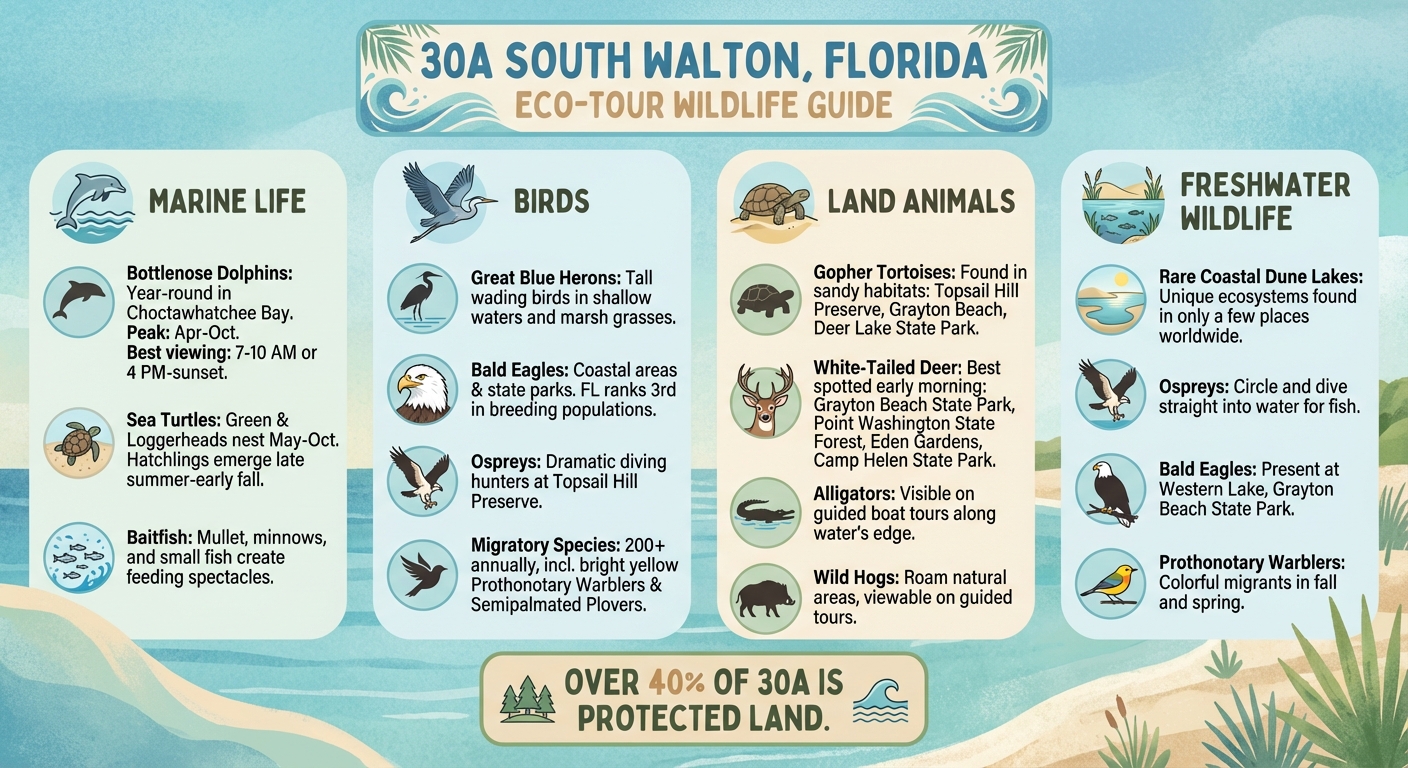
Wildlife Species Guide for 30A Eco-Tours in South Walton Florida
1. Marine Life
Bottlenose Dolphins
Bottlenose Dolphins are a common sight in Choctawhatchee Bay, where they thrive throughout the year. Their activity tends to spike between April and October, thanks to the influx of baitfish that draw larger pods to the area. If you're hoping to spot them, the best times are early in the morning (7–10 AM) or later in the day from 4 PM until sunset. For a closer look, operators like Marine Adventures 30A offer private tours guided by local experts.
Sea Turtles
The beaches of South Walton play a vital role as nesting grounds for two endangered species: Green Sea Turtles and Loggerheads. Nesting season runs from May through October, and by late summer into early fall, you can witness hatchlings making their way to the sea. Organizations like South Walton Turtle Watch work tirelessly to safeguard these nests and ensure the hatchlings have the best chance of survival.
Baitfish and Marine Ecosystems
The Gulf waters are alive with schools of mullet, minnows, and other small fish that form the foundation of the local marine food web. These baitfish attract larger predators, creating fascinating feeding spectacles that are often visible from boats.
This lively underwater world not only supports marine life but also sets the stage for the diverse bird species you can encounter on 30A eco-tours.
2. Birds
Great Blue Herons
Great blue herons are a familiar sight on 30A eco-tours, particularly during sunset outings with Backwater Tours. These tall, striking wading birds are often spotted along the shallow waters of Choctawhatchee Bay or standing still among the marsh grasses, patiently waiting to catch their prey. If you're an early riser, morning eco-tours offer a prime chance to watch these herons in action when they’re at their busiest. Their serene and poised demeanor perfectly sets the tone for the majestic raptors that follow.
Bald Eagles and Ospreys
The skies of Northwest Florida are alive with raptors. Bald eagles, with their unmistakable white heads, can often be seen gliding above coastal areas and state parks. Meanwhile, ospreys are a common sight, particularly around Topsail Hill Preserve, where they perform dramatic dives into the water to snag fish. A good pair of binoculars is a must to truly appreciate these magnificent birds while maintaining a respectful distance.
Migratory Warblers and Plovers
In addition to the raptors, 30A serves as a haven for smaller migratory birds. This region becomes a vibrant hub of avian activity during migration seasons. Fall brings a noticeable increase in bird sightings, and spring offers a colorful array of species. Keep an eye out for Prothonotary Warblers, known for their bright yellow feathers, and Semipalmated Plovers, which frequent the shorelines. Every tour offers the chance to discover a new feathered visitor.
3. Land Animals
After exploring South Walton's lively marine life and diverse bird species, the region's land animals add another layer of excitement to the eco-tour experience.
Gopher Tortoises
Gopher tortoises are a common sight in sandy habitats like Topsail Hill Preserve, Grayton Beach nature trails, and the boardwalks of Deer Lake State Park. These slow-moving reptiles are fascinating to watch as they leisurely search for vegetation, making them easy to spot during a stroll.
White-Tailed Deer
White-tailed deer are often seen in areas such as Grayton Beach State Park, Point Washington State Forest, Eden Gardens, and Camp Helen State Park. Early morning tours provide the best chance to observe these graceful creatures as they move through their natural habitats. Their ability to thrive in a variety of environments ensures they remain a familiar presence across South Walton's preserved lands.
Alligators and Wild Hogs
Guided boat tours, like Backwater Tours' 3-hour sunset cruise or the 8-hour natural spring adventure, offer a safe way to observe alligators and wild hogs in their natural settings. Alligators can often be seen lounging along the water's edge, while wild hogs roam nearby. These encounters provide a thrilling yet secure way to experience South Walton's untamed wildlife.
sbb-itb-d06eda6
4. Freshwater Wildlife
South Walton’s freshwater habitats offer some incredible opportunities to observe wildlife in their natural settings. Among these environments, the rare coastal dune lakes stand out. These unique ecosystems are found in only a handful of places around the world and are home to species that are rarely seen elsewhere. While the marine and coastal areas of 30A showcase their own vibrant array of wildlife, the freshwater habitats reveal a different side of the region’s biodiversity. These serene settings also provide a stage for fascinating bird behaviors, which are explored below.
Birds of Freshwater Habitats
Freshwater areas attract their own array of bird species, each with distinct behaviors and characteristics. Ospreys, for instance, are a common sight in these zones. Known for their dramatic hunting techniques, these birds are a highlight for birdwatchers. Walt Spence of the Choctawhatchee Audubon Society shares his admiration for their unique approach:
"The most entertainment I get from any bird here is from the Ospreys. They're fascinating to watch hunt. They circle overhead until they find something; and then they dive. They dive straight down and directly into the water - unlike other similar species. Sometimes they catch a fish that's so big, they can't even get airborne with it in their mouth. They have to drag it to shore."
Bald Eagles are another striking presence in South Walton’s freshwater areas, including Western Lake at Grayton Beach State Park. While they’re often spotted along the coast, these freshwater habitats provide additional viewing opportunities. Florida ranks third in the nation for Bald Eagle breeding populations, making sightings relatively frequent during the summer breeding season.
Adding a splash of color to these habitats, Prothonotary Warblers brighten the scene during their fall and spring migrations. South Walton’s location between two major bird migration routes further enhances its appeal to bird enthusiasts. With over 200 species of migratory birds passing through the area each year, the diversity of avian life here is truly remarkable.
Conclusion
South Walton's 30A eco-tours showcase one of the most biodiverse regions in the country. Stretching from the emerald waters of the Gulf of Mexico to the rare coastal dune lakes, and from the sprawling Choctawhatchee Bay to untouched freshwater habitats, this area brings together ecosystems that are rarely found side by side. The numbers behind this natural diversity are just as impressive as the landscapes themselves.
Thanks to conservation efforts, including protected lands and thriving populations of marine creatures, birds, and terrestrial animals, these habitats remain open for exploration. Walt Spence from the Choctawhatchee Audubon Society highlights how observing wildlife can unlock a whole new perspective, making these tours a truly eye-opening experience.
Whether you're paddling across a serene coastal dune lake, marveling at ospreys diving for their catch, or catching sight of a bald eagle soaring above, these eco-tours offer an unforgettable journey into nature. To plan your adventure and discover the best eco-tour operators, state parks, and hidden gems along 30A, head over to sowal.co. Their guides and local tips will help you make the most of this extraordinary coastal haven.
FAQs
When is the best time to spot sea turtles on 30A eco-tours?
The prime window to witness sea turtles on 30A eco-tours is from May to October, which marks their nesting season. During these months, female turtles emerge from the sea to nest on the shore, while tiny hatchlings begin their brave trek to the Gulf.
For the best chance to see these amazing animals, join a guided eco-tour at dawn or dusk - times when sea turtles are typically most active. Be sure to respect their habitat and adhere to local rules to help safeguard these endangered creatures.
What are the best ways to safely and respectfully view wildlife on 30A eco-tours?
To experience South Walton's amazing wildlife while being mindful of nature, follow a few straightforward tips. Always maintain a safe distance - at least 25 feet from birds and 50 feet from larger animals. Instead of getting too close, use binoculars or a spotting scope to observe them without interrupting their natural behavior. Stick to marked trails or boardwalks to avoid damaging fragile habitats, and never feed, chase, or touch wildlife. Pay special attention around nesting areas, as disturbing them violates both federal and state laws.
When exploring beaches or dunes, be mindful of sea turtles. Avoid using bright lights after sunset, and if you need a flashlight, opt for one with a red filter to prevent disorienting hatchlings. Be sure to fill in any holes you dig and clear away debris to help protect turtles and their nests. For birdwatching enthusiasts, the best times are early morning or late afternoon. Staying quiet during these hours minimizes disturbances.
If you're on a water-based tour, keep boat speeds low and respect no-approach zones to avoid stressing marine life. By following these simple guidelines, you can enjoy South Walton's wildlife responsibly while contributing to the preservation of its stunning natural environment.
What makes the coastal dune lakes along 30A so special?
Coastal dune lakes are a rare natural wonder, found in only a handful of places around the globe. One of those special spots is the 30A area in South Walton, Florida. What makes these lakes stand out is their location - nestled behind ancient sand dunes near the Gulf of Mexico - and their unique connection to the Gulf. Occasionally, fresh groundwater mixes with salty Gulf water, creating a dynamic brackish environment teeming with life.
These lakes are a haven for wildlife. Migratory birds make pit stops here, fish adapted to fluctuating salinity thrive, and you might even catch a glimpse of a Florida black bear or a coyote. With their ever-shifting water chemistry and distinct ecological traits, these lakes are a must-visit for anyone exploring the 30A coastline, especially those with a love for nature and adventure.