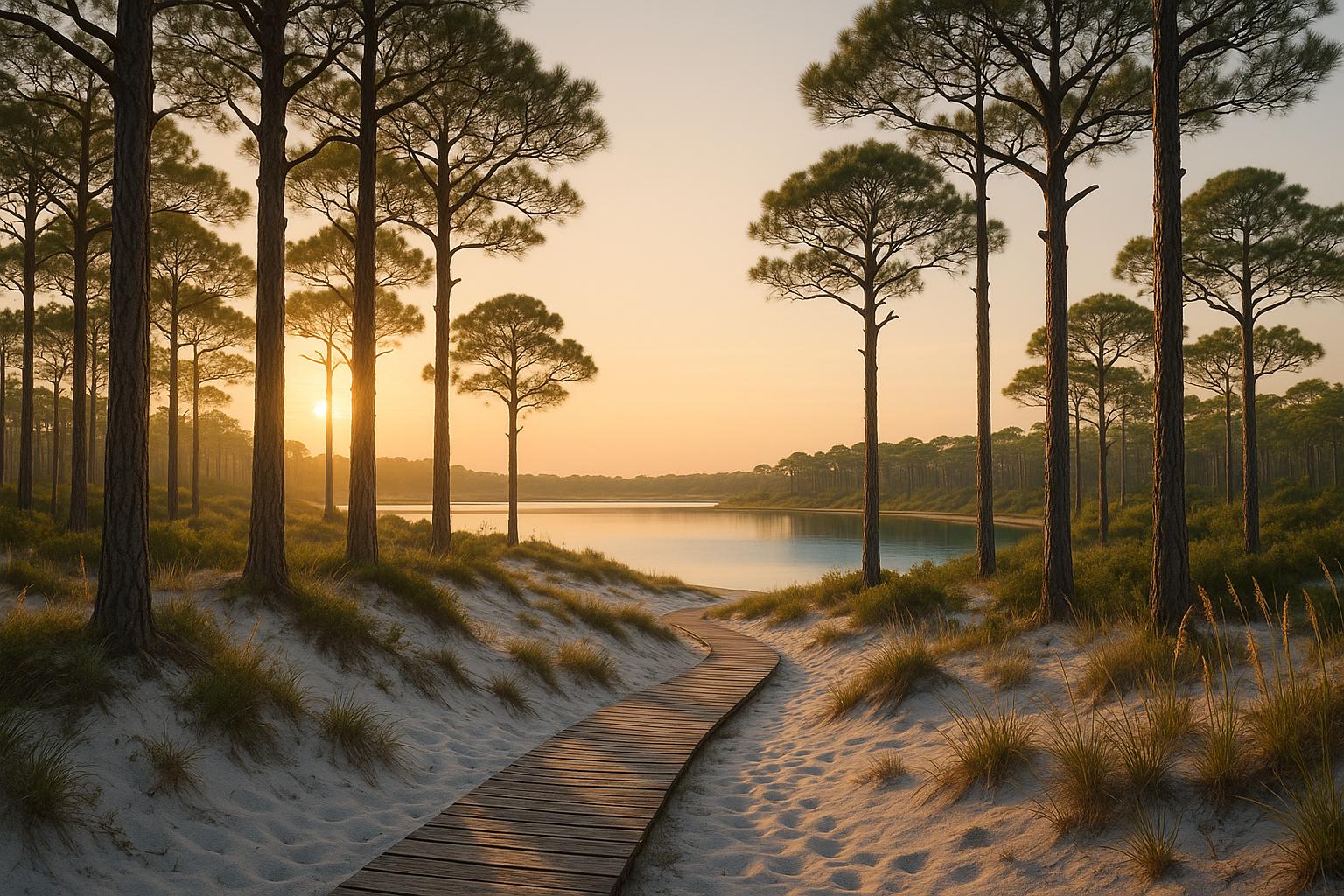
The 30A coastline in Florida is a wildlife hotspot, offering unique animal encounters across its beaches, dune lakes, and state parks. Each season reveals different species and behaviors, from dolphin sightings to bird migrations. Here's what you can expect:
- Spring: Dolphins near shore, sea turtles nesting, and migratory birds like painted buntings.
- Summer: Sea turtle hatchlings, evening dolphin activity, and nesting shorebirds.
- Fall: Migratory waterfowl, late-season sea turtle hatchlings, and active raptors.
- Winter: Waterfowl gatherings, close-to-shore dolphins, and hunting bald eagles.
Activities like kayaking, paddleboarding, and early morning hikes enhance these experiences. Respecting wildlife habitats and supporting conservation efforts are key to preserving this rich ecosystem for future generations.
1. Spring Wildlife
1. Bottlenose Dolphins Near Shore
As spring warms the waters along the 30A coastline, temperatures climb from the 60s°F into the low 70s°F, drawing bottlenose dolphins closer to shore. Early risers paddling or kayaking near Crab Island often spot small pods of these playful creatures gliding through the calmer waters. With fish activity on the rise, spring becomes the perfect time for dolphin encounters during paddleboarding adventures or boat tours. The ocean teems with life, setting the stage for seasonal wonders.
2. Sea Turtle Nesting Season Begins
May marks the beginning of sea turtle nesting season on 30A’s beaches, a period that continues through October. Loggerhead and green sea turtles come ashore at night to lay their eggs, and it’s essential to observe these events from a respectful distance while adhering to local guidelines. During this time, beachfront lighting is carefully controlled to ensure hatchlings find their way to the sea safely.
3. Migratory Songbirds Pass Through
Spring migration brings a burst of color and song to the 30A area as various migratory birds, including the vibrant painted bunting, make their way through the region. With its striking blue, green, and red feathers, the painted bunting is a favorite among birdwatchers. For the best viewing experience, head to wooded areas near dune lakes or state park trails equipped with binoculars. These seasonal visitors add a lively energy to the natural landscape.
4. Wading Birds in Marshes and Dune Lakes
The marshes, bayous, and dune lakes of 30A become hotspots for wading birds in spring. Great blue herons, snowy egrets, and roseate spoonbills can be seen patiently hunting in the shallow waters. Early mornings at Eden Gardens State Park or the bayous near Grayton Beach State Park provide excellent opportunities to observe these elegant birds in action.
5. Osprey and Bald Eagles Hunting Over Water
Spring is also a great time to watch osprey and bald eagles as they soar above dune lakes and coastal waters, searching for their next meal. Topsail Hill Preserve and Camp Helen offer some of the best vantage points for spotting these majestic raptors. Whether you’re paddleboarding or kayaking, keep an eye on the skies for these awe-inspiring hunters.
6. Shorebirds on Beaches and Tidal Flats
The beaches and tidal flats of 30A come alive in spring with shorebirds like brown pelicans, terns, gulls, and piping plovers. These birds are especially active during the early morning and evening hours. To ensure their habitat remains undisturbed, observe them from a respectful distance while enjoying the serene coastal landscape.
7. Gopher Tortoises Emerge from Burrows
As temperatures climb into the 70°F to 80°F range, gopher tortoises begin emerging from their burrows in 30A’s state parks. You might spot them basking near their sandy homes or slowly making their way across trails. Midday hikes in places like Grayton Beach State Park offer a good chance to see these fascinating reptiles in action.
8. Gray Foxes and Raccoons at Dusk
Gray foxes and raccoons become more visible during the quiet hours of dawn and dusk. These creatures are often found near wooded areas or along the edges of water sources. Kayakers exploring dune lakes in the early morning or late afternoon might catch a glimpse of them foraging along the shoreline, adding a touch of wild charm to the experience.
2. Summer Wildlife
When summer arrives on 30A, the area comes alive with remarkable wildlife activity, especially during the evenings and cooler parts of the day. Here's a glimpse of what nature has in store.
Sea Turtle Hatchlings Emerge at Night
Summer nights on 30A bring a special treat: sea turtle hatchlings making their way to the Gulf. Loggerhead and green sea turtles emerge from their nests under carefully regulated beachfront lighting. Visitors staying near the beach are encouraged to dim or turn off bright lights to ensure these tiny creatures don’t get disoriented on their journey.
Dolphins Active During Cooler Evening Hours
Dolphins are a common sight along 30A, but summer’s heat shifts their most active times to the cooler evening hours. Sunset boat tours or late afternoon kayaking trips provide the perfect chance to watch these playful marine mammals as they swim closer to shore, chasing schools of fish.
Brown Pelicans Diving for Fish
The abundance of marine life in summer draws brown pelicans to the shoreline, where they dive dramatically for fish during the early morning and late afternoon. Paddleboarders near the coast can often catch an up-close view of these expert hunters as they take advantage of the plentiful baitfish in shallow waters.
Roseate Spoonbills in Bayous and Dune Lakes
Roseate spoonbills, with their striking pink plumage, are a sight to behold as they forage in bayous and dune lakes at dawn. Early morning kayaking around Western Lake or Tucker Bayou near Eden Gardens State Park offers a prime opportunity to spot these elegant birds alongside great blue herons and snowy egrets.
Terns and Gulls Nesting on Beaches
Terns and gulls find 30A’s beaches ideal for nesting during the summer months. While enjoying coastal activities, be mindful to observe these birds from a distance to avoid disturbing their nests.
Alligators Basking Near Freshwater Areas
The summer heat often draws alligators out to bask near the edges of dune lakes and freshwater ponds, particularly around Grayton Beach State Park and Topsail Hill Preserve. Always keep a safe distance and never approach or feed these protected reptiles.
Ospreys Feeding Young in Nests
Summer is also the season to observe ospreys feeding their young. These powerful raptors can be seen hovering over water before diving to catch fish, then returning to their elevated nests near dune lakes and coastal areas. Camp Helen State Park and other natural spots along 30A offer excellent views of this fascinating behavior.
3. Fall Wildlife
As summer fades, Fall brings a more tranquil and intimate wildlife experience to 30A. This season offers a mix of resident and migratory species, with temperatures ranging from 65°F to 80°F - perfect for both wildlife and those eager to observe it. Fewer visitors and calm waters make this time of year especially rewarding for nature enthusiasts.
Late-Season Sea Turtle Hatchlings
Even as the nesting season winds down, sea turtle hatchlings continue their journey into October. Loggerhead and green sea turtle babies emerge under the cover of night, making their way to the Gulf. If you're staying near the beach, use red-filtered flashlights and keep outdoor lighting dim to help guide these little ones safely to the water.
Migratory Shorebirds Make a Stop
Fall is a busy time for migratory shorebirds as they head south from their northern breeding grounds. Sandpipers, plovers, and other species pause along 30A's beaches to rest and feed. Among them, you might spot the protected Piping Plover. Early morning walks along the shore offer a chance to see these travelers in action. Meanwhile, nearby dune lakes welcome another wave of feathered visitors.
Waterfowl Gather at Dune Lakes
The region's rare dune lakes become seasonal havens for migratory waterfowl. Northern Pintail, Blue-winged Teal, and Redhead ducks arrive from cooler areas to settle in the calm waters of Western Lake, Camp Creek Lake, and other spots. A dawn kayak trip gives you a front-row seat to watch these ducks diving and feeding in their temporary home.
Dolphins Draw Closer to Shore
Bottlenose dolphins remain active during Fall, following schools of baitfish closer to the coastline. Early mornings and late afternoons near Crab Island are prime times to spot their fins slicing through the calm waters. Kayakers often find themselves in the company of playful pods during their outings.
Raptors on the Hunt
Fall migration also brings an uptick in birds of prey along the coast. Ospreys continue their fishing routines, while bald eagles become more noticeable, often perched in tall pines or soaring above the coastline and dune lakes. Grayton Beach State Park and Topsail Hill Preserve State Park are excellent spots to watch these majestic hunters in action.
Wading Birds in the Marshes
Coastal marshes and bayous come alive in Fall with wading birds like great blue herons, snowy egrets, and roseate spoonbills. These birds gather in shallow waters to feed on small fish and crustaceans. Tucker Bayou near Eden Gardens State Park is particularly active, offering kayakers and paddleboarders a chance to quietly observe these elegant birds.
Gopher Tortoises on the Move
Cooler temperatures bring gopher tortoises out of their burrows and onto state park trails. Particularly in Grayton Beach State Park and Topsail Hill Preserve State Park, these slow-moving reptiles can be seen ambling along. Always maintain a respectful distance and avoid disturbing or feeding them.
Nocturnal Wildlife at Dusk
As the days grow shorter, nocturnal animals like gray foxes, raccoons, and white-tailed deer become more active at dusk. White-tailed deer, in particular, are easier to spot in the forested areas of state parks. Quietly observing from designated trails offers the best chance to see these elusive creatures.
sbb-itb-d06eda6
4. Winter Wildlife
Winter along 30A brings mild temperatures ranging from 50–70°F and tranquil waters, creating the perfect backdrop for observing a variety of resident and migratory wildlife. Whether you're paddling across a dune lake or walking along the shoreline, the cooler weather makes outdoor adventures especially rewarding. This season is a showcase for waterfowl, dolphins, raptors, and more.
Wintering Waterfowl at Dune Lakes
Between November and February, migratory waterfowl flock to 30A's rare dune lakes, transforming them into seasonal havens. Northern Pintail, Blue-winged Teal, and Redhead ducks are among the species you’ll find in the calm, shallow waters of Grayton Beach State Park, Western Lake, and other coastal spots. Early mornings are the best time to catch these birds diving and feeding along the water’s edge. Grab a kayak or paddleboard for an up-close view of their daily routines.
Dolphins Close to Shore
Winter's cooler waters bring baitfish closer to shore, and with them, bottlenose dolphins. These playful creatures are often spotted in the early morning near Crab Island or along the coastline. Whether you join a guided boat tour or paddle out on a kayak, winter offers some of the best opportunities to see dolphins in their natural habitat.
Raptors on the Hunt
The winter wildlife scene extends to the skies, where raptors like ospreys and bald eagles patrol the coastline. These majestic birds are frequently seen near dune lakes and pine forests, especially in Grayton Beach State Park and Topsail Hill Preserve State Park. A pair of binoculars will help you appreciate their graceful flight and sharp hunting skills as they soar or perch in search of prey.
Shorebirds and Wading Birds in Action
Even as summer’s nesting season fades, shorebirds and wading birds remain active. Great blue herons, snowy egrets, and various gull species can be seen along the coast and in marshy areas. Tucker Bayou near Eden Gardens State Park is a great spot to observe these birds wading through shallow waters. Paddleboarding in the calm mornings or late afternoons offers a peaceful way to watch their daily activities.
Gopher Tortoises and Other Wildlife on Trails
Gopher tortoises are a common sight on state park trails, even during the cooler months. These protected reptiles emerge from their burrows to bask in the sun and forage along trails in Grayton Beach State Park, Topsail Hill Preserve State Park, and Point Washington State Forest. Their slow, steady movements make them easy to spot, but be sure to give them space and stay on designated trails. As winter days grow shorter, you might also encounter white-tailed deer, gray foxes, and raccoons earlier in the evening along wooded paths.
Conclusion and Final Thoughts
The 30A coastline stands out as one of the most ecologically rich areas, offering visitors a chance to witness nature's seasonal rhythms up close. Each season brings its own wildlife spectacles - from nesting shorebirds in spring and sea turtle hatchlings in summer to dolphins in the fall and gatherings of waterfowl in winter. With over 250 bird species documented in this part of Florida's Panhandle, along with sea turtles, raptors, and protected species like gopher tortoises, the area provides endless opportunities for wildlife enthusiasts to connect with nature year-round.
However, this incredible biodiversity comes with a responsibility to protect it. Florida's beaches, hosting more than 60,000 sea turtle nests each year, face challenges as only 1 in 1,000 hatchlings survive. Simple actions, like reducing beachfront lighting during nesting season (May through October), can make a significant difference in improving hatchling survival rates.
Supporting conservation efforts is a key part of responsible wildlife viewing. Groups like South Walton Turtle Watch patrol the beaches daily during nesting season, working tirelessly to safeguard endangered sea turtles and educate visitors. Participating in educational walks or donating to local conservation initiatives helps protect these fragile ecosystems. The Choctawhatchee Basin Alliance also plays an essential role in preserving the unique habitats that define the 30A area.
State parks such as Grayton Beach, Topsail Hill Preserve, and Camp Helen offer visitors excellent opportunities for eco-friendly wildlife observation. These protected areas not only serve as vital habitats but also provide guided experiences that minimize human impact. Whether you're kayaking near dune lakes to spot ospreys, taking a narrated boat tour to watch dolphins, or walking trails to observe gopher tortoises, choosing guided activities through reputable operators ensures you enjoy these encounters responsibly.
Water-based activities are particularly special along 30A, offering a unique way to experience its vibrant wildlife. Early morning kayak outings, snorkeling trips, and boat tours through coastal waterways often reveal dolphins, sea turtles, and a variety of bird species in their natural environments. Following safety guidelines and maintaining respectful distances during these activities ensures these experiences remain both thrilling and sustainable.
Your choices as a visitor play a direct role in preserving these delicate ecosystems. Respecting marked nesting areas, sticking to designated trails, giving ample space to protected species like gopher tortoises, and supporting local conservation organizations all contribute to maintaining 30A's status as a haven for wildlife. Each season offers something new, making return visits in spring, summer, fall, or winter a rewarding experience for anyone who loves nature.
The wildlife along 30A depends on our care and commitment. By blending outdoor adventures with conservation-conscious practices, you help safeguard this extraordinary coastline for future generations. For the latest updates on wildlife viewing spots, conservation news, and responsible tourism tips for South Walton and the 30A area, resources like sowal.co are invaluable for planning your next wildlife adventure. These efforts underscore why protecting and respecting wildlife is essential to fully appreciating the beauty of 30A year-round.
FAQs
How can I enjoy wildlife along the 30A coastline while respecting their natural habitats?
To fully appreciate the amazing wildlife along the 30A coastline while being mindful of its preservation, there are a few easy steps you can take. Start by keeping a safe distance from animals, whether you're admiring dolphins in the water or watching birds along the shore. Feeding wildlife might seem harmless, but it can actually disrupt their natural habits and diet, so it's best to avoid it.
Stick to designated paths and areas to protect delicate ecosystems. If you're out kayaking or paddleboarding, make sure to steer clear of nesting sites or spots where animals are resting. Additionally, try to keep noise levels low and always dispose of trash properly to maintain the area's unspoiled beauty. By being thoughtful and responsible, you can enjoy an unforgettable experience while helping to preserve the natural wonder of 30A for everyone.
What can visitors do to help protect the wildlife along the 30A coastline?
Visitors can play a meaningful role in protecting the wildlife along the 30A coastline through small, thoughtful actions. Joining beach cleanups, respecting guidelines to safeguard nesting sea turtles, and steering clear of disturbing natural habitats are easy ways to make a difference. You can also contribute by supporting local groups that work tirelessly to preserve the area's natural ecosystems and scenic charm.
While exploring the outdoors, it's important to follow the principle of "leave no trace." Properly dispose of trash, avoid feeding wild animals, and stay out of marked conservation zones. These efforts go a long way in keeping the 30A coastline and its incredible wildlife thriving for future generations to enjoy.
What are the best ways to experience seasonal wildlife along the 30A coastline?
The 30A coastline is a haven for wildlife enthusiasts, offering a chance to connect with nature throughout the year. Depending on when you visit, you might catch glimpses of playful dolphins, nesting sea turtles, or flocks of migratory birds. To truly immerse yourself in this natural wonder, try a guided kayak tour, paddleboard through the calm waters, or hop on a sunset boat cruise for an up-close look at marine life.
If birdwatching is your thing, the cooler months are ideal as migratory birds make their way to the area. For those visiting in summer, keep an eye out for sea turtle nests dotting the beaches - but always maintain a respectful distance to avoid disturbing them. No matter the time of year, the 30A coastline offers endless opportunities to discover and appreciate its thriving wildlife.