Looking for the best spots to enjoy nature along 30A? Here are five must-visit wetlands where you can observe diverse wildlife in their natural habitats. These destinations, located within minutes of South Walton’s beach towns, feature rare coastal dune lakes, marshes, and bayous teeming with birds, alligators, and more. Whether you prefer walking scenic trails, birdwatching, or paddling calm waters, these wetlands offer something for everyone:
- Grayton Beach State Park (Western Lake): Spot wading birds, alligators, and deer along easy-to-moderate trails around a rare coastal dune lake.
- Topsail Hill Preserve State Park: Explore over 15 miles of trails near three coastal dune lakes, home to herons, ospreys, and even bald eagles.
- Deer Lake State Park: Walk boardwalks through marshes and dunes while observing shorebirds, pelicans, and painted buntings.
- Camp Helen State Park (Lake Powell): Visit Florida’s largest coastal dune lake, where freshwater meets saltwater, attracting diverse birds and even dolphins.
- Point Washington State Forest: Discover inland wetlands and bayous, perfect for spotting deer, foxes, and over 250 bird species.
Quick Tip: Early mornings or late afternoons are the best times to see wildlife. Bring binoculars, water, and bug spray for a comfortable visit. Whether you’re a seasoned wildlife enthusiast or just looking for a peaceful outing, these 30A wetlands deliver unforgettable experiences.
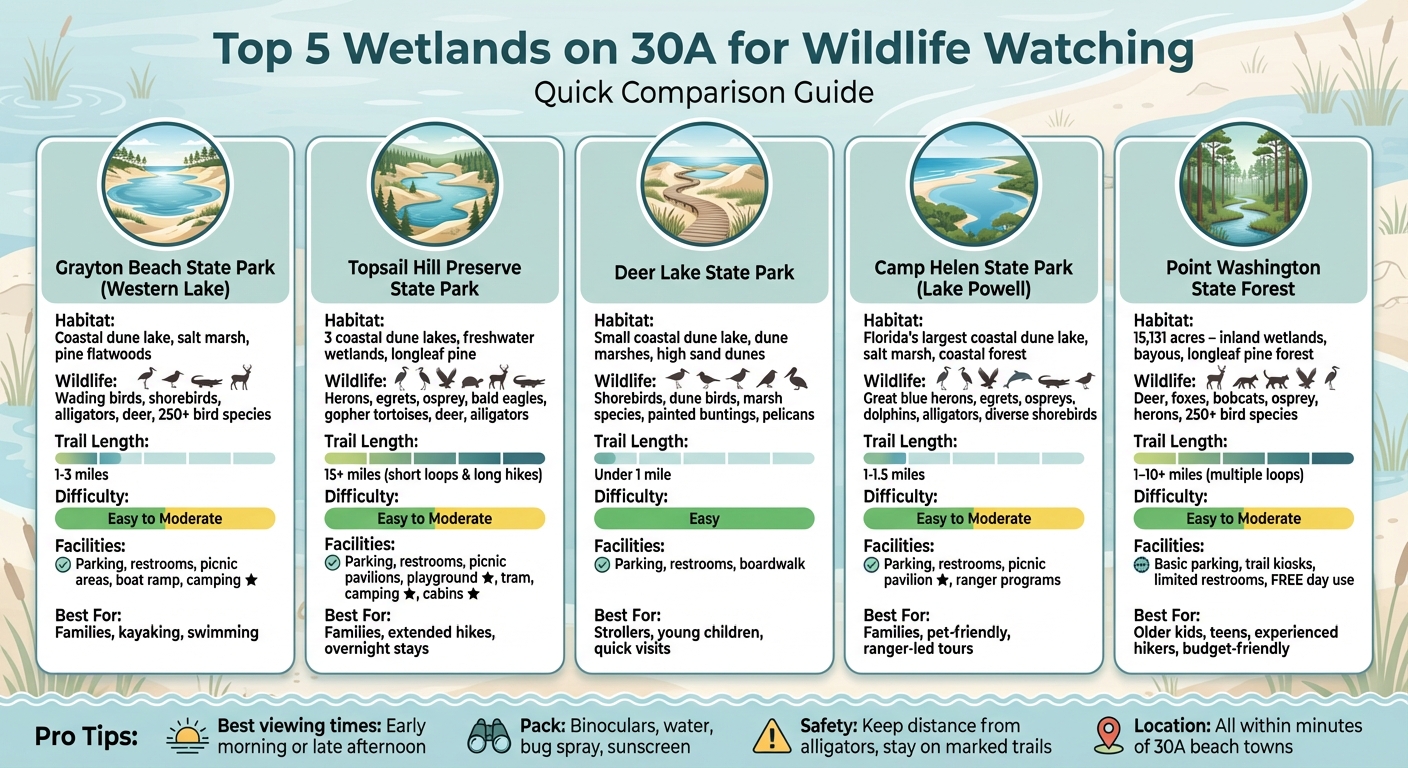
30A Wetlands Comparison Guide: Trails, Wildlife & Facilities
COASTAL DUNE LAKES JEWELS OF FLORIDA'S EMERALD COAST
1. Grayton Beach State Park Wetlands and Western Lake
Grayton Beach State Park is a standout destination along 30A, showcasing the region's unique ecosystems and making them accessible to visitors of all ages.
Primary Habitat Type
At the heart of the park lies Western Lake, one of South Walton's rare coastal dune lakes. These lakes are an ecological treasure, alternating between freshwater and brackish conditions when the dunes occasionally open to the Gulf. This dynamic environment creates a haven for diverse fish, birds, and plant species. Visitors can explore the wetland edges and nearby longleaf pine forests with ease, thanks to the park's well-maintained trails.
Typical Wildlife Highlights
Western Lake is a hotspot for wildlife enthusiasts. Alligators are often spotted basking in quiet coves, while the shallows attract wading birds and seasonal waterfowl. Ospreys frequently make an appearance, hovering and diving for fish during the early morning or late afternoon. During migration seasons, the area becomes a birdwatcher’s dream, with over 250 species passing through - including waterfowl, shorebirds, and even the occasional bald eagle. Forested trails may reveal sightings of deer, raccoons, or turtles, and the marsh edges come alive with amphibians during warmer months.
Trail Difficulty and Length
The park’s trails cater to a variety of fitness levels, ranging from easy to moderate. These paths wind around the lake, pass through wetlands, and meander into pine flatwoods. Sandy footpaths and multi-use trails designed for both hiking and biking feature gentle elevation changes and firm surfaces, making them accessible for most visitors. Boardwalks in wetter areas allow close-up views of the marsh while protecting delicate vegetation. Many trails can be completed in under two hours, offering a mix of lakeside views and glimpses of where Western Lake meets the Gulf.
Facilities
Grayton Beach State Park is well-equipped for an extended visit. On-site parking, restrooms, and picnic areas make it convenient to spend several hours enjoying the scenery. For those who prefer water activities, kayaking, canoeing, and paddleboarding on Western Lake are popular options, with local outfitters providing rentals. The park’s location near Scenic Highway 30A means visitors are just minutes away from dining, lodging, and other amenities, adding to the overall experience.
Family-Friendliness
With its gentle trails, boardwalks, and easy access to the lake, Grayton Beach State Park is a great choice for families. Kids will enjoy spotting herons, pelicans, ospreys, and even deer during their visit. However, parents should take precautions to ensure safety - keeping children away from marshy water edges, using life jackets during water activities, and packing essentials like sunscreen, snacks, and plenty of water, especially during warmer months. This balance of adventure and safety makes the park an engaging outing for all ages.
2. Topsail Hill Preserve State Park Wetlands and Coastal Lakes
Topsail Hill Preserve State Park is a standout destination along 30A, offering over 1,640 acres of protected coastal landscapes near Santa Rosa Beach. This park is home to an extraordinary feature: three rare coastal dune lakes - Campbell, Morris, and Stallworth - which are part of a phenomenon found in only a handful of places worldwide. With its diverse ecosystems, the park provides endless opportunities for unforgettable wildlife encounters.
Primary Habitat Type
The park's landscapes are a mix of unique habitats. The three coastal dune lakes shift between freshwater and brackish conditions, creating a haven for various species. Surrounding these lakes, you'll find maritime forests, pine woodlands, freshwater wetlands, and coastal marshes blending seamlessly. Adding to its charm, the park boasts some of Florida's tallest sand dunes - towering up to 25 feet - which offer stunning views of the wetland ecosystems below. This combination of habitats makes Topsail Hill a prime spot for observing a wide range of wildlife.
Typical Wildlife Highlights
The park's ecosystems attract an impressive variety of animals. Topsail Hill is a favorite for bird enthusiasts, with its dune lakes and wetlands drawing great blue herons, egrets, and even the occasional roseate spoonbill. Shorebirds and gulls are often seen near the lakes' outflows into the Gulf. Ospreys and hawks patrol the skies, while songbirds like cardinals and buntings flit through the pine forests. Early mornings or evenings are the best times to spot white-tailed deer, raccoons, and other small mammals. In the shallow waters, turtles and alligators make appearances, though sightings depend on the season and time of day.
Trail Difficulty and Length
Topsail Hill features over 15 miles of trails that wind through wetlands, along lake shores, and into pine forests. These sandy or packed trails are mostly easy to moderate, making them accessible for a wide range of visitors. You can choose shorter hikes of 3–4 miles to scenic viewpoints or tackle longer loops of 6–8 miles. The gentle terrain allows plenty of opportunities to pause for wildlife viewing or photography.
Facilities
The park is well-equipped for both day trips and longer stays. At the main entrance, you'll find parking, restrooms, and picnic areas. For overnight visitors, there are campgrounds and cabins, perfect for those hoping to catch early-morning wildlife activity. Activities like hiking, biking, and fishing are popular, and you can also rent kayaks or paddleboards from local outfitters to explore the calm waters of the dune lakes. These beginner-friendly conditions make paddling an excellent choice for families.
Family-Friendliness
Topsail Hill is a great spot for families and groups of all ages. The well-marked, flat trails and shorter route options make it easy to plan outings that suit kids' attention spans, whether it's a quick stop at a lake overlook or a stroll through shaded forests. Parents should supervise children closely, keeping them on the paths and at a safe distance from water edges, especially in areas where alligators might be present. The park's diverse habitats also provide plenty of learning opportunities, from observing birds to discussing the importance of wetlands and the unique role of coastal dune lakes.
3. Deer Lake State Park Dune Lake and Marsh Boardwalks
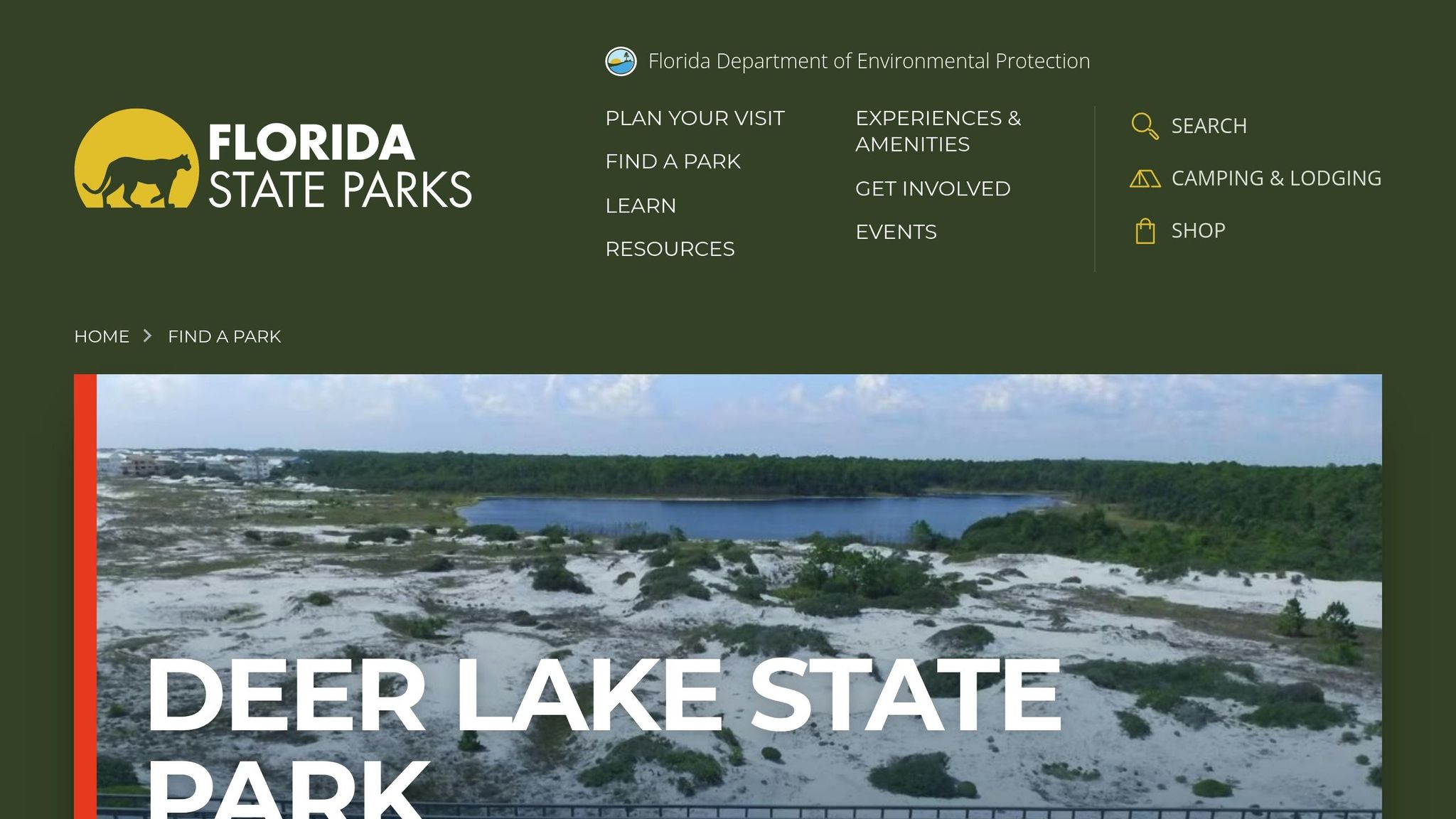
Deer Lake State Park provides a peaceful spot for wildlife enthusiasts along 30A, centered around a coastal dune lake separated from the Gulf by sand dunes. You’ll find it at 6350 E. County Road 30A in Santa Rosa, where the environment supports a variety of wildlife throughout the year.
Primary Habitat Type
At the heart of the park is a coastal dune lake - a rare freshwater system that exists in only a few places worldwide. A raised boardwalk winds through the surrounding dunes and marshes, offering a chance to explore these unique habitats without disturbing them. This mix of ecosystems creates the perfect setting for diverse wildlife.
Typical Wildlife Highlights
For birdwatchers, Deer Lake State Park is a treasure trove. The coastal dune lake and marshes draw wading birds like great blue herons and egrets, along with shorebirds such as piping plovers, brown pelicans, terns, and gulls. Look up, and you might spot osprey, eagles, or hawks scanning the waters for fish. If you visit during the early morning or late afternoon, you’re likely to catch sight of painted buntings and roseate spoonbills during their migrations.
Trail Difficulty and Length
The park’s trails and boardwalks are designed to be easy to moderate, making them accessible for nearly everyone. These boardwalks, ranging from about 0.5 to 2 miles, offer elevated views of the surroundings while protecting the fragile dune ecosystem.
Facilities and Family-Friendliness
Deer Lake State Park combines natural beauty with visitor-friendly amenities. There’s parking at the main entrance, picnic pavilions for a relaxing meal, and seasonal rentals for kayaks and paddleboards. Families will appreciate the safe, well-maintained boardwalks and the calm waters, which are ideal for beginners learning to paddle. It’s also a great opportunity for kids to explore and learn about this rare coastal environment. Don’t forget to pack binoculars for birdwatching, bug spray for the marshy areas, and comfortable shoes to make the most of your visit.
sbb-itb-d06eda6
4. Camp Helen State Park: Lake Powell and Salt Marsh
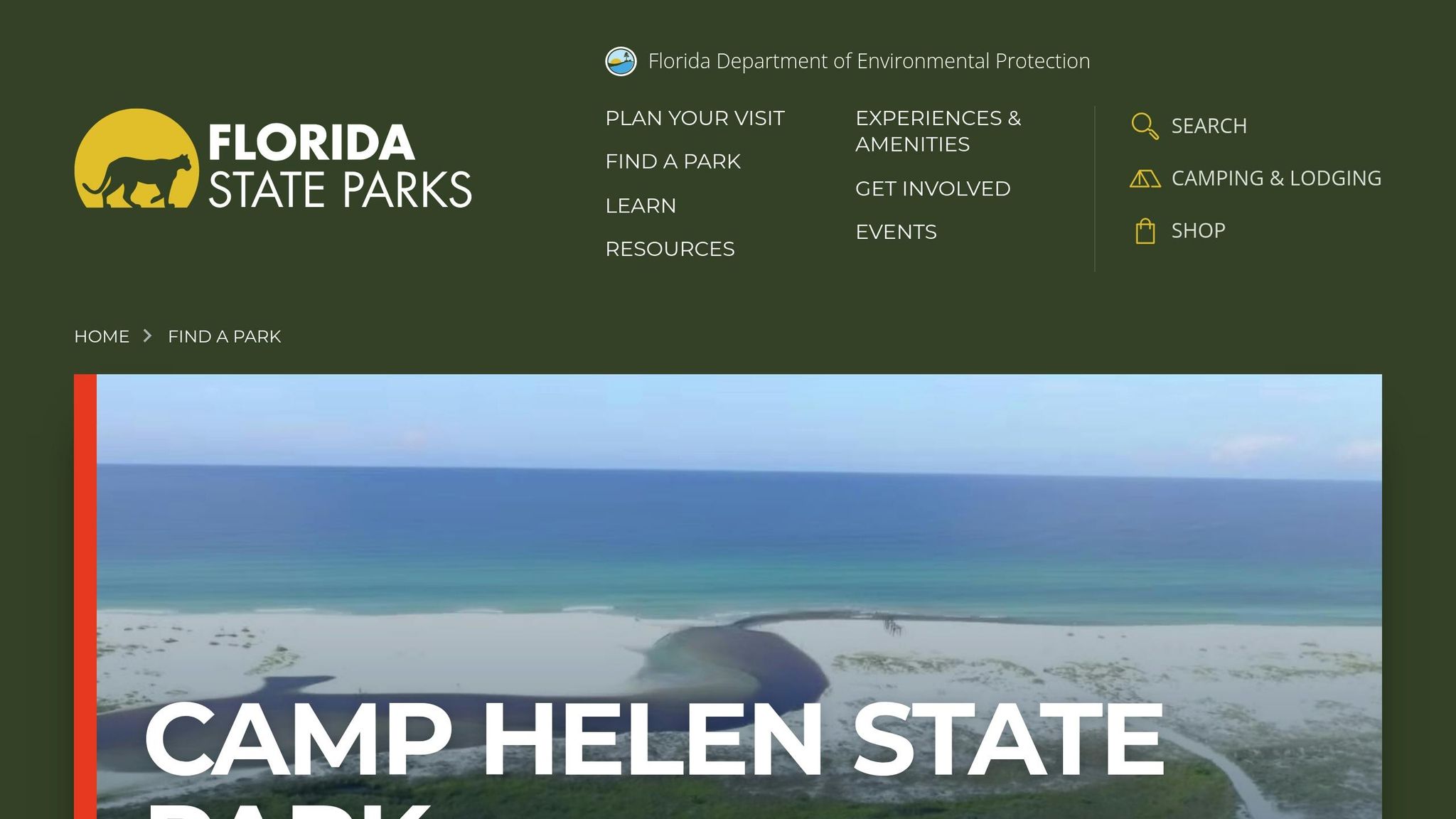
As we continue exploring the wetlands along 30A, Camp Helen State Park offers a unique highlight: Lake Powell. This is one of Florida's largest coastal dune lakes, where freshwater meets the Gulf's saltwater, creating a brackish ecosystem that transitions into a salt marsh. This mix supports a fascinating blend of freshwater and marine species.
Habitat and Ecosystem
The park's wetland is centered around a coastal dune lake that connects directly to the Gulf of Mexico. The lake gradually transitions into a salt marsh, where grasses along the edges provide a safe haven for crabs and other small invertebrates. These, in turn, attract a variety of birds, making the area a lively spot for wildlife activity throughout the day.
Wildlife to Watch For
Lake Powell is a haven for birdwatchers and wildlife enthusiasts. Along its shoreline, you'll often see great blue herons and egrets wading gracefully, while ospreys can be spotted hunting over the open water. The brackish shallows draw fish, which sometimes lure dolphins to the area. Keep an eye out for alligators in the calmer sections of the lake and marsh zones. During spring and fall migrations, the diversity of shorebirds along the sandy and marshy edges is at its peak. For the best experience, visit early in the morning or late in the afternoon when the area comes alive with the calls of herons, gulls, and songbirds.
Trails: Easy and Accessible
The park's trails are perfect for a relaxed outing. The main paths, which stretch about 1 to 1.5 miles round-trip depending on your route, are mostly flat and easy to navigate. Short connector trails lead to scenic overlooks of the lake and access points to the beach, making it simple to explore at your own pace.
Amenities and Family Appeal
Camp Helen State Park is designed with visitor comfort in mind. It offers paved parking, restrooms, and picnic areas, along with seasonal options for kayak and paddleboard rentals through local outfitters. Families and first-time visitors can take advantage of ranger-led programs that explain the area's natural history, helping everyone spot wildlife without needing expert skills. The gentle trails and opportunities to see birds like ospreys make this a great destination for families. However, it's important to stay cautious near the water's edge, as alligators are known to inhabit the freshwater and brackish zones.
5. Point Washington State Forest Wetlands and Bayous
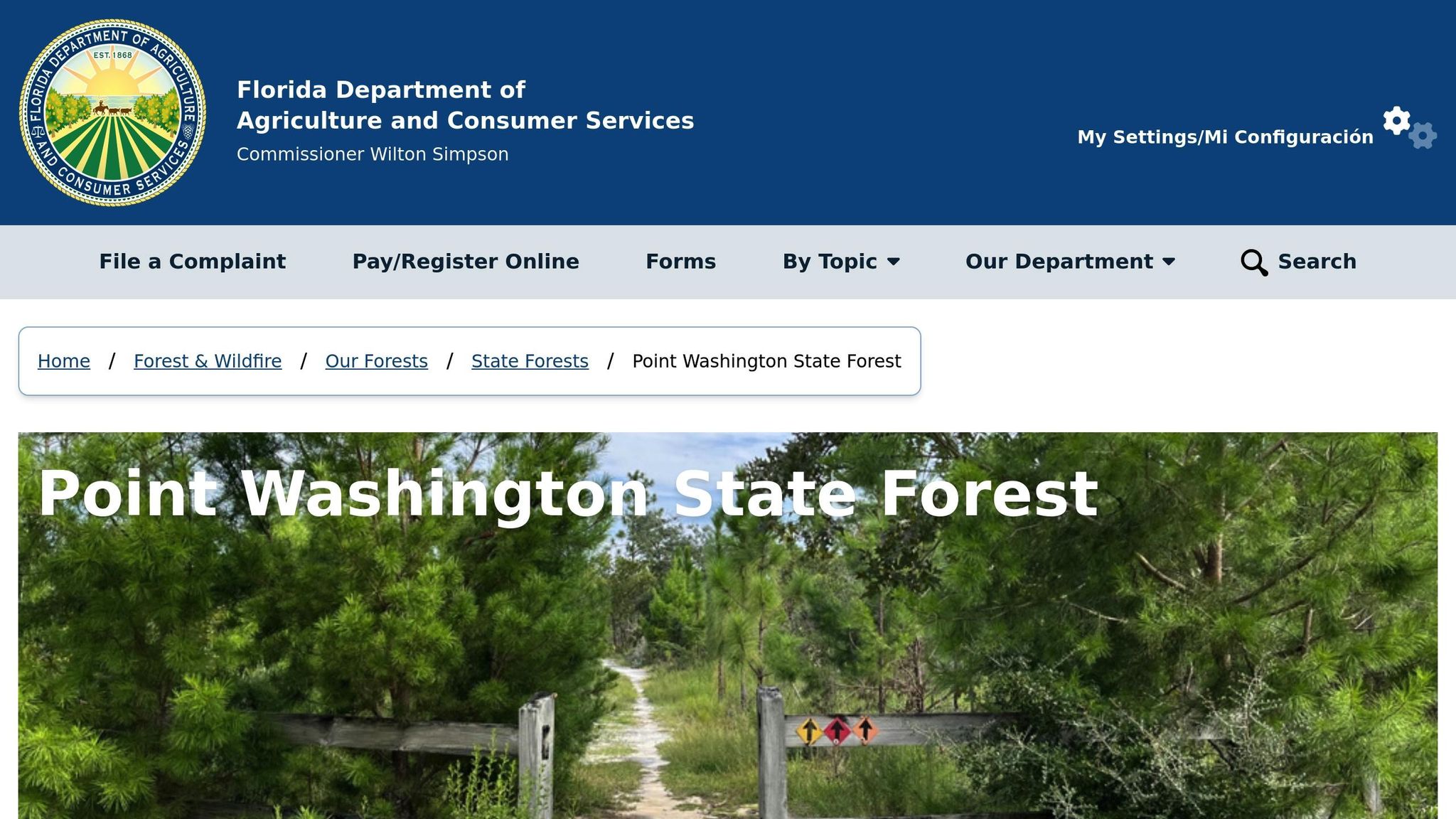
Point Washington State Forest offers a refreshing inland escape from the bustling coastal parks. Spanning an impressive 15,131 acres just north of Scenic Highway 30A, this forest is a haven of natural beauty. Its landscape is a mix of forested wetlands, cypress ponds, titi swamps, and bayous that flow into Choctawhatchee Bay. The longleaf pine flatwoods dominate much of the area, transitioning into shaded, wet habitats that teem with wildlife. If you're looking for a quieter, more secluded experience away from the beach crowds, this inland gem delivers a unique perspective on Florida's diverse ecosystems.
Primary Habitat Type
Unlike the coastal dune lakes, Point Washington's wetlands feature a blend of forested swamps and freshwater bayous. These habitats are home to a variety of species, including amphibians, wading birds, and larger mammals, creating a rich and vibrant ecosystem that feels distinctly different from the coastal environment.
Typical Wildlife Highlights
For wildlife lovers, this forest doesn't disappoint. Trails often reveal tracks from deer, foxes, and even bobcats, hinting at their presence. Along the bayous and wetlands, you might catch sight of alligators basking near the water. Birdwatchers will be thrilled to know this area is part of the Great Florida Birding Trail, with over 250 bird species recorded in the region. Keep an eye out for ospreys and herons, especially during early morning or evening visits when wildlife is most active.
Trail Difficulty and Length
The forest offers trails suited to a range of hiking preferences, from short 1-mile loops to longer 10-mile treks. Three interconnected loops provide options for both quick outings and more extended adventures. Trails like the Eastern Lake Trail and Longleaf Pine Trail are perfect for easy to moderate hikes, making them ideal for wildlife observation.
Facilities and Family-Friendliness
While the facilities here are basic compared to coastal parks, they cover the essentials. You'll find dirt or sand parking areas, trail kiosks, and limited restrooms. The best part? Day use is generally free, making it a great option for those on a budget. Although kayak rentals aren't available on-site, nearby outfitters can arrange eco-tours for exploring the bayous by water. The flat terrain and abundant wildlife make this forest a family-friendly destination. Just be sure to pack water, snacks, and a physical trail map. Families with younger kids might prefer the shorter loops, especially during the cooler morning hours when wildlife activity peaks.
Comparison Table
Choose the perfect wetland for your next outing - whether you're looking for easy boardwalks, longer trails, or incredible wildlife viewing. Use the table below to compare features and plan your ideal 30A wildlife experience.
| Wetland | Primary Habitat | Wildlife Highlights | Trail Difficulty & Length | Key Facilities | Family Suitability |
|---|---|---|---|---|---|
| Grayton Beach State Park (Western Lake) | Coastal dune lake, salt marsh, pine flatwoods | Wading birds, shorebirds, alligators, deer | Easy to moderate; multiple trails, 1–3 miles | Parking, restrooms, picnic areas, boat ramp, camping | Great for all ages; kayaking and swimming options |
| Topsail Hill Preserve State Park | Multiple coastal dune lakes, freshwater wetlands, longleaf pine | Herons, egrets, osprey, bald eagles, gopher tortoises, deer, alligators | Easy to moderate; 15+ miles of trails, with both short loops and longer hikes | Parking, restrooms, picnic pavilions, playground, tram to beach, camping, cabins | Excellent for families; playground and beach access |
| Deer Lake State Park | Small coastal dune lake, dune marshes, high sand dunes | Shorebirds, dune birds, marsh species | Easy; short boardwalk under 1 mile | Parking, restrooms, boardwalk | Ideal for strollers and young children |
| Camp Helen State Park (Lake Powell) | Large coastal dune lake, salt marsh, coastal forest | Diverse birds, fish, crabs, small mammals | Easy to moderate; short nature trails | Parking, restrooms, picnic pavilion, ranger programs | Great for families; pet-friendly with quiet beaches |
| Point Washington State Forest | Inland wetlands, bayous, longleaf pine forest | Deer, foxes, bobcats, osprey, herons, over 250 bird species | Easy to moderate; loops from 1 to 10+ miles | Basic parking, trail kiosks, limited restrooms; free day use | Best for older kids, teens, and experienced hikers |
Helpful Tips: For the best experience, visit early in the morning or late in the afternoon when temperatures are cooler and wildlife is more active. Always maintain a safe distance from alligators, and pack essentials like water and bug spray. For updates on trails and current wildlife activity, check with park rangers at staffed locations. You can also explore sowal.co for local advice on dining, hidden trail access, and nearby events to enhance your 30A adventure.
Conclusion
While 30A is famous for its stunning beaches, its rare wetlands and dune lakes unveil a side of the Gulf Coast that's often overlooked. These ecosystems pack an incredible variety of habitats into a compact area, including freshwater and salt marshes, bayous, and longleaf pine forests. Whether you're strolling the boardwalks at Deer Lake, paddling the serene waters of Western Lake at Grayton Beach, hiking the 15+ miles of trails at Topsail Hill Preserve, birdwatching near Lake Powell at Camp Helen, or exploring the quiet bayous of Point Washington State Forest, you'll uncover a whole new perspective on this coastal haven.
Each location offers its own unique experience, from spotting over 250 bird species to glimpsing alligators, deer, and foxes. Visiting during cooler parts of the day can improve your chances of seeing wildlife. Remember to keep a safe distance, use binoculars for a closer view, and stay on marked trails and boardwalks to protect the delicate vegetation. And whatever you do, never feed the wildlife - especially alligators. Not only is it dangerous, but it's also illegal.
Before heading out, check park hours, trail updates, and seasonal conditions. Be sure to bring essentials like water, sunscreen, bug spray, and a quiet demeanor to avoid disturbing the animals. If you're new to exploring wetlands, a ranger-led program or guided eco-tour can offer added safety and fascinating insights into the area's natural wonders.
For the latest trail updates and local tips about South Walton's 30A coastline, visit sowal.co. Grab your binoculars, pack your camera, and start planning your next wetland adventure along 30A!
FAQs
What makes coastal dune lakes so special compared to other wetlands?
Coastal dune lakes are a rare natural wonder, found in just a handful of places across the globe, including the scenic 30A coastline. What makes them so special is their direct yet delicate connection to the ocean. A thin sand barrier separates these lakes from the sea, occasionally opening up to let freshwater and saltwater mingle. This creates a fascinating ecosystem where both freshwater and marine species coexist.
Formed by unique geological and hydrological conditions, these lakes stand apart from typical wetlands. Their ever-changing environment supports an incredible variety of plants and animals, giving visitors a chance to immerse themselves in a truly distinctive and vibrant natural setting.
When is the best time to visit the 30A wetlands for wildlife watching?
The ideal times to explore the wetlands along 30A for wildlife watching are spring (March through May) and fall (September through November). In spring, the wetlands come alive with colorful bird migrations and heightened wildlife activity as many species focus on breeding and foraging. Fall offers its own spectacle, with migratory birds and other animals busily preparing for the winter months.
These seasons also offer the bonus of pleasant temperatures and smaller crowds, making them perfect for those seeking a tranquil, immersive nature experience.
What safety tips should I keep in mind when visiting wetlands along 30A?
When visiting the wetlands along 30A, staying safe ensures you can fully enjoy the experience. Stick to marked trails - not only for your safety but also to protect the fragile ecosystems around you. Make sure to wear sturdy, comfortable shoes to prevent slips, and pack insect repellent to keep mosquitoes and other bugs at bay. Avoid feeding or approaching wildlife, as it can be harmful to both you and the animals.
If your plans include kayaking or boating, always check water conditions ahead of time and wear a life jacket. Keep an eye on the weather, especially during stormy seasons, as conditions can change quickly. With a little preparation and respect for nature, you can immerse yourself in the amazing wildlife these wetlands have to offer.