South Walton offers fantastic workshops for anyone looking to learn about native plants and improve their gardening skills. These events focus on creating landscapes that support local wildlife, conserve water, and reduce harmful pollutants. Whether you're a beginner or an experienced gardener, these workshops provide practical guidance for designing and maintaining native plant gardens.
Key Workshops:
-
Native Plant Landscaping Basics
Hosted by UF/IFAS Walton County Extension, this workshop covers plant selection, pest management, and Florida-Friendly Landscaping™ techniques. Includes hands-on sessions and tours of the Native Plant Demonstration Garden. -
30A Native Plants Walk and Workshop
Held at Topsail Hill Preserve State Park, this workshop combines guided nature walks with lessons on native plants, their habitats, and practical landscaping tips. Explore diverse ecosystems and learn about prescribed burns and plant replacements. -
Designing Eco-Friendly Gardens
Organized by the South Walton Community Council, these sessions focus on creating rain gardens, reducing runoff pollution, and replacing non-native species with local plants. -
Community Native Plant Workshop
At Eden Gardens State Park, participants learn plant identification and restoration techniques, with opportunities to assist in shoreline planting projects. Includes guided walks and boat tours of local ecosystems. -
Native Plant Gardening for Beginners
Offered by the Coastal Dune Lakes Advisory Council, this workshop introduces gardening techniques specific to South Walton’s coastal dune lakes. Includes soil testing, plant identification, and seasonal tips.
Why Attend?
These workshops not only teach practical gardening techniques but also help preserve South Walton's unique ecosystems. From hands-on activities to expert-led tours, you'll gain the tools and knowledge to create thriving native plant gardens while contributing to local conservation efforts.
For details on dates, registration, and locations, check with the respective organizers or visit local event calendars.
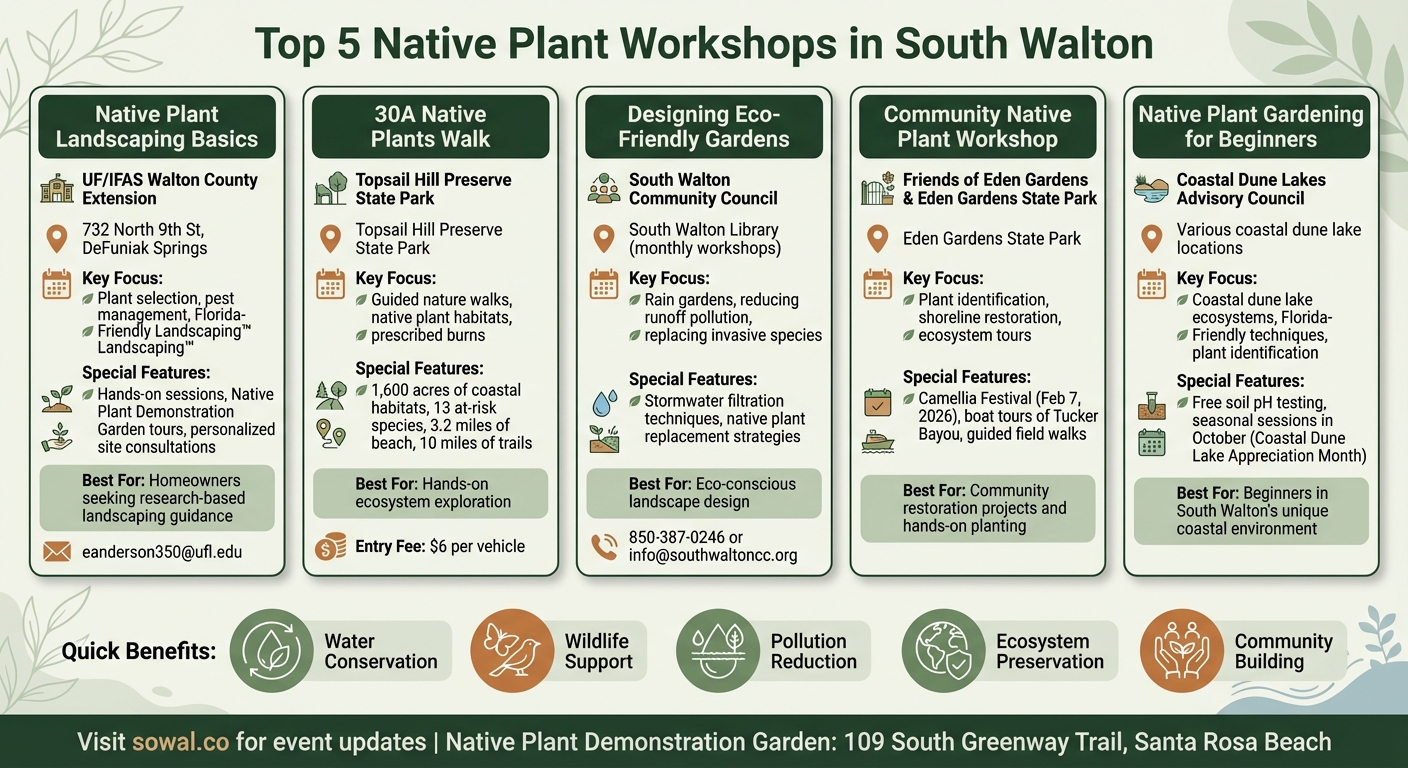
Top 5 Native Plant Workshops in South Walton: Locations, Focus Areas & Features
Step-by-Step Guide to a Florida Native Yard by Ginny Stibolt
1. Native Plant Landscaping Basics Workshop at UF/IFAS Walton County Extension
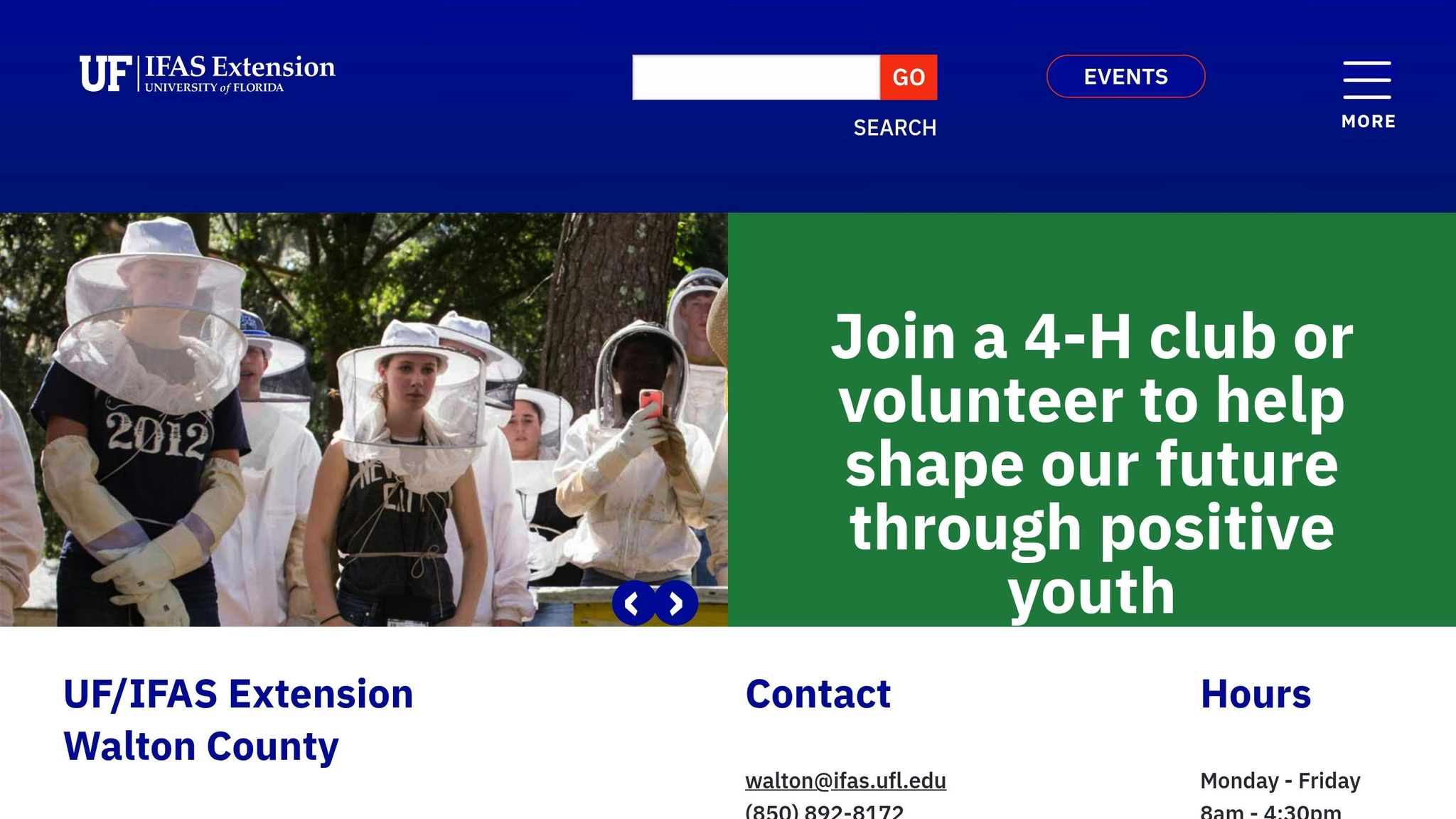
The UF/IFAS Walton County Extension offers a hands-on workshop designed to help local homeowners enhance their landscaping skills. Led by Evan Anderson, the Walton County Horticulture Agent and Master Gardener Coordinator, this program focuses on key topics like choosing the best plants for the area, identifying pests, and solving common landscaping challenges.
"This program is designed to assist homeowners with research-based information that emphasizes proper plant selection for Northwest Florida, plant and pest identification and general landscape trouble shooting." - UF/IFAS Walton County Extension
Participants are introduced to Florida-Friendly Landscaping™ (FFL) methods, including the "right plant, right place" approach. This strategy not only simplifies maintenance but also helps protect South Walton's natural beauty and coastal environment. The workshop highlights the benefits of incorporating native plants, such as conserving water and reducing the need for chemicals, while offering practical guidance for creating landscapes suited to South Walton's unique ecosystem. It serves as a foundation for applying these concepts in real-world settings, like local demonstration gardens.
The program also includes hands-on sessions that showcase seasonal changes and conservation practices in action. Back in 2011, the Walton County Master Gardeners teamed up with the Choctawhatchee Basin Alliance and Northwest Florida State College to create the Native Plant Demonstration Garden and Trail at 109 Greenway Trail in Santa Rosa Beach. This "living classroom" is a testament to South Walton's dedication to sustainable planting. Visitors can see how native plants adapt through the seasons and learn about water-saving techniques firsthand. Additionally, the Extension offers garden tours, plant disease and pest diagnostic services, and even personalized site consultations.
To register or find out about upcoming workshops, reach out to Evan Anderson at eanderson350@ufl.edu. The Extension office, located at 732 North 9th St in DeFuniak Springs, is open Monday through Friday from 8:00 am to 4:30 pm.
2. 30A Native Plants Walk and Workshop at Topsail Hill Preserve State Park
This workshop takes landscaping to the next level with a hands-on experience in one of Florida's most stunning natural settings. At Topsail Hill Preserve State Park, participants explore 1,600 acres of diverse coastal habitats, including old-growth longleaf pines and rare dune lakes. The park is home to 13 at-risk species and features breathtaking dunes that rise 25 feet above sea level, stretching along 3.2 miles of pristine, white sandy beach. For just $6 per vehicle, visitors can also enjoy 10 miles of trails that showcase the area's incredible biodiversity.
During the workshop, attendees journey through a variety of ecosystems. Picture wetlands filled with unique pitcher plants, flathills dominated by majestic longleaf pines, and sandhills adorned with joint weed, vibrant wildflowers like goldenrod, asters, purple blazing star, and summer farewell, along with oaks and saw palmettos - all offering a glimpse into the region's rich plant life.
A key focus of the session is developing an eye for the finer details of native plants. By examining how these species adapt to their environments, participants gain a deeper appreciation of their resilience and beauty. The workshop also delves into how subtle shifts in elevation and soil - ranging from stark white beach sands to tannic swamps - determine which plants thrive in specific conditions, offering practical insights for home landscaping.
The session also covers the importance of prescribed burns, which replicate natural fire cycles, and provides actionable tips for replacing invasive plants with native alternatives. Participants will tour rare coastal dune lakes and explore historic features like Native American midden mounds and remnants of Quarters Turpentine Village, adding a historical dimension to the experience.
The park is open daily from 8:00 a.m. to sundown, and a tram service conveniently shuttles guests from the parking lot to the beach and nature trails.
"Topsail is so much more than a beach park... It's such a big piece of unique coastal habitat - it gives a sense of peace and quiet." - Celeste Cobena
Discover how understanding native plants can transform your garden at our next workshop.
3. Designing Eco-Friendly Gardens with Native Plants by South Walton Community Council
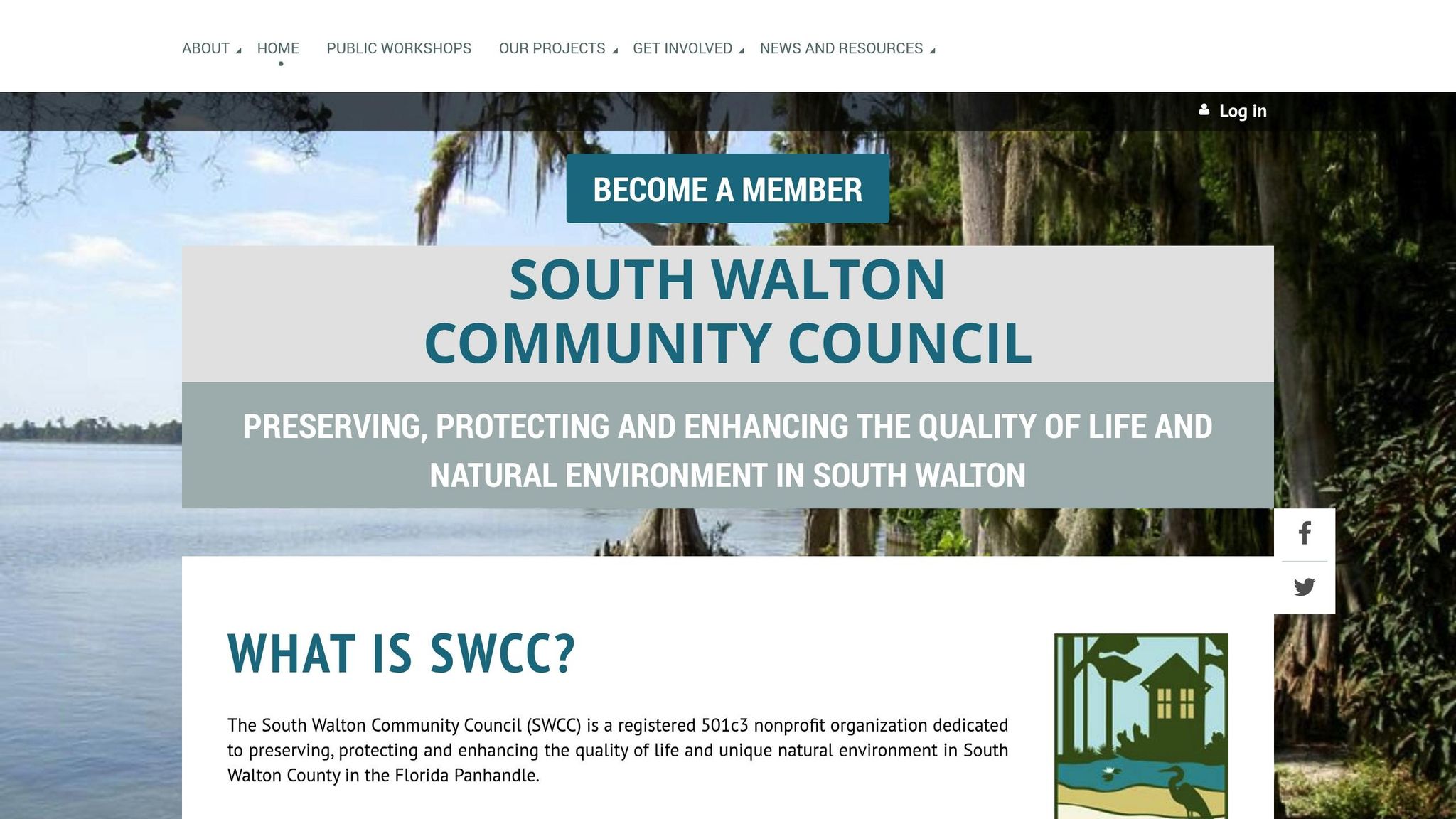
After hands-on sessions at Topsail Hill Preserve, the South Walton Community Council is now focusing on empowering the community to embrace eco-friendly gardening practices. As part of their ongoing efforts to promote native plant use in South Walton, they host monthly workshops at the South Walton Library. These workshops guide residents in designing landscapes that not only enhance their surroundings but also safeguard the local ecosystem.
A major highlight of these sessions is the focus on rain gardens. These thoughtfully designed gardens help filter stormwater runoff, reducing pollutants before they reach the coastal waters - a direct contribution to the conservation goals emphasized in earlier workshops. Attendees also learn practical techniques for replacing invasive plant species with native alternatives, fostering healthier, more sustainable landscapes.
Back in May 2009, Bay Elementary students got an early start in eco-friendly initiatives. Under the guidance of Alison McDowell from the Choctawhatchee Basin Alliance, they cultivated smooth cordgrass in student-designed ponds. Once matured, the grass was planted to serve as a natural filtration system for runoff.
"To protect, preserve and enhance the quality of life and the natural environment of South Walton County" - South Walton Community Council Mission Statement
If you're inspired to revamp your garden with eco-friendly designs, reach out to the SWCC at 850-387-0246 or via email at info@southwaltoncc.org. To stay updated on upcoming workshops and forums, you can subscribe through their website or follow their Facebook page.
sbb-itb-d06eda6
4. Community Native Plant Workshop at Eden Gardens State Park
Eden Gardens State Park offers a unique blend of classroom learning and hands-on activities through its workshops. Partnering with park rangers, the Friends of Eden Gardens host a variety of educational events year-round. One of the standout events is the Camellia Festival, scheduled for February 7, 2026, from 10:00 am to 2:00 pm. While the festival showcases the park’s impressive collection of over 370 camellias, it also includes displays dedicated to identifying native plants.
As part of these workshops, guided field walks provide participants with expert-led lessons on recognizing native species. For example, attendees learn to spot unique characteristics like the pink joints of joint weed or the succulent features of certain white-flowering plants. These skills help differentiate species such as purple blazing star and summer farewell. After honing their identification abilities, participants often put their knowledge to use in local restoration projects.
A key aspect of these efforts involves planting native species, such as smooth cordgrass, along the Choctawhatchee Bay shoreline. These plants play a crucial role in filtering runoff and managing salinity levels. Workshop activities also extend to exploring nearby ecosystems. For instance, boat excursions through Tucker Bayou offer a closer look at native habitats and underscore the importance of these plants to South Walton’s coastal environment.
To stay updated on upcoming workshops and events at Eden Gardens State Park, reach out to the Friends of Eden Gardens or check the park’s event calendar. You’ll also find ranger-led hikes and other educational programs scheduled throughout the year.
5. Native Plant Gardening for Beginners by Coastal Dune Lakes Advisory Council
If you're new to native plant gardening in South Walton, the Coastal Dune Lakes Advisory Council has you covered. They offer workshops designed to introduce beginners to the unique ecosystem of the region's 15 coastal dune lakes, a feature found nowhere else. These sessions lay the groundwork for understanding how to garden successfully in this special environment.
Attendees get an inside look at how natural outfalls influence salinity levels, creating a habitat for native plants like sawgrass, royal fern, and waterlilies. The workshops also highlight Florida-Friendly gardening techniques and help participants identify native trees, shrubs, and wildflowers that thrive in South Walton's coastal conditions.
For a personalized approach, you can get a free soil pH test at the UF/IFAS Extension office, which will help you choose the best plants for your garden. Visiting local demonstration gardens is another great way to see these techniques in action and gather inspiration for your own space.
These workshops aren’t just about theory - they’re packed with practical tips. Seasonal sessions are often scheduled in October, which is designated as Coastal Dune Lake Appreciation Month in Walton County. To stay updated on upcoming workshops, check the events calendar on sowal.co or the UF/IFAS Extension website. You can also sign up for email notifications from the local Extension office. When attending, make sure to wear sturdy shoes and bring essentials like water, sunscreen, and binoculars for spotting plants up close.
Conclusion
Joining native plant workshops in South Walton is a great way to grow your gardening skills while making a positive impact on the environment. You'll pick up practical tips on Florida-friendly gardening, learn to identify trees and shrubs suited to the area, and understand how to create habitats that help local wildlife thrive. Plus, these skills help conserve water, reduce pollution, and protect the region's water systems.
But it's not just about gardening - these workshops foster a strong community of environmentally conscious individuals. They bring together locals, visitors, and students who share a passion for sustainable living, creating a space to share ideas and contribute to preserving South Walton's natural beauty and wildlife.
For a closer look at sustainable gardening in action, stop by the Native Plant Demonstration Garden at 109 South Greenway Trail in Santa Rosa Beach. It’s a living example of water-saving and eco-friendly design.
To stay in the loop about upcoming workshops and environmental events, visit sowal.co for the latest updates. You can also check out programs at Eden Gardens and Camp Helen state parks, where ranger-led hikes and nature tours often complement the lessons from these workshops.
Whether you're just starting out or already have a green thumb, these workshops provide the knowledge and tools to make a lasting difference in South Walton's ecosystem - one native plant at a time.
FAQs
What are the advantages of planting native plants in my garden?
Planting native plants in your garden offers a range of benefits that go beyond just aesthetics. Since these plants are naturally suited to the local climate and soil conditions, they typically need less water, fertilizer, and pesticides to grow. This makes them an easy-care option that’s also kinder to the environment.
Beyond their practical advantages, native plants are essential for supporting local ecosystems. They provide vital food and shelter for pollinators like bees and butterflies, as well as other wildlife, contributing to the preservation of biodiversity. Plus, they help conserve water and minimize environmental impact by thriving in landscapes designed to use water efficiently.
By choosing native plants, you’re not just enhancing your garden’s beauty - you’re creating a sustainable space that benefits the planet while saving you time and effort.
How can I select the best native plants for my area in South Walton?
To find the best native plants for South Walton, start by exploring the local ecosystem and learning about the plants that naturally thrive in the area. A great place to begin is the native plant demonstration garden at Northwest Florida State College's South Walton campus. These gardens not only inspire but also offer practical guidance, showcasing plants that suit the region’s soil, climate, and water conditions. They also highlight landscaping techniques that are both effective and environmentally friendly.
Another valuable resource is the South Walton Community Council (SWCC). They host workshops and events where experts share advice tailored specifically to the area. When choosing plants, think about factors like sunlight, soil type, and moisture levels. Opt for species that benefit local pollinators and wildlife. By tapping into these resources and focusing on plants suited to South Walton’s unique environment, you can design a landscape that’s both sustainable and visually appealing.
How do native plant workshops in South Walton support local conservation efforts?
Native plant workshops in South Walton are making a big difference when it comes to conservation. These events focus on sustainable landscaping and preserving the area’s unique ecosystems. They often team up with groups like the Choctawhatchee Basin Alliance and Walton County Master Gardeners to teach attendees about the perks of using native plants - like saving water and cutting back on chemical fertilizers.
By showing locals and visitors how to integrate native plants into their gardens, these workshops help safeguard local habitats, minimize environmental harm, and even support efforts like sea turtle conservation and habitat restoration. They’re an important piece of South Walton’s mission to keep the area’s natural beauty intact while bringing the community together to protect it.