Want to explore Florida's 30A coastline while learning about native plants? Topsail Hill Preserve State Park in Santa Rosa Beach offers guided plant walks every third Monday of the month, from 9:00 to 11:00 a.m. For just $6 per vehicle (up to 8 people), you can join expert guides to discover the park's diverse ecosystems, including pine forests, coastal dunes, wetlands, and rare coastal dune lakes.
These two-hour walks are beginner-friendly, featuring a relaxed pace and frequent stops to discuss plants like pitcher plants, saw palmetto, and Florida rosemary. Whether you're interested in plant identification, wildlife connections, or just a peaceful morning outdoors, this activity offers an engaging way to enjoy nature. Walks run rain or shine - just meet at Tram Stop #2 and come prepared with water, sunscreen, and sturdy shoes.
For updates or changes due to construction, check the Florida State Parks website before heading out. Beyond the walk, enjoy the park's 15 miles of trails, pristine beaches, and other ranger-led activities.
What to Expect on a Guided Plant Walk
Schedule and Cost Information
Guided plant walks are included in the park's admission fee, which is $6.00 per vehicle (up to eight people). These walks happen rain or shine, so it's a good idea to check the weather and dress accordingly. Keep in mind, schedules may change due to holidays or special events, so it’s always smart to confirm the dates on the Florida State Parks website or sowal.co event listings before heading out.
Walking Route and Trail Conditions
The adventure kicks off at Tram Stop #2, accessible via the park tram from the main parking area near the ranger station. The route covers about 1–2 miles, combining paved tram paths, campground roads, and natural trails through pine flatwoods and scrub. The pace is relaxed, with frequent stops to explore and discuss the plants, making it suitable for most visitors. While the paved sections are flat and accessible, some side trails feature soft sand, grassy paths, or boardwalks, which can be a bit trickier to navigate. Be ready for Florida's heat and humidity, as the scrub and dune areas offer limited shade. After rain, you might encounter wet or muddy patches. Additionally, ongoing construction (since January 27, 2025) may impact tram stop locations, so it’s a good idea to check with the ranger station upon arrival. As you explore, your guide will share fascinating insights about the park’s diverse plant life.
What You'll Learn About Native Plants
During the walk, you’ll explore a variety of ecosystems, including old-growth longleaf pine forests, sandy scrub, dune systems, wetlands, and areas near coastal dune lakes like Campbell Lake and Morris Lake. Along the way, you’ll encounter native plants such as saw palmetto, turkey oak, sand pine, magnolia, reindeer lichen, Florida rosemary, Gulf coast lupine, woody goldenrod, and even carnivorous pitcher plants in wetter spots. Guides will use live examples to teach you how to identify plants by their leaf shapes, bark textures, and growth patterns.
You’ll also learn about fascinating plant adaptations, like fire-resistant traits such as thick bark and heat-triggered seed cones, and how deep-rooted dune plants stabilize sand during storms. The guides will highlight the connections between plants and local wildlife, including gopher tortoises, songbirds, and the rare Choctawhatchee beach mouse. With plenty of opportunities to ask questions, this walk offers a deeper appreciation for the park’s unique coastal plant communities and their role in the ecosystem.
How to Prepare for Your Guided Plant Walk
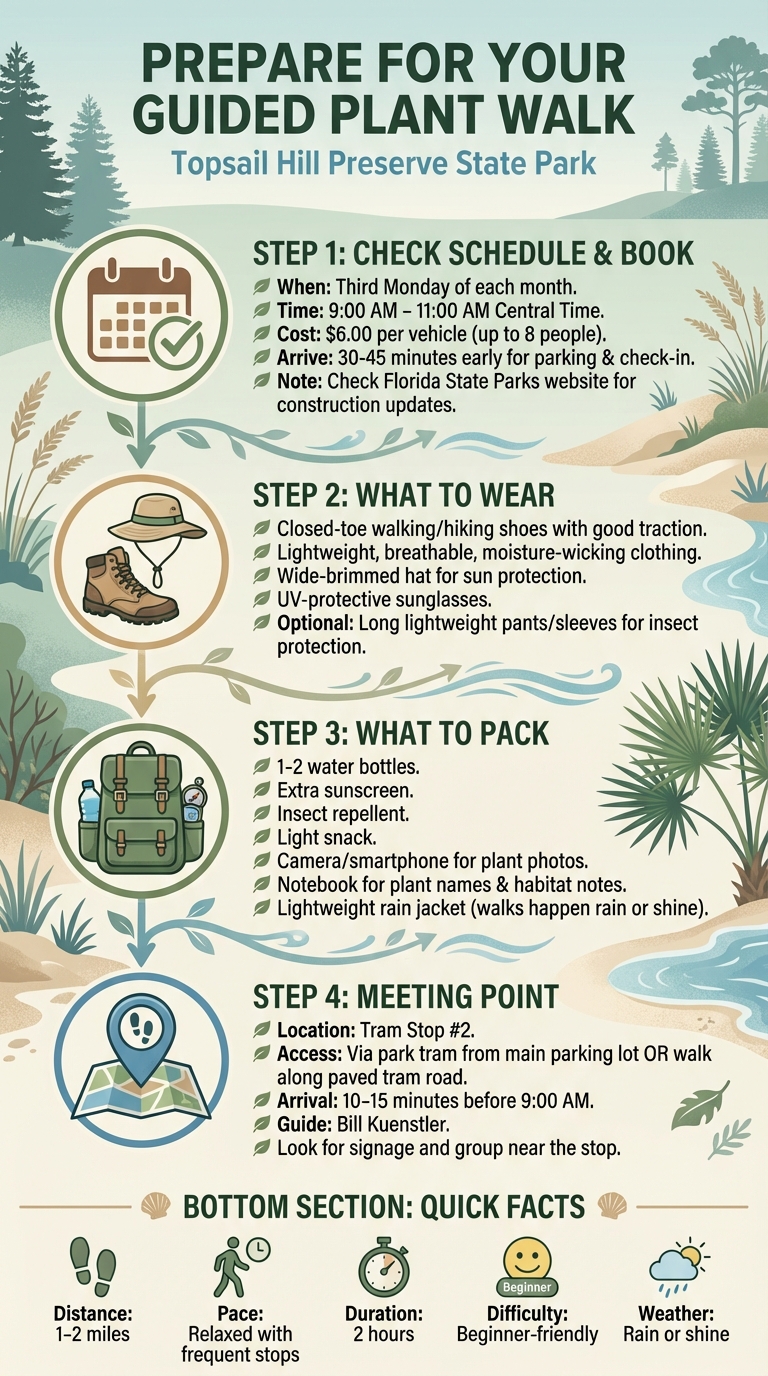
How to Prepare for Topsail Hill Guided Plant Walk: Essential Planning Guide
To make the most of your guided plant walk, a bit of preparation can go a long way. Here's what you need to know before you head out.
Check Dates and Park Entry Details
These walks take place on the third Monday of each month from 9:00 a.m. to 11:00 a.m. Central Time. Be sure to double-check the schedule on the official Florida State Parks website or sowal.co, as dates can occasionally shift. The walk is included in the $6.00 per vehicle park entry fee, which covers up to eight people. Keep in mind, due to construction at the new Nature Walk and Visitor Center (since January 27, 2025), some facilities like tram stops and restrooms near the entrance have been temporarily relocated. Plan to arrive 30–45 minutes early to allow time for parking, payment, and check-in.
What to Wear and Bring
Expect warm, humid Florida weather during this two-hour walk. Wear closed-toe walking or light hiking shoes with good traction, and stick to lightweight, breathable clothing - think moisture-wicking shirts and shorts or light pants. If you’re looking for extra sun protection, a wide-brimmed hat and UV-protective sunglasses are smart choices. For those sensitive to insects or plant brush near wetlands, long, lightweight pants and sleeves can be helpful.
Pack 1–2 water bottles, extra sunscreen, and insect repellent, especially if it’s a warmer day or has recently rained. A small day pack is perfect for carrying essentials like a light snack, a camera or smartphone for snapping plant photos, and a notebook to jot down plant names or habitat details.
Meeting Point for the Walk
The walk begins at Tram Stop #2, which you can reach via the park tram from the main parking lot. If you prefer, you can also walk along the paved tram road to get there. Look for clear signage guiding you to the stop. Be sure to arrive at Tram Stop #2 10–15 minutes before 9:00 a.m. to check in with guide Bill Kuenstler, adjust your gear, and take advantage of the nearby restrooms. Running late? Look for the small group near the stop or head back to the ranger station for assistance.
Plants and Habitats You'll See
Main Ecosystems Along the Trail
As you walk the trail, you'll journey through a variety of coastal ecosystems unique to the Panhandle. The adventure begins in an old-growth longleaf pine forest, where tall, widely spaced pines rise above an open understory of wiregrass and saw palmetto - plants that thrive in areas shaped by frequent, low-intensity fires. From there, the landscape transitions into sandy scrub, where hardy shrubs cling to nutrient-poor, well-drained soils. As the trail progresses, you'll pass through wetlands and seepage zones that nurture moisture-loving plants. Closer to the coast, you'll encounter the park's rare coastal dune lakes - Campbell Lake and Morris Lake - extraordinary natural features found in only a few places worldwide. The walk concludes at the white quartz dunes and Gulf beaches, where plants have adapted to withstand shifting sands, salty air, and relentless winds. These diverse habitats provide a rich backdrop for discovering native plant life.
Common Native Plants on the Walk
As you move through these ecosystems, you'll come across a fascinating variety of native plants. In the longleaf pine forest, guides often point out the longleaf pine itself, a species that has adapted to fire by staying in a "grass stage" as a seedling, keeping its growth bud low and protected. In the scrub and dune areas, you'll notice sand pine, twisted oaks, Florida rosemary (a key plant for stabilizing dunes), gopher apple, and false rosemary. Wetland areas introduce you to pitcher plants, carnivorous wonders that trap and digest insects to survive in nutrient-poor, acidic soils. Depending on the season, you might see Gulf coast lupines blooming in vibrant purple during spring or woody goldenrod adding a splash of yellow in the fall.
How Guides Help You Identify Plants
Guides make plant identification engaging and interactive by teaching you to look for key features like leaf arrangement, flower color, and bark texture. They often encourage you to touch and even smell the plants to better understand their characteristics. To make things easier, guides might use reference tools like laminated ID sheets or smartphone photos. But they don't stop at identification - they also explain how these plants play a crucial role in supporting local wildlife. For example, they highlight connections to the park's 13 imperiled species, such as the Choctawhatchee beach mouse. This hands-on approach not only helps you sharpen your plant ID skills but also deepens your appreciation for how these plants sustain the area's delicate ecosystem and its endangered inhabitants.
sbb-itb-d06eda6
Tips for a Better Walk Experience
Trail Etiquette and Safety
When you're out exploring, stick to designated trails and boardwalks. This simple step helps protect fragile habitats, like coastal dunes and wetlands, which are home to 13 at-risk species, including the Choctawhatchee beach mouse. Be mindful of your impact: pack out all trash, resist the urge to pick plants or disturb wildlife, and keep noise to a minimum. This way, both visitors and the park's native species can enjoy the tranquility.
Pay attention to your footing, especially on trails like Morris Lake Trail, where exposed rebar from historical testing sites may be present. Prepare for the weather and terrain by reviewing packing tips - don’t forget that walks happen rain or shine, so a lightweight rain jacket might come in handy. Once you've taken steps to ensure your safety, dive deeper into the area's unique environment with additional resources.
Learning More After the Walk
Your adventure doesn’t have to end when the walk does. Grab a paper nature trail guide - these are available at trailheads like Morris Lake Trail - and explore the park's 15 miles of trails that wind through old-growth pine forests and scrublands. It’s a great way to practice identifying plants and learn more about the local ecosystem.
For a more interactive experience, join the Coffee with a Ranger event hosted monthly by Friends of Topsail Hill Preserve State Park. These sessions cover fascinating topics like imperiled species and pitcher plants. You can also visit sowal.co to discover more about Topsail Hill’s hidden beaches, natural features, and upcoming community events. For those looking to get involved, topsailparkfriends.org offers educational materials and volunteer opportunities to help protect these extraordinary ecosystems.
Other Activities at Topsail Hill
Why stop at the plant walk? Make the most of your visit by trying some of the park's other activities. After your morning walk, take a relaxing stroll along 3 miles of pristine white-sand beach or paddle through the rare coastal dune lakes, Campbell and Morris Lake. These unique lakes are a highlight of the park and offer a peaceful way to connect with nature.
Conclusion
A guided plant walk at Topsail Hill Preserve State Park transforms a simple morning stroll into a fascinating journey through the rare dunes, coastal dune lakes, and pine forests that define the 30A coastline. These two-hour walks, led by knowledgeable guides, combine recreation with hands-on learning. You’ll explore how essential ecosystems - like longleaf pine forests and coastal dune lakes - interconnect, while picking up skills to identify native plants, understand why certain species are threatened, and appreciate the role these habitats play in supporting wildlife, including migratory birds and the Choctawhatchee beach mouse.
With park admission costing just $6.00 per vehicle and the walks scheduled consistently on the third Monday of each month from 9:00 a.m. to 11:00 a.m., it’s easy to work this enriching activity into a day of beach fun or a camping getaway. The guides bring years of expertise, whether your curiosity leans toward Gulf Coast plant life, fire-adapted longleaf pine ecosystems, or even carnivorous plants. For upcoming dates, visit sowal.co and plan your visit.
These guided walks uncover details you might otherwise miss - like subtle plant identification tips and the intricate relationships between ecosystems. Afterward, you can explore Topsail’s 15 miles of trails, join other ranger-led activities, or even volunteer with the Friends of Topsail Hill Preserve State Park to contribute to conservation efforts. For more information on upcoming walks and other nature programs, check sowal.co.
Every visit offers something new, from spotting native plants to enjoying breathtaking coastal views, making it an ideal way to kick off your adventures along Florida’s extraordinary coastline.
FAQs
What should I bring for a guided plant walk at Topsail Hill Preserve State Park?
When heading out for a walk, make sure to wear comfortable walking shoes to keep your feet happy. Pack essentials like insect repellent, sunscreen, and a hat to shield yourself from the sun and pesky bugs. Staying hydrated is key, so bring plenty of water. A small daypack can come in handy for carrying everything you need without weighing you down.
Where can I find Tram Stop #2 for the guided plant walk at Topsail Hill Preserve State Park?
Tram Stop #2 serves as the meeting spot for the guided plant walk at Topsail Hill Preserve State Park. You can locate it by checking the event details shared by the organizers or by referring to the park's signage. If you need help finding it, don’t hesitate to reach out to the park for directions.
What plants and habitats can I explore during the guided walk?
During the guided plant walk at Topsail Hill Preserve State Park, you’ll journey through a variety of stunning coastal habitats, including upland pine flatwoods, coastal dunes, and salt marshes. As you wander, you’ll encounter native plants like longleaf pines, magnolias, saw palmettos, and resilient beach grasses.
These walks don’t just showcase the plants - they also shine a light on how these ecosystems support local wildlife and help maintain the delicate balance of nature. It’s a chance to connect with and gain a deeper understanding of Florida’s breathtaking landscapes.