Eco-friendly housing in 30A is about designing homes that save energy, reduce costs, and protect the local environment. This guide highlights why green homes are smart investments, especially in areas like 30A, where natural beauty and durability are key.
Key Takeaways:
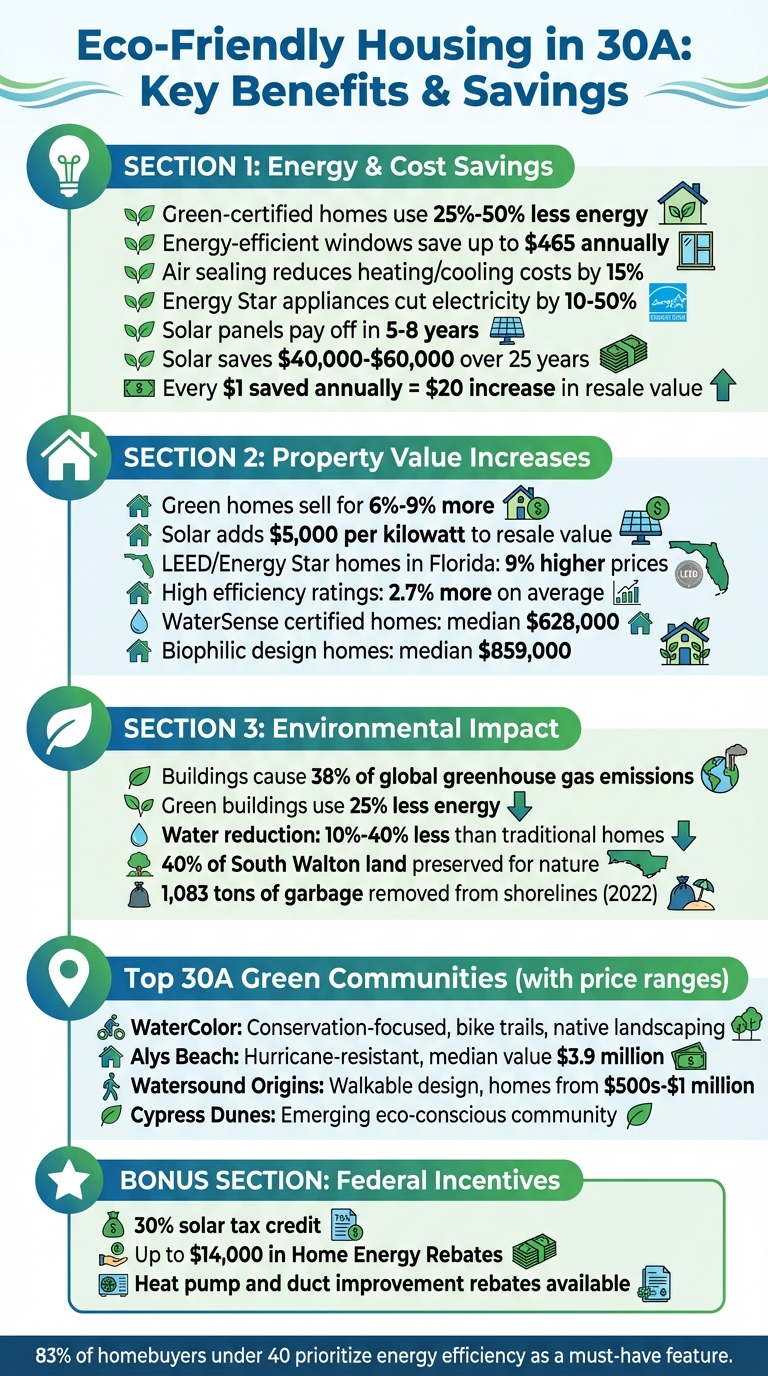
- Energy Savings: Green-certified homes use 25%-50% less energy, cutting utility bills significantly. Solar panels can pay off in 5-8 years and add $5,000 per kilowatt to resale value.
- Durable Materials: Coastal homes use salt-resistant materials like fiber cement siding and metal roofing to withstand Florida's climate.
- Water Conservation: Low-flow fixtures, rainwater systems, and native plants protect rare dune lakes while reducing water use by 10%-40%.
- Resilient Design: Hurricane-proof features like impact-resistant windows and elevated foundations ensure long-lasting homes.
Top Communities in 30A:
- WaterColor: Prioritizes conservation with bike trails and native landscaping.
- Alys Beach: Known for hurricane-resistant homes and energy-efficient designs.
- Watersound Origins: Offers walkable layouts and eco-friendly homes at varied price points.
Why It Matters: Green homes not only lower costs but also appeal to buyers, with properties selling for 6%-9% more. These homes align with 30A's focus on preserving its natural charm while meeting modern needs.
Eco-Friendly Housing Benefits and Cost Savings in 30A Florida
Tour A Florida Sustainable Waterfront Living New Construction Home That Survived Hurricane Milton!
Key Design Trends in Green 30A Homes
Eco-conscious design in 30A has moved far beyond basic additions like solar panels. Today’s green homes seamlessly combine cutting-edge technology and durable materials with the breezy aesthetic of coastal living. These homes are designed not just to look good but to endure the challenges of the coastal environment, offering lower utility bills and boosting property values. Building on these core principles, current trends focus on refining energy efficiency, material durability, and landscaping approaches.
Energy Efficiency and Renewable Energy
Modern 30A green homes prioritize HVAC systems rated SEER 16+ with advanced humidity control, tailored to the region's coastal climate. These systems pair effectively with spray foam insulation and Insulated Concrete Forms (ICFs), sealing every gap to slash cooling costs. Impact-resistant windows with Low-E coatings provide dual benefits: hurricane protection and reduced solar heat gain.
Smart technology, like Ecobee thermostats, allows homeowners to manage climate control remotely, ensuring energy efficiency and comfort. Solar panels, often paired with battery storage, are becoming a staple for their ability to provide power during outages, a critical feature in storm-prone areas. Passive solar design is also gaining traction, with architects orienting homes to maximize natural light and ventilation while using large overhangs to shield walls from the intense sun.
Green Building Materials
In the coastal environment of 30A, materials must resist salt air, high humidity, and UV exposure. Fiber cement siding and metal roofing have become popular choices, offering durability against rot, pests, and the elements while reflecting heat. As Grahame Family 30A Custom Home Builders notes:
"Salt air, moisture, and the sun's UV will cause significant damage to building materials not suited for the coastal climate." – Grahame Family 30A Custom Home Builders
Inside the home, reclaimed wood, bamboo flooring, and recycled glass countertops bring a touch of style while reducing environmental impact. Low-VOC paints and finishes further enhance indoor air quality, a key consideration for sealed, climate-controlled spaces. Smart glass technology, which blocks up to 90% of solar radiation, is becoming a popular feature in high-end builds, cutting cooling needs while maintaining natural light. These durable materials not only stand up to the elements but also reduce the need for frequent repairs or replacements.
Exterior design trends are also leaning toward harmony with the local environment.
Eco-Friendly Landscaping
Landscaping in 30A has shifted away from traditional, water-intensive lawns toward native plants that thrive in sandy, salty soils. Salt-tolerant grasses, wildflowers, and shrubs require less irrigation and fewer chemical treatments, helping protect local waterways. Features like bioswales and rain gardens are becoming popular for managing Florida’s heavy rainfall on-site, reducing harmful runoff.
Thoughtful design ensures these landscapes remain visually appealing. For instance, narrow strips of neatly mown turf along plant beds or stone walkways create a polished look. Hardscape elements like arbors and stone walls frame native plantings, blending them seamlessly into the overall design. As Gail Hansen, Associate Professor at the University of Florida, puts it:
"A sustainable yard can be lushly planted, attractive, and undemanding."
Water conservation is also a priority. Rainwater catchment systems and smart irrigation controllers help minimize water use, while strategically placed shade and deciduous trees can reduce cooling costs significantly. Wellness-focused outdoor spaces, such as meditation gardens and water features, are also becoming staples, combining sustainability with the serene coastal lifestyle.
Top Eco-Friendly Communities on 30A
Some neighborhoods along 30A have taken sustainability to heart, weaving it into every aspect of their design and lifestyle. These communities don’t just add environmentally friendly features - they create entire ecosystems that prioritize conservation, durable building practices, and walkable designs.
Here’s a closer look at three communities that stand out for their commitment to sustainable living.
WaterColor: Where Nature and Design Coexist
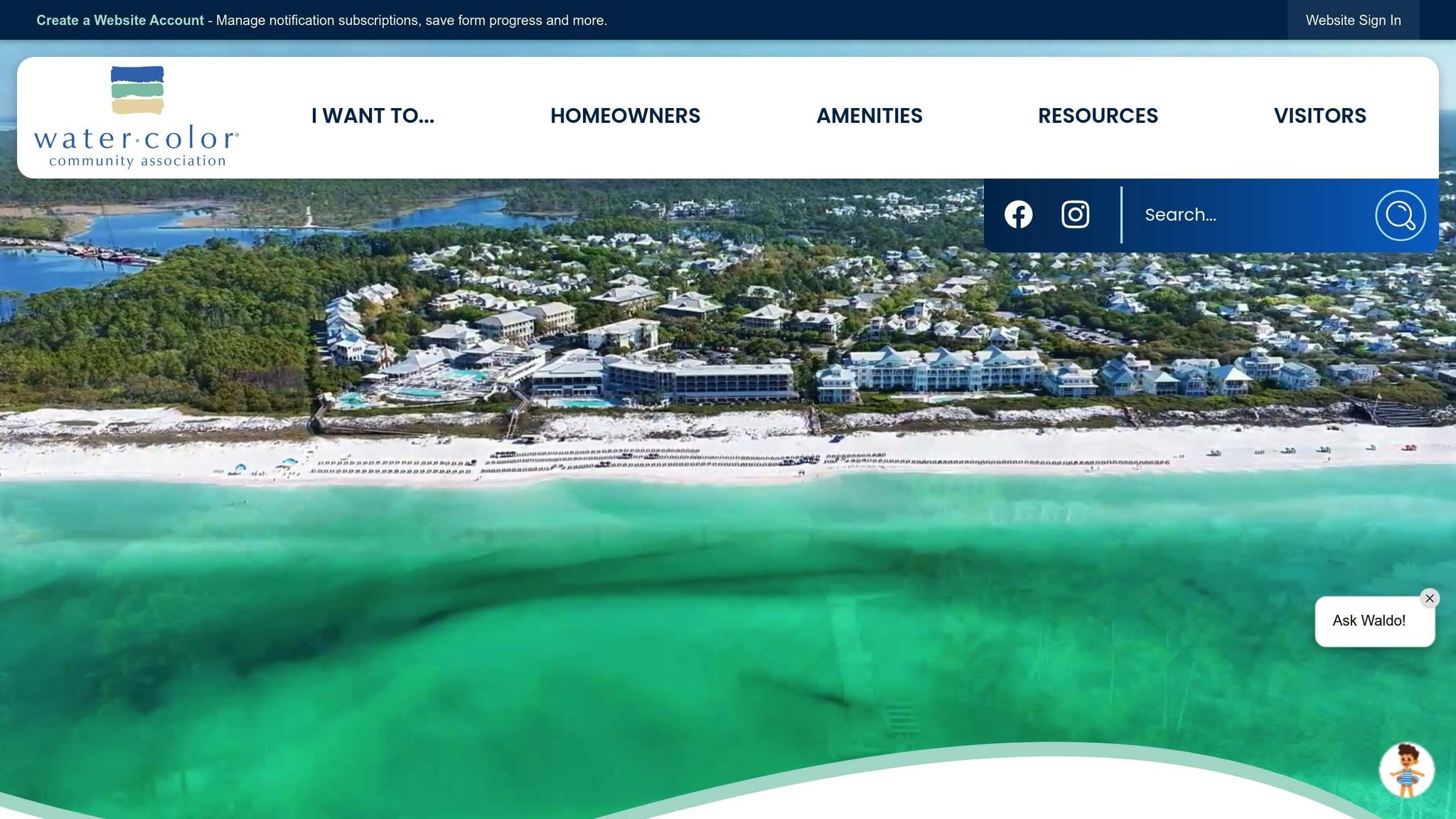
WaterColor is a master-planned community that prioritizes preserving its natural surroundings, dedicating nearly half of its land to open space and conservation efforts. Nestled around Western Lake - a rare coastal dune lake - the area features bike paths and pebbled trails that let residents explore without disturbing the local ecosystem. The use of native plants throughout the community minimizes water usage and reduces the need for chemical treatments, which helps protect nearby waterways.
The neighborhood’s Southern coastal-style homes, with their wood siding and wraparound porches, blend seamlessly into the environment. WaterColor’s walkable layout makes it especially appealing to retirees who appreciate easy access to essential services and daily conveniences. This thoughtful design reflects the larger goal of balancing development with nature.
Alys Beach: A Benchmark for Green Building
Alys Beach has set a high standard for green architecture, becoming the first Florida community to mandate FGBC green certification. Designed to meet the "FORTIFIED for Safer Living" standard, it was built to withstand hurricanes with winds over 160 mph, as seen during Hurricane Michael in 2018, when the community suffered minimal structural damage. Reinforced masonry, impact-resistant windows, and elevated foundations are just a few of the features that provide this resilience.
The community's design also addresses energy efficiency and stormwater management. White stucco walls and white-tile roofs reflect heat, helping to lower cooling costs and mitigate the urban heat island effect. Permeable cobblestone streets allow rainwater to naturally filter into the soil, reducing runoff. A 20-acre nature preserve, complete with an 1,800-foot elevated boardwalk, protects wetlands and dune lake biodiversity while offering residents a way to connect with the outdoors.
Marieanne Khoury-Vogt, the town architect, highlights the community's natural elevation as a key advantage:
"We're lucky here that we have a natural elevation that's about 30 feet above the water, so we're relatively inoculated against floods".
Alys Beach also embraces a New Urbanist design, with a compact layout that significantly reduces car usage. Residents typically drive just 6 to 8 times per week, compared to the daily trips common in conventional neighborhoods. As Galina Tachieva, Managing Partner at DPZ, explains:
"The compactness of these communities is the number one condition for being environmentally responsible, because then you can leave nature alone".
Homes in Alys Beach reflect this premium on sustainability and resilience, with median values reaching $3.9 million as of 2025. This community’s forward-thinking approach sets a strong example for newer developments like Watersound Origins.
Watersound Origins: A New Standard for Green Living
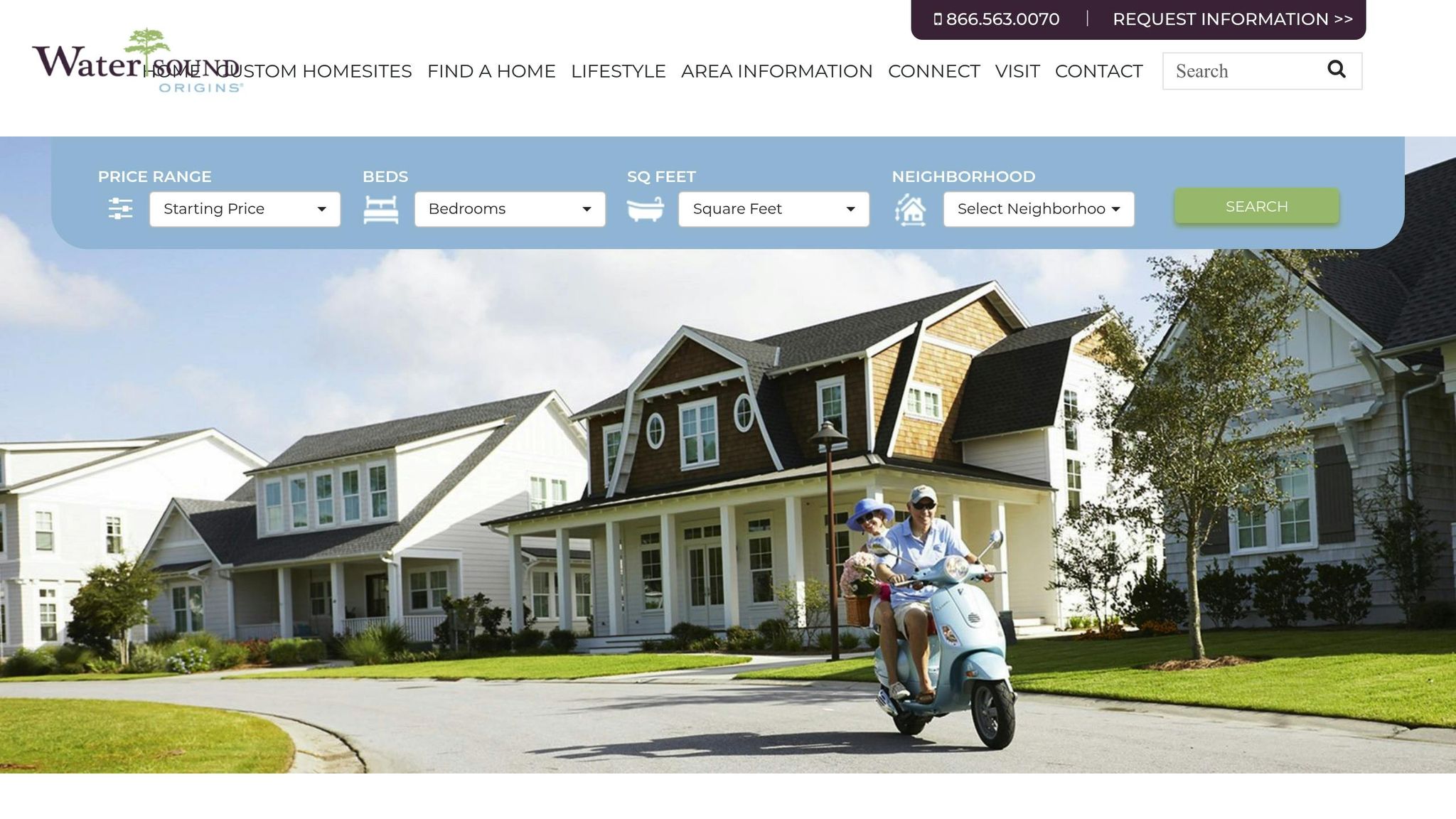
Watersound Origins, particularly its NatureWalk neighborhood, is a newer addition to 30A’s eco-friendly communities. It builds on the principles established by WaterColor and Alys Beach, focusing on integrating residential spaces with the natural environment. Flexible floorplans emphasize outdoor living, while proximity to Lake Powell enhances the connection to nature.
The community is designed to reduce car dependency, featuring walkable streets, golf cart paths, and a central Town Center for easy access to amenities. Homes range from the $500s to $1 million, making sustainable living more attainable in a master-planned setting.
With native landscaping and an extensive trail system, Watersound Origins ensures residents can enjoy the surrounding environment while maintaining its integrity. Although it’s a newer development, it exemplifies how sustainability is becoming the norm along 30A.
Local Builders Specializing in Green Construction
Finding the right builder is crucial when creating an eco-friendly home in the 30A area. Several local companies stand out for their expertise in sustainable construction, each offering unique approaches to environmentally conscious building.
Cole Construction and Development focuses on crafting luxury homes along the Highway 30A corridor and Santa Rosa Beach, with a commitment to incorporating eco-friendly practices. As they explain:
"Incorporating eco-friendly options into the homes we build, helps us to build homes that better the environment".
BetterBuilt of Northwest Florida, serving 30A and Grayton Beach, has earned accolades such as the 2025 Parade of Homes award for their use of high-quality materials and craftsmanship. For a more advanced approach to green building, Loxley Hawk Environmental Construction and Consulting specializes in high-performance homes throughout Northwest Florida. Their expertise includes integrating Structural Insulated Panels (SIPs) and solar energy systems.
These builders often pursue certifications like LEED for Homes, ENERGY STAR, and the U.S. Department of Energy's Zero Energy Ready Home designation. For instance, ENERGY STAR certification requires a home to score 75 or higher, outperforming 75% of similar buildings nationwide. LEED-certified homes are known for higher property values and lower operating costs. A standout example is Loxley Hawk’s Rex Residence project in East Pensacola Heights, which achieved a HERS rating of 58 - making it 42% more energy-efficient than standard building codes require. These certifications ensure that homes meet the strict demands of the 30A coastal environment.
Comparing Builders by Green Features
Here’s a quick look at the green certification features many local builders aim for:
| Feature | LEED | ENERGY STAR | Passive House |
|---|---|---|---|
| Primary Focus | Holistic environmental impact (water, energy, materials) | Energy efficiency and performance | Extreme energy efficiency through insulation and airtightness |
| Performance Threshold | Points-based system (40-80+ points) | At least 15% more efficient than code | Rigorous energy modeling and testing |
| Verification Method | Documentation review by GBCI | On-site verification by approved professionals | Performance testing and continuous monitoring |
When evaluating builders, check if they work with licensed professionals like Professional Engineers or Registered Architects to validate energy data for certifications. Certification costs can vary widely: LEED certification typically ranges from $15,000 to $50,000, while WELL Certification can cost between $10,000 and over $100,000 due to its intensive testing requirements.
Choosing the Right Builder for Your Needs
Selecting the right builder starts with identifying your priorities. If energy efficiency tops your list, seek builders experienced in ENERGY STAR or Passive House standards. For those focused on health-related features like air quality and natural light, look for builders familiar with WELL certification.
Ask about their experience with coastal construction. The 30A area presents unique challenges, such as salt air, high humidity, and intense UV exposure, which require durable materials. Request examples of homes with specific HERS ratings and third-party energy performance verification - reliable builders are transparent about these details.
Finally, consider the long-term savings. While green certifications may increase upfront costs, they often lead to lower maintenance and utility bills over time. Additionally, green-certified homes tend to have higher resale values. Partner with builders who emphasize "Sustainable Sites" practices to reduce the impact on 30A’s fragile coastal ecosystems. This approach aligns with the area’s vision of creating homes that balance comfort with environmental responsibility.
sbb-itb-d06eda6
Benefits of Eco-Friendly Housing and Real Estate Trends
As highlighted by 30A's approach to green design, eco-friendly housing combines cost efficiency with a commitment to protecting the environment.
Cost Savings and Lower Impact on the Environment
Eco-friendly homes offer both financial and environmental perks. For example, energy-efficient windows can save homeowners up to $465 annually, while proper air sealing reduces heating and cooling costs by about 15%. Using Energy Star appliances can cut electricity usage by 10–50%, translating into significant yearly savings.
There’s also a direct connection between energy savings and home value. For every $1 saved annually on energy bills, a home’s resale value can increase by $20. Solar power installations take this further, boosting resale value by $5,000 per kilowatt (kW) installed. Federal incentives sweeten the deal, offering a 30% solar tax credit and up to $14,000 in Home Energy Rebates for upgrades like heat pumps and duct improvements.
Beyond personal savings, green homes help reduce the broader environmental footprint. Buildings are responsible for about 38% of global greenhouse gas emissions, but green-certified buildings consume 25% less energy and use 10–40% less water than traditional ones. In coastal areas like 30A, sustainable features such as native landscaping and smart irrigation protect the fragile dune ecosystem while requiring less upkeep. Additionally, low-VOC paints and natural materials enhance indoor air quality, creating healthier living spaces for families.
These advantages are driving a growing preference among buyers for homes with eco-friendly features.
Growing Demand for Green Homes
The financial and environmental benefits of green homes are fueling a surge in demand for sustainable properties. In the 30A real estate market, buyer priorities have shifted significantly. Sustainability is no longer a niche interest - it’s now a “design imperative”, according to industry experts. Features like WaterSense fixtures have seen mentions in listings increase by 289.6%, while Net-Zero Ready homes experienced a 198% year-over-year rise. EV charging stations and biophilic design elements have also seen notable upticks, with mentions rising by 175% and 163%, respectively.
These trends are directly influencing property values. Homes with WaterSense certifications are listed at a median price of around $628,000, while properties featuring biophilic designs command about $859,000. Additionally, homes with high energy-efficiency ratings sell for an average of 2.7% more than those without such upgrades. In markets like Florida, green-labeled homes (e.g., LEED or Energy Star) fetch prices 9% higher than standard homes.
As Anthony Smith, Senior Economist at Realtor.com, notes:
"Buyers increasingly view eco-friendly upgrades as both a lifestyle choice and a smart financial investment - especially as energy costs and climate concerns become part of everyday decision-making".
The luxury housing market is a strong example of this shift. In Q4 2025, Alys Beach, known for its sustainable architecture, reported an average sales price of approximately $9.04 million, while the emerging eco-focused community of Watersound Origins averaged $1.27 million. Moreover, 82% of homebuyers now consider heating and cooling costs a critical factor when choosing a home, making energy-efficient features more important than ever. The 30A market’s annual appreciation rate of 6–8% is further boosted by green certifications, which enhance a home’s appeal to environmentally conscious buyers.
Community Programs Supporting Green Living
The 30A community takes eco-friendly living seriously, extending efforts beyond individual homes to a network of conservation programs and volunteer-driven initiatives. Local organizations work tirelessly to protect the area's natural ecosystems while teaching both residents and visitors how to adopt sustainable practices.
Local Conservation Efforts
Several nonprofit groups are leading the charge to preserve South Walton's unique coastal environment:
- South Walton Turtle Watch focuses on protecting sea turtle nests during nesting season (May 1–October 31). They promote the #CleanDarkFlat initiative, urging beachfront residents to use red or amber lights at night, remove personal items from the beach daily, and fill in sand holes to ensure safe habitats for nesting turtles.
- Trees on the Coast works to expand the native tree canopy along the 30A corridor. One of their key projects involves planting 87 Sand Live Oaks between bike paths and Scenic Highway 30A. These trees help with erosion control, improve drainage, and naturally regulate temperatures. The group also runs an "Honor Tree" program, allowing residents to donate trees in memory of loved ones while supporting reforestation. Additionally, Trees on the Coast provides educational workshops for schools and businesses on native tree care and planting techniques.
- Scenic Walton focuses on sustainable infrastructure improvements, such as undergrounding overhead utilities and enhancing pedestrian and cycling facilities. The organization emphasizes the dual benefits of these efforts, stating:
Beauty is good for business. These steps enhance environmental and economic progress, including tourism, while promoting better health outcomes and a higher quality of life.
Residents can contribute by purchasing a Scenic Walton specialty license plate, with proceeds funding landscaping projects and utility undergrounding.
- Keep Walton County Beautiful, an affiliate of Keep America Beautiful, oversees recycling, waste reduction, and litter prevention programs. These efforts are supported by funding from the Walton County Tourism Department.
These initiatives form the backbone of community events that encourage sustainable living.
Green Living Events and Workshops
Community events complement these conservation efforts, engaging residents in hands-on sustainable practices.
The Friends of South Walton Sea Turtles hosts the annual International Coastal Cleanup Day at five major beach access points: Inlet Beach, Santa Clara, Ed Walline, Dune Allen, and Miramar Beach. Volunteers use the Clean Swell App to log debris data, which contributes to the Ocean Conservancy's global database for marine debris research. Christina Cabral, a representative from the organization, shares:
We are always in recruitment mode for new Volunteer Beach Ambassadors. Interested individuals can reach out anytime.
Residents can also join the Volunteer Beach Ambassador Program year-round by applying through friendsofswturtles.org.
Together, these programs highlight 30A's dedication to sustainable living while preserving the natural beauty that defines the area. With 40% of Walton County's land set aside for nature and over 1,083 tons of garbage removed from shorelines in 2022, the region serves as a shining example of how organized conservation efforts can support eco-friendly living.
Conclusion: Building a Green Future in 30A
The 30A corridor stands out as a model for sustainable living in the United States. With 40% of South Walton's land preserved permanently for nature and a community dedicated to conservation, it offers a glimpse into how coastal living and environmental responsibility can go hand in hand.
Investing in an eco-friendly home here isn't just good for the planet - it makes financial sense too. Green-certified homes tend to sell for 6% to 9% more than traditional properties and cut operating costs by approximately 17% over five years. Solar installations, in particular, add significant value, increasing a home's market price by about $5,000 per kilowatt installed. These systems typically pay for themselves within 5 to 8 years and can save homeowners $40,000 to $60,000 on electricity costs over 25 years. Beyond the financial benefits, features like these also contribute to healthier living and a more resilient home.
For example, using low-VOC paints and natural materials can improve indoor air quality, creating safer spaces for families. Meanwhile, hurricane-resistant construction ensures homes are built to last, even in the face of challenging coastal weather.
Communities such as WaterColor, Alys Beach, and Cypress Dunes embody the sustainable ethos of 30A. Cypress Dunes, in particular, is emerging as a hub for eco-conscious living, offering new options for those seeking a balance between style and sustainability. Whether you're building from scratch or retrofitting an existing home with solar panels, high-efficiency HVAC systems, or better insulation, there are countless ways to reduce your environmental impact.
30A has shown that luxury and sustainability can thrive together. With 83% of homebuyers under 40 prioritizing energy efficiency as a must-have feature, this is the perfect time to invest in a home that aligns with both your values and your financial goals - all while protecting the stunning coastal environment that makes this area so unique.
FAQs
What are the most affordable eco-friendly home upgrades in 30A?
If you're looking to make your home in the 30A area more eco-friendly without spending a fortune, there are plenty of budget-conscious options to consider. A simple yet effective first step is switching to LED light bulbs. They use less electricity and can noticeably lower your energy bills over time.
Another easy upgrade is sealing gaps around windows and doors. This prevents drafts, keeps your home more comfortable, and reduces energy waste. Adding insulation and installing programmable thermostats are also cost-effective ways to improve energy efficiency.
Don’t overlook your HVAC system. Regular maintenance helps it run efficiently, and when it’s time for an upgrade, choosing an energy-efficient model is a smart move. While solar panels might seem like a big expense upfront, their long-term savings are hard to ignore - especially in a sunny area like 30A.
These straightforward changes allow homeowners to embrace sustainable living while keeping costs manageable.
Do green-certified homes increase resale value in 30A?
Absolutely, green-certified homes often fetch higher resale values in the 30A area. Homes equipped with eco-friendly features - like energy-efficient windows, solar panels, or hurricane-resistant designs - tend to sell for more money and often quicker than similar properties without these upgrades. Research indicates that these homes can command a price premium ranging from 2% to 8% and may move off the market faster, reflecting the increasing demand for sustainable living options.
In the 30A region, where the natural environment and climate resilience are top priorities, eco-friendly upgrades do more than just lower utility bills. They attract buyers who value environmentally conscious living. Adding green certifications or sustainable features to your property could be an excellent strategy to boost its market value in this sought-after coastal area.
Who are the top builders for eco-friendly homes in the 30A area?
The 30A area is home to several builders who excel at creating homes with a focus on sustainability and high-quality craftsmanship. Among them, BetterBuilt of Northwest Florida stands out for their luxurious homes along Scenic Highway 30A. They frequently use environmentally friendly materials and building practices to deliver both style and sustainability.
Cole Construction Company is another top choice, offering sustainable building options that help homeowners design energy-efficient and environmentally conscious living spaces. Their work ensures a balance between functionality and environmental responsibility.
For those seeking custom home solutions, Walton Home Solutions provides tailored designs with a strong emphasis on green construction methods. Their commitment to quality and eco-conscious building makes them a reliable option in the area.
Finally, Envision Builders Group has earned recognition for their custom residential projects, which seamlessly incorporate sustainable practices into their designs. Whether you're starting from scratch or looking to renovate, these builders offer excellent options for crafting an eco-friendly home in the 30A region.