South Walton, Florida, is a prime birdwatching destination, attracting over 200 bird species annually due to its location along two migratory flyways. This area features diverse habitats, including sugar-white Gulf beaches, globally rare coastal dune lakes, and expansive forests like Point Washington State Forest. With 40% of its land protected, it offers a sanctuary for birds and a haven for enthusiasts.
Key Highlights:
- Top Birding Spots: Gulf beaches (Inlet Beach, Deer Lake State Park), coastal dune lakes, and state parks like Grayton Beach and Topsail Hill Preserve.
- Notable Birds: Bald Eagles, Ospreys, Snowy Plovers, Prothonotary Warblers, and Red-Cockaded Woodpeckers.
- Best Times to Visit: Fall (September–November) for peak migration and spring (March–May) for breeding activity.
- Tips: Visit early mornings or evenings, bring binoculars, and respect nesting zones.
Whether you're spotting shorebirds on tranquil beaches or warblers in lush forests, South Walton offers an extraordinary birding experience. Visit sowal.co for maps and more details.
Best Birdwatching Spots in South Walton
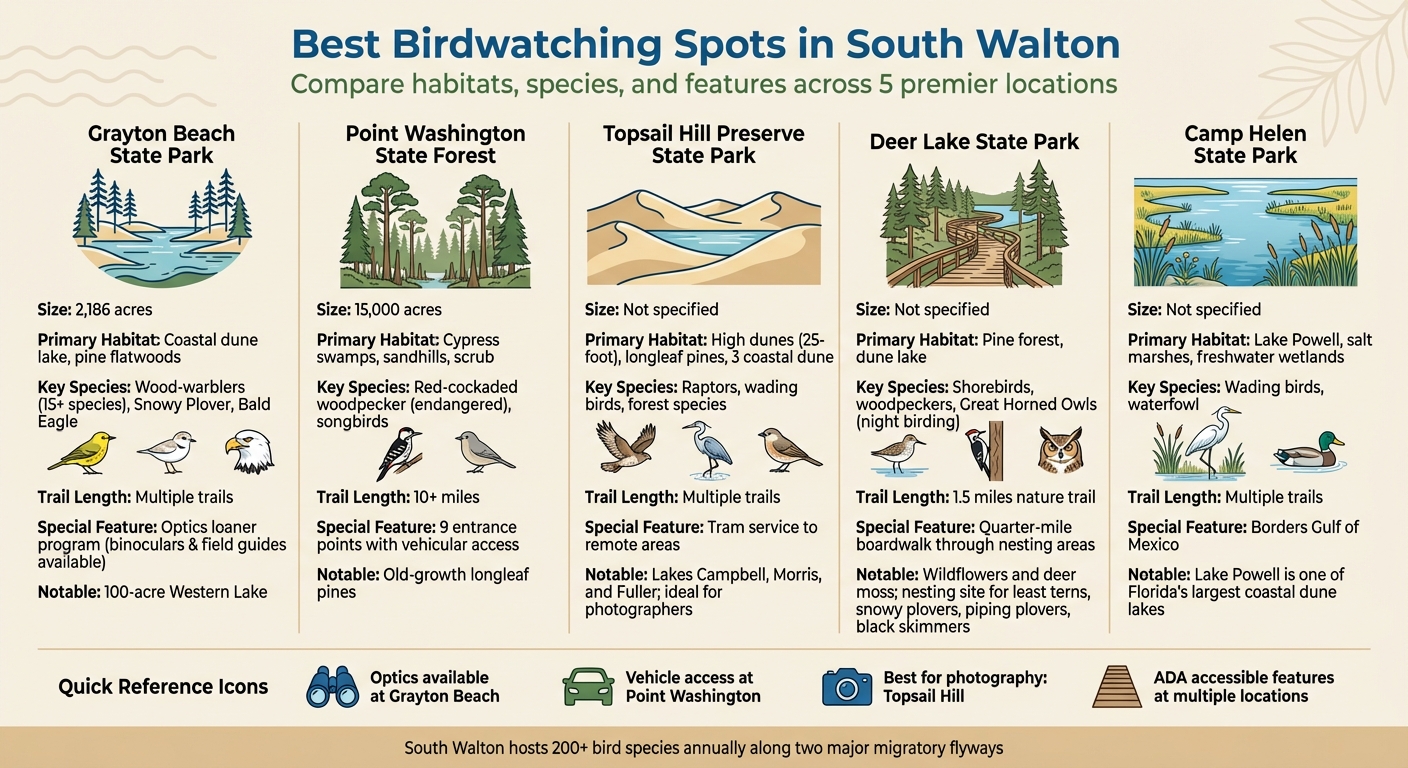
Top Birdwatching Locations in South Walton: Habitat Guide and Key Species
South Walton is a haven for bird enthusiasts, offering diverse habitats that cater to casual birdwatchers and seasoned ornithologists alike. From pristine beaches to rare dune lakes and expansive forests, each location promises unique species and experiences.
Gulf Beaches and Shoreline
The sugar-white sands of South Walton's beaches are a year-round sanctuary for shorebirds and seabirds. At quieter spots like Inlet Beach, you’ll often spot Semipalmated Plovers, while Laughing Gulls are a common sight in busier areas like Sandestin. Deer Lake State Park, with its quarter-mile boardwalk, offers a front-row seat to nesting areas for least terns, snowy plovers, piping plovers, and black skimmers during the nesting season.
For convenient birdwatching, regional beach accesses such as Ed Walline, Santa Clara, and Blue Mountain Beach provide amenities like paved parking, restrooms, and ADA-accessible features, including beach wheelchairs. Ospreys are a frequent highlight along the shoreline. Walt Spence of the Choctawhatchee Audubon Society shares, "The most entertainment I get from any bird here is from the Ospreys. They're fascinating to watch hunt. They circle overhead until they find something; and then they dive."
If you’re looking for a vantage point to observe water birds on Choctawhatchee Bay without needing a boat, Thomas Pilcher Park is an excellent choice. Beyond the beaches, South Walton’s inland wetlands and dune lakes reveal a vibrant and contrasting birding environment. To help organize your visit, you can use a South Walton itinerary generator to plan your stops.
Coastal Dune Lakes and Wetlands
South Walton is home to 15 rare coastal dune lakes, a natural wonder found in only a few places around the globe. These freshwater lakes occasionally connect to the Gulf, creating temporary estuaries that attract wading birds like little blue herons, reddish egrets, and white ibis. During summer, Bald Eagles are often seen near these waters as they gather for breeding.
Grayton Beach State Park, sprawling across 2,186 acres around the 100-acre Western Lake, offers a mix of habitats, from pine flatwoods to sand live oak canopies. Birders can encounter at least 15 species of wood-warblers here, along with Snowy Plovers and Northern Gannets. Visitors can borrow binoculars and field guides from the park's ranger station. Nearby, Camp Helen State Park, bordered by the Gulf and Lake Powell (one of Florida’s largest coastal dune lakes), boasts salt marshes and freshwater wetlands that support a wide range of bird species. As you move away from these water-rich habitats, South Walton’s state parks and forests present even more terrain and wildlife diversity.
State Parks and Forests
Point Washington State Forest is a must-visit for forest birding. This sprawling 15,000-acre preserve features over 10 miles of trails that wind through cypress swamps, sandhills, and scrub habitats. It’s one of the few places where you might spot the endangered red-cockaded woodpecker alongside a variety of songbirds thriving in the old-growth longleaf pines.
Topsail Hill Preserve State Park combines stunning landscapes with excellent birding opportunities. Its towering 25-foot dunes overlook three coastal dune lakes - Campbell, Morris, and Fuller - making it a favorite for bird photographers. A tram service conveniently transports visitors to remote beach and lake areas, making it easier to carry gear like spotting scopes and cameras. Deer Lake State Park offers a 1.5-mile nature trail that winds through pine forests adorned with wildflowers and deer moss. For night birding, the wooded areas of Deer Lake and Grayton Beach State Parks are perfect for hearing the haunting calls of Great Horned Owls after sunset.
| Location | Primary Habitat | Key Species | Trail Length | Special Features |
|---|---|---|---|---|
| Grayton Beach State Park | Coastal dune lake, pine flatwoods | Wood-warblers, Snowy Plover, Bald Eagle | Multiple trails | Optics loaner |
| Point Washington State Forest | Cypress swamps, sandhills | Red-cockaded woodpecker, songbirds | 10+ miles | 9 entrance points; vehicular access |
| Topsail Hill Preserve State Park | High dunes, longleaf pines, 3 lakes | Raptors, wading birds, forest species | Multiple trails | Tram service to remote areas |
| Deer Lake State Park | Pine forest, dune lake | Shorebirds, woodpeckers | 1.5 miles | Boardwalk through nesting areas |
| Camp Helen State Park | Lake Powell, salt marshes | Wading birds, waterfowl | Multiple trails | Borders Gulf; features Lake Powell |
sbb-itb-d06eda6
Common Bird Species in South Walton
South Walton’s unique location along two major flyways makes it a haven for bird enthusiasts, attracting over 200 bird species. Knowing what to look for can help you spot the region’s most notable residents and seasonal visitors. From shorebirds to raptors to songbirds, the area’s avian diversity is truly impressive.
Shorebirds and Seabirds
The Gulf beaches in South Walton are home to an array of shorebirds throughout the year, each with distinct features. Take Semipalmated Plovers, for example. These small birds are easy to identify by their single black neckband and seashell-brown feathers, a key difference from the similar-looking Killdeer, which sport two neckbands. You’ll often find them darting across the sand at Inlet Beach, their sharp whistles cutting through the sound of the waves. Sanderlings, measuring about 6 inches, are another common sight, scurrying along the shoreline on their black legs. Willets, larger at 15 inches, are gray with long legs and bills, often seen alone or in small groups.
Among the year-round residents are Laughing Gulls, known for their black heads, red bills, and unmistakable calls that sound like laughter. Terns, sleeker than gulls, are expert divers with forked tails and sharp beaks. You can distinguish species by their bills: the Royal Tern has an orange bill, the Caspian Tern a blood-red one, and the Least Tern a yellow bill with a black cap. Another standout is the Black Skimmer, with its lower bill extending beyond the upper - ideal for skimming the water’s surface, especially during sunset. Brown Pelicans are hard to miss as they dive headfirst into the Gulf, while American Oystercatchers use their striking reddish-orange bills to pry open shells.
If you’re near the dune lakes, keep an eye out for white wading birds. Snowy Egrets are easily identified by their black legs and bright yellow feet, often referred to as “golden slippers.” In contrast, Great Egrets have entirely black legs and feet. Interestingly, Sanderlings, which breed in the high Arctic, are seasonal visitors to South Walton, commonly seen from fall through spring.
Birds of Prey
South Walton’s skies are dominated by majestic raptors. Ospreys are particularly noticeable along the coastline, scanning the waters for fish. Occasionally, they catch fish so large they have to drag them to shore rather than take flight with their catch.
Bald Eagles are another highlight, especially near the coastal dune lakes during the summer breeding season. Florida boasts the third-largest Bald Eagle breeding population in the U.S., so sightings are relatively frequent. Henderson Beach State Park is a prime spot for eagle watching, along with other hawk species. For those interested in nocturnal raptors, Great Horned Owls can be found in the wooded areas of Deer Lake and Grayton Beach State Parks. Their haunting calls are most often heard at twilight, echoing through the pines.
"Fall is one of the best times to see migrating birds. The birds ride down with the cold front as it moves through."
This migration pattern reverses in the spring, typically between March and May, as birds head north through the Florida Panhandle. Beyond raptors, South Walton’s forests and wetlands come alive with the songs of migratory songbirds.
Forest and Wetland Songbirds
The cypress swamps and wetlands surrounding South Walton’s coastal dune lakes are a magnet for colorful songbirds during spring and fall migrations. Among them, the Prothonotary Warbler stands out with its bright yellow feathers and melodic, rhythmic calls. These birds are frequently spotted along the Alys Beach Nature Trail and the Cassine Trail in Seagrove.
Painted Buntings, with their vibrant, multicolored plumage, prefer shrubby and grassy areas. Meanwhile, Red-Headed Woodpeckers make their presence known with short, shrill calls and the rhythmic tapping of their beaks on trees. These striking woodpeckers feature bright red heads, white chests, and dark gray wings. For those seeking rarer sightings, the endangered Red-Cockaded Woodpecker can be found exclusively in the longleaf pine forests of Point Washington State Forest and Nokuse Plantation. These areas are vital for spotting this elusive species.
If you’re hoping to see migratory songbirds, early morning visits during the fall offer the best opportunities as the birds pass through South Walton’s dual flyways.
Planning Your Birdwatching Trip
Best Seasons and Migration Periods
South Walton's blend of coastal and forest landscapes makes it a birdwatcher's haven throughout the year. Thanks to its location between the Northern and Western flyways, the area offers incredible birding opportunities, but timing your visit can elevate your experience. Fall migration (September–November) is the highlight of the birdwatching calendar. During this time, cold fronts spark large-scale migrations, offering the chance to observe an impressive variety of species. For example, over 100 peregrine falcons can be spotted along Florida's coastal corridors during peak migration.
Spring migration (March–May) flips the script, with northbound songbirds making their way through the region and breeding activity in full swing. Winter (December–February) draws waterfowl, loons, and grebes escaping the chill of northern climates, while summer (June–August) showcases resident species like Bald Eagles during their breeding season. By late July, shorebirds from the Arctic Tundra also start arriving. To make the most of your trip, plan around these seasonal highlights and keep in mind the time of day and weather conditions.
Best Times of Day and Weather Conditions
Timing your outings can make all the difference. Early fall mornings are ideal for observing migratory birds at sunrise, while evenings are perfect for spotting nocturnal raptors like Great Horned Owls in spots such as Deer Lake and Grayton Beach State Parks. Cold fronts are a key factor during fall migration, so keeping an eye on weather forecasts can help you catch peak activity.
October is particularly appealing, with temperatures ranging from the 70s to 80s, low humidity, and fewer insects to contend with. Onshore breezes during this time also help keep beaches free of biting dog flies that tend to appear with north winds. However, summer comes with its challenges, including high humidity and frequent afternoon thunderstorms, which can disrupt your plans.
Gear and Access Information
Having the right gear and knowing where to go are essential for a successful birdwatching trip. For South Walton's mix of coastal dunes and forested areas, a good pair of binoculars and a birding field guide - whether in print or a digital option like the Merlin app - are must-haves. A binocular harness can distribute weight more comfortably during long hikes, while an all-weather notebook is great for jotting down observations. If photography is your thing, lightweight telephoto lens kits and compact tripods can help you capture stunning shots without the hassle of bulky DSLR equipment.
Be sure to stop by the South Walton Visitor Center at the intersection of U.S. Highways 331 and 98 to grab the "Birding in South Walton Guide", which provides detailed information about local hotspots. Some locations require extra planning: for example, the Okaloosa Compost Center requires visitors to check in at a weigh station, and gated preserves like Coffeen Nature Preserve (call 850-622-3700) need advance notice for access. If you're heading to holding ponds or off-road areas, be cautious and park only on paved surfaces to avoid getting stuck in the sand.
Bird Photography Tips
Camera and Lens Selection
Choosing the right gear is essential for capturing the diverse bird life in South Walton. Cameras with crop sensors, like APS-C and Micro Four Thirds models, are great for their extra reach and lighter weight - perfect for navigating rugged terrain. For instance, the Canon EOS R7, which scores 8.7/10 for wildlife photography, offers reliable bird-eye tracking autofocus, making it ideal for photographing fast-moving warblers or diving Ospreys.
When it comes to lenses, zoom options like 100–400mm or 150–600mm provide the flexibility you need without being overly cumbersome. A 100–400mm lens works well in forested areas where birds are closer, while a 150–600mm lens is better suited for capturing distant shorebirds or raptors near coastal dune lakes without disturbing them. The Nikon Z 180–600mm f/5.6–6.3, priced significantly lower than comparable prime lenses at around $1,900, offers excellent range without the extra weight - crucial for long birding sessions. For an all-in-one option, the Sony RX10 IV provides a 600mm equivalent reach and 24fps burst speed, eliminating the hassle of switching lenses on sandy beaches.
"Weight is a priority when it comes to birds in flight... imagine holding a 6 or 7lbs lens with a 4lb camera attached to it for nearly 3 hours straight."
– Jared Lloyd, PhotoWILD Magazine
Once your gear is sorted, focus on adapting your techniques to South Walton's unique lighting and landscapes.
Working with Coastal Light and Backgrounds
Having the right equipment is only part of the equation - understanding how to work with coastal light can take your bird photography to the next level. South Walton's landscapes offer stunning backdrops but also pose some lighting challenges. The sugar-white sand and turquoise waters of the Gulf create high-contrast settings, especially during the golden hour, which beautifully highlights shorebirds. Meanwhile, the tannin-rich, tea-colored water in the 15 coastal dune lakes provides a moody, dramatic background - particularly striking at lake outfalls where fresh and saltwater meet.
Timing matters. Early mornings and evenings not only provide the best light but also coincide with peak bird activity. For example, Black Skimmers become more active at sunset along the beach. In Point Washington State Forest, you can use different habitats to your advantage: the bright yellow Prothonotary Warbler stands out against the dark cypress swamps, while open sandhills create a more airy and light-filled composition. To capture action shots, position yourself by the water to photograph Ospreys diving into the Gulf - their dramatic splashes against the emerald waters make for unforgettable images.
"The most entertainment I get from any bird here is from the Ospreys... They're fascinating to watch hunt. They circle overhead until they find something; and then they dive."
– Walt Spence, Choctawhatchee Audubon Society
Ethical Photography Practices
Respecting wildlife and their habitats is crucial to ensuring South Walton's bird populations thrive for years to come. Always maintain a safe distance using long telephoto lenses to avoid disturbing nesting birds and fragile dune ecosystems. Many shorebirds, like terns, lay camouflaged eggs directly in the sand, so it’s important to steer clear of marked nesting zones. If you come across baby seabirds alone on the beach, resist the urge to approach - your presence could prevent the parents from returning with food.
Stick to established paths to protect the environment, and always follow local regulations. Before leaving, fill in any holes dug in the sand and properly dispose of any trash, especially fishing lines and plastics, to prevent harm to birds. If you encounter an injured bird, contact the Emerald Coast Wildlife Refuge at 650-1880 rather than attempting a rescue on your own.
"When you see signs warning that you are in a bird nesting area on the beach, be sure to stay clear, even if you don't see any birds at that moment."
– Lauren Tjaden, Writer
Conclusion
South Walton stands out as a birdwatching haven, thanks to its rich ecosystems and prime location nestled between two major migratory flyways. With more than 200 species calling this area home - whether year-round residents like ospreys or migratory birds arriving with seasonal cold fronts - it’s a destination that truly celebrates avian diversity.
"This is one of the most unique places in the country for bird watching, in terms of diversity. When you factor in the number of migratory birds we receive, it's well over 200 species."
– Walt Spence, Choctawhatchee Audubon Society
From photographing shorebirds on the pristine, sugar-white beaches to following warblers through the serene cypress swamps or spotting raptors near the dune lakes, South Walton offers something for every birding enthusiast. Fall migration is an especially exciting time, with peak bird activity filling the skies, while winter provides a quieter, more tranquil birding experience away from the crowds.
For more information on accessing these habitats and to stay updated on local birding opportunities, visit sowal.co.
FAQs
When is the best time to go birdwatching in South Walton?
The prime season for birdwatching in South Walton is the fall, spanning late September through November. As cooler temperatures sweep across the Gulf Coast, migratory birds make their way south, turning the region’s dunes, lakes, and coastal habitats into vibrant hubs of avian activity.
Winter, from December through February, also offers excellent birdwatching opportunities. During these months, many seabirds and waterfowl settle in the area, giving bird enthusiasts a chance to observe a variety of fascinating species.
To make the most of your visit, consider timing your trip during the fall migration and extending it into early winter. This way, you’ll catch the best of both worlds: the spectacle of migrating birds and the charm of South Walton’s winter residents.
What are the best practices for ethical birdwatching and photography in South Walton?
To enjoy birdwatching responsibly in South Walton, it’s important to respect the birds and their environment, especially during nesting season. Keep a safe distance - stay at least 300 feet (roughly the length of a football field) away from bird groups, and for more sensitive species like terns and skimmers, increase that distance to 600 feet. If you notice birds becoming restless or flying away, that’s a clear sign you’re too close. Step back and use binoculars or a spotting scope to observe them without causing stress. Also, steer clear of marked "no-access" zones, as these areas protect nesting sites from being disturbed by people, pets, or predators.
If you’re taking photos, opt for a telephoto lens so you can capture close-up shots without approaching the birds. Avoid using flash - it can startle them and disrupt their natural behavior. Be mindful of the surroundings by leaving things like shells or vegetation in place, as birds often use these for shelter or nesting. Always clean up after yourself and properly dispose of trash. If you’re bringing a dog along, make sure it’s leashed and follow any posted guidelines to keep the area safe for wildlife.
By reducing disturbances, you’re playing a part in preserving these fascinating species and their habitats, ensuring they can be appreciated by generations to come.
What unique bird species can you find in South Walton?
South Walton boasts an incredible variety of habitats, from coastal dunes and salt marshes to pine flatwoods and rare dune lakes. These rich environments provide a home for some truly eye-catching bird species. For instance, the Prothonotary Warbler, with its striking yellow feathers, is a standout, while the Red-Headed Woodpecker is often spotted in the open pine forests.
Down by the beaches and around the dune lakes, keep an eye out for the Piping Plover and Semipalmated Plover, two birds that thrive along the shoreline. Venture into the inland forests, and you might encounter the endangered Red-Cockaded Woodpecker or the secretive Swainson’s Warbler, which favors dense, swampy areas.
Rounding out the list are some other local favorites: the majestic Osprey, the graceful Brown Pelican, the elegant Roseate Spoonbill, and the vibrantly hued Painted Bunting. With such a diverse array of species, South Walton is a dream destination for birdwatchers.