The Eastern Lake Trails in Point Washington State Forest offer a mix of outdoor experiences perfect for hikers and cyclists. Located along Florida’s scenic 30A, this trail system spans over 27 miles, weaving through 10 ecosystems, including pine flatwoods, sandhills, and cypress swamps. You’ll find three loop options - Yellow (3.5 miles), Red (6 miles), and Orange (10.9 miles) - each providing varying levels of challenge. Highlights include views of Eastern Lake, wildlife like deer and woodpeckers, and unique features such as tannic streams and pitcher plants.
- Yellow Loop: Beginner-friendly, flat terrain, great for families.
- Red Loop: Moderate difficulty with sand patches and cypress domes.
- Orange Loop: The longest and most challenging, with primitive campsites and diverse landscapes.
Access costs $2 per person (kids under six free), with parking at the trailhead on County Highway 395. Visit during cooler months for a more comfortable experience, and always prepare with water, sunscreen, and bug spray. Whether you’re after a short stroll or an all-day trek, these trails cater to a variety of outdoor interests.
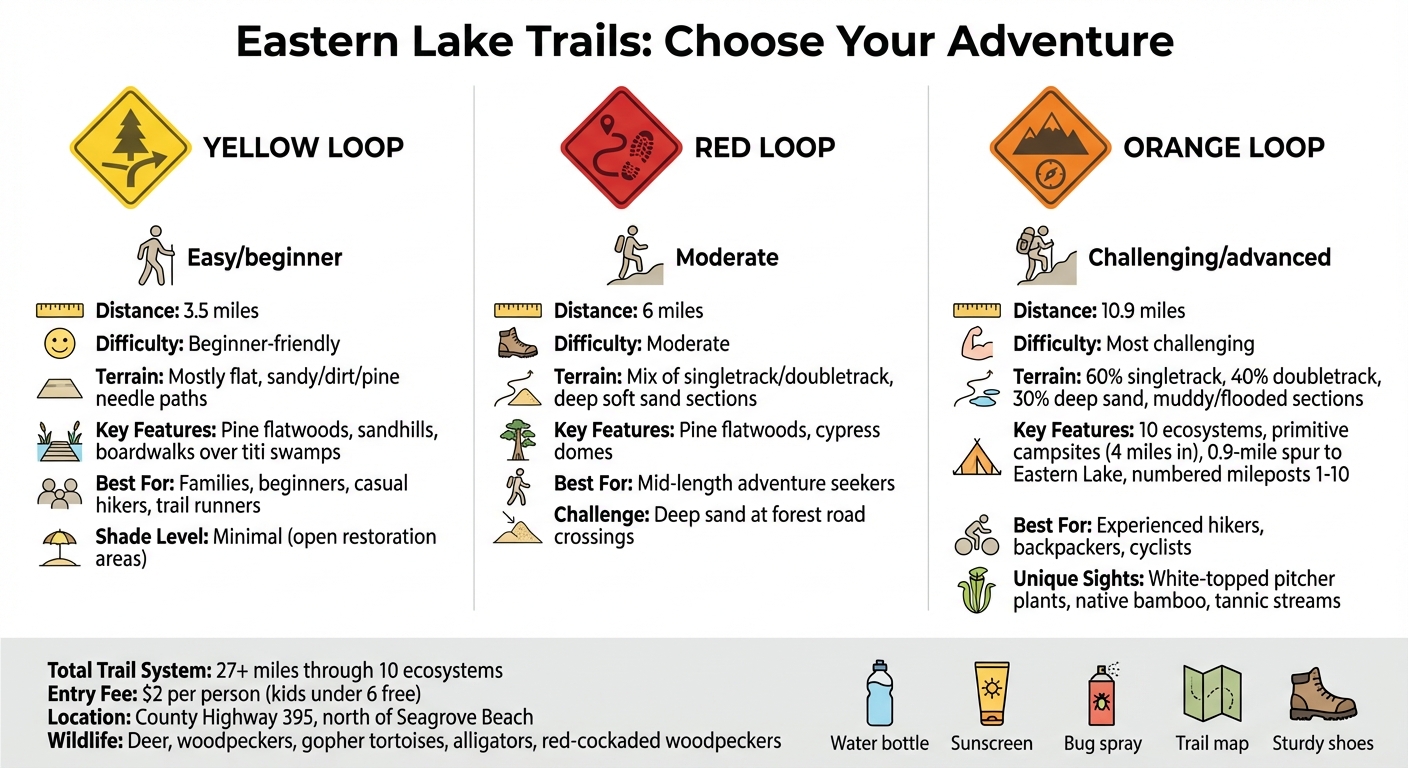
Point Washington State Forest Eastern Lake Trail Loops Comparison Guide
Eastern Lake: Orange, Cassine, & Pink Trails
The Three Main Trail Loops
Point Washington State Forest's Eastern Lake Trail system features three distinct loops, each marked by diamond-shaped blazes in yellow, red, and orange. These trails cater to different fitness levels and provide a chance to experience the forest's diverse landscapes. Here's a closer look at what each loop offers.
Yellow Loop Trail (3.5 Miles)
The Yellow Loop spans 3.5 miles of mostly flat terrain, making it an excellent choice for families, beginners, or casual hikers. The trail alternates between sandy, dirt, and pine needle-covered paths, winding through pine flatwoods and sandhills dotted with longleaf pines and turkey oaks. Along the way, you'll cross boardwalks over titi swamps and small bridges over drainage areas.
This trail is dog-friendly (leashes required) and also suits trail runners and off-road cyclists. Since much of the loop passes through open restoration areas with minimal shade, it's a good idea to bring sunscreen, wear a hat, and carry plenty of water. Be sure to grab a trail map from the kiosk before you set out.
Red Loop Trail (6 Miles)
Stretching about 6 miles, the Red Loop offers a moderate challenge with a mix of singletrack and doubletrack paths through pine flatwoods. The route also passes by cypress domes, adding variety to the scenery. However, hikers and cyclists should be ready for sections of deep, soft sand, particularly at forest road crossings. Cyclists may need to dismount and push their bikes through these areas.
This loop shares some singletrack sections with the Orange Loop but avoids its most remote southeastern stretches near Eastern Lake. It's ideal for those seeking a mid-length adventure without venturing too far into the forest.
Orange Loop Trail (10.9 Miles)
At 10.9 miles, the Orange Loop is the longest and most challenging of the three trails. It features a mix of 60% singletrack and 40% doubletrack, navigating through sandhills, pine flatwoods, scrub, titi swamps, and cypress domes. Expect narrow boardwalks over tannic streams, deep sandy patches covering roughly 30% of the trail, and occasional muddy or flooded sections.
"The Orange Trail [is] the most diverse for an offroad ride or backpacking trip." - Sandra Friend & John Keatley
What makes this loop stand out is its access to primitive campsites located about 4 miles in (reservations available through Reserve America) and a 0.9-mile spur leading to the Cassine Trail near Eastern Lake. Along the way, you'll encounter unique sights like white-topped pitcher plants and native bamboo in creek basins.
The Orange Loop is the only trail with numbered mileposts (1 through 10), and cyclists are advised to follow the trail counterclockwise to match the markers. Be prepared with mosquito spray, extra water, and snacks for energy.
Each loop offers something special, from family-friendly strolls to rugged adventures, setting the stage for the wildlife and scenic beauty highlighted in the next section.
What You'll See on the Trails
The Eastern Lake Trails in South Walton, Florida, offer a chance to experience a variety of ecosystems up close. These trails wind through the stunning landscapes of Point Washington State Forest, providing a unique way to explore the region's natural beauty.
Wildlife and Natural Habitats
As you journey through the trails, you'll encounter a mix of habitats like sandhills, pine flatwoods, cypress swamps, and coastal dune lakes, each teeming with wildlife. Keep an eye out for white-tailed deer, gopher tortoises, and raccoons, especially during the quieter hours of early morning or late afternoon.
For bird enthusiasts, the area is a treasure trove. You might spot the endangered red-cockaded woodpecker nesting in the longleaf pines or catch a glimpse of bald eagles and ospreys soaring above. The wetlands and cypress swamps are home to alligators, wading birds, and even gopher frogs. Meanwhile, songbirds fill the air with their melodies, and along the creek basins, you'll find white-topped pitcher plants and native bamboo adding to the scenery. These rich, lively habitats lead you to the breathtaking views of Eastern Lake.
Eastern Lake Views
Eastern Lake, one of South Walton's rare coastal dune lakes, is a standout feature of the trail system. At the southeastern edge of the Orange Loop, the trail opens up to a serene overlook right at the lake's edge.
"Following the Eastern Lake Trail to the far southeastern point will bring you to the edge of Eastern Lake where a picnic table sits invitingly." - Manny Chavez, Photojournalist
Getting to this picturesque spot involves the park's steepest elevation change, though the rest of the terrain is relatively flat. Be prepared for the occasional challenges - mosquitoes are common in the swampy areas, so bug spray is a must. Also, pack plenty of water, as much of the trail runs through open areas with limited shade.
sbb-itb-d06eda6
Planning Your Visit
Directions and Parking
To find the main trailhead for the Eastern Lake Trail system, head to County Highway 395, just north of Seagrove Beach. Use your GPS and search for "Point Washington State Forest Eastern Lake Trailhead." Once there, you'll spot a gravel parking lot marked with a large sign.
There are also additional access points along nearby highways, clearly marked with signs.
When to Go
Timing your visit can make a big difference. Summers in the area can be sweltering, so it's best to hit the trails early in the morning or later in the afternoon when it's cooler and wildlife is more likely to be active. From fall through spring, the weather is generally more pleasant, but it's worth checking for any prescribed burns that could impact air quality or the scenery.
"In the summer, early morning or late afternoon rides are more comfortable, and you're more likely to come across local wildlife during these hours." - Manny Chavez
Keep in mind that summer rains can lead to muddy patches and even deep water crossings. Also, since Point Washington State Forest is part of a Wildlife Management Area, you should check the Florida Fish and Wildlife Conservation Commission (FWC) website for hunting season dates. If you’re visiting during hunting season, wearing bright hunter orange clothing is a smart way to stay visible.
Make sure to pack the right gear to ensure a safe and enjoyable adventure.
What to Bring and Safety Tips
Before hitting the trails, take a photo of the trail map showing the three color-coded loops. Wear sturdy, closed-toe shoes that can handle both packed sand and dirt trails, as hidden roots under pine needles can trip you up. With proper preparation, you'll be ready to make the most of your time exploring the Eastern Lake Trails.
Why Visit the Eastern Lake Trails
The Eastern Lake Trails hold the distinction of being the first trail system created within Point Washington State Forest. With three loops to choose from, they cater to everyone - from families looking for a quick outing to seasoned hikers and cyclists ready for a more demanding adventure. This setup makes it easy for visitors to tailor their experience, whether it's a short stroll with kids or a long trek through the forest, all starting at the same trailhead.
As you explore, you'll encounter a variety of landscapes, including sandhills, swamps, and pine flatwoods - habitats that play a crucial role in protecting the area's coastal dune lakes. For those seeking a challenge, the southeastern section of the trails offers the steepest hills in the forest, along with streams that glimmer in striking shades of yellow, red, and orange thanks to their tannic waters. These natural features create an experience that many describe as truly immersive.
"The Eastern Lake Trail offers an immersion in Point Washington State Forest for hikers and cyclists." – Sandra Friend & John Keatley, Florida Hikes
Access to this outdoor haven is incredibly affordable - just $2 per person, with free entry for children under six. In return, you get to explore over 15,000 acres of protected wilderness, all just minutes away from the bustling 30A corridor. Whether you're a solo trail runner looking for peace, a family eager to spot wildlife, or a cyclist ready to tackle technical terrain, the Eastern Lake Trails promise a genuine Florida Panhandle adventure.
To discover even more outdoor treasures and hidden spots in South Walton, check out the guides at sowal.co.
FAQs
What animals might I see on the Eastern Lake Trails in Point Washington State Forest?
The Eastern Lake Trails are a haven for wildlife enthusiasts, offering a chance to observe animals in their natural habitats. The forest's varied landscapes - sandhill forests, swamps, and cypress domes - create the perfect environment for a wide range of species. As you explore, you might come across white-tailed deer, coyotes, and, if you're lucky, even a black bear. Watch where you step, as snakes often bask on the warm sandy paths, and listen for the calls of owls or the melodies of songbirds in the trees. Keep your eyes peeled for the American kestrel, a small falcon frequently spotted hunting in open areas.
The forest also shelters some rare species. Look for the gopher tortoise, known for digging burrows in the sandy soil, and the elusive flatwoods salamander, which thrives in the wet flatwoods. With its diverse ecosystem, these trails are a must-visit for anyone who loves observing nature up close.
What should I know before hiking the Orange Loop Trail in Point Washington State Forest?
Before you set off on the Orange Loop Trail, take a moment to review the fall hunting schedule - safety first! Make sure to wear bright-orange clothing to ensure you're easily visible. The trail offers a mix of challenges, including stretches of deep sand, muddy patches, and the occasional flooded swampy areas, so come prepared. Don’t forget to pack bug spray to fend off pesky insects, and stick to the orange-marked mileposts to keep yourself on the right path.
What is the best time of year to visit the Eastern Lake Trails in Point Washington State Forest?
The ideal time to explore the Eastern Lake Trails is in the fall. The crisp, cooler weather makes hiking and biking much more pleasant, and the trails burst with colorful wildflowers, creating a stunning backdrop. Keep in mind that fall is also hunting season, so wearing bright orange is a smart way to stay safe while enjoying the forest.
Spring is another excellent choice, with its mild temperatures and vibrant greenery. However, for many outdoor lovers, fall stands out as the top pick thanks to its breathtaking scenery and perfect hiking conditions.