The 30A region in South Walton, Florida, is a haven for wildlife photographers. With 40% of the area dedicated to conservation, this stretch of coastline offers diverse ecosystems like coastal dune lakes, forests, and wetlands. Here are the top five spots to capture stunning wildlife shots:
- Grayton Beach State Park: Known for its 100-acre Western Lake, this park features bald eagles, dolphins, and rare birds like snowy plovers. Entry: $5/vehicle.
- Deer Lake State Park: Home to piping plovers, sea turtles, and rare plants, this park is perfect for bird photography. Entry: $3/vehicle.
- Topsail Hill Preserve State Park: Offers 10+ miles of trails and three coastal dune lakes. Spot ospreys, deer, and even alligators. Entry: $6/vehicle.
- Eastern Lake Outfall: A unique mix of freshwater and Gulf waters attracts 180+ bird species and fish like red drum and Gulf flounder. Free access.
- Western Lake: Ideal for sunrise shots, this shallow dune lake features dolphins, alligators, and migratory birds. Entry via Grayton Beach State Park: $5/vehicle.
Quick Comparison
| Location | Wildlife Highlights | Entry Fee | Best Time to Visit |
|---|---|---|---|
| Grayton Beach State Park | Bald eagles, dolphins, snowy plovers | $5/vehicle | Early morning/sunset |
| Deer Lake State Park | Piping plovers, sea turtles, rare plants | $3/vehicle | Dawn |
| Topsail Hill Preserve | Ospreys, deer, alligators | $6/vehicle | Sunrise |
| Eastern Lake Outfall | 180+ bird species, fish, stingrays | Free | Early morning |
| Western Lake | Dolphins, migratory birds, alligators | $5/vehicle | Sunrise |
For the best results, visit in spring or fall during early mornings or golden hour. Don’t forget a telephoto lens for wildlife and a polarizing filter for water shots. Whether you're photographing rare birds or serene landscapes, 30A offers endless opportunities.
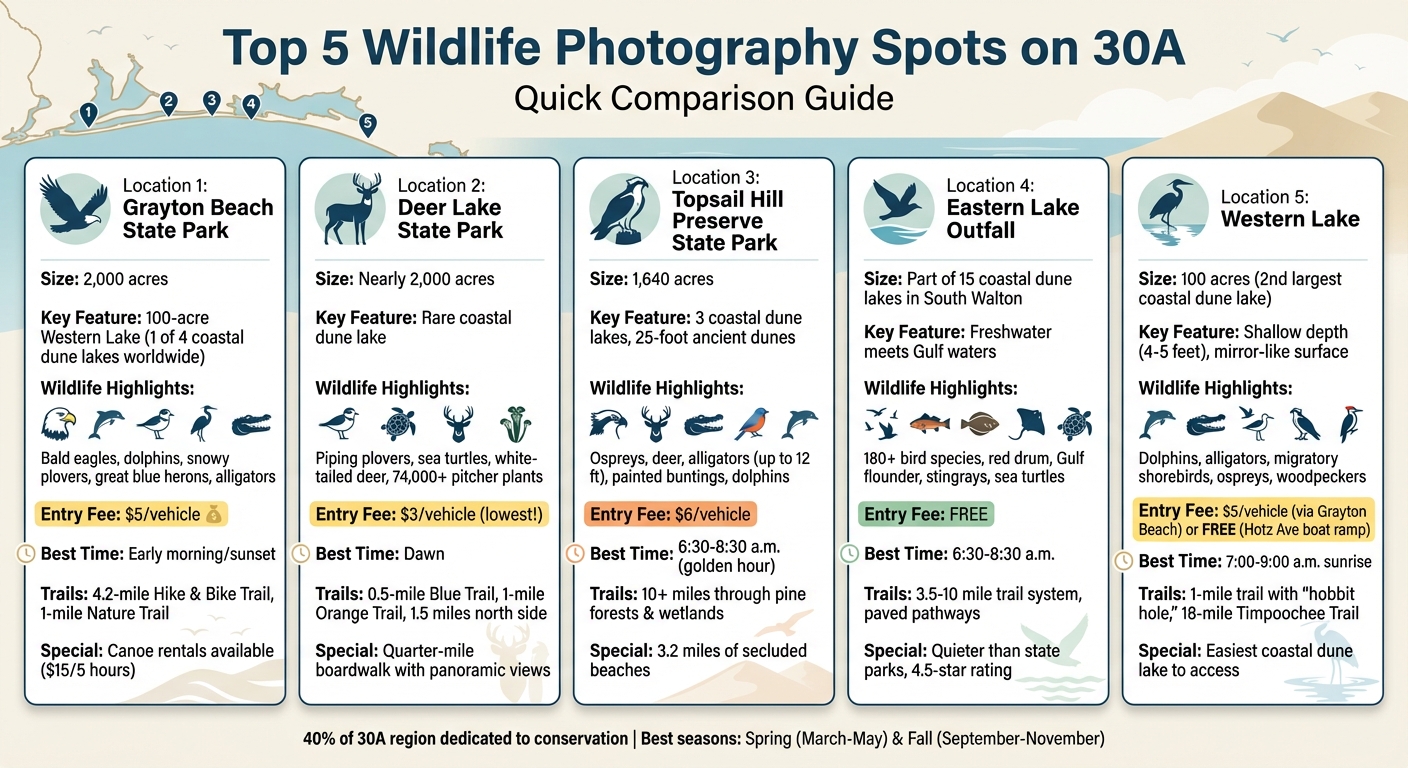
Top 5 Wildlife Photography Spots on 30A: Quick Comparison Guide
1. Grayton Beach State Park

Spanning 2,000 acres, Grayton Beach State Park is one of the premier spots for wildlife photography along 30A. Its diverse landscapes - sugar-white sand dunes, pine flatwoods, and the stunning 100-acre Western Lake - create a haven for wildlife. Western Lake is particularly special, as it's one of only four coastal dune lakes in the world. This unique environment supports an impressive array of wildlife, including bald eagles, great blue herons, barred owls, dolphins, sea turtles, and even alligators near the lake.
Let’s dive into what makes this park a must-visit for nature enthusiasts and photographers alike.
Wildlife Diversity
Grayton Beach State Park is a hotspot for birdwatching and marine life sightings, making it a dream destination for photographers. Birding is excellent year-round, with snowy plovers nesting along the beach and brown-headed nuthatches and pied-billed grebes thriving in the pine flatwoods. During migration seasons, over 15 species of wood-warblers, including Blackpoll and Hooded warblers, pass through the area. Winter brings opportunities to photograph Bonaparte's gulls, northern gannets, savannah sparrows, and common loons.
The Gulf waters add another layer of excitement. Dolphins are frequent visitors, and while sharks are less common, they do make appearances - 60 were recorded off the coast in August 2019. Western Lake, with its mix of freshwater and saltwater, is home to species like redfish, flounder, and speckled trout, creating even more opportunities for capturing marine life.
Scenic Composition Opportunities
For photographers, Western Lake is a standout feature. Its glassy surface reflects the surrounding salt marshes, creating stunning compositions. The coastal forests, with their dramatic silhouettes, and the pristine white dunes offer striking contrasts for minimalist shots. And, of course, the mile-long sugar-white beach paired with emerald-green Gulf waters is perfect for capturing breathtaking sunsets.
Accessibility
The park is easy to explore, thanks to its well-maintained trails. The 4.2-mile Hike and Bike Trail and the shorter 1-mile Nature Trail wind through dunes and live oak canopies, offering plenty of vantage points for photography. For a closer view of the wildlife, you can rent a canoe to explore Western Lake’s backwaters - $15 for five hours or $25 for a full day. The ranger station often provides field guides and optics to help visitors make the most of their experience.
Optimal Photography Conditions
To get the best shots, plan to arrive early. The park opens at 8:00 a.m., and during peak times - like warm weekends - it can reach capacity, leading to temporary closures. Early mornings and evenings offer the best light and the most active wildlife. Spring and fall are particularly pleasant, with mild temperatures and smaller crowds. Entry fees are affordable at just $5 per vehicle.
Whether you're a seasoned photographer or just looking to immerse yourself in nature, Grayton Beach State Park offers an unforgettable experience.
2. Deer Lake State Park

Deer Lake State Park is another gem along 30A, showcasing the region's stunning natural diversity. Spanning nearly 2,000 acres, the park is home to one of the rare coastal dune lakes - a natural phenomenon that exists in only a few places worldwide, such as New Zealand and Australia. For just $3 per vehicle, visitors can enjoy this serene retreat, with payment made conveniently at the honor box near the entrance.
Wildlife Diversity
For wildlife photographers, Deer Lake State Park is a dream come true. The park attracts an array of shorebirds and waterfowl, including piping plovers, least terns, little blue herons, reddish egrets, white ibis, and black skimmers.
"Deer Lake is beloved by piping plover, little blue heron, reddish egret, white ibis and black skimmers, making it a paradise for birders".
White-tailed deer are a common sight along the park's roads and trails, while the endangered Choctawhatchee beach mouse makes its home in the dunes. In the forested areas, visitors might spot Florida black bears or coyotes, and during the summer months, sea turtles nest on the beach. The park has also been a site for ecological restoration, including the reintroduction of rare pitcher plants, which now number over 74,000.
Scenic Composition Opportunities
The park offers fantastic settings for photographers, with a quarter-mile boardwalk providing panoramic views of the ancient dunes. The sugar-white sands resemble an "arctic landscape", offering a unique backdrop for minimalist shots. For those looking to explore further, the 0.5-mile Blue Trail provides a scenic overlook of the lake's northern shore, while the 1-mile Orange Trail winds through wet prairies, perfect for capturing pitcher plants and wildflowers. Spring and fall bring an abundance of migratory birds and butterflies, while summer adds vibrant wildflowers around the cypress domes.
Accessibility
Deer Lake State Park is open daily from 8:00 a.m. until sundown. The park is equipped with ADA-accessible parking, restrooms, and picnic areas. The boardwalk to the beach stretches about a quarter-mile, so using a wagon or cart for heavier gear can be helpful. For those eager to explore more, the north side of Highway 30A features 1.5 miles of hiking trails that pass through diverse habitats, offering opportunities to encounter larger mammals.
Optimal Photography Conditions
To make the most of your visit, plan to arrive at dawn when wildlife is most active and parking is still available. The park's rustic atmosphere and limited amenities often result in smaller crowds, especially on weekdays. Golden hour - whether in the early morning or just before sunset - provides the best lighting for capturing the shimmering coastal dune lake and the surrounding sea oats. Transition zones, such as where the maritime forest meets the dunes, are particularly rich in photographic opportunities. Like Grayton Beach State Park, Deer Lake rewards early risers with soft light and lively wildlife, making it a must-visit spot for photographers along 30A.
3. Topsail Hill Preserve State Park
Topsail Hill Preserve State Park is a paradise for wildlife photographers. Spanning 1,640 acres, the park is home to diverse ecosystems, including the rare coastal dune lakes. For just $6 per vehicle, visitors gain access to three pristine coastal dune lakes, 3.2 miles of secluded beaches, and over 10 miles of trails that wind through old-growth pine forests and wetlands.
Wildlife Diversity
The park's varied landscapes are teeming with life, offering endless opportunities for photography. Around the coastal dune lakes, you’ll find herons, egrets, and ospreys, while the Pine Flatwoods Trail is a hotspot for spotting white-tailed deer, wild turkeys, and songbirds like Northern Cardinals and Blue Jays. In the warmer months, Painted Buntings and Ruby-throated Hummingbirds make appearances, and during the fall, migratory warblers pass through. The park also safeguards rare species like the Choctawhatchee beach mouse and features a butterfly garden that draws Gulf Fritillary butterflies and native bees. If you’re lucky, you might even spot bottlenose dolphins from the Gulf overlooks or catch a glimpse of American alligators, some reaching up to 12 feet, in the freshwater habitats. These dynamic settings naturally lend themselves to stunning and unique compositions.
Scenic Composition Opportunities
For breathtaking panoramic views, head to the Coastal Dune Lakes Overlook, just 0.3 miles from the coffee shop. This spot is perfect for capturing wading birds and even distant dolphins. The Beach Access Trail Midpoint offers a fascinating transition zone where maritime forests meet coastal dunes, providing excellent chances to photograph Painted Buntings and fox squirrels from elevated boardwalks. For dramatic shots, the Morris Lake Trail winds through ancient dunes towering 25 feet above sea level, while the Deer Track Trail showcases rare carnivorous pitcher plants alongside Campbell Lake. The Morris Lake Trail, known for its tranquil solitude, offers photographers uncrowded settings, though its deep-sand paths can be challenging.
Accessibility
Topsail Hill Preserve State Park caters to photographers with a mix of paved and natural trails. Paved paths like the Beach Tram Trail and Campbell Lake Bike Trail make it easier to transport heavier gear, while natural trails such as Pine Flatwoods and Morris Lake allow for closer wildlife encounters. For added convenience, all-terrain beach wheelchairs are available at the ranger station, and elevated boardwalks not only protect the sensitive dune ecosystems but also provide excellent vantage points. Note that construction of a new Nature Walk and Visitor Center has temporarily relocated the tram stop.
Optimal Photography Conditions
"The golden hour after sunrise is absolutely prime time for wildlife watching at Topsail Hill Preserve State Park. This is when most animals are most active, the lighting is perfect for photography, and the park is peaceful before day-visitors arrive." – Coastal Coffee 30A
For the best experience, plan to arrive between 6:30 a.m. and 8:30 a.m. when wildlife is most active and the light is soft and ideal for photography. The park’s beaches tend to stay quiet throughout the day since they’re only accessible through the park, but early mornings offer the perfect balance of serene lighting and abundant wildlife. If sea turtles are your focus, visit between May and October, the nesting season for Loggerhead and Green Sea Turtles. For white-tailed deer sightings, head to the Pine Flatwoods Trail at dawn or dusk, moving slowly and quietly to avoid startling them. Early mornings truly set the stage for capturing the park’s natural beauty at its finest.
4. Eastern Lake Outfall
Eastern Lake Outfall in Seagrove Beach is a fascinating spot where dark, tannin-stained freshwater flows into the turquoise waters of the Gulf. It's one of just 15 coastal dune lakes found in South Walton.
Wildlife Diversity
This unique mixing zone is a magnet for wildlife, with over 180 bird species recorded in the area. Waterfowl like Pied-billed Grebes and American Coots are common sights, while birds of prey such as Bald Eagles, Ospreys, Northern Harriers, and Red-shouldered Hawks often soar above. The waters themselves are teeming with fish, including largemouth bass, bluegill, red drum, Gulf flounder, and gray snapper. From May to October, sea turtles can sometimes be spotted near the shore during nesting season. Stingrays are also a frequent sight in the shallows, particularly between May and August. Surrounding the lake, wet prairies with black needlerush, saltbush, and swamp rose mallow create a textured, natural backdrop that enhances the area's appeal for wildlife photography.
Scenic Composition Opportunities
"This coastal dune lake meets the Gulf in a beautiful natural merge of dark freshwater and turquoise sea - perfect for moody, artistic shots." – Destin Dreamers
At sunrise, the lake's surface transforms into a mirror, offering stunning reflections ideal for capturing silhouettes and tranquil landscapes. The contrast between the tea-colored water and the bright white sands of the Gulf creates a striking visual. After heavy rains, the lake "blows out", allowing fresh and saltwater to mix dynamically - an event that provides opportunities to photograph shifting sands and water patterns. For bird photography, a telephoto lens (200 mm or more) is a must, while a wide-angle lens works wonders for expansive landscape shots and time-lapse compositions.
Accessibility
Eastern Lake is surrounded by paved pathways, making it easy to explore on foot or by bike, even with camera gear in tow. The western side of the lake features soft, white sand beaches, while smooth walkways ensure that heavier equipment can be transported without hassle. With a 4.5-star rating from FloridaPanhandle.com Local Experts, Eastern Lake is typically quieter than the larger state parks, offering a peaceful environment for wildlife observation. For those looking to explore further, the Eastern Lake Trail System provides hiking routes ranging from 3.5 to 10 miles through nearby forests and wetlands, offering diverse perspectives for photographers.
Optimal Photography Conditions
The best time to visit is early in the morning, between 6:30 a.m. and 8:30 a.m., when the light is soft and wildlife is most active. Spring (March–May) and fall (September–November) are particularly serene, making it easier to focus on your shots. A polarizing filter can be a game-changer, reducing glare on the water's surface and enhancing the vibrancy of the sky. Scouting the area during the day can help you plan compositions for golden hour. Steer clear of high noon, when harsh shadows and glare can diminish the quality of your photos. And remember to stay off the dunes and vegetation - this ecosystem, estimated to be between 2,000 and 10,000 years old, is fragile and deserves care.
sbb-itb-d06eda6
5. Western Lake (Grayton and WaterColor Area)
Western Lake stands out among 30A’s coastal spots, offering a shallow-water landscape that’s perfect for photographers. Spanning 100 acres, it’s the second-largest coastal dune lake in the area and maintains a depth of just four to five feet. This unique setting is home to a mix of freshwater and saltwater species, making it a haven for wildlife enthusiasts.
Wildlife Diversity
The lake’s outfall, where freshwater meets the Gulf, attracts a variety of birds, including migratory and nesting shorebirds, ospreys, and woodpeckers. Occasionally, dolphins can be spotted near this area. The lake also supports alligators, sea turtles, and small fish. On the northern side, wetlands provide a habitat for rare plants, while sea oats and scrub oaks help stabilize the dunes.
"Wetlands that surround these lakes are very important because they're some of the most biodiverse ecosystems we have here in Walton County and in the panhandle of Florida, which is part of a biodiversity hotspot." – Jeff Talbert, Chairman of the Coastal Dune Lakes Advisory Board
Scenic Composition Opportunities
For photographers, Western Lake offers plenty of creative possibilities. The "hobbit hole", a tunnel formed by low live oaks along a one-mile trail, creates a whimsical natural frame. The pedestrian bridge in WaterColor provides a sweeping view of the lake and its eastern marshes. Sunrise and sunset transform the water into a mirror-like surface, ideal for capturing reflections. If you enjoy close-up shots, bring a macro lens to photograph fungi, wildflowers, and insects along the Point Washington State Forest trails. With well-maintained paths, you’ll have no trouble exploring the lake from multiple angles.
Accessibility
Western Lake is one of the easiest coastal dune lakes to access. You can enter through Grayton Beach State Park, where the entry fee is $5 per vehicle (for groups of 2–8 people) or $4 for single-occupant vehicles. Alternatively, there’s a free public boat ramp and dock on Hotz Avenue in Grayton Beach. The Timpoochee Trail, an 18-mile paved path, includes a long bridge over the lake, offering elevated views of its habitat. For a quieter experience, head to the trails on the northern side, accessible via the Scenic 30A trailhead.
Optimal Photography Conditions
Western Lake shines in the soft light of early morning, making it a prime spot for wildlife photography. The best time to visit is between 7:00 a.m. and 9:00 a.m. during spring (March–May) or fall (September–November), when the light is gentle, wildlife is most active, and crowds are minimal. A polarizing filter can help reduce glare and enhance water clarity. For varied perspectives, explore different sides of the lake throughout the day - try the southern side near Grayton Beach State Park, the eastern side at WaterColor, and the quieter northern side. Avoid midday shooting to steer clear of harsh shadows and glare.
When to Visit for Wildlife Photography
If you're planning a wildlife photography trip, spring (March–May) and fall (September–November) are prime times to capture stunning moments. These seasons bring migratory birds like warblers, tanagers, and orioles to the coastline, particularly along the Northern and Western flyways. Fall migration is especially spectacular, with birds riding cold fronts as they head south. Walt Spence from the Choctawhatchee Audubon Society highlights this phenomenon:
"Fall is one of the best times to see migrating birds. The birds ride down with the cold front as it moves through".
During these months, you’ll also witness thousands of Monarch butterflies passing through the area.
Other wildlife follows distinct seasonal rhythms as well. Sea turtle nesting season spans from May 1st to October 31st, with Loggerheads being the most common species. Eggs typically hatch about 50 days after being laid. For the best photos - and to respect the turtles - visit at sunrise to photograph their crawl tracks before the beach gets crowded. Avoid using flash or white lights near nesting turtles or hatchlings. If you need light, stick to red or amber wavelength flashlights, as these are less likely to disturb the turtles.
Winter (December–February) brings waterfowl like Northern Pintails, Blue-winged Teals, and Redhead ducks to the area’s state parks and forests. Meanwhile, year-round residents such as Great Blue Herons, Snowy Egrets, Ospreys, and Brown Pelicans provide excellent photo opportunities in any season.
Timing your shots with the right light conditions can make all the difference. Early mornings (7:00–9:00 a.m.) are ideal for soft lighting, active wildlife, and fewer crowds. Dolphins are particularly lively during this time, and you’ll find sea turtle tracks undisturbed. The hour before sunset offers warm, dramatic lighting, perfect for photographing deer and foxes. Midday, however, can be tricky due to harsh shadows and intense glare, which can wash out details in water and sand.
For marine life photography, tide changes are key. Plan your shots between 6:30–8:30 a.m. or 6:00–7:30 p.m., when dolphins and shorebirds are more active near inlets and jetties. Overcast days also provide soft, even lighting, eliminating the high contrast caused by direct sunlight.
Photography Tips and Equipment
If you're planning to capture the vibrant wildlife and stunning landscapes of 30A, having the right photography gear can make all the difference. For wildlife photography, a camera with a resolution between 30 and 50 megapixels is ideal. Professional photographer Zach Nichols highlights this range as perfect for wildlife shots:
"The sweet spot for wildlife is right around the 30–50 MP range. This will give you a good sized image to crop but also one that can allow your camera to have a higher burst speed without blackouts".
Look for camera models that feature animal and bird eye autofocus, along with burst speeds of 15–20 frames per second. A great all-around choice for wildlife and outdoor photography is the Nikon Z8 (priced at $3,696.00). For those seeking a more budget-friendly option, the Sony Alpha 7 IV ($2,298.00) offers full-frame capabilities and bird eye autofocus.
Choosing the Right Lenses
Pairing your camera with the right lenses is key to capturing 30A's diverse subjects. Here’s a quick guide to help you decide:
- Telephoto lenses (70–200mm or dedicated 200mm): Perfect for photographing dolphins from jetties or birds near coastal dune lakes.
- Wide-angle lenses: Ideal for sweeping beach vistas and capturing the vast beauty of dune lakes, as these lenses emphasize foreground depth.
- Macro lenses: Best for close-up shots of wildflowers, fungi, and insects along the trails of Point Washington State Forest.
Even modern smartphones can deliver excellent results in both landscape and portrait modes, making them a handy backup option.
Protecting Your Gear
The coastal environment of 30A can be tough on your equipment. Sand and salt spray can cause damage, so it’s important to take precautions. Always carry an air blower and lens cloth for quick cleaning. A lens hood can help prevent flare and protect your lens from salt spray, while a polarizing filter enhances the Gulf’s rich blues, deepens shadows, and reduces glare on water. For midday shots, a Neutral Density (ND) filter is invaluable for achieving smooth, silky water effects. Since beach scenes often have high contrast between bright sand and darker water, shooting in RAW format is recommended to preserve as much detail as possible for post-processing.
Stability and Composition
For sharp, clear images, stability is essential. A lightweight tripod is a great companion for long exposures at sunrise or for capturing reflections on calm waters. When composing your shots, use boardwalks and trails as natural leading lines to guide the viewer’s eye toward your subject.
If you're aiming to photograph wildlife behavior, timing and patience are key. Arrive before sunrise and stay quiet - many animals, like Blue Herons, are more approachable when observers remain still and silent. For locations like Topsail Hill Preserve or Grayton Beach, pack light since you'll need to hike to reach the best vantage points.
Conclusion
The five locations along 30A each offer their own charm for wildlife photography, from serene dune lakes and picturesque boardwalks to striking coastal views and birdwatching hotspots. Together, these diverse landscapes highlight just how many incredible photographic opportunities 30A has to offer.
With around 40% of South Walton’s land set aside for preservation, photographers can enjoy year-round access to an array of wildlife. Whether it’s dolphins and sea turtles or deer, foxes, and rare shorebirds, the variety of species here is astounding. The blend of ecosystems within a relatively small area allows for endless creative possibilities. Imagine capturing a sunrise over shimmering waters or using a macro lens to explore the intricate details of native flora. Plus, with park entrance fees ranging from just $2 to $6 per vehicle, this destination is both inspiring and budget-friendly for photographers of all levels.
For travel tips, park updates, trail maps, and local advice, check out sowal.co - your go-to resource for planning an unforgettable wildlife photography journey along 30A.
FAQs
When is the best time to capture wildlife photos along 30A?
The prime seasons for wildlife photography on 30A are spring and fall, thanks to the increased activity of migratory birds and the pleasant weather. If you're interested in capturing sea turtles, summer offers an incredible opportunity, especially during their nesting and hatching periods.
For optimal shots, venture out early in the morning or close to sunset. These times not only align with peak wildlife activity but also provide the soft, golden light that's perfect for photography.
What camera gear is best for wildlife photography along 30A?
To photograph the breathtaking wildlife and landscapes of 30A, a sturdy tripod and a wide-angle lens can make a world of difference. The tripod provides stability for longer exposures, especially during those magical sunrise and sunset moments. Meanwhile, a wide-angle lens, such as a 16–35mm for full-frame cameras, is ideal for capturing the sweeping dunes, serene forests, and mirror-like lakes. For wildlife enthusiasts aiming to get up close and personal with birds or other animals, a telephoto lens (300mm or longer) is a must-have.
If you're working with a DSLR or mirrorless camera, choose one with fast autofocus and solid low-light capabilities. But don’t count out modern smartphones - they can yield impressive results, especially when shooting in landscape orientation and making the most of golden-hour lighting. Local photographers often stress that while having a tripod and wide-angle lens helps highlight 30A’s unique beauty, the real magic comes from careful composition and perfect timing.
What are the best tips for photographing the coastal dune lakes along 30A?
Capturing the essence of 30A’s coastal dune lakes requires a mix of timing and technique. To showcase their calm, mirror-like surfaces, try shooting in landscape orientation - this helps you capture the lake's full expanse along with its surroundings. The best times to shoot are during the early morning golden hour or late afternoon magic hour. At these times, the sunlight is softer and warmer, bringing out the natural colors and textures beautifully. Steer clear of midday shooting, as the harsh light can create glare and wash out the finer details.
For something truly special, head out at sunrise. The stillness of the water at that hour often reflects the sky and nearby foliage, creating dramatic and symmetrical compositions. Western Lake is an especially breathtaking location for these types of shots. Remember to stick to marked trails and boardwalks - not just to protect the delicate ecosystem but also to ensure you have a safe and stable spot to frame your photos. With these tips in mind, you’ll be well on your way to capturing the unique beauty of South Walton’s coastal dune lakes.