Transporting fragile items to 30A can be tricky due to long trips, vibrations, and South Walton's humid, sandy environment. Without proper packing, items like glassware, electronics, and artwork risk damage. Here's a quick guide to ensure your belongings arrive safely:
- Use sturdy materials: Opt for double-walled boxes, bubble wrap, foam sheets, and packing paper.
- Protect electronics: Wrap in anti-static materials, seal ports, and use silica gel packets to combat humidity.
- Label boxes clearly: Mark with "Fragile" and "This Side Up" to guide careful handling.
- Pack strategically: Place heavier items at the bottom and lighter ones on top when loading.
- Prepare for climate: Use plastic sheeting and moisture protection for coastal weather.
Focus on proper materials, careful packing, and climate considerations to avoid breakage or damage during your move.
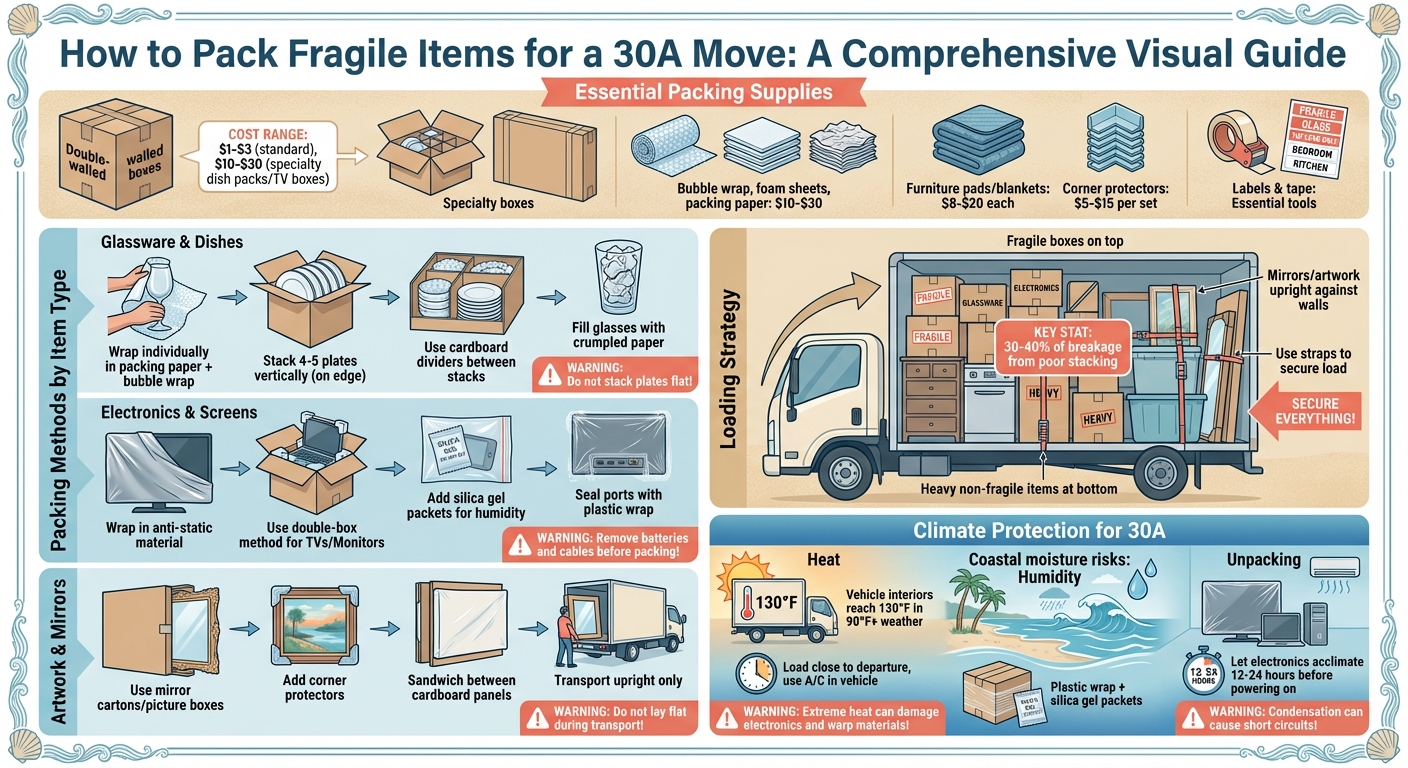
Complete Packing Guide for Fragile Items During 30A Move
How to Pack for a Move-Fragile Items
Packing Supplies You'll Need
To keep your fragile items safe during your 30A move, it's crucial to use the right materials. Professional movers recommend double-walled cardboard boxes because their extra layers provide better resistance to crushing and punctures during loading and transportation. Thin, flexible boxes are a no-go - they just don't offer enough protection. Here's a rundown of the essential supplies you'll need to protect your breakables every step of the way.
Selecting Sturdy Boxes
When it comes to packing dishes, glassware, and ceramics, small, heavy-duty boxes are your best bet. These boxes are sturdy enough to prevent items from shifting. If you want added protection, consider dish packs with built-in dividers - they're perfect for keeping fragile items separated and cushioned. For flat screens, framed art, and mirrors, mirror and TV boxes are the way to go. These slim, reinforced cartons often telescope, allowing you to adjust the fit and add foam corners for extra padding.
Standard moving boxes usually cost between $1 and $3 at major retailers in the U.S., while specialty boxes like dish packs or TV boxes can range from $10 to $30 or more, depending on their size and padding.
Wrapping and Cushioning Materials
To wrap each item securely, use materials like bubble wrap, foam sheets, or packing paper. These supplies typically cost between $10 and $30. Opt for plain packing paper instead of newspaper to avoid ink stains on your dishware or décor.
If you're moving in humid conditions, particularly in 30A's climate, consider adding anti-static bubble wrap or plastic sheeting to protect electronics and artwork from condensation as they transition between air-conditioned spaces and the outdoors. You can also use household items like towels, blankets, or clothing to fill gaps and provide extra cushioning.
Labels and Handling Tools
Clear labeling is key to keeping fragile items safe. Mark each box with "Fragile" on two sides and the top, so everyone handling it knows to be careful. Adding "This Side Up" arrows or labels is just as important, especially for boxes containing stacked dishes, electronics, or liquids. Use a thick permanent marker or brightly colored pre-printed labels (red or orange work well), and include details like the room name and contents (e.g., "Kitchen – Glassware – Fragile").
For added protection, install corner protectors on frames, mirrors, glass tabletops, or TVs to absorb impacts. Wrap larger items, like glass-front cabinets or dining tables with glass tops, in thick, quilted furniture pads or moving blankets to prevent scratches and cushion them during transport. Reusable furniture pads or blankets generally cost $8 to $20 each, and you can often rent them from local moving or truck rental companies. Corner protectors typically cost around $5 to $15 per set.
Lastly, reinforce your boxes with strong packing tape. Apply multiple strips across seams and around the boxes to keep everything secure. This not only strengthens double-walled cartons but also ensures internal wrapping materials stay in place, reducing the risk of items shifting during transit.
How to Pack Different Types of Fragile Items
Once you've gathered your packing materials, the next step is figuring out how to pack your fragile items properly. Different items need different approaches - what works for your glassware won't work for your flat-screen TV. Here's a breakdown of how to handle some common fragile belongings when preparing for your move to 30A.
Glassware and Dishes
For glassware and dishes, start with small-to-medium heavy-duty boxes lined with crumpled packing paper or foam sheets to prevent shifting. Wrap each item individually in packing paper, then add a layer of bubble wrap for extra protection, securing it with tape.
When packing plates and saucers, stack 4–5 pieces together, placing a layer of packing paper or bubble wrap between each one. Tape the stack securely and pack them vertically (on their edges) instead of laying them flat. This reduces pressure points and helps minimize the risk of breakage. For added safety, you can insert cardboard or thick paper dividers between stacks.
Glasses and stemware need special care. Use cardboard dividers or specialty stemware boxes to keep them separated. Fill the inside of each glass with crumpled paper to reduce vibrations, then wrap the outside in packing paper or bubble wrap. Avoid nesting glasses, as this can lead to cracking or sticking during the move.
For items like vases, jars, or canisters, start by filling the hollow interiors with crumpled paper to add internal support. Then, wrap the outside in bubble wrap or packing paper. Pack these upright with plenty of padding on all sides to absorb vibrations. Fill any gaps in the box with cushioning material, but don’t overpack. Shake the box lightly to ensure everything stays stable.
Electronics and Screens
Electronics need special attention to protect them from moisture and static. If you still have the original boxes for your TV, monitor, or laptop, use them - they're designed for safe transport. If not, wrap the devices in antistatic wrap first, followed by packing paper.
For TVs and monitors, a double-box method works best. Place the wrapped screen in an inner box padded with foam corners, then nest it inside a slightly larger outer box. Fill the gap between the two boxes with cushioning materials like packing peanuts or foam for added shock absorption.
Detach removable parts like stands, cables, and accessories. Wrap these separately and store them in labeled plastic bags, either taped to the device or packed in the same box to avoid misplacing them. For smaller electronics like laptops, use padded compartments or wrap them in moving blankets before placing them in a sturdy box.
Given 30A's humid climate, it's smart to wrap electronics with plastic sheeting or cling wrap over ports and vents. Add silica gel packets to the box to absorb moisture as your items transition between air-conditioned spaces and the outdoors. Clearly label these boxes with "Fragile – Electronics – This Side Up", and keep them upright during transport. Avoid stacking heavy items on top of these boxes.
Artwork, Mirrors, and Glass Furniture
Delicate artwork, mirrors, and glass furniture require specialized packing techniques. For mirrors and framed artwork, use mirror cartons or picture boxes. These are adjustable and sturdy, offering better protection. Reinforce the corners with rigid cardboard corner protectors.
Wrap each piece in bubble wrap, then sandwich it between two cardboard panels with an extra layer of bubble wrap in between. Tape everything securely and add foam padding around the edges. Always transport mirrors and framed artwork upright to avoid warping or cracking.
For glass furniture like tabletops and shelves, disassemble them if possible. Wrap each piece in foam sheets and bubble wrap, then place them in a custom crate or heavy-duty box reinforced with plywood supports. Use furniture pads or quilted moving blankets to prevent scratches and absorb shocks. Mark these boxes clearly with "Do Not Lay Flat", and ensure no heavy items are stacked on top of them.
sbb-itb-d06eda6
Transporting Fragile Items to 30A

Once you've carefully packed your fragile items, the next step is ensuring they’re loaded and transported safely to 30A.
Loading and Arranging Boxes in Your Vehicle
Start by building a stable base with heavy, non-fragile items against the truck wall or rear seats. Place heavier fragile boxes at the bottom and lighter ones on top to avoid unnecessary pressure. According to professional movers, poor stacking is responsible for 30–40% of fragile item breakage.
Set aside a specific area for fragile items so they don’t end up supporting heavier furniture or appliances. Use bungee cords, ratchet straps, or rope tied to anchor points in your vehicle to secure the boxes and prevent shifting. Fill any gaps with moving blankets, crumpled paper, or foam peanuts to keep everything snug. Before heading out, give the load a gentle shake to ensure there’s no movement. For items like mirrors, artwork, and glass furniture, always keep them upright and securely wedged along the walls - never lay them flat.
Once everything is loaded, it’s time to prepare for South Walton’s challenging coastal weather.
Dealing with Heat, Humidity, and Coastal Weather
The environment plays a big role in safely transporting fragile items, especially in South Walton's Gulf Coast climate. With summer temperatures often exceeding 90°F, the interior of a closed vehicle can reach up to 130°F. This extreme heat can soften adhesives and damage electronics. To avoid these issues, load fragile boxes closer to your departure time rather than letting them sit for hours. If possible, transport electronics in the air-conditioned passenger area. During summer trips, plan for shorter driving segments and open the vehicle at rest stops to release built-up heat.
Humidity and sudden rain are also concerns. Wrap moisture-sensitive items - like electronics, artwork, and paper goods - in plastic cling wrap or waterproof covers to protect them. Adding silica gel packets inside boxes can help absorb excess moisture as your items move from air-conditioned spaces to the humid coastal environment. If rain or sea spray is in the forecast, cover your load with tarps and secure them tightly.
When you arrive in the 30A area, unpack fragile and moisture-sensitive boxes first. Running the air conditioning or a dehumidifier can help items acclimate and prevent condensation damage. For particularly delicate or high-value items, like artwork, musical instruments, or electronics, consider using climate-controlled transport or storage to avoid issues like warping, mold, or corrosion.
Moving Checklist for Fragile Items
Before the Move
Start preparing for your move by taking inventory of your fragile items about 3–4 weeks in advance. Go room by room, listing everything that needs special handling. Assign a number to each box, note which room it belongs to, and make a separate list of any high-value items for insurance purposes. This is also a great opportunity to declutter - donate or sell any glassware, dishes, or décor you no longer need. About 2–3 weeks before moving, gather your supplies: sturdy small or medium corrugated boxes, bubble wrap, packing paper, dish dividers, high-quality packing tape, and permanent markers. Clearly label each box with its room and contents to make both loading and unpacking smoother when you arrive in South Walton.
On Moving Day
With your pre-move prep complete, focus on protecting your fragile items during the move. Clearly mark each box containing delicate items with "FRAGILE" and "THIS SIDE UP" on at least two sides and the top. Group these boxes near the door so they’re loaded last and stay on top of heavier items, reducing the risk of crushing. When loading, keep fragile boxes on top of sturdier ones and away from loose items that could shift or fall. For mirrors and framed art, place them upright against the truck wall with padding on both sides to prevent damage. It’s also a good idea to pack a small box of essential fragile items - like daily-use dishes, a couple of glasses, key electronics, and sentimental pieces - and keep it in your car for easy access on your first night in your new 30A home.
Unpacking in South Walton

Once you arrive, prioritize unpacking your fragile items to keep them safe. Store these boxes in a cool, dry area as soon as you unload them. Start with daily-use kitchenware and electronics, and inspect each item for cracks, chips, or damage as you unpack. If you find anything damaged, document it for claims. For electronics, let them sit at room temperature for 12–24 hours before plugging them in to avoid condensation damage, which is common in humid coastal climates. For more advice on managing humidity and placing fragile items in your new home, check out sowal.co for relocation tips tailored to the 30A area.
FAQs
What materials should I use to pack fragile items in a humid climate?
When dealing with fragile items in humid environments, it's important to use materials that can resist moisture, such as bubble wrap, packing paper, or foam peanuts. Combine these with durable, well-constructed boxes and seal them using waterproof packing tape to keep out moisture. For added safety, toss in some silica gel packets to help absorb any excess humidity inside the box.
What’s the best way to pack electronics safely for a move?
When moving your electronics, it's important to take steps to keep them safe. Start by wrapping each device individually in bubble wrap or foam padding to absorb any shocks. Use sturdy boxes - preferably ones with built-in padding - and fill any empty spaces with materials like crumpled paper to prevent items from shifting. Don’t forget to label these boxes as fragile and indicate which side needs to stay upright. Make sure to handle these boxes gently throughout the move to avoid damage.
How can I keep fragile items safe from heat and humidity during my move?
When transporting delicate items, protecting them from heat and humidity is crucial. Opt for climate-controlled vehicles to maintain a stable environment. Wrap fragile goods - such as glassware, electronics, or artwork - in bubble wrap, foam, or padded blankets to provide extra insulation. To combat moisture, include silica gel packs or similar moisture absorbers in the packaging. These precautions will go a long way in keeping your valuables safe and intact during transit.