Planning a beach day on 30A? Here's what you need to know: Preparation is key. From sun protection to snacks, having the right items ensures a stress-free experience along Florida's stunning Gulf Coast.
- Sun Protection: Pack reef-safe sunscreen (SPF 30–50), UV-blocking sunglasses, hats, and rash guards. Don't forget lip balm with SPF and after-sun lotion.
- Beach Gear: Quick-drying towels, a sand-free mat, lightweight chairs, and a sturdy umbrella are must-haves. Check your rental for available gear to avoid overpacking.
- Hydration & Snacks: Bring insulated bottles, electrolyte drinks, and heat-friendly snacks like fruits, trail mix, and sandwiches. Avoid glass containers.
- Safety: Follow the beach flag system for water conditions, watch for rip currents, and assign a water watcher for kids.
- Local Etiquette: Respect rules like no glass, no overnight gear, and protecting sea turtle nesting areas.
Arrive early or late to avoid crowds and check weather conditions before heading out. With a little planning, you’ll enjoy a relaxing day soaking up the sun and waves. For more tips, visit sowal.co.
Essential Packing Guide For Your Perfect Emerald Coast Beach Day
Beach Bag Essentials
Your beach bag is like your mission control for a perfect day on 30A. A roomy, soft tote with plenty of pockets is key to keeping everything organized and ensuring you're prepared for a comfortable, stress-free outing. Here's a breakdown of what to pack, based on your needs.
Sun and Skin Protection
The Florida sun can be intense, especially during midday. Start with a reef-safe, broad-spectrum sunscreen with SPF 30–50 for both adults and kids. Reapply every two hours and after swimming. Use a spray sunscreen for quick coverage on arms and legs, while lotion or stick formulas work best for your face and sensitive areas.
Toss in some aloe vera or after-sun lotion to soothe any redness, and don't forget lip balm with SPF to prevent sunburned lips. Protect your eyes with UV-blocking sunglasses (look for 100% UVA/UVB protection) and pack a wide-brimmed hat or cap. For extra sun defense, lightweight, long-sleeve rash guards are a smart addition, especially during peak hours.
Gear for the Sand
Sand can be a nuisance, but the right tools make it manageable. Bring quick-drying microfiber towels that repel sand and shake off easily. Use a sand-free mat or large top sheet as a base layer to keep your towels cleaner and create extra lounging space.
Since 30A’s uneven paths can make wheeled coolers tricky, stick to lightweight items like collapsible buckets and shovels. For an added touch of comfort, consider packing a portable handheld fan. Before lugging heavy gear, check what chairs and umbrellas are available for rent so you can pack lighter.
Water and Swim Items
Two swimsuits per person are ideal for alternating between dips. Rash guards - whether short- or long-sleeve - are great for reducing sunscreen use and protecting shoulders and backs, especially for kids or those with sensitive skin. Water shoes or sturdy flip-flops are a must for navigating hot sand, shells, or rocky areas and for walking to and from public beach access points.
For kids or beginner swimmers, pack Coast Guard–approved flotation devices like puddle jumpers or life vests instead of relying on inflatable pool floats. Complete your swim kit with a compact mask and snorkel set, a small inflatable pump for any floats, and a mesh wet bag to separate damp swimsuits and rash guards from dry items.
Personal Basics
A mini first-aid kit is a must. Include bandages, antiseptic wipes, gauze, medical tape, tweezers, hydrocortisone cream, and a family-friendly pain reliever. Insect repellent is handy for evenings near the dunes, and hand sanitizer or wipes are perfect for quick clean-ups before snack time.
Keep your electronics and valuables safe with waterproof phone pouches or a watertight container for your phone, keys, and cards. For post-beach freshening up, pack travel-size toiletries like facial wipes, tissues, a mini hairbrush, hair ties, and deodorant. With these items, you'll be ready to hit nearby 30A spots feeling refreshed after a day in the sun.
Setting Up Your Beach Spot
Seating and Shade
When you arrive at the beach, setting up a cozy spot should be your first priority. Lightweight folding beach chairs are perfect for 30A’s soft, powdery sand. Look for chairs with wide feet or sand-friendly bases to avoid sinking. Pair your chair with a sturdy umbrella or sunshade to get relief from the sun, especially during peak hours between 11 AM and 3 PM.
The Gulf breezes on 30A can be strong, often reaching 15–20 mph, so anchoring your shade is a must. Umbrella anchors or sandbags are great for keeping everything secure. Be aware of Walton County’s equipment rules, which aim to protect both visitors and wildlife. For example, umbrellas and canopies generally can’t exceed 7.5 feet in height, and oversized tents are not allowed in busy areas. Always check for posted regulations at your beach access point or visit sowal.co for the latest South Walton guidelines.
Before you pack everything from home, check with your rental property or beach service. Many 30A rentals provide essentials like chairs, umbrellas, coolers, and even wagons or toys. This can save you from overpacking and make your walk to the beach much easier.
Once your spot is set up, staying cool and hydrated should be your next focus.
Staying Cool and Hydrated
Summers on 30A are hot and humid, with temperatures typically ranging from 85–95°F. A backpack cooler is your best bet for carrying cold drinks and snacks since rolling coolers don’t handle the fine sand or access stairs well. Pack your cooler with bottled water, juice boxes, and ice packs to keep everything chilled. Insulated stainless steel water bottles or tumblers are also great for frequent sips throughout the day. Just remember, glass containers are usually prohibited on 30A beaches. For extra cooling, bury your soft cooler in damp sand under your umbrella - it can keep things up to 20°F cooler.
If you’re planning an active day, consider bringing a few electrolyte packets to mix into your water for an extra boost.
Once you’re comfortable and refreshed, it’s time to plan for some fun.
Entertainment Options
A mix of activities can make your beach day enjoyable for everyone. For families, classic sand toys like buckets, shovels, and boogie boards are always a hit, especially with the gentle Gulf waves. Frisbees, beach balls, and compact card games are easy to pack and provide entertainment for all ages.
For quieter moments, bring along a book, magazine, or Kindle. If you enjoy music, a small portable Bluetooth speaker can add a nice touch - just keep the volume low to respect others nearby. To protect your phone and other electronics from sand and splashes, use a watertight pouch. With these items in tow, you’ll be ready to enjoy both the surf and some downtime.
Food and Drinks for the Beach
Once you've staked out your perfect beach spot, it's time to think about keeping everyone fueled and refreshed throughout the day.
Hydration
Staying hydrated is a must when you're spending hours under the Florida sun. Plan for each adult to have 2–3 quarts of water, ideally in reusable or insulated bottles. A handy trick? Freeze some plastic water bottles overnight. Not only do they double as ice packs, but they'll also provide cool water as they thaw. Place these frozen bottles around and beneath other drinks in your cooler for maximum efficiency, and rotate them as needed.
Consider packing low-sugar sports drinks, electrolyte tablets, or powdered drink mixes to replenish salts and minerals lost through sweating. For the kids, juice boxes or flavored sparkling water are great options. Just remember: glass containers are a no-go on 30A beaches, so stick to plastic, cans, or metal. Insulated stainless steel tumblers are another smart pick - they’ll keep your drinks icy cold even in the heat.
Easy Snacks
Choose snacks that can handle the heat. Think pretzels, crackers, popcorn, trail mix (skip the chocolate), granola bars, and nuts. For something more filling, pack simple sandwiches or wraps like turkey and cheese, PB&J, or hummus and veggies. Cut them into smaller portions and store them in reusable containers for easy access.
Fresh fruit is another winner. Pre-cut options like grapes, apple slices (add a splash of lemon to prevent browning), melon chunks, or berries in lidded containers are refreshing and easy to grab. For the little ones, include kid-friendly bites like cheese sticks, squeezable yogurt, and individual snack packs. Just steer clear of anything with heavy mayo or cream-based fillings - they won’t hold up well in the Gulf Coast heat.
Keeping your snack area tidy not only makes things easier but also helps maintain your organized cooler setup.
Cooler Packing Tips
When packing your cooler, start with drinks and frozen water bottles at the bottom, then layer food in watertight containers on top. If needed, use small plastic bins to keep ice separate from food.
Place frequently used items - like kids' drinks or fruit - near the top so you’re not constantly digging through and letting cold air escape. Keep the cooler in the shade under an umbrella or tent, and encourage everyone to decide what they want before opening the lid. For navigating 30A's soft sand and access stairs, a backpack-style cooler is your best bet. If you're renting a beach house, check to see if a cooler is provided before packing your own.
Don’t forget the essentials to keep your area clean: trash bags, paper towels, wet wipes, and hand sanitizer. These will help you pack out all waste and leave your beach spot as pristine as you found it.
sbb-itb-d06eda6
Safety and Local Beach Rules
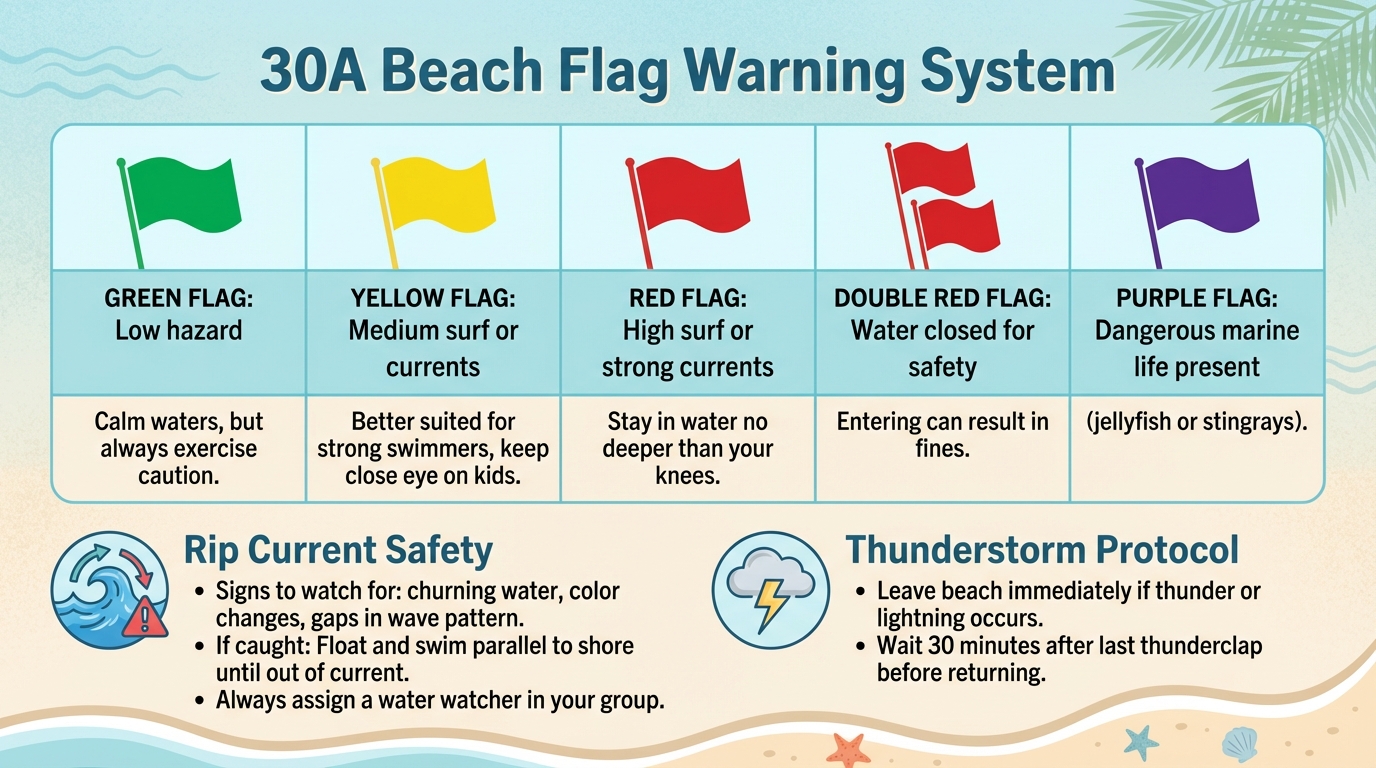
30A Beach Flag Warning System and Safety Guide
Water and Weather Safety
South Walton beaches use a flag warning system, visible at every public access point, to inform visitors about current conditions in the Gulf. Here's what the flags mean:
- Green: Low hazard - calm waters, but always exercise caution.
- Yellow: Medium surf or currents - better suited for strong swimmers, and keep a close eye on kids.
- Red: High surf or strong currents - locals often recommend staying in water no deeper than your knees.
- Double Red: Water is closed for safety reasons, and entering it can result in fines.
- Purple: Dangerous marine life, such as jellyfish or stingrays, may be present.
Even on seemingly calm days, rip currents can pose a serious risk. Watch for signs like churning water, changes in color, or gaps in the wave pattern. If caught in one, remember to float and swim parallel to the shore until you’re out of the current. Assign a water watcher in your group - someone focused solely on safety, not distracted by phones. For young children, consider using Coast Guard–approved life jackets or puddle jumpers.
Summer afternoons often bring thunderstorms, so if you hear thunder or see lightning, leave the beach immediately. Wait at least 30 minutes after the last thunderclap before returning. Following these precautions, along with local safety guidelines, can help ensure a safe beach experience.
Local Rules and Beach Etiquette
Walton County enforces several rules to keep the beaches safe and enjoyable for everyone while protecting the environment. Glass containers are not allowed, so stick to plastic, cans, or metal tumblers for beverages. Tents, chairs, and toys must not be left overnight, as they will be removed. Open fires and grills are prohibited unless arranged through approved vendors for a permitted beach bonfire.
Between May and October, the beaches along 30A become sea turtle nesting grounds. To help protect these gentle creatures, keep the beach clean, dark, and flat: pack out all trash, avoid using lights at night, and fill in any holes you dig. Stick to clearly marked public access points, and respect private beach areas. When setting up your spot, avoid blocking others' views, keep your music at a low volume, and refrain from feeding seagulls or disturbing dune vegetation, which plays a vital role in preventing erosion.
Avoiding Crowds
If you want to skip the crowds and enjoy a more peaceful beach day, timing is key. Arrive early in the morning, from sunrise to mid-morning, or plan for a visit in the late afternoon into sunset. Mornings offer cooler temperatures, a gentler sun, and better parking options. Late afternoons provide softer lighting and more space as families begin to leave for dinner. During peak summer months and holidays, steer clear of the busiest hours - 10:00 a.m. to 3:00 p.m. - at popular spots like Seaside or Rosemary Beach. For quieter alternatives, check sowal.co or explore further down the shoreline after entering to find a more secluded spot for a relaxing beach experience.
Before and After Beach Checklists
Before You Leave Your Rental
Double-check your beach access point, parking details, and ramp conditions to make your arrival hassle-free - especially if you have a stroller or cart in tow. Many 30A rentals come stocked with essentials like beach chairs, umbrellas, towels, coolers, wagons, and toys. Save yourself the trouble of overpacking by reviewing your rental listing or asking your host about what's included.
Do a final run-through of your packing list to ensure nothing gets left behind. Make sure your phone is fully charged and tucked safely into a waterproof case. Divide up the carrying duties among your group - assign someone to handle the cooler, another to take charge of the kids' bags, and someone else to manage the shade or toys. This way, the walk to the beach is easier for everyone.
Before You Leave the Beach
After soaking up the sun and surf, take a few steps to leave your spot just as beautiful as you found it.
Gather your valuables - phone, wallet, and keys - and secure them in a waterproof pouch. Do a quick check for any towels, hats, toys, or other belongings. Shake out sandy towels, empty buckets, and give toys a rinse in the surf to cut down on sand tracking.
Bring along a small trash bag to collect all your garbage, like food wrappers, cans, or broken toys. Toss it in a nearby bin or take it back to your rental if no bins are available. If you've dug any large holes in the sand, fill them back in to prevent accidents or harm to nesting sea turtles. Pack wet swimsuits and towels in a separate waterproof bag to keep the rest of your items dry.
Conclusion
A perfect day on 30A’s beautiful beaches starts with a little preparation. By packing essentials like sun protection, plenty of water, snacks, and some shade, you can fully enjoy South Walton’s stunning coastline without a hitch.
To make things easier, stick to a simple two-step routine: first, check what’s already included with your vacation rental before packing. Many 30A rentals come equipped with chairs, umbrellas, coolers, or even wagons. Second, do a quick sweep of your belongings before leaving the beach to ensure nothing gets left behind. These small steps can save both time and money while keeping your day stress-free.
Use this checklist as a starting point, but don’t hesitate to adjust it based on your group’s specific needs. Want to discover more than just the basics? For insider tips on quiet beach accesses, hidden gems, or the best local dining spots, head over to sowal.co. It’s a fantastic resource to help you explore the area like a true local, from secret beaches to community events.
With a bit of planning, you’ll be free to focus on what really matters - soaking in the Gulf’s beauty and creating unforgettable memories.
FAQs
What do the beach warning flags mean, and how should I use them?
The beach warning flag system uses colored flags to alert beachgoers about water and surf conditions, ensuring safety for everyone. Here's a quick guide to what each color represents:
- Green: Low hazard – the water is generally calm, and conditions are safe.
- Yellow: Medium hazard – exercise caution due to moderate surf or currents.
- Red: High hazard – conditions are dangerous; swimming is not recommended.
- Double Red: The beach is closed to the public; entering the water is prohibited.
- Purple: Marine life such as jellyfish or other potentially harmful creatures may be present.
Before heading into the water, always take a moment to check the flags and stay informed. Lifeguards and beach authorities update these flags regularly to reflect current conditions, so following their guidance is key to a safe beach day.
When is the best time to visit 30A beaches to avoid crowds?
If you're looking to enjoy the 30A beaches without the crowds, aim for the early morning hours or visit on weekdays. For an even calmer vibe, consider planning your trip outside the busy summer season - either before Memorial Day in late May or after Labor Day in early September.
Visiting during these quieter times comes with extra perks: cooler weather, hassle-free parking, and a more relaxed atmosphere. It's an ideal way to fully take in the charm and tranquility of 30A!
What are the must-have items for a perfect beach day on 30A?
For a relaxing and enjoyable beach day along 30A, make sure to pack these must-haves: a swimsuit, towel, sunscreen, hat, and sunglasses to shield yourself from the sun’s rays. Stay refreshed by bringing plenty of water, snacks, and a cooler to keep everything chilled. For added comfort, grab a beach chair, umbrella or shade tent, and a pair of flip-flops.
A few extra items can make your day even smoother: a waterproof phone case, lip balm with SPF, something to read like a book or magazine, and a small first aid kit in case of minor mishaps. Keep important items like your keys and wallet tucked safely in a secure pocket of your beach bag. With these essentials, you’ll be set to soak up the sun and enjoy the stunning 30A coastline!