Coastal dunes are more than just scenic mounds of sand - they’re natural barriers that protect communities, ecosystems, and economies. They reduce storm damage, prevent flooding, and support wildlife. However, urban development and human activity often harm these systems, leading to erosion, habitat loss, and increased vulnerability during storms.
Key Takeaways:
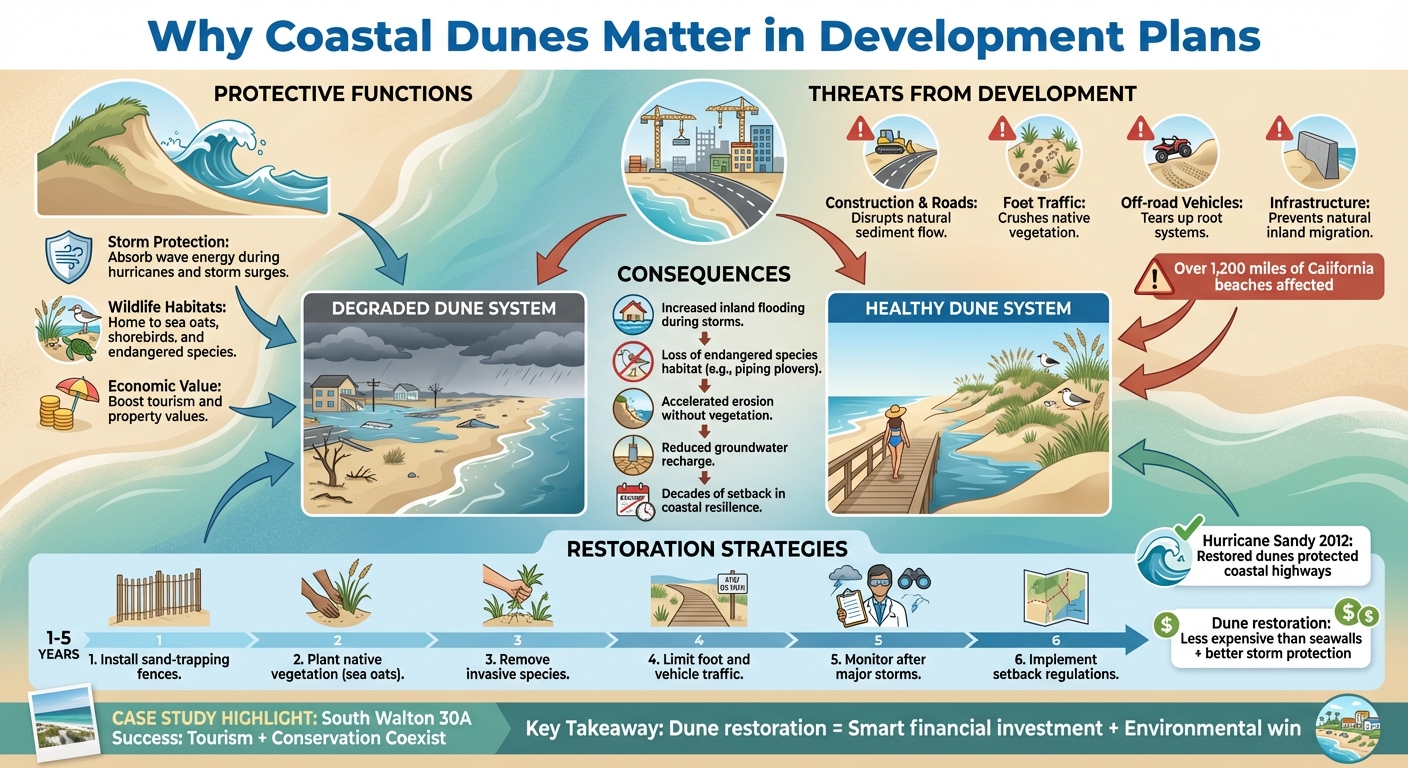
- Protection from Storms: Dunes absorb wave energy, reducing inland damage during hurricanes and storm surges.
- Wildlife Habitats: They provide homes for species like sea oats, shorebirds, and endangered animals.
- Economic Benefits: Healthy dunes maintain beaches, boosting tourism and property values.
- Threats from Development: Construction, roads, and foot traffic disrupt dunes, accelerating erosion and reducing their effectiveness.
- Restoration Strategies: Planting native vegetation, installing sand fences, and removing harmful species help rebuild dunes naturally.
- Smart Urban Planning: Setback regulations and conservation programs ensure dunes can function while allowing responsible development.
By balancing restoration efforts with sustainable development, regions like Florida’s 30A coastline have shown that protecting dunes is both practical and necessary for long-term resilience.
How Coastal Dunes Protect Communities: Functions, Threats, and Restoration Strategies
Ecological and Protective Functions of Coastal Dunes
Biodiversity and Habitat Support
Coastal dunes are more than just picturesque landscapes - they’re vital ecosystems that support a variety of life. These dunes provide habitats for plants and animals uniquely adapted to harsh conditions. For example, native grasses like sea oats play a critical role in stabilizing the dunes by trapping windblown sand. This creates microhabitats that sustain insects, shorebirds, and even endangered species. Places like Grayton Beach State Park and Western Lake in South Walton showcase how these ecosystems not only enhance biodiversity but also offer incredible opportunities for wildlife observation. However, when dunes are lost or damaged, the specialized flora and fauna they support often vanish as well, according to state and federal agencies. Beyond their role in nurturing wildlife, dunes also act as a natural shield against environmental threats.
Natural Barriers Against Storms and Erosion
Coastal dunes are nature’s frontline defense against storms and erosion. Acting as elevated sand buffers, they absorb wave energy and storm surges, protecting inland areas from severe damage. During storms, the seaward side of the dunes erodes, redistributing sand offshore, which helps minimize flooding and overwash. A powerful example of this was seen during Hurricane Sandy in October 2012, when restored dunes played a crucial role in protecting coastal highways and infrastructure. What’s remarkable about dunes is their ability to naturally rebuild over time. Through the interplay of wind and vegetation, they adapt to changing conditions like rising sea levels and stronger storms, all while maintaining beach widths by storing and releasing sand as needed.
Development Challenges and Impacts on Dune Systems
Effects of Urbanization on Coastal Dunes
Urban development - whether through building construction, new roads, or increased visitor activity - wreaks havoc on coastal dune systems. Stabilizing vegetation is often stripped away, sand becomes compacted, and natural sediment flow is disrupted, all of which speed up erosion . Every new house or highway reshapes how wind and waves interact with the dunes, while beachgoers’ footsteps crush native plants, and off-road vehicles tear up root systems that hold the sand in place. Even protective measures like fencing can backfire; in areas with heavy foot traffic, visitors sometimes remove or bypass barriers to preserve their ocean views or gain easier beach access, which only worsens the damage .
Infrastructure like coastal highways and seawalls poses another problem. These structures can trap dunes, preventing their natural movement inland - a process that’s crucial for adapting to rising sea levels and stronger storms . In Santa Monica, however, a dune restoration pilot project has shown promise. Launched in 2016, the 3-acre initiative successfully rebuilt vegetation and sand structures. This success paved the way for a 43-acre expansion approved in August 2023, aiming to balance flood protection with recreational needs. Despite such efforts, the cumulative disruptions caused by urbanization continue to create significant ecological and community challenges.
Consequences of Dune Degradation
When dunes are damaged, their ability to act as natural barriers diminishes significantly. As a result, areas with compromised dunes experience much higher levels of inland flooding during hurricanes compared to regions with intact systems .
The ecological impacts are equally troubling. Degraded dunes mean less habitat for species that depend on these unique environments, including endangered animals like piping plovers. Groundwater recharge also suffers . Without vegetation to anchor the sand, erosion accelerates, leaving dunes barren and unable to recover naturally. This creates a vicious cycle where further degradation becomes inevitable . Habitat fragmentation reduces biodiversity and can set back coastal resilience efforts by decades, particularly in areas with heavy tourist activity. These challenges are widespread, affecting over 1,200 miles of California’s beaches alone.
Strategies for Development and Dune Protection
Dune Restoration Techniques
Restoring dunes often starts with simple yet effective methods like installing sand-trapping fences and planting native vegetation. These approaches are not only economical compared to heavy machinery but also work in harmony with nature. For example, along the Gulf Coast, native plants like sea oats thrive in challenging coastal conditions - handling sand blasting, salt spray, flooding, heat, and drought. They naturally trap windblown sand, while their deep root systems stabilize the sediment beneath them, creating a robust foundation for the dunes to grow and thrive.
Another crucial step is removing invasive species. A pilot project at Point Reyes National Seashore in California demonstrated the success of this approach. By eliminating non-native European beachgrass, the dunes were able to migrate naturally, improving their ability to buffer storms and restoring habitats for native plants and animals.
To ensure long-term success, restored dunes should be positioned as far oceanward as possible, allowing for natural seaward expansion. Limiting foot and vehicle traffic is equally important to protect the fragile, newly planted vegetation. After major storms, regular monitoring helps identify areas where replanting or repairs to sand fencing are necessary, ensuring the dunes remain intact and effective.
Incorporating Dunes into Urban Planning
Beyond physical restoration, thoughtful urban planning plays a key role in protecting dune systems while allowing for responsible coastal development. Zoning regulations, like setback requirements, create a buffer zone by prohibiting permanent structures within a specific distance from the primary dune or coastal construction control line. This space gives dunes the flexibility to migrate landward as sea levels rise, maintaining their protective function. Additionally, dune overlay districts can enforce design rules like elevated structures, minimal grading, and restrictions on seawall construction, further safeguarding these natural barriers.
Modern tools like probabilistic numerical models are also becoming a cornerstone of planning. These models simulate how dunes might evolve over the next 50–100 years under various conditions, from frequent hurricanes to long periods of calm, as well as different rates of sea level rise. This data helps communities plan within acceptable risk levels and prioritize nature-based solutions over hard infrastructure. Many projects in the U.S. follow the U.S. Army Corps of Engineers' guidelines, which recommend designing dunes to withstand storms with return periods of 25–100 years.
Policy incentives can also encourage private landowners to protect dunes. Tools like conservation easements, density bonuses, and cost-sharing programs make it more appealing to invest in dune preservation rather than building seawalls. In areas where tourism drives the economy, such as South Walton and the 30A corridor, initiatives like sowal.co highlight how healthy dunes not only improve beach quality but also boost property values. Educating the public about the benefits of well-maintained dunes - such as superior flood protection at a lower long-term cost compared to seawalls - helps foster community-wide support for sustainable coastal management. Together, these strategies show how dunes can be integrated into broader plans for resilient and sustainable coastal development along the 30A corridor.
sbb-itb-d06eda6
Case Studies: Successful Dune Management Practices
Lessons from South Walton and the 30A Region
South Walton has become a shining example of how tourism and dune conservation can coexist. The region has implemented elevated boardwalks to minimize foot traffic on the dunes, preserving their structure and function. Techniques like fencing and planting native vegetation have been key to stabilizing the dunes and preventing erosion, all while maintaining the natural beauty that attracts visitors.
Grayton Beach State Park demonstrates this balance perfectly. Coastal dune lakes and untouched beaches thrive alongside carefully managed public access, with features like viewing decks and small parking areas. These efforts ensure that dunes remain a reliable defense against storm surges.
Interestingly, the region has avoided constructing seawalls, favoring restoration techniques instead. These methods, which take 1–5 years to implement and require ongoing maintenance, are not only more affordable than traditional infrastructure but also align with South Walton's eco-tourism focus. Resources like sowal.co highlight these unique natural features - such as the rare coastal dune lakes like Western Lake - educating visitors and potential residents about the importance of dune-conscious travel and living.
These initiatives offer a roadmap for other regions looking to balance development with conservation.
Other Examples of Coastal Dune Conservation
Similar conservation strategies have succeeded in other areas as well. At Point Reyes National Seashore, managers tackled invasive species to restore natural dune migration and improve storm resilience. A 2009 pilot project near Abbotts Lagoon involved removing up to 120 acres of European beachgrass, which had disrupted natural dune movement. With the invasive grass gone, the dunes were able to shift naturally again, enhancing their ability to act as storm buffers and creating better habitats for native plants and wildlife.
On the U.S. East Coast, restored dunes proved their worth during Hurricane Sandy in 2013, protecting highways and buildings without the unintended damage often caused by seawalls. These successes have inspired coastal communities across the country to adopt advanced modeling tools that predict dune changes, helping them plan for the future more effectively.
Mondays with the Manager: Dune Restoration Project Strengthens Surfside’s Shoreline
Conclusion
Coastal dunes play a critical role in protecting shorelines, providing habitats for wildlife, and supporting local economies. When these natural barriers are overlooked during development, the consequences can be severe - more flooding, faster erosion, and the destruction of vital ecosystems.
Restoring dunes isn’t just an environmental win; it’s also a smart financial move. Studies reveal that dune restoration is less expensive than building hard structures, while also offering better storm protection and opportunities for eco-tourism.
Take South Walton’s 30A as an example. By combining native plants with thoughtful development setbacks, the area has managed to safeguard its dunes while maintaining public access. This kind of balance between development and natural defenses is key to ensuring the region’s resilience in the face of growing climate challenges, such as stronger storms and rising sea levels.
The takeaway is clear: incorporating dunes into development plans isn’t just a choice - it’s a necessity for creating a secure and sustainable future.
FAQs
How do coastal dunes help protect communities from storms and flooding?
Coastal dunes act as nature's barriers, taking the brunt of storm surges and powerful waves. By absorbing much of this energy, they play a critical role in safeguarding homes, roads, and essential infrastructure from extensive damage.
Beyond protection, dunes also capture sand and sediment, helping to stabilize shorelines and limit erosion. This natural process is vital for preserving the security and durability of coastal communities when extreme weather strikes.
What are the biggest threats to coastal dunes from urban development?
Coastal dunes are under constant threat from urban development. Construction projects often lead to habitat destruction, while the use of heavy machinery can destabilize the dunes. On top of that, removing native vegetation - critical for holding the sand together - further jeopardizes their stability. Changes in natural water flow and shifting storm patterns only make matters worse, speeding up erosion and leaving these ecosystems more vulnerable.
Safeguarding coastal dunes is crucial. They act as natural barriers against storms, provide habitats for wildlife, and contribute to the scenic beauty of coastal regions.
How can we restore and protect coastal dunes effectively?
Restoring and protecting coastal dunes calls for a mix of practical and well-planned measures. One key approach is planting native vegetation, which helps anchor the sand and reduces erosion. Another effective method is using sand fencing to capture windblown sand, promoting the natural buildup of dunes. Limiting construction near dunes and creating buffer zones are also crucial steps to maintain their stability and ecological role.
Equally important is educating the public about the importance of coastal dunes. When people understand their value, they’re more likely to act responsibly - like sticking to marked paths and minimizing foot traffic in fragile areas. Together, these strategies ensure that dunes can continue to shield coastal communities, support ecosystems, and balance the demands of sustainable development.