Paddleboarding on 30A offers stunning experiences, but safety must come first. Whether you're navigating the Gulf, coastal dune lakes, or Choctawhatchee Bay, preparation is key to avoiding risks like rip currents, boat traffic, and sudden weather changes. Here's what you need to know:
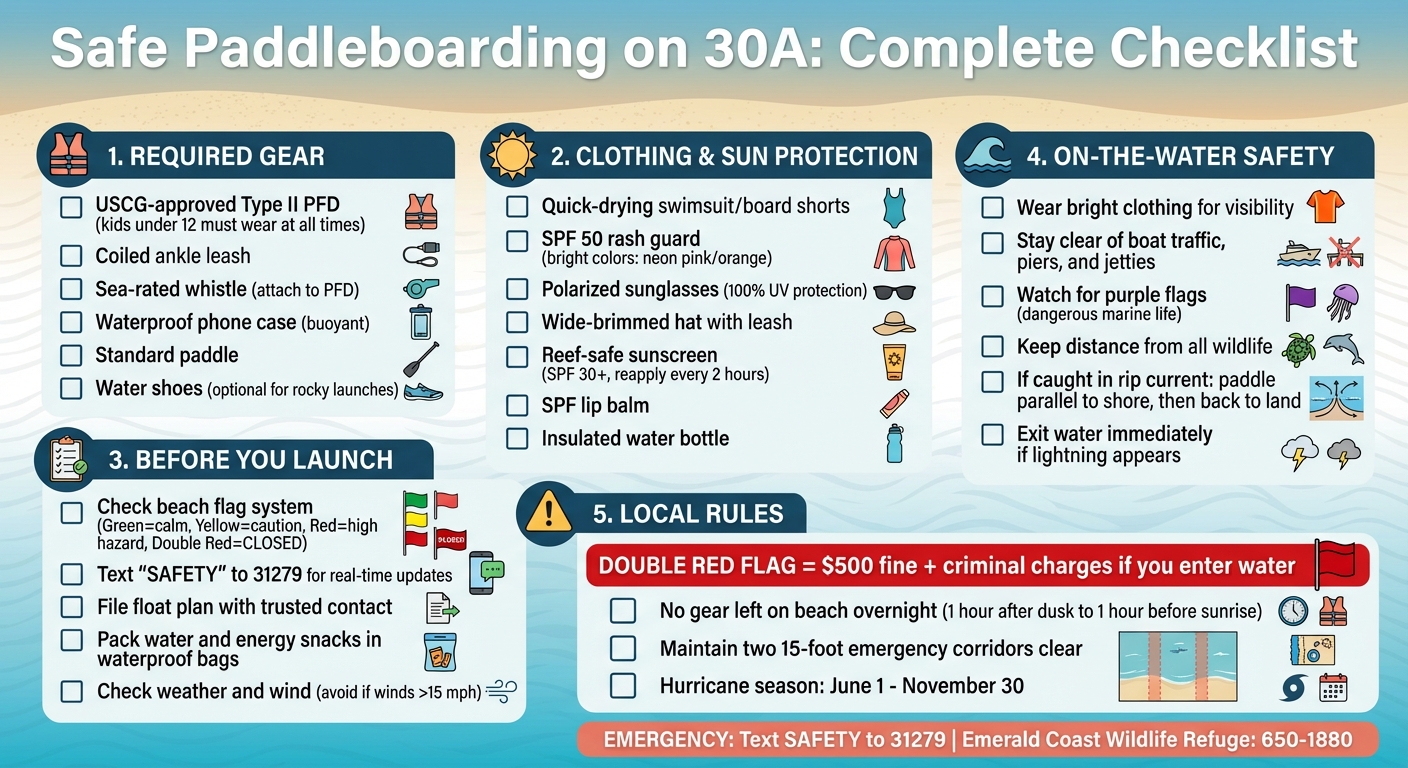
- Gear Essentials: A USCG-approved PFD, coiled leash, sea-rated whistle, and waterproof phone case are must-haves.
- Clothing & Sun Protection: Wear quick-drying, bright clothing (SPF rash guards recommended), polarized sunglasses, and reef-safe sunscreen.
- Pre-Launch Steps: Check the beach flag system, file a float plan, and pack water/snacks.
- On-the-Water Safety: Avoid rip currents, stay visible to boats, and respect wildlife.
- Local Rules: Double red flags mean the water is off-limits, and leaving gear on the beach overnight is prohibited.
Stay informed by texting "SAFETY" to 31279 for real-time updates, and always prioritize safety to enjoy 30A’s waters responsibly.
Essential Paddleboarding Safety Checklist for 30A
Paddle Boarding Safety Top Tips by Red Paddle Co
Required Gear Checklist
When you're heading out on 30A's unpredictable waters, having the right gear isn't just smart - it's essential. Paddleboards used outside designated areas are classified as vessels, meaning they must meet the same safety requirements as kayaks and canoes. Here's a rundown of what you'll need to stay safe and prepared.
Personal Flotation Device (PFD)
Every paddler must have a USCG-approved Type II PFD, and kids under 12 are required to wear theirs at all times. A PFD isn’t just a safety measure - it provides buoyancy if you fall, cuts down on fatigue, and makes you more visible to boats.
"A well-chosen life jacket can mean the difference between a close call and a serious emergency." – Thurso Surf
Choosing the right PFD depends on your skill level and the water conditions. For beginners or those paddling in rough Gulf waters, Type III foam vests are a solid choice because they offer constant flotation. Experienced paddlers often prefer Type V inflatable vests for their lightweight feel and better range of motion, but these require more upkeep. If you go with a Type V, check the gas cartridge before every trip and replace it annually. To ensure a proper fit, tighten all straps snugly and lift your arms overhead. If the vest rides up past your chin or ears, it needs adjustment.
SUP Leash and Paddle
Always secure a coiled leash around your ankle to keep your board close if you fall, and bring a standard paddle for steering and navigation.
Safety Accessories
Safety gear is just as important as your board and paddle. Attach a sea-rated whistle to your PFD for signaling, and keep a charged smartphone in a buoyant waterproof case for emergencies and real-time flag updates (text "SAFETY" to 31279). A waterproof watch can help you track time, and water shoes are great for protecting your feet from sharp objects or hot surfaces.
Clothing and Sun Protection Checklist
What to Wear While Paddleboarding
Florida's heat calls for lightweight, quick-drying clothing. Opt for a swimsuit, bikini, or board shorts paired with a nylon-spandex rash guard (often offering SPF 50) to shield your skin from the sun and avoid chafing. Skip cotton - it gets heavy when wet and dries slowly. The right outfit not only keeps you comfortable but also improves safety by enhancing visibility on the water.
Barefoot paddling is ideal for grip, but if you're launching from rocky or debris-covered areas, flexible water shoes or aqua socks are a smart choice. For cooler weather, a lightweight wetsuit can keep you warm without making you overheat.
Bright colors like neon pink or orange are not just stylish - they make it easier for others to spot you in busy waters. Once you're dressed for the occasion, don't forget to gear up with sun protection.
Sun Protection Items
Before hitting the water on 30A, apply a broad-spectrum, water-resistant sunscreen with SPF 30 or higher. Reapply every two hours to stay protected. To help preserve the Gulf's marine life, choose reef-safe sunscreens like 30A Branded SPF 30.
"Choose a sunscreen that's good for the environment. Shine On Living and The 30A Company have introduced an environmentally conscious sun care line, reminding consumers to choose sunscreens carefully to protect both their skin and delicate marine ecosystems." – The 30A Company
Polarized sunglasses with 100% UV protection are essential for cutting glare and protecting your eyes. A wide-brimmed hat can shield your face, ears, and neck from the sun - just secure it with a leash to keep it from drifting away if you take a tumble. Don’t overlook SPF lip balm for your lips and an insulated water bottle to stay hydrated throughout your paddleboarding adventure.
Before You Launch Checklist
Getting ready for your adventure along 30A involves more than just grabbing your gear. Pre-launch checks are key to keeping your trip safe and enjoyable.
Check Weather and Water Conditions
Before heading out, always check the beach flag warning system. These flags, displayed along the shore, act as your guide to current water conditions. Here’s what they mean:
- Green: Calm waters, ideal for activities.
- Yellow: Moderate surf and currents - proceed with caution.
- Red: High hazards - stay extra alert.
- Double Red: Water is closed to the public. Entering during double red conditions can lead to a $500 fine and even criminal charges.
"Beach flags are like traffic lights for the shore. They inform beachgoers about water conditions and potential hazards." – 30A.com
For real-time updates, text "SAFETY" or "FLAG" to 31279. Flag conditions are updated twice daily, at 9:00 a.m. and 1:00 p.m., and you can also check live beach cams for up-to-the-minute views. Watch for rip current signs, like darker patches of water or unusual breaks in wave patterns, and head to safety immediately if lightning appears.
Once you've checked the weather and water, let someone know your plans before you launch.
File a Float Plan
Always inform a trusted friend or family member about your outing. Share your exact launch spot, the route you plan to paddle, and your expected return time. This simple step ensures someone knows to alert authorities if you don’t return as planned.
Keep a fully charged smartphone in a waterproof case so you can update your contact if plans change. And when you’re back on shore, send a quick text to let them know you’re safe - it's a small gesture that provides big peace of mind.
Pack Water and Snacks
With your route planned and float plan filed, it’s time to pack the essentials. Hydration is a must under Florida’s blazing sun, so bring plenty of water and take breaks at least every hour. Energy-packed snacks like trail mix or granola bars are great choices - just store them in waterproof bags to keep them dry.
sbb-itb-d06eda6
Safety Rules While on the Water
When paddling along the 30A coastline, following safety guidelines is essential to avoid accidents and adapt to changing conditions. This area offers stunning views but also comes with challenges like busy boat traffic and sudden weather shifts.
Staying Clear of Boat Traffic
Motorized boats and jet skis are a common sight in many parts of 30A. To stay safe, wear bright clothing to remain visible and keep a safe distance from boats, especially those that are less maneuverable. Avoid paddling near piers, jetties, or other structures where rip currents and heavy boat traffic are more likely. If you'd rather steer clear of motorized craft altogether, head to Campbell Lake at Topsail Hill Preserve State Park, a serene spot free of boats. Always stay alert to your surroundings, as natural hazards can also pose risks.
Watching for Wildlife
Pay attention to purple flags - they signal the presence of potentially dangerous marine life like jellyfish or sharks. Keep your distance from all wildlife, including sea turtles and coastal birds. If you come across an injured or stranded animal, contact the Emerald Coast Wildlife Refuge at 650-1880 instead of trying to help on your own. In shallow waters, watch out for stingrays resting on the sandy bottom. To avoid attracting sharks, skip wearing shiny jewelry.
Handling Currents and Wind
Environmental factors like currents and wind require constant vigilance. If you're caught in a rip current, paddle parallel to the shore to escape, then head back to land. For beginners, it's best to paddle when winds are below 10 mph, and avoid the water entirely if winds exceed 15 mph. Be aware that the 30A region is prone to sudden storms, which can last 1 to 3 hours and quickly change water conditions. At the first sign of lightning, get out of the water immediately and take shelter in a sturdy building - not a vehicle.
30A-Specific Hazards and Tips
Navigating the 30A coastline safely requires a solid understanding of the area and its unique challenges. From knowing where to launch your paddleboard to preparing for seasonal weather, being informed can make all the difference between a fun outing and a dangerous situation.
Beach Access and Parking
South Walton boasts ten regional beach access points that are perfect for paddleboarders. These spots come equipped with parking, restrooms, and lifeguard coverage (from March 1 to October 31, typically 10:00 a.m. to 6:00 p.m.). For ample parking, Miramar Beach Regional Access tops the list with 200 spaces, while Inlet Beach offers 110 spaces spread across three entry points. If you need ramp access, Santa Clara (60 spaces), Ed Walline (39 spaces), and Fort Panic (34 spaces) are excellent options.
During busy seasons, parking can be tight. That’s where the 30A Trolley comes in handy - it runs from March through October with fares of $5 for a one-way trip or $15 for a day pass. Keep in mind that the "Leave No Trace" ordinance prohibits leaving personal items, including paddleboards, on the beach overnight (from one hour after dusk to one hour before sunrise). This rule helps protect sea turtles and ensures emergency vehicles can access the area. Also, always keep two 15-foot emergency corridors clear: one running from the dunes to the water and another from the water’s edge upland.
Hurricane Season Safety
The Atlantic hurricane season spans from June 1 to November 30, bringing additional risks for outdoor activities. Drowning is the leading cause of death during hurricanes, often due to ignoring or underestimating weather warnings.
"The number one cause of loss of life in a hurricane is drowning second to complacency" – Susan Gunn, retired paramedic
Before every launch, check the Gulf’s flag warning system. You can get real-time updates by texting "SAFETY" to 31279. If a storm is on the horizon, secure your gear indoors early to prevent it from becoming dangerous debris. Once the storm passes, wait for local authorities to evaluate waterway safety. Shifting sandbars, debris, and poor water quality can pose hidden risks.
Emergency Communication
Cell phone coverage can be unreliable along certain stretches of 30A, especially near state parks or less developed areas. Always carry a fully charged phone in a waterproof case. For extra safety, consider bringing a portable NOAA Weather Radio tuned to channels WX1 (162.550 MHz), WX2 (162.400 MHz), or WX3 (162.475 MHz) for live updates.
The 30A app is another great resource for localized safety alerts. Additionally, follow the Walton County Sheriff's Office and Emergency Management social media pages for the latest updates during severe weather. If you encounter an emergency on the water, lifeguards at regional access points can assist during their operational hours. Outside of these times, ensure you have reliable communication tools to call for help.
Conclusion
Enjoy the beauty of the Gulf while keeping safety a top priority. As PADL reminds us: "The key to enjoying paddleboarding or any other water sport is to put 'safety first' and make sure that you are properly prepared". Always avoid the water during double red flag conditions - stay informed by texting "SAFETY" to 31279 for real-time updates.
Having the right equipment is essential. Make sure you have a USCG-approved PFD, a secure leash, and a sea-rated whistle on hand. Additionally, sharing a float plan with someone you trust - detailing your destination and expected return time - adds another layer of security.
Timing and environmental awareness are just as important. Early morning paddles often provide the calmest waters, as south winds tend to strengthen later in the day. Avoid paddling in high winds, and if you're a beginner, explore the coastal dune lakes. These calm, protected areas are perfect for honing your skills.
Stay vigilant by steering clear of rip currents and boat traffic. With the right preparation and awareness, you’ll be ready to safely embrace all that 30A’s waters have to offer.
FAQs
What should I do if I get caught in a rip current while paddleboarding on 30A?
If you’re caught in a rip current, the key is to stay calm and conserve your energy. Fighting directly against the current will only tire you out. Instead, float or swim parallel to the shore to escape its pull. Once you’re out of the current, you can swim diagonally back toward the shore. If you can, signal for help - ask someone nearby to alert a lifeguard or call 911, providing your exact location. Staying calm and knowing these steps can be lifesaving.
What do I need to make sure my paddleboarding gear is safe and compliant on 30A?
To keep your paddleboarding experience along 30A safe and within regulations, here are some key steps to follow:
- Wear or have a U.S. Coast Guard-approved personal flotation device (PFD). For children under 6, wearing a PFD is mandatory at all times. Adults should at least keep one within reach. Choose one that fits well so you're more likely to use it.
- Carry a whistle or other sound-making device. This is a safety requirement, and it should be loud enough to be heard from up to half a mile away. Attaching it to your PFD or paddleboard ensures it’s always accessible.
- Use proper lighting in low-visibility conditions. If you're paddling at night or in fog, you must have a white light visible from all directions. A flashlight or lantern works perfectly for this.
- Check beach safety flags and local updates. Familiarize yourself with the South Walton beach flag system and any advisories before heading out. This helps you stay aware of current conditions and rules.
These steps will help you stay safe, prepared, and in compliance while enjoying the stunning 30A coastline on your paddleboard.
What safety rules and flag warnings should I know before paddleboarding on 30A?
Before heading out for paddleboarding on 30A, it’s essential to familiarize yourself with South Walton’s beach flag system. This system helps you understand water conditions and stay safe:
- Green: Low hazard with calm water - paddle carefully, but enjoy the gentle conditions.
- Yellow: Moderate hazard, including surf or currents - stay vigilant and keep an eye on changing conditions.
- Red: High hazard with strong surf or currents - recommended only for experienced paddlers.
- Double Red: The water is off-limits to everyone. Entering could lead to a $500 fine.
- Purple: Marine pests, like jellyfish, are present - enter the water cautiously or consider staying out.
Beach flags are updated daily at access points, and you can check real-time updates through text alerts or local resources.
Beyond the flag system, there are a few local rules to keep in mind. Always pack up your belongings at the end of the day, limit tent sizes to 10×10 feet or smaller, and follow lifeguard instructions. Lifeguards are on duty from 10 a.m. to 6 p.m., March 1 through October 31. Even on calm days, be mindful of rip currents. If you find yourself caught in one, paddle parallel to the shore to escape safely.
By following these guidelines, you can enjoy a safe and fun paddleboarding adventure on 30A.