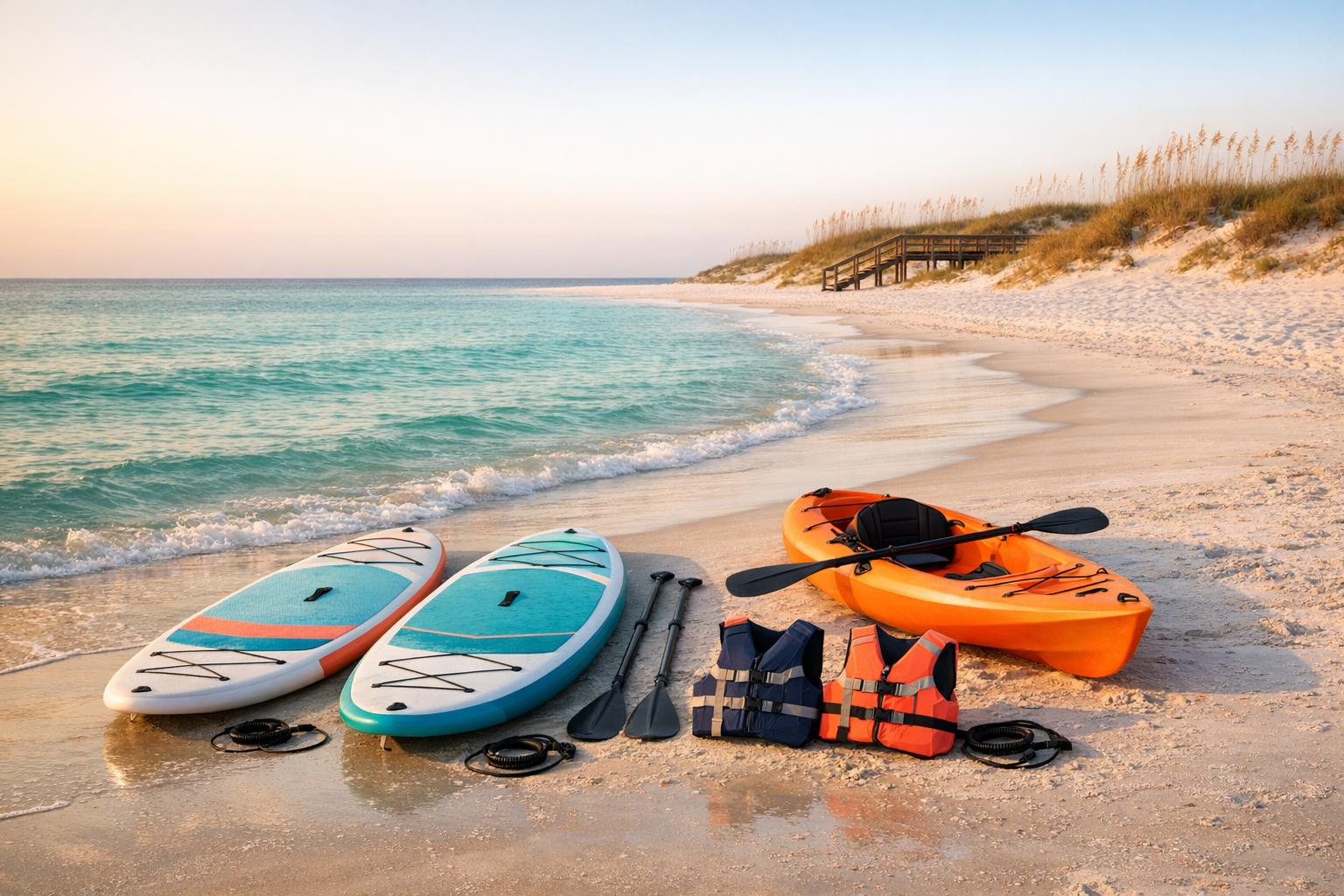
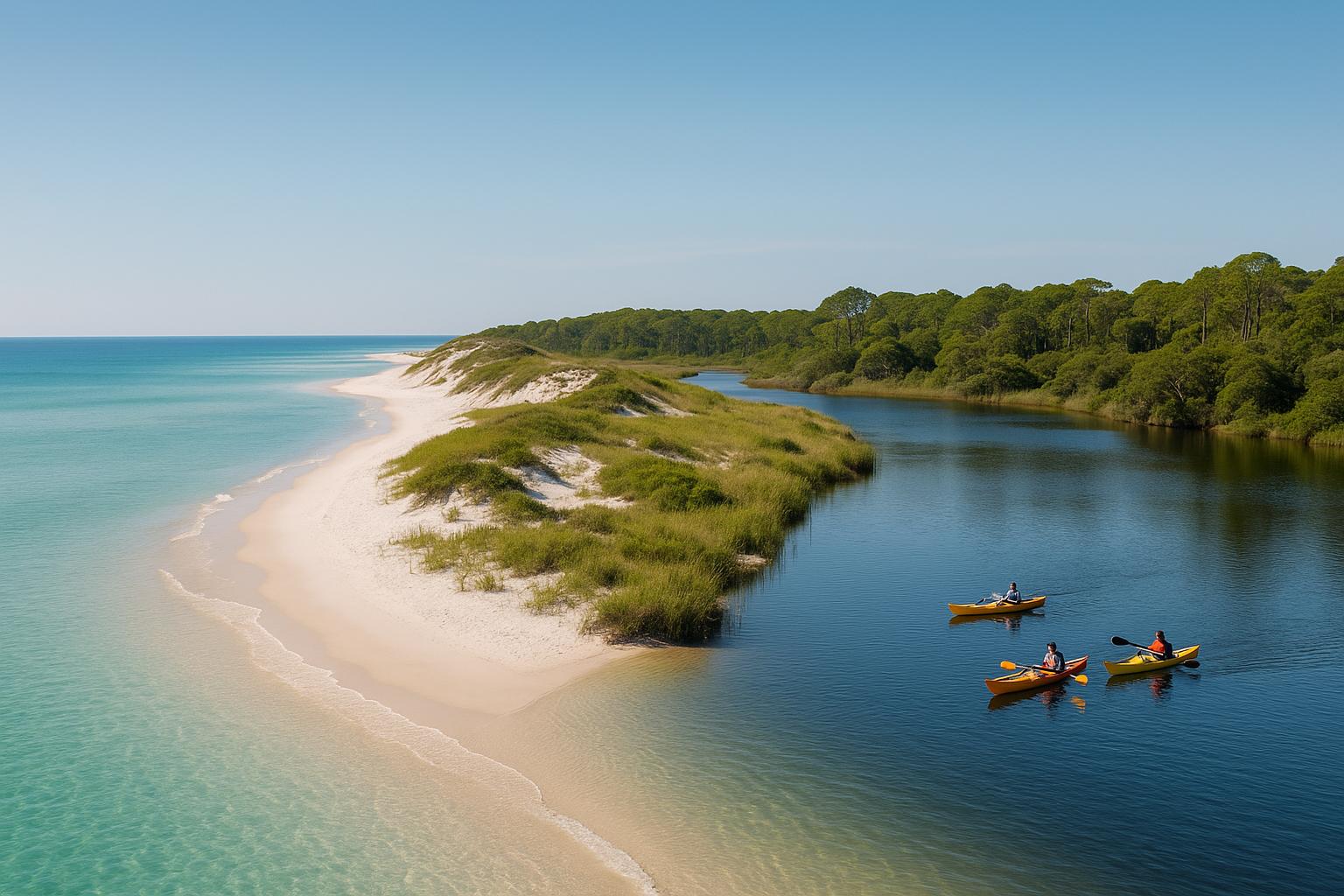
Renting a kayak in 30A lets you explore Florida's stunning waterways, including coastal dune lakes, Choctawhatchee Bay, and the Gulf of Mexico. To ensure a smooth experience, here's what you need to know:
- Understand the waters: Coastal dune lakes are calm and ideal for beginners; the bay offers more challenge with wind and boat traffic; the Gulf requires experience due to waves and currents.
- Prepare for weather: Morning paddles are safer; avoid afternoon storms. Check local conditions for tides, wind, and marine life warnings.
- Safety first: Wear a life jacket, follow rental shop guidelines, and leave a float plan. Bring essentials like sunscreen, water, and a dry bag.
- Choose the right kayak: Sit-on-tops are great for beginners, while tandem kayaks suit families. Check weight limits and seating arrangements.
- Plan your trip: Book ahead, confirm launch details, and stick to beginner-friendly routes if needed.
Whether you're paddling for an hour or a full day, preparation is key for a safe, enjoyable outing. For more tips, check local resources like sowal.co.
Fast and free delivery of kayak rentals on 30A in Santa Rosa Beach Florida
Know the Local Waters in 30A
Before renting a kayak in 30A, it’s essential to understand the area's water environments. Each type of water offers its own challenges, characteristics, and safety considerations, which can greatly influence your experience.
Types of Water You'll Encounter
30A offers three distinct paddling environments, each suited to different skill levels and preferences. Here's what to know about each:
Coastal dune lakes - such as Western Lake, Camp Creek Lake, and Deer Lake - are shallow, brackish lakes with calm waters, typically waist- to chest-deep. These lakes are ideal for beginners and families due to their gentle currents and limited boat traffic. However, avoid the outfall channels where these lakes connect to the Gulf. When active, these channels can create strong, river-like currents and rapidly changing water levels.
Choctawhatchee Bay, located north of 30A, is a large estuarine area where freshwater rivers meet saltwater from the Gulf. While generally more protected than the Gulf, the bay can experience wind-driven waves and choppy conditions, making it more challenging than the calm dune lakes. It’s a great spot for longer paddles and fishing, but you’ll need to stay mindful of powerboat traffic in marked channels and plan routes closer to shore. Open stretches of the bay demand stamina and solid paddling skills, especially when winds pick up.
The Gulf of Mexico offers stunning views and crystal-clear water, but it’s also the most unpredictable. Surf, tides, and weather can create challenging conditions, even for experienced paddlers. Moderate surf can flip kayaks, fill them with water, or push paddlers off course. Safe Gulf paddling requires timing your launch between wave sets, keeping your kayak bow pointed into incoming waves, and steering clear of red or double-red flag days. This environment is best for confident paddlers familiar with surf zones and self-rescue techniques.
| Waterbody | Typical Conditions | Main Hazards | Best For |
|---|---|---|---|
| Coastal dune lakes | Calm, shallow, minimal boat traffic | Strong currents at outfalls; conservation rules | Beginners, families, wildlife viewing, short paddles |
| Choctawhatchee Bay | Protected but can get choppy | Wind-driven waves, boat wakes, longer distances | Intermediate paddlers, fishing, longer trips |
| Gulf of Mexico | Clear water; surf varies by day | Surf, rip currents, weather changes | Experienced paddlers comfortable in open water |
Tides and currents are strongest at dune lake outfalls and bay channels, so check local tide charts before heading out. Many public beach access points along 30A designate swim-only zones where kayaks aren’t allowed. Launch outside flagged swim areas and steer clear of lifeguard towers and crowded swimmer zones. Additionally, some areas - like state parks and protected zones - have specific rules, such as no-motor zones or restrictions near bird nesting sites and seagrass beds. Parks like Grayton Beach State Park and Topsail Hill Preserve State Park often have designated launch zones, so pay attention to signage and follow any guidance from rental shops or park staff. Always avoid damaging dunes or shoreline vegetation to help preserve these rare ecosystems.
Weather and Wildlife to Watch For
Once you’ve familiarized yourself with the water types, it’s time to think about how weather and local wildlife could impact your trip. Seasonal weather patterns in the Florida Panhandle play a major role in kayak safety and planning.
Summer temperatures often climb into the upper 80s to low 90s °F, with afternoon thunderstorms bringing lightning, gusty winds, and sudden downpours. Morning outings are generally safer, with calmer winds and less risk of storms. During hurricane season (August to October), tropical systems can create heavy surf, strong currents, and frequent red-flag beach conditions, even days before or after a storm’s landfall.
In cooler months, passing cold fronts can bring strong north or northwest winds, quickly roughing up the bay and Gulf. On blustery days, stick to more sheltered locations like the dune lakes. Wind direction is crucial: onshore winds can make returning to shore exhausting, while offshore winds may push you farther out than intended. Whenever possible, plan to paddle with the wind at your back on your return trip.
Wildlife in 30A adds to the experience but requires respectful behavior. In the Gulf and bay, you might spot dolphins, sea turtles, rays, and various fish species. Coastal dune lakes are home to wading birds, turtles, and occasionally alligators in freshwater areas. Always maintain a respectful distance - don’t feed or chase wildlife, and follow state guidelines for marine mammal viewing.
During sea turtle nesting season (May through October), avoid disturbing marked nests on the beach, keep lights low at night, and give turtles plenty of space in the water. Be mindful of jellyfish, which are more common in the Gulf and bay at certain times of the year. A purple beach flag signals dangerous marine life, so check with your rental outfitter about current conditions before heading out.
Before launching, take these safety steps: check the marine forecast for wind speed, wave height, and thunderstorm chances. Look for any small craft advisories or beach flag warnings. Verify whether your planned location is a protected lake, bay, or the open Gulf, and adjust your route and distance based on conditions and your group’s experience level. Local rental shops and guides are a great resource for advice on calm paddling spots and beginner-friendly routes. Websites like sowal.co offer detailed maps, area overviews, and trip ideas tailored to South Walton and 30A, helping you find the best launch points and routes for your skill level.
Rental Rules and Safety Requirements
Before renting a kayak in 30A, it's crucial to familiarize yourself with the legal and safety requirements. This preparation not only ensures a smooth rental process but also helps you stay safe on the water. While policies may vary slightly between outfitters, there are some common guidelines you can expect.
Age and ID Requirements
To rent a kayak, the primary renter must be at least 18 years old. Minors can participate, but only under specific conditions. Children under 12 must ride as passengers in a tandem kayak with an adult. Older minors may paddle solo, but only if they meet the outfitter's size and age criteria and the waters are calm. Be sure to bring a government-issued photo ID and a major credit or debit card for the security deposit. Additionally, you may need to sign a waiver confirming your paddling experience and understanding of safety protocols.
Once your eligibility is confirmed, double-check that all required safety equipment is provided and in good condition.
Required Safety Gear
Kayak rentals typically include U.S. Coast Guard–approved personal flotation devices (PFDs), paddles, and often a marine safety whistle. Some outfitters may also provide extras like comfort seating, paddle leashes, or a white light for dusk trips, as required by Florida law. Inspect all gear carefully before heading out. Ensure PFDs fit securely, paddles are undamaged, and any whistles or lights are functional.
What to Confirm During Your Safety Briefing
After confirming your age, ID, and equipment, pay close attention during the safety briefing. This is your chance to clarify any lingering questions about your trip.
During the briefing, make sure you understand your designated paddling zone, right-of-way rules, and the outfitter's weather, surf, and cancellation policies. Ask about safe distances from wildlife and review emergency procedures, including who to contact if conditions change unexpectedly. Leave a float plan with the rental shop or a trusted person, detailing your launch point, intended route, and expected return time. Also, get a direct phone number for assistance in case of equipment issues or worsening conditions. For sudden squalls, ask about the nearest safe shoreline or access point and when to call local emergency services instead of attempting a self-rescue.
Most outfitters require adult participants to sign a waiver outlining the risks of kayaking, such as capsizing, sun exposure, and unpredictable water conditions. Review the liability and damage policies carefully. Understand how repair or replacement fees are determined and what happens if you fail to follow staff safety instructions. If you're renting for a minor, you'll be signing on their behalf and taking full responsibility for their safety.
Local guides can also be a great resource, offering insights on trustworthy rental shops, typical inclusions, and seasonal tips. With the right preparation, you'll be set for a safe and enjoyable kayaking adventure!
Choosing the Right Kayak and Gear
Once you've got a handle on local waters and safety precautions, the next step is picking the right kayak and getting your gear in order. The kayak you choose should match your skill level, the conditions you'll face, and the needs of your group.
Types of Kayaks Available
Sit-on-top kayaks are the go-to choice for rentals around 30A, and it’s easy to see why. They’re stable, simple to get on and off, and they drain water quickly if waves splash over. These are perfect for beginners, kids, or anyone looking for a casual paddle along the Gulf, the coastal dune lakes like Western Lake, or Choctawhatchee Bay. Plus, if you tip over, getting back on is a breeze compared to sit-inside models.
Sit-inside kayaks offer a drier and more efficient ride, making them a solid pick for experienced paddlers or cooler days. However, they’re trickier to re-enter if you flip, and they’re less common in 30A’s rental options. Most visitors will find sit-on-tops more practical and beginner-friendly.
When deciding between a single or tandem kayak, think about your group and paddling skills. Single kayaks are great for solo paddlers who want independence and control. On the other hand, tandem kayaks are ideal for couples, families with young kids, or groups with mixed abilities since a stronger paddler can take on more of the work. Just double-check the kayak’s weight capacity and seating arrangement to ensure everyone fits comfortably.
If fishing is on your agenda, fishing kayaks are available at some 30A rental shops. These models come with rod holders, extra storage, and a stable platform, making them ideal for casting lines in the dune lakes or bay. For something a little different, specialty kayaks like clear-bottom or glow models offer unique views on calm waters, though they might not be as comfortable for longer trips.
Weight and height limits are key factors when choosing a kayak. Many two-seaters in 30A are designed for around 400–450 pounds, including paddlers and gear. Taller paddlers should look for longer kayaks or adjustable footrests to avoid feeling cramped. Always check the posted weight limits - overloading can compromise stability and safety.
For families with young kids or multi-generational groups, look for kayaks with child-sized life vests, stable seating arrangements, and plenty of room. Wide tandem or three-seat sit-on-tops are often the safest choice. Groups with older or less mobile members might prefer kayaks with higher-backed seats, easy entry points, and shorter paddling routes. Stability and comfort should take priority over speed.
Once the kayak is sorted, it’s time to fine-tune your gear for the trip.
Gear and Fit Checklist
Having the right gear - and making sure it fits - can make or break your time on the water. Start with the paddle. Taller paddlers or those using wider sit-on-tops should go for longer paddles to avoid overreaching. Ask the rental shop to help size the paddle by checking that your hands can make a relaxed, shoulder-height stroke without straining.
Next, test out the seat comfort and ergonomics. Sit in the kayak and see if the seat provides enough padding and back support. Adjust it to maintain an upright posture without stressing your lower back. Make sure the footrests or wells allow your knees to bend slightly, and practice a few paddle strokes to ensure everything feels natural. Any discomfort will only get worse after an hour on the water.
Don’t forget essential accessories like dry bags, waterproof phone cases, and tie-downs for coolers or water bottles. Many rental shops include basic safety gear with their kayaks, but you might need to ask for extras like paddle leashes, anchor poles for fishing, or small coolers for longer outings. Bungee cords or deck tie-downs are especially handy for keeping your belongings secure.
Local rental shops are a great resource for advice on kayak types and gear setups, especially if you’re navigating the calm coastal dune lakes, the open Gulf, or Choctawhatchee Bay. They can recommend models that handle wind or choppy water better. Online guides like sowal.co also provide tips on launch points, typical conditions, and family-friendly routes, helping you decide whether you need extra storage, stable kayaks, or upgraded seats for longer trips.
Before you hit the water, go through a quick pre-launch checklist. Make sure paddles are the right size, seats are adjusted for comfort, and essentials like water, sunscreen, and a waterproof phone case are packed. Double-check that dry bags are sealed, weight is evenly distributed, and all gear is secured in the kayak. A little preparation goes a long way toward a smooth and enjoyable outing.
sbb-itb-d06eda6
What to Pack and Wear for Your Kayaking Trip
Getting the right clothing and gear is key to enjoying a comfortable kayaking trip along 30A. With the Gulf Coast's intense sun, warm weather, and the occasional splash, you'll want to focus on quick-drying materials, sun protection, and waterproof storage to keep your essentials safe.
Clothing and Sun Protection
Once your kayak and gear are sorted, it’s time to think about what you'll wear and pack. Lightweight, quick-drying layers are ideal for 30A’s warm and humid climate. A swimsuit or board shorts paired with a long-sleeve UPF-rated shirt will keep you cool and shield your skin from the sun’s harsh UV rays, which reflect off both the Gulf and the area's coastal dune lakes. Quick-dry fabrics are a better choice than cotton, which can trap moisture and leave you feeling chilly.
For midday paddling, breathable long-sleeve shirts, board shorts, or lightweight water pants over a swimsuit strike the perfect balance between comfort and coverage. If you’re heading out early in the morning or at sunset when temperatures can dip slightly, pack a thin synthetic or fleece layer in your dry bag for added warmth if the breeze picks up.
Don’t forget about accessories for sun protection. A wide-brimmed hat or cap with a neck flap will shield your face and neck, while polarized sunglasses with UV protection will reduce glare from the water. Make sure your sunglasses have a retainer strap to keep them secure if you tip over. Many paddlers also use a lightweight buff or neck gaiter to protect their neck and lower face during peak sunlight hours.
Sunscreen is a must. Use a broad-spectrum sunscreen with SPF 30 or higher that's water- and sweat-resistant. Apply it at least 15 minutes before launching and bring extra to reapply every 1–2 hours, focusing on areas like your face, ears, hands, and feet. Don’t overlook your lips - use SPF lip balm to prevent sunburn. To protect 30A’s unique coastal ecosystems, opt for reef-safe sunscreen.
Footwear is more important than you might think. Closed-toe water shoes or sturdy sandals with heel straps are your best bet - they’ll protect your feet from sharp shells, rocks, and hot sand while draining water efficiently. Avoid flip-flops, which can slip off easily and offer little support. In cooler months, neoprene booties or thicker water shoes provide extra warmth and grip, especially when launching from damp or slippery spots.
Items to Bring on the Water
Staying hydrated in Florida’s heat and humidity is essential. Bring at least one 32-ounce refillable water bottle per person for shorter paddles. Pack simple, mess-free snacks like granola bars, trail mix, or fruit in resealable bags. These can be stored in a small soft cooler or insulated lunch bag that fits in your kayak’s storage area. Use reusable ice packs instead of loose ice to keep things cold without excess water sloshing around. Secure the cooler with a carabiner or bungee cord to prevent it from moving.
A compact microfiber towel is handy for quick drying, while a full change of dry clothes (including underwear and socks) should be left at the launch point for when you return. Store your change of clothes in a duffel or backpack and keep it out of direct sunlight to avoid overheating fabric and buckles.
Protecting valuables from water damage is simple with the right tools. Place keys and wallets in a zip-top plastic bag, then store them in a dry bag that you can clip to your kayak. Transparent waterproof phone pouches are especially useful, allowing you to take photos or check maps without exposing your phone to water or sand.
Extra Comfort and Safety Items
A few additional items can make your trip more enjoyable and safer. If your kayak seat lacks padding, a lightweight cushion or inflatable seat pad can make a big difference. Fingerless paddling gloves are also helpful for preventing blisters during longer outings. For sun-sensitive paddlers or kids, a small, packable sunshade or long-sleeve cover-up offers relief from direct sunlight.
Even with safety gear provided, it’s wise to bring a small first-aid kit. A compact waterproof headlamp or flashlight is a smart addition, especially for late-afternoon or sunset trips, in case your return takes longer than planned. Carry a laminated card with emergency contacts and local non-emergency numbers in your dry bag for added peace of mind.
A basic repair kit - duct tape, zip ties, and a small multi-tool - can help you handle minor equipment issues. For navigation, a waterproof phone pouch with a navigation app or offline maps usually works well, but a printed map and compass can serve as a reliable backup in case your phone dies. If you’re venturing farther from shore or exploring complex waterways like Choctawhatchee Bay, ensure at least one phone in your group is fully charged, stored in a waterproof case, and kept on your person (like in a vest pocket) rather than loose in the kayak. Share your route and return time with a friend, your rental shop, or a guide service to ensure someone checks in if you’re delayed. Local resources like sowal.co can help you identify launch points, typical conditions, and family-friendly routes.
Tailor your packing list to fit the type of trip. For a short 1–2 hour beach paddle, focus on the essentials: sun-protective clothing, water, snacks, and a towel and change of clothes waiting at your car. For family-friendly lake outings, consider adding kid-sized sun hats, child-friendly snacks, compact toys (like a small net or binoculars), and extra water to cover spills or sharing. Longer, more adventurous trips call for additional supplies - extra water and food, navigation tools, a more robust first-aid kit, and possibly an extra paddle or leash to handle unexpected issues.
With your clothing, snacks, and safety gear ready, you’re all set for a great day on the water.
Planning Your 30A Kayak Outing
Once you’ve got your safety gear ready and checked in on local water conditions, it’s time to focus on the practical details of your 30A kayaking adventure. From rental logistics to timing your paddle, a little planning can make all the difference.
Reservation and Launch Details
First, confirm your rental duration. Most 30A rental companies offer hourly, half-day, full-day, or even multi-day options. If you’re unsure how long you’ll need, ask about flexible pickup times to avoid rushing or paying extra fees for going over your time limit.
Next, sort out delivery or pickup arrangements. Some companies will deliver your kayak, but there may be extra fees if you’re outside the main 30A area. If delivery is included, ask how far you’ll need to carry the kayak from the drop-off point to the water. Keep in mind that some beach accesses have long boardwalks or stairs, which can be tricky, especially if you’re with kids or new to kayaking.
Parking is another key detail. Popular spots like Western Lake and Grayton Beach State Park are great for accessing calm waters and scenic routes, but parking can fill up quickly, especially during peak times. Check with your rental company about the best launch points for your location, and ask about parking restrictions or height limits if you’re transporting the kayak yourself. It’s also helpful to know if the site has amenities like restrooms or rinse showers.
Don’t forget to review cancellation policies. Weather along the Gulf Coast can change fast, with sudden thunderstorms or high winds in the afternoon. Find out how far in advance you need to cancel to avoid fees and whether you’ll get a refund or credit if conditions turn unsafe. Clarify who decides if the weather is too risky and how you’ll be notified. If rescheduling is an option, it’s good to know you can shift your plans without penalty.
Lastly, during busy periods, check if same-day reservations are allowed and if there are cut-off times for morning deliveries. Booking ahead is your best bet to secure equipment and enjoy the best water conditions.
Once your launch details are squared away, you’re ready to fine-tune your trip’s timing and route.
Trip Planning Tips
Early mornings are ideal for kayaking, offering calmer winds, cooler temperatures, and smaller waves. Late afternoons can also be enjoyable, but keep an eye on the weather - summer storms are more common later in the day. If you’re heading out in the evening, make sure to return before sunset unless you have lights or night-specific rentals. Midday paddling means stronger sun and heat, so plan accordingly with proper sun protection and consider your comfort level with potentially choppier water.
When deciding on your route and paddling duration, consider the least experienced paddler in your group. For kids or beginners, stick to shorter routes of 1–2 miles. Longer routes are better suited for those with more experience. Dune lakes provide a more relaxed paddling experience compared to open Gulf waters, where wind and waves can make things more challenging. Don’t forget to account for breaks, photo ops, and wildlife watching, as well as potential headwinds on the way back. Rental staff can often recommend easy routes that fit your group’s skill level and time frame.
Set clear turnaround points - like a dock, inlet, or dune landmark - and plan to take breaks every 30–45 minutes. This helps prevent fatigue, hunger, or other issues from becoming safety concerns. Choose shaded, safe spots for breaks and confirm with your rental company which areas are suitable for brief landings, as some shorelines may be private property or environmentally sensitive.
For extra insights, local resources like sowal.co can provide updates on events, hidden spots, and regulations that might influence your plans. Rental shops and eco-tour operators are also great sources for the latest info on wildlife sightings, temporary closures, and water conditions.
If your group includes paddlers with varying skill levels, keep these additional tips in mind.
Planning for Groups
When paddling with a mixed-skill group, choose the calmest environment available, such as a dune lake or sheltered bay. Avoid launching directly into surf or areas with strong currents. Place experienced paddlers in single kayaks or in the rear seats of tandem kayaks, where they can help steer and provide extra power. Before starting, agree on a slower pace and designate a more experienced paddler to stay at the back and ensure no one falls behind. For the first outing, stick to a shorter route and stay close to shore.
For groups with kids, young children and inexperienced teens should ride in tandem kayaks with a capable adult, especially on the Gulf or in windy conditions. Typically, the adult sits in the rear for better control, while the child can paddle lightly in the front or simply enjoy the ride. Make sure the kayak’s weight and seating limits are suitable for the pair. If you have several kids in the group, rotating which adult pairs with which child can help keep everyone’s energy and attention levels balanced.
Always have a backup plan for unexpected weather or minor emergencies. Agree on a simple return signal and a meeting point near shore before launching. If conditions change, such as rising winds or dark clouds, everyone should know to head back immediately. Each kayak should carry essentials like a whistle, a waterproof phone or radio, and a small first-aid kit in a dry bag. Go over basic lightning and thunderstorm precautions before heading out - if you hear thunder or see lightning, it’s time to end the trip, no matter how much rental time is left.
With your reservations, routes, and group plans sorted, you’re all set to enjoy the natural beauty and adventure of 30A’s waters.
Conclusion
Renting a kayak in 30A is a fantastic way to immerse yourself in South Walton's breathtaking coastal scenery. A little preparation can go a long way in ensuring your kayaking adventure is both enjoyable and hassle-free. Start by familiarizing yourself with the different water environments in the area, choose a kayak and gear that match your skill level, and confirm all the details of your rental and launch site. Don’t forget the essentials: sunscreen, plenty of water, and a few comfort items to keep your day pleasant.
Safety should always come first. Make sure everyone in your group wears a properly fitted life jacket and pays attention to the instructions provided during the rental briefing. Follow local guidelines regarding currents, wildlife, and designated launch areas. With these precautions in place, you can paddle confidently, whether you're new to kayaking or a seasoned pro. To avoid any last-minute issues, book your kayak at least a day ahead and check the marine forecast the evening before to steer clear of unexpected weather or scheduling hiccups.
Kayaking can easily become a highlight of your 30A itinerary. Consider combining a morning paddle with an afternoon spent lounging on the beach, a visit to a nearby café, or catching a stunning coastal sunset. Many rental spots are conveniently located near beach towns and trailheads, making it simple to weave kayaking into a day filled with other activities. For more inspiration on dining, hidden beaches, or local events, check out sowal.co.
Before heading out, double-check your checklist, confirm the rental details, and plan your route. With the right preparation and a sense of adventure, you’re ready to soak up the natural beauty and peaceful waters that make 30A so special.
FAQs
How do I choose between a sit-on-top and a sit-inside kayak for my 30A trip?
Choosing between a sit-on-top and a sit-inside kayak comes down to your experience, comfort level, and the kind of adventure you’re envisioning.
Sit-on-top kayaks are a fantastic choice for beginners. They’re stable, simple to hop on and off, and perfect for warm, sunny days. If you’re paddling in calm waters around 30A - like the serene coastal dune lakes or the Gulf on a clear day - this type of kayak is an excellent option.
On the flip side, sit-inside kayaks are better suited for cooler weather or longer trips. They provide more protection from wind and splashes, making them ideal for paddlers tackling open or rougher waters. Plus, they’re generally more efficient for covering greater distances. Before making your choice, think about the water conditions, your skill level, and how much gear you’ll be bringing along.
What steps should I take to stay safe while kayaking in the Gulf of Mexico's changing conditions?
To enjoy kayaking in the Gulf of Mexico safely, preparation and awareness are key. Start by checking the weather forecast before you head out - this region is known for sudden storms and strong winds that can quickly turn dangerous. If the forecast shows rough seas or unfavorable conditions, it’s best to postpone your trip.
Make sure to wear a U.S. Coast Guard-approved life jacket at all times, and outfit your kayak with essential safety items. This includes a whistle for signaling, a waterproof flashlight, and a dry bag to protect your phone and other valuables. If you're new to kayaking, stick to designated areas and stay close to the shore to minimize risks. Lastly, share your plans with someone, including details like where you’ll be and when you expect to return. This simple step can make a big difference in ensuring your safety.
What should I pack and wear for a comfortable kayaking trip in 30A?
For an enjoyable kayaking experience along 30A, having the right gear can make all the difference. Start with lightweight, moisture-wicking clothing - perfect for staying cool and dry in Florida's warm weather. Add a wide-brimmed hat, polarized sunglasses, and plenty of sunscreen to shield yourself from the sun's rays. For your feet, water shoes or sandals with straps are a smart choice, as they provide good grip on slippery surfaces.
A waterproof dry bag is a must-have to keep your essentials safe and dry. Pack items like a reusable water bottle to stay hydrated, some snacks for energy, a fully charged phone for emergencies, and a small first aid kit. If you're planning a longer outing, toss in a towel and an extra layer in case the weather takes a turn. With these essentials, you'll be well-prepared to enjoy the stunning 30A waterways while staying safe and comfortable.