Finding affordable assisted living in 30A (Santa Rosa Beach area) means balancing cost, care quality, and location. The average monthly cost here is $4,499, lower than Florida's state average of $4,750, while nearby areas like Crestview and Pensacola offer options starting at $2,295. Key factors include understanding pricing models, financial aid options, and facility licenses. Facilities like Somerby of Santa Rosa Beach and Brookdale Destin cater to varying needs, while budget-friendly alternatives exist in Crestview and Niceville. Review contracts carefully, visit facilities, and use tools like FloridaHealthFinder.gov to compare costs, services, and inspection reports. For financial assistance, programs like Medicaid SMMC-LTC, Optional State Supplementation, and veterans' benefits may help manage expenses. Prioritize safety, comfort, and proximity to local attractions like Grayton Beach State Park for quality living.
Costs and Financial Aid in Florida
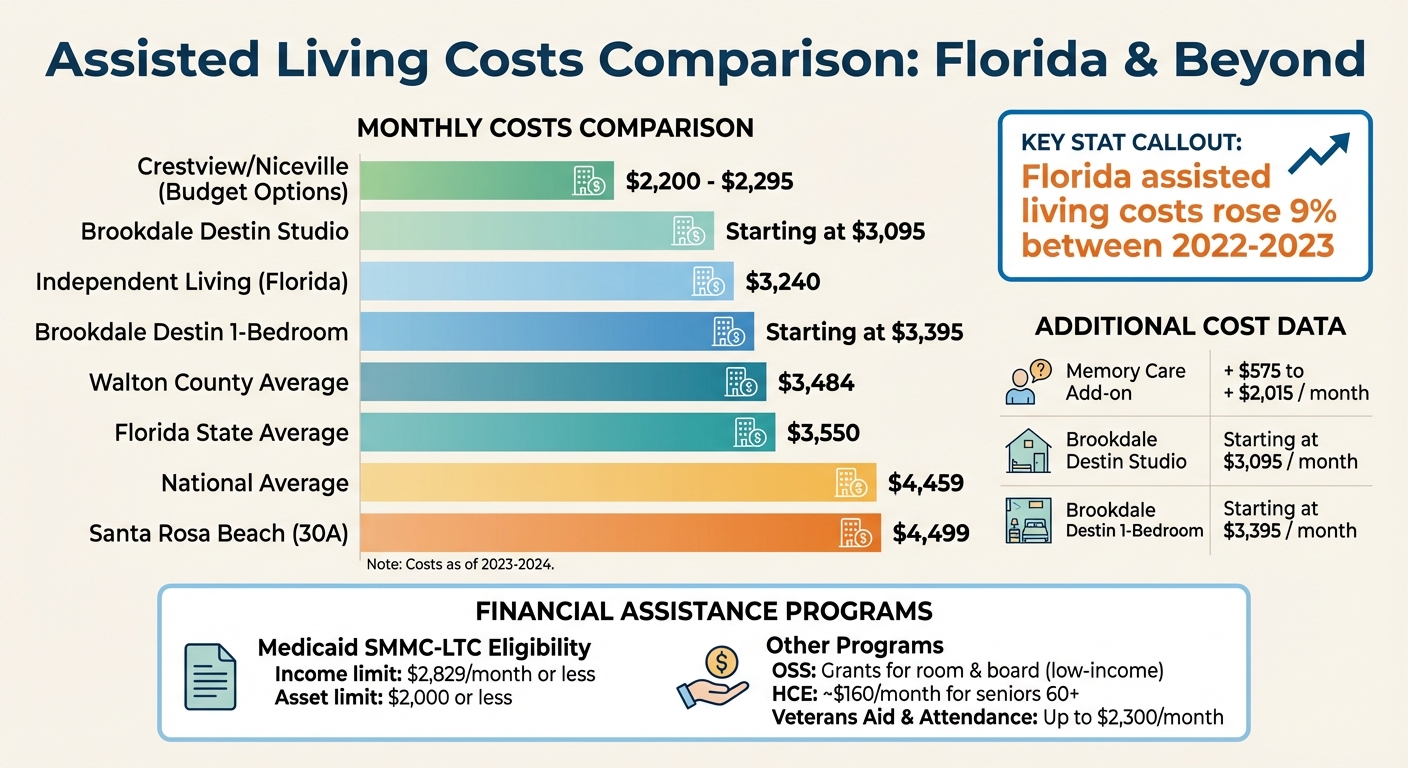
Assisted Living Costs Comparison: 30A Florida Area vs State and National Averages
Average Assisted Living Costs in 30A
The cost of assisted living in 30A can vary depending on the community and the level of care needed. In Walton County, the average monthly cost is $3,484 - slightly below Florida’s state average of $3,550. Meanwhile, Santa Rosa Beach stands out with an average cost of $4,499 per month. This exceeds both local and state averages but aligns closely with the national average of $4,459.
Facilities often use different pricing models. Some offer all-inclusive packages that combine rent, meals, and most services into a single monthly fee. Others use fee-for-service models, where residents pay only for the specific care they use. For families considering memory care, expect an additional cost ranging from $575 to $2,015 per month on top of standard assisted living fees. Independent living options, which require less assistance, average around $3,240 per month across Florida.
Now, let’s look at financial aid options in Florida that can help manage these costs.
Florida Financial Assistance Programs
Florida has several programs designed to help families manage the expenses of assisted living. The Statewide Medicaid Managed Care Long-Term Care (SMMC-LTC) program is the primary resource. It provides personalized care that covers basic needs and therapies for eligible individuals. To qualify, applicants must have a monthly income of $2,829 or less and countable assets not exceeding $2,000.
The Optional State Supplementation (OSS) program offers grants to help low-income residents pay for room and board. Another option, the Home Care for the Elderly (HCE) program, provides caregivers of seniors aged 60 and older with about $160 per month to help with medical supplies and basic support. For those who don’t qualify for Medicaid but still need assistance, the Community Care for the Elderly (CCE) program supports seniors at risk of needing nursing home care.
If a family’s income exceeds the $2,829 Medicaid threshold, they may still qualify by setting up a Qualified Income Trust, which helps allocate excess funds. Since many of these programs have limited availability and long waitlists, applying as early as possible is strongly recommended.
Creating Your Budget
When planning your budget, consider both the base costs and any additional fees. Assisted living costs in Florida rose by about 9% between 2022 and 2023 due to inflation. Facilities are required to provide a 30-day notice for rate increases, so review contracts carefully.
Keep in mind that extra charges can add up quickly. These may include fees for medication management, transportation to medical appointments, specialized diets, or incontinence supplies. Some facilities also charge for holding a resident’s room during hospital stays, so it’s essential to confirm their bed hold policy before signing a contract. Veterans may qualify for the Aid and Attendance benefit, which can provide up to $2,300 per month to help with costs.
Assessing Local Facilities Near 30A
Facilities to Review
The 30A area offers several assisted living options, each with unique pricing and care features. Watersound Fountains in Inlet Beach stands out with its 5/5-rated resort-like ambiance, conveniently located near the Watersound Origins Town Center. Another highly rated option is Somerby of Santa Rosa Beach, which is affiliated with Sacred Heart Health System. For families seeking more affordable choices, Brookdale Destin offers studio apartments starting at $3,095 and one-bedroom units beginning at $3,395.
For budget-friendly alternatives, Twin Cities Pavilion in Niceville and Crestview Manor in Crestview provide shared rooms starting at $2,200 per month, significantly lower than the Santa Rosa Beach average of $4,499. Meanwhile, The Opal at Bluewater Bay in Niceville, also rated 5/5, is known for its personalized care and proximity to Destin beaches.
When considering these options, it's important to think about how each facility's location and amenities contribute to residents' quality of life.
Location and Community Access
Facilities situated near key attractions like coastal dune lakes, Grayton Beach State Park, and vibrant hubs such as Seaside and Rosemary Beach can offer residents a chance to fully embrace the 30A lifestyle. Check whether transportation services for outings, medical appointments, and local farmers markets are included in the facility’s base fee.
For those researching the area, sowal.co provides a wealth of information about 30A’s community events, hidden beaches, and dining options. This resource can help families assess how well a facility integrates with the local lifestyle. Close proximity to events like the 30A Songwriters Festival or iconic spots such as The Red Bar can enrich the lives of residents who enjoy staying connected to the community.
Facility Tour Checklist
Once you've narrowed down your options, it's time to visit. Use this checklist to ensure you cover all the important aspects of care and operations.
Bring along a family member or friend to provide a second perspective. Start by verifying the facility’s license type. If your loved one may need additional care in the future, confirm that the facility holds an Extended Congregate Care (ECC) license, which supports aging in place with added nursing services.
"An assisted living facility with an ECC license allows a resident to age in place by providing the basic services of an assisted living facility as well as limited nursing services and assessments."
Request a copy of the contract to review details such as charges, refund policies, bed hold rules, and whether financial aid options like OSS or Medicaid waivers are accepted. Ask about staffing levels, especially the staff-to-resident ratio during various shifts, including nighttime.
Plan your tour to coincide with a meal or social activity to observe the quality of food and interactions between staff and residents. Before your visit, use the FloridaHealthFinder.gov “Assisted Living Facility Comparison Tool” to check inspection reports and any history of deficiencies.
sbb-itb-d06eda6
Comparing Facilities by Cost and Services
Facility Comparison Table
After touring various facilities and collecting contracts, it's time to compare your findings side-by-side. This step goes beyond just looking at the monthly rate - you’ll need to dig into what services are included, what might cost extra, and how those details align with your needs.
Start by confirming each facility's license to understand the level of care they can provide and their associated costs. For instance, facilities with Limited Nursing Services (LNS) or Limited Mental Health (LMH) licenses typically charge higher rates due to their specialized care offerings.
Facilities often have different pricing models. Some offer all-inclusive packages where one monthly fee covers rent, meals, and most services. Others use a base rate model, adding fees for extras like medication management, diabetic care, or transportation to medical appointments.
When comparing costs, be thorough. Check what’s included in the base rate and take note of additional charges for services such as specialized diets, pet care, or transportation. Also, review policies like "bed hold" fees in case a resident is hospitalized temporarily. Keep in mind that Florida law requires facilities to provide at least 30 days' written notice before increasing monthly rates. If financial assistance is a factor, confirm whether the facility accepts programs like Optional State Supplement (OSS) or Medicaid Managed Care Long-Term Care.
Cost isn’t the only factor - services and amenities are just as important. Look into clinical offerings like 24-hour awake staff, on-call doctors, and visiting therapists for physical, occupational, or speech therapy. For residents with dementia, check for memory care units with features like secured environments, wander guard systems, and staff trained in dementia care. On the lifestyle side, consider amenities such as fitness classes, activity directors, pet-friendly policies, and organized outings to places like farmers markets or beaches.
Finally, before making any decisions, review inspection reports and verify license details using the FloridaHealthFinder.gov tool. This ensures you’re choosing a facility that meets both your expectations and state requirements.
Conclusion: Choosing Affordable Assisted Living
Finding the right assisted living facility in 30A requires weighing cost against quality care. While local facilities often strike a balance between affordability and good care, the lowest price doesn’t always mean the best choice. What truly matters is ensuring your loved one’s safety, comfort, and well-being. This often means looking beyond the price tag to evaluate both the quality of care and the amenities available.
Start by focusing on key factors like staffing ratios, inspection reports, and proper licensing. Facilities with high staff-to-resident ratios and long-tenured staff often provide more consistent care. Use tools like FloridaHealthFinder.gov to confirm the facility’s licensing - whether it’s a Standard license, Extended Congregate Care (ECC), or Limited Nursing Services (LNS) - to ensure it aligns with your loved one’s current and future needs. Geriatrician Dr. Susann Varano also recommends making unannounced visits to get a genuine sense of how the facility operates day-to-day.
Carefully review contracts for potential hidden fees, policies on bed holds, and incremental charges. If financial assistance is needed, check whether the facility accepts Optional State Supplementation (OSS) or participates in Medicaid Managed Care Long-Term Care programs. Beyond the financial aspects, the living environment itself plays a critical role in your decision.
Don’t overlook how well the facility integrates with the 30A lifestyle. Resources like sowal.co can help you explore the local area, from serene spots like Grayton Beach State Park to beloved community hubs like Black Bear Bread Co. Ensuring your loved one stays connected to the area’s coastal charm can enhance their overall quality of life. For added peace of mind, consider local support services such as the Walton County Sheriff's Office "SafetyNet" daily check-in program.
FAQs
What should I consider when selecting an affordable assisted living facility in 30A?
When selecting an assisted living facility in the 30A area, it's essential to focus on factors that match your loved one's needs and lifestyle. Begin with location and accessibility - being close to family, local amenities, and a welcoming community can make a significant difference in their day-to-day happiness.
Next, take a close look at the services and care options provided. This might include personal care assistance, medication management, or any specialized support they may need. It's equally important to understand the costs and fee structure upfront to avoid any surprises later on.
Don't overlook the safety, cleanliness, and overall environment of the facility. These elements are crucial for comfort and peace of mind. Additionally, think about personal preferences, such as opportunities for social activities, pet-friendly policies, and the general atmosphere of the community. Touring the facilities and thoroughly reviewing contracts can help you make a confident choice, ensuring your loved one feels comfortable and cared for.
What financial assistance options are available for assisted living in Florida?
Florida offers several financial assistance programs to help offset the costs of assisted living. One key option is the Florida Medicaid Managed Care Long-Term Care (SMMC-LTC) Program, which is available to seniors who meet specific income and asset requirements - monthly income must be $2,523 or less, and assets cannot exceed $2,000. This program provides services such as personal care, skilled nursing, and transportation, which can be accessed either in assisted living facilities or at home.
Another valuable resource is the Florida Agency for Health Care Administration, which provides detailed guidance on Medicaid and other state-supported programs. Families can also refer to the Florida Senior Benefits Guide, which outlines various support options for seniors, including housing and healthcare assistance. These tools can help families navigate their financial options and find the best support for their loved ones in Florida.
What should I consider when touring an assisted living facility?
When visiting an assisted living facility, it's crucial to take note of cleanliness, safety features, and the overall vibe. Does the space feel well-kept? Are the residents engaged and content? Is the staff approachable and welcoming? These details can tell you a lot about the quality of care provided.
Make sure to look for practical safety measures like handrails, emergency call buttons, and secure entry points. An easy-to-navigate layout is also important, especially for residents with mobility challenges.
Take a moment to chat with the staff. This is your chance to gauge their professionalism and friendliness. Ask about things like the staff-to-resident ratio, the types of care plans available, and the services they provide. These insights can help you figure out if the facility aligns with your specific needs.
Finally, don’t forget to ask about visitation rules and observe how residents interact with one another. This can give you a glimpse into the sense of community and openness within the facility.