In-home senior care lets older adults stay in their homes while receiving the help they need. This approach is often more affordable than assisted living, costing about 25% less, and allows seniors to maintain their independence. The 30A area in Florida, known for its scenic beaches and tight-knit community, is an ideal location for aging in place. Services here range from companionship and homemaker tasks to skilled nursing care, with agencies like Home Instead and Visiting Angels offering tailored care plans.
Key points:
- Types of Care: Companion care (social interaction), homemaker services (household tasks), personal care (bathing, dressing), and skilled nursing (medical care).
- Costs: Average hourly rates in 30A are $23–$31, with full-time care costing about $6,292/month.
- Local Providers: Agencies like Panhandle Assistant Care and Home Instead provide licensed, professional services.
- Financial Assistance: Options include long-term care insurance, Medicaid, and VA benefits for eligible seniors.
- Safety Programs: Walton County offers daily check-ins and emergency alert services for seniors.
Whether you’re a full-time resident or a seasonal visitor, 30A offers a variety of in-home care options tailored to seniors’ needs, ensuring comfort, safety, and connection to the community.
Can You Afford Home Care? Here’s How to Make It Work
In-Home Senior Care Options in 30A
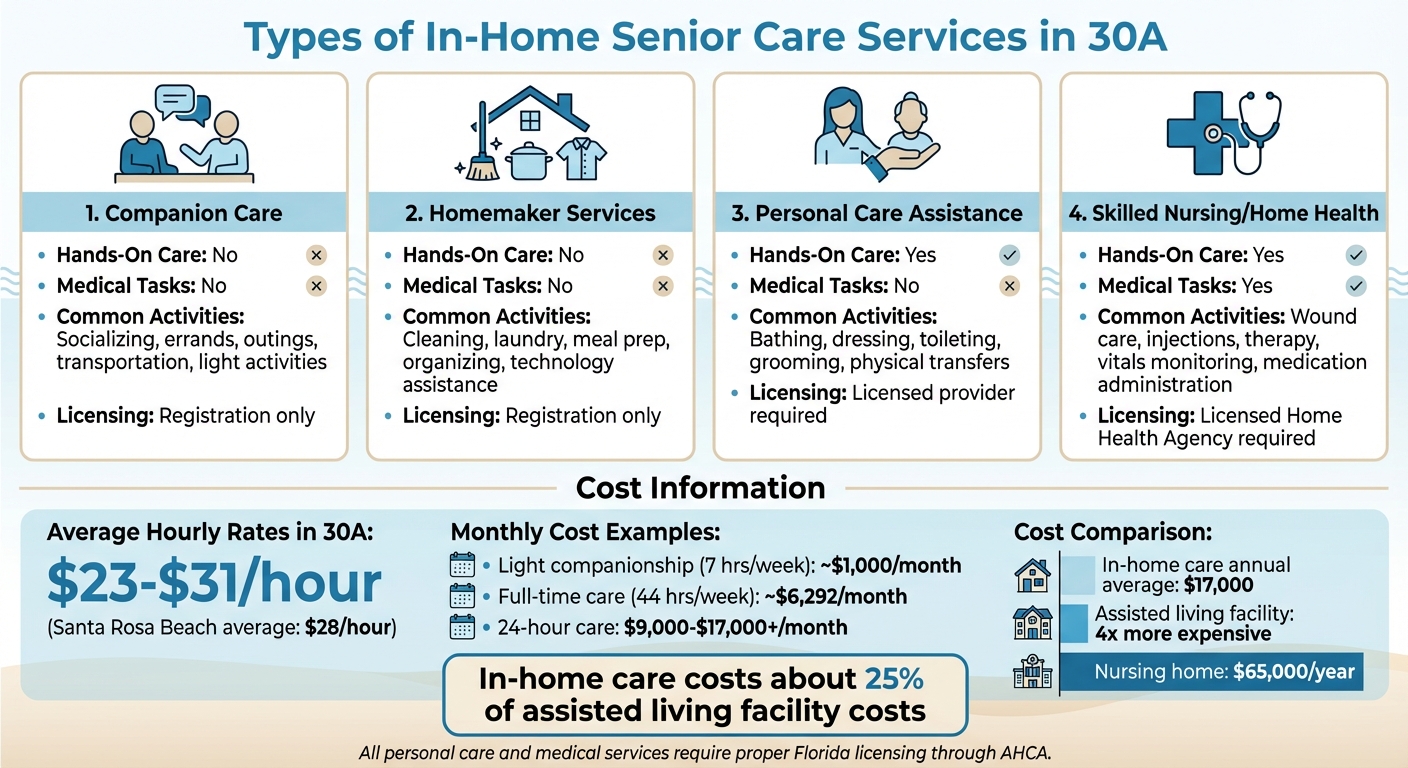
In-Home Senior Care Service Types and Costs in 30A Florida
Florida Regulations for In-Home Senior Care
In Florida, the state has clear guidelines to help families choose the right in-home care provider. The Florida Agency for Health Care Administration (AHCA) oversees these services, dividing providers into tiers based on the level of care they can offer. For example, Homemaker and Companion Services only require registration, while Nurse Registries and Home Health Agencies must obtain full licensure.
According to the AHCA, "Homemaker & Companion Services Providers... cannot provide any personal care or nursing according to state law". This means registered companions can assist with tasks like driving seniors to appointments, preparing meals, and offering companionship, but they cannot help with hands-on activities like bathing or dressing. For medical services, such as wound care or administering medications, a physician's signed treatment order and a formal Plan of Care are necessary.
If you’re unsure about a provider’s qualifications, you can check their license status and inspection history using the Facility Locator on FloridaHealthFinder.gov.
Types of In-Home Care Services
In the 30A area, in-home care is divided into four main categories:
- Companion Care: Focuses on providing social interaction, transportation, and encouragement for light activities to ensure safety and engagement.
- Homemaker Services: Includes help with household chores like meal preparation, laundry, light cleaning, and even assistance with technology.
- Personal Care Assistance: Offers direct support with activities of daily living (ADLs), such as bathing, dressing, grooming, toileting, and physical transfers. This type of care requires a licensed provider since it involves hands-on tasks.
- Skilled Nursing and Home Health: Provides medical care, including nursing visits, medication administration, and therapies like physical, occupational, or speech therapy, all delivered by a licensed Home Health Agency.
Here’s a quick comparison of these service types:
| Service Type | Hands-On Care? | Medical Tasks? | Common Activities |
|---|---|---|---|
| Companion | No | No | Socializing, errands, outings |
| Homemaker | No | No | Cleaning, laundry, meal prep, organizing |
| Personal Care | Yes | No | Bathing, dressing, toileting, walking |
| Skilled Nursing | Yes | Yes | Wound care, injections, therapy, vitals |
Additionally, respite care is available for family caregivers needing a break. This temporary care ensures seniors maintain their routines while giving caregivers time to recharge.
When to Choose In-Home Care
In-home care is often the right choice during significant life changes or health challenges. For example, seniors recovering from a hospital stay or managing chronic conditions like Parkinson's or Alzheimer's may need short-term or ongoing support. It’s also a helpful solution when family caregivers feel stretched thin, offering relief while allowing seniors to stay in the comfort of their own homes.
For snowbirds visiting 30A during the winter, temporary in-home care can provide an added layer of safety and support. Whether it’s for a few weeks or an extended period, these services ensure peace of mind for both seniors and their families.
In-Home Senior Care Providers in 30A
Local in-home care providers in the 30A area deliver personalized support tailored to the unique needs of seniors, ensuring they can age comfortably in their own homes.
Service Areas Around 30A
The 30A region is well-covered by in-home care services, with providers serving key areas like Santa Rosa Beach, Seaside, Seacrest, Miramar Beach, Rosemary Beach, and Seagrove Beach. Beyond these coastal communities, care extends to Destin, Niceville, Fort Walton Beach, and Freeport, ensuring a broad reach across Walton and Okaloosa Counties. While coastal towns enjoy a variety of specialized companion and homemaker services, northern Walton County may have fewer boutique options specific to 30A. However, regional providers continue to support these areas, offering reliable care across the board.
Local and Regional Care Providers
The 30A area embraces a culture of aging in place, and local providers are dedicated to delivering care that complements the coastal lifestyle. A few standout agencies include:
- Panhandle Assistant Care: A woman-owned agency with over 25 years of experience, offering non-medical companion and homemaker services in 30A, Seaside, and Seacrest.
- Home Instead: Based in Santa Rosa Beach, this provider offers a wide range of services, including 24-hour care, Alzheimer's support, personal care assistance, and end-of-life care.
- Visiting Angels: Known for customized non-medical care, their caregivers assist with personal grooming, medication reminders, and dementia support.
- Always Best Care Senior Services: Specializing in companionship, home help, and respite care, they also provide assisted living referral services for families exploring other care options.
Each provider offers free, no-obligation evaluations to help families determine their specific needs. It’s essential to confirm that the agency’s Florida licensing aligns with the care level required. For example, companion and homemaker licenses don’t cover hands-on tasks like bathing or dressing. Many agencies also support seniors’ independence by providing transportation and errand services.
Transportation and Errand Services
Transportation assistance is a vital part of in-home care in the 30A region, helping seniors maintain independence and stay connected to their communities. Known as "incidental transportation", these services cover medical appointments, church visits, social gatherings, and personal errands like hair or nail appointments. Caregivers also ensure seniors can enjoy family visits, attend community events, and remain engaged with the vibrant 30A lifestyle despite mobility challenges.
For seasonal residents, transportation services make it easier to access medical care and stick to familiar routines, even on unfamiliar roads. When setting up a consultation, it’s a good idea to discuss how often transportation will be needed and for what purposes, whether it’s for regular errands or occasional outings. This ensures seniors can continue to enjoy their daily lives with ease and comfort.
sbb-itb-d06eda6
Planning and Paying for In-Home Care in 30A
Assessing Care Needs and Creating a Plan
The first step in arranging in-home care is understanding your loved one's specific needs. Many local providers in the 30A area offer free consultations to help families determine which daily tasks require support and which activities seniors can still handle on their own. These evaluations focus on Activities of Daily Living (ADLs) - things like bathing, dressing, cooking, or getting in and out of chairs or beds.
"The Care Manager will ask many questions to discover where your loved one could benefit from a helping hand, along with what aspects of daily life are going just fine right now." - Home Instead
As part of the process, a care professional will also inspect your home for safety risks, such as slippery floors, missing grab bars, or unsafe heating systems. They’ll also consider emotional and social needs, which is especially important in seasonal areas like 30A, where isolation can be a challenge. This personalized approach ensures the care plan aligns with the unique lifestyle of the 30A community. For families in Walton County, the CARES (Comprehensive Assessment and Review for Long-Term Care Services) program offers state-mandated evaluations to determine whether home care or nursing facility care is the best fit.
To take things further, families can contact the Elder Helpline at 1-866-531-8011 to join the Department of Elder Affairs' priority list for state-funded services. Additionally, Walton County residents can sign up for the "Handle With Care" program, which ensures emergency responders are aware of special needs in the household.
Cost of In-Home Care in 30A
Once a care plan is in place, understanding the financial side is essential. In Florida, in-home care through licensed agencies costs between $23 and $31 per hour. For light companionship (around 7 hours a week), families can expect to pay about $1,000 per month. On the other hand, full-time care (44 hours a week) averages $6,292 per month. If 24-hour care is needed, costs rise significantly, ranging from $9,000 per month for non-certified live-in help to over $17,000 per month for certified care with awake-and-alert shifts.
Agencies typically charge 20% to 30% more than independent caregivers because they handle background checks, insurance, liability, and staffing backups. While this comes at a higher cost, it offers peace of mind and ensures consistent care. In high-demand areas like 30A, rates may be slightly above the state average due to the local cost of living and competition for workers in tourism-driven communities.
"There's evidence that even small amounts of in-home care, such as helping someone with meals or light housekeeping, can extend their independence." - Vicki Demirozu, Founder, Giving Care with Grace
On average, a typical in-home care plan in Florida costs $17,000 annually, which is about 25% the cost of an assisted living facility and far less than the $65,000 yearly cost of nursing home care.
Payment Options and Financial Help
With costs in mind, exploring payment options is a critical next step. Most families pay out-of-pocket, but there are programs that can help. Long-term care insurance (LTCi) often covers in-home care, though policies usually have an "elimination period", requiring families to pay privately for a set time before benefits kick in. A 55-year-old purchasing coverage might pay around $2,065 annually for a $162,000 benefit policy.
For veterans and their surviving spouses, the VA Aid and Attendance Pension Benefit offers financial support to those who served at least 90 days of active duty (with one day during wartime) and meet specific physical and financial criteria. The Florida Department of Veterans' Affairs can assist families in determining eligibility.
Florida Medicaid (SMMC-LTC) provides home-based services like personal care, meal delivery, and respite care for low-income seniors. In 2024, the income limit for individuals is $2,829 per month, with an asset cap of $2,000 (excluding a home and primary vehicle). For those who don’t qualify for Medicaid, state-funded programs like Community Care for the Elderly (CCE) and Home Care for the Elderly (HCE) offer alternatives. The CCE program supports seniors at risk of nursing home placement, while HCE provides monthly subsidies to caregivers of low-income seniors.
"A typical home care plan includes case management, homemaking, personal care, caregiver respite, and home-delivered meals, and still may be only 25% the cost of an Assisted Living Facility." - Northwest Florida Agency on Aging
It’s important to note that Medicare does not cover long-term, non-medical in-home care. Medicare only pays for short-term, physician-prescribed home health services, such as skilled nursing or therapy, after a hospital stay. Families looking for guidance on Medicare, Medicaid, or insurance options can contact the SHINE (Serving Health Insurance Needs of Elders) program for free, unbiased advice. Local organizations like the Emerald Coast Council on Aging in Walton County can also help families navigate these resources and find the best fit for their needs.
Choosing and Managing In-Home Care in 30A
How to Evaluate Agencies and Caregivers
When selecting an in-home care provider in 30A, start by verifying that the agency holds proper licensing in Florida. Many local agencies, like Panhandle Assistant Care, offer free in-home consultations to assess your needs and create a tailored care plan. These evaluations can make the process much smoother for families just starting out. To get a sense of service quality, take some time to read online reviews and ratings.
It's also essential to choose agencies familiar with 30A's unique neighborhoods. Whether it’s Seaside with its pedestrian-friendly layout or Grayton Beach with its "Old Florida" vibe, a provider who understands the local area can make all the difference. Top-notch agencies should also be aware of community safety programs, such as the Walton County Sheriff's "SafetyNet" program, which offers daily check-in calls for homebound seniors, and the "Handle With Care" registry that notifies first responders of special needs during emergencies.
This thorough evaluation process ensures that the care provided not only meets medical and safety standards but also complements the charm and active lifestyle of the 30A region.
Fitting Care into 30A's Lifestyle
Caregiving in 30A is about more than just meeting basic needs - it’s about weaving care into the area’s coastal lifestyle. Look for caregivers who can support activities like exploring the 19-mile Timpoochee Trail, enjoying ADA-accessible beach entries along South Walton’s 26 miles of shoreline, or attending events like the 30A Songwriters Festival. Even a simple visit to an art gallery, such as The Blue Giraffe, can enhance a senior’s day.
For seasonal residents, often referred to as "Snowbirds", flexibility is key. Many agencies offer custom care plans that adjust to temporary stays or seasonal changes. This adaptability is especially crucial during busy tourist seasons or hurricane preparations, when routines may need to shift to ensure safety and comfort.
Safety and Social Engagement
Ensuring safety and fostering social connections go hand in hand when adapting care to 30A’s lifestyle. Seniors can take advantage of free fire safety services offered by the South Walton Fire District, which include smoke detector battery replacement and installation. Signing up for emergency alerts through "Alert Walton" and wellness check-ins through the Sheriff’s "SafetyNet" program adds another layer of security.
Equally important is preventing isolation. Programs like GetSetUp, a partnership with the Northwest Florida Area Agency on Aging, offer free virtual classes where seniors can learn new skills and connect with peers. Companion care can also include engaging activities such as puzzles, photo reminiscing, or simply sharing a friendly conversation to lift spirits. Local libraries provide tech help sessions, helping seniors stay connected with family and community resources.
For emergencies, completing a "Handle With Care Citizen Support Form" through the Sheriff’s Office ensures first responders are aware of any special needs. Additionally, for those with unique medication requirements, Emerald Coast Compounding Pharmacy in Santa Rosa Beach offers customized prescriptions. With the right mix of local resources and a compassionate caregiver, seniors can maintain their independence while staying safe, connected, and engaged in the vibrant 30A community.
Conclusion
Opting for in-home care in 30A allows seniors to maintain their independence while enjoying life in a breathtaking coastal environment. With 26 miles of pristine white-sand beaches, the scenic 18.6-mile Timpoochee Trail, and 16 unique beach neighborhoods, this area offers the perfect blend of natural beauty and an active, welcoming community. A thoughtfully designed care plan ensures seniors can stay connected to the lifestyle they cherish - whether that means attending local events, enjoying easy access to the beach, or simply relishing the comfort of their own home. This setup not only boosts their quality of life but also provides families with much-needed peace of mind.
Professional in-home care services bring an added layer of reassurance, ensuring loved ones are safe and well cared for. Agencies like Panhandle Assistant Care and Home Instead - recognized by Newsweek as a "Best Customer Service Provider 2026" in December 2025 - stand out for their dedication and ability to adapt care to the unique needs of the 30A community. These providers understand the area's distinctive lifestyle and customize care plans for both year-round residents and seasonal visitors.
From a financial perspective, in-home care in 30A is surprisingly affordable. The average cost in Santa Rosa Beach is around $28 per hour, which is slightly below both the Florida state average of $29 and the national average of $30. For many families, a comprehensive home care plan - including case management and personal care - can cost just 25% of what an Assisted Living Facility might charge.
"These programs allow people to live with dignity and independence in their own homes and communities".
The combination of personalized care, an active and vibrant community, and cost efficiency makes in-home care in 30A an excellent choice. It’s worth exploring care options early - schedule a free evaluation with a local agency to craft a plan tailored to your loved one’s needs. You can also contact the Elder Helpline at 1-866-531-8011 to learn more about state and federal support programs. With the right resources in place, seniors in 30A can continue to enjoy their independence, stay socially engaged, and savor the unique charm of coastal living.
FAQs
What are the financial assistance options for in-home senior care in the 30A area?
There are plenty of financial assistance programs available for in-home senior care in the 30A area. For starters, Florida Medicaid offers options like home-health services and HCBS (Home and Community-Based Services) waivers. The state also supports seniors through programs such as Home Care for the Elderly (HCE) and Community Care for the Elderly (CCE). Another helpful resource is the PACE program (Program of All-Inclusive Care for the Elderly), which provides eligible seniors with a full range of care services.
On the federal level, funding is available through initiatives like the Older Americans Act, the National Family Caregiver Support Program, and the Alzheimer’s Disease Initiative. Veterans may also be able to access benefits specifically designed to cover in-home care needs.
Locally, organizations like the Northwest Florida Agency on Aging and Coastal Seniors of South Walton can be excellent sources of guidance and referrals for families navigating care options.
For those who don’t qualify for Medicaid, private long-term care insurance is another route worth considering to help manage costs. Families should take the time to explore these programs and connect with local agencies to identify the best financial solutions for their loved ones.
How can I check if an in-home care provider is licensed in Florida?
To verify whether an in-home care provider is licensed in Florida, you can use the online tools offered by the Florida Agency for Health Care Administration. Their database lets you check the current licensing status of both agencies and individual caregivers, ensuring they comply with state regulations. Additionally, you can access inspection reports for more insight into their compliance history and overall performance.
Taking the time to review these records can help you make well-informed choices and ensure your loved one receives care from a qualified and reliable provider.
What’s the difference between companion care and personal care services for seniors?
Companion care is all about offering social interaction, safety oversight, and help with light household tasks. It’s a non-medical service designed to help seniors maintain their independence while reducing feelings of isolation. Caregivers in this role might assist with errands, prepare meals, and provide company during outings. It’s important to note, though, that companion care does not include hands-on tasks like bathing or dressing.
Personal care takes things a step further by providing direct support with daily activities. This includes tasks like bathing, dressing, grooming, toileting, and assisting with mobility. Caregivers might also handle medication reminders and other health-related responsibilities. This type of care is crucial for seniors who require more hands-on help to ensure their physical well-being and safety.
While both services aim to enhance a senior's quality of life, the choice between them depends on the level of support the individual needs.