South Walton, Florida, is home to rare coastal dune lakes, a natural phenomenon found in only a few places worldwide. These lakes form in coastal dune systems and create a unique mix of freshwater and saltwater ecosystems. South Walton’s 30A coastline features 15 of these lakes, some thousands of years old, making them a must-see for nature enthusiasts.
Here’s a breakdown of four state parks offering stunning dune lake views and activities:
- Grayton Beach State Park: Offers access to Western Lake, with hiking, fishing, and kayaking. Entry: $5 per vehicle.
- Topsail Hill Preserve State Park: Features five lakes, 15 miles of trails, and a tram service. Entry: $6 per vehicle.
- Deer Lake State Park: Showcases ancient dunes and rare plant species. Entry: $3 per vehicle.
- Camp Helen State Park: Home to Florida’s largest coastal dune lake, Lake Powell, with trails and historic landmarks. Entry: $4 per vehicle.
Each park offers unique experiences, from boardwalk trails and kayaking to fishing and wildlife spotting. Whether you’re seeking adventure or relaxation, these parks highlight the beauty of South Walton’s rare ecosystems.
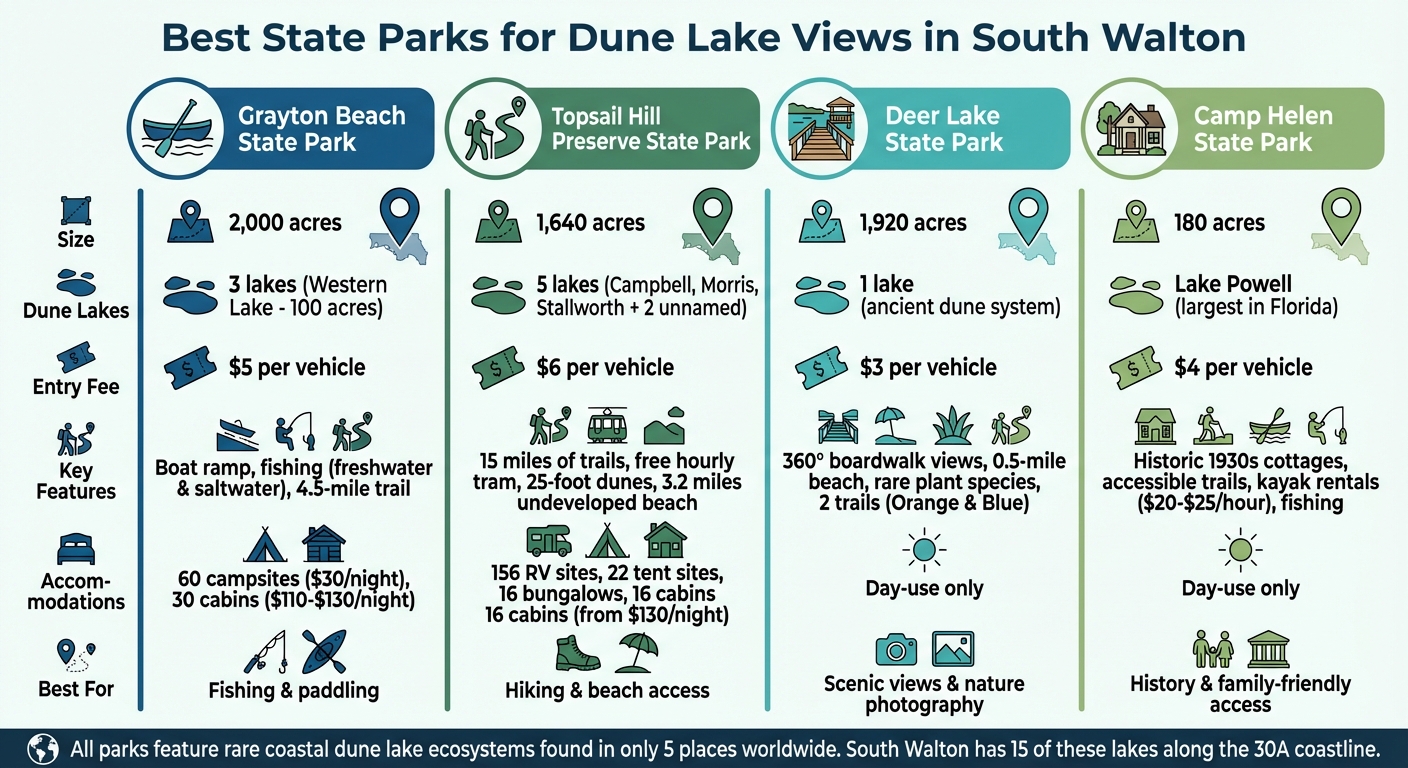
South Walton State Parks Comparison: Dune Lakes, Activities, and Entry Fees
Coastal Dune Lakes on Scenic Highway 30A
1. Grayton Beach State Park
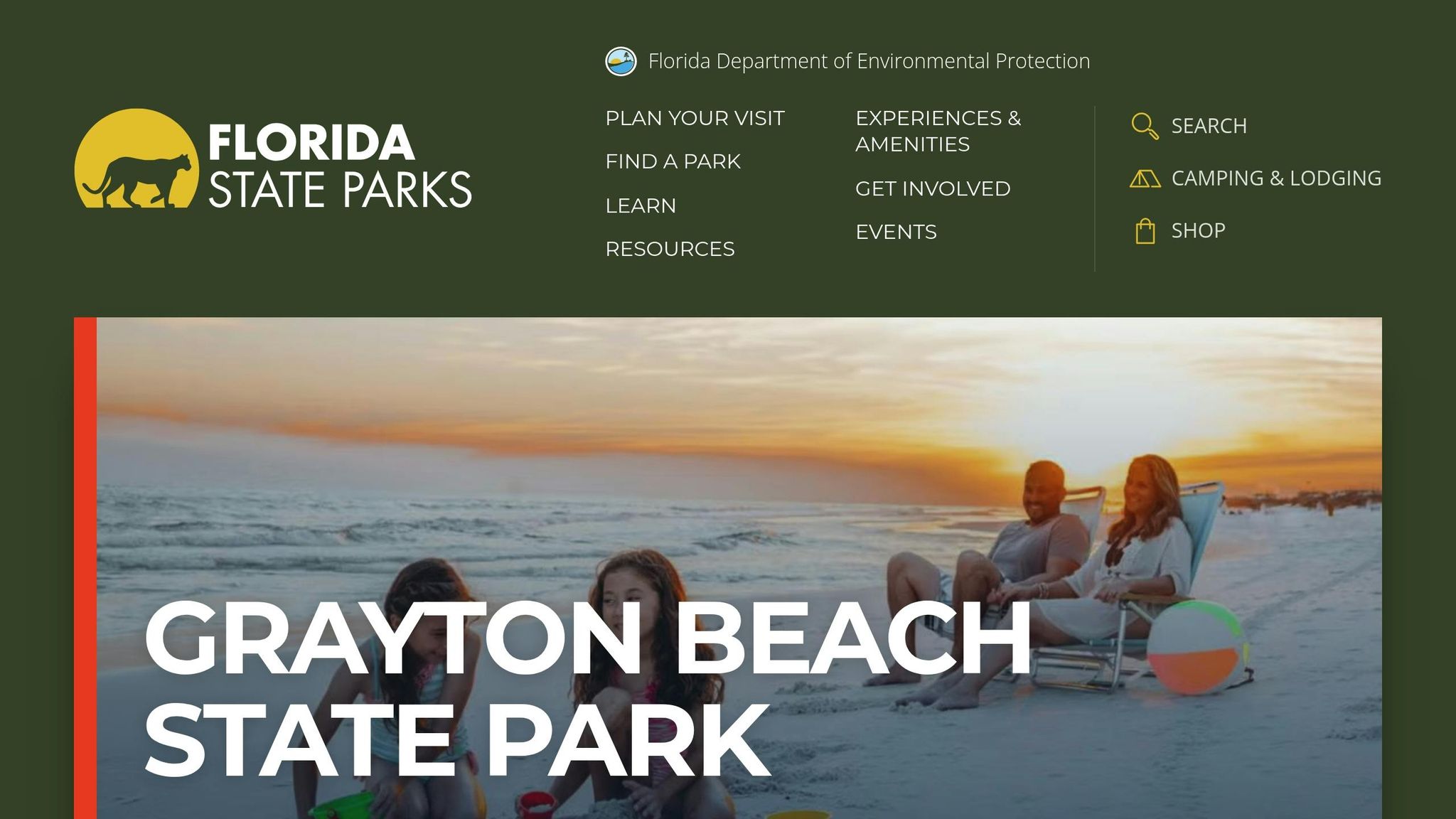
Grayton Beach State Park stretches across nearly 2,000 acres and is home to three coastal dune lakes, including the well-known 100-acre Western Lake. This lake is a prime example of the rare coastal dune ecosystem that defines South Walton.
"Western Lake is the centerpiece of the park, one of our rare, freshwater coastal dune lakes." – Manny Chavez, Photojournalist, SoWal.com
Accessibility
The park charges $5 per vehicle for day-use entry. For visitors with mobility needs, the park provides Mobi-Mats at the day-use and cabin beach areas, along with a beach wheelchair available by calling 850-267-8300 in advance. An accessible boardwalk connects the beach to scenic dune views, offering convenient access. Keep in mind that the park often reaches capacity during busy times, so arriving early is key as entry may be temporarily restricted. These accessibility features ensure everyone can enjoy both the land and water activities.
Activities
Western Lake is a hub for water activities, with a boat ramp and kayak launch offering direct access. For those without their own equipment, kayak and canoe rentals are available on-site. The lake’s brackish waters create a unique fishing experience, where anglers can reel in both freshwater species like largemouth bass and saltwater fish such as Redfish and Pompano. For land explorers, a 4.5-mile trail skirts the lake’s northwest edge, while the "Hobbit Hole", a short 0.5-mile loop, winds through a canopy of salt-twisted scrub oaks and magnolias, revealing stunning views of the lake and dunes. Whether paddling, fishing, or hiking, the park offers endless ways to enjoy its natural beauty.
Scenic Views
The park’s landscape is a visual treat, with white sand dunes towering up to 30 feet high set against the calm waters of Western Lake. The "wind-pruned" coastal forest, featuring stunted slash pines and southern magnolias, adds to the park's unique charm. Just 750 feet offshore, the Turtle Reef artificial snorkeling reef enhances the coastal scenery, inviting underwater exploration.
Amenities
Visitors can stay overnight with 60 campsites available for $30 per night (plus fees) or choose from 30 cabins priced between $110 and $130 per night. Additional amenities include picnic pavilions, accessible restrooms, and paved roads connecting the cabin areas. For those interested in learning more about the park’s ecosystem, Park Rangers lead educational programs focusing on the coastal dune lake environment.
2. Topsail Hill Preserve State Park
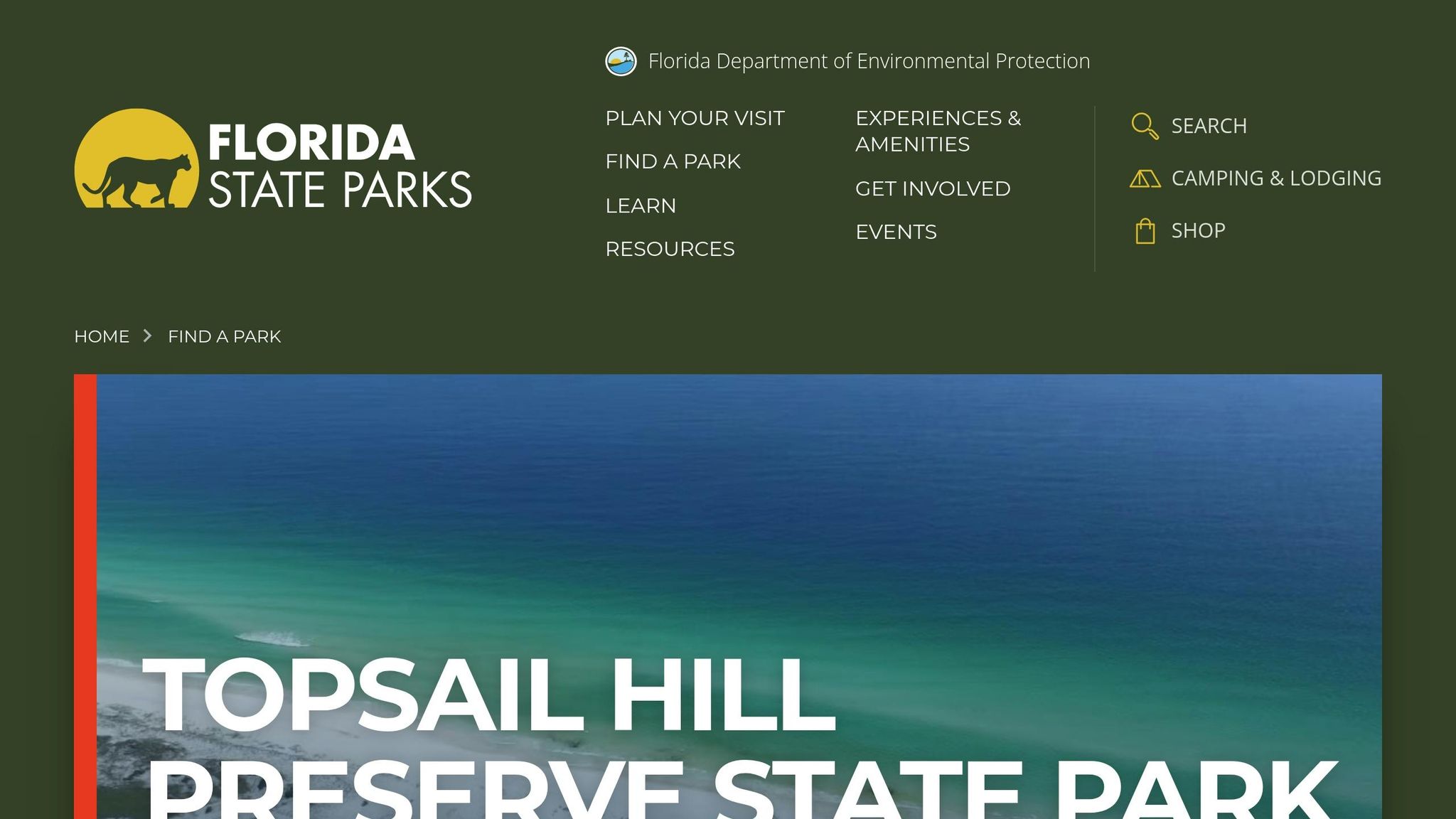
Topsail Hill Preserve State Park covers 1,640 acres and is home to five coastal dune lakes: Campbell, Morris, Stallworth, and two smaller unnamed ones. A striking 25-foot dune serves as a dramatic backdrop along the Gulf. These rare coastal dune lakes are central to South Walton's unique ecosystem, offering visitors experiences unlike those found in other parks.
"Topsail Hill is named for its dunes, which rise like a ship's sails over soft sand beaches and the emerald waters of the Gulf of America." – Florida State Parks
Accessibility
Entry to the park costs $6 per vehicle. Once inside, visitors park in the main lot and can explore on foot, by bike, or via a free tram that runs hourly from 9:00 a.m. to 5:00 p.m.. Campbell Lake is accessible through a one-mile paved path, which is bike-friendly and features restrooms, picnic tables, and benches along the way. For a longer adventure, a four-mile round-trip hike on the Deer Track Trail leads to Morris Lake, while Stallworth Lake is located on the park's eastern edge. As of January 27, 2025, construction is underway for a new Nature Walk and Visitor Center, with the tram stop temporarily relocated during this project. These features make the park easy to navigate and enjoyable for a variety of visitors.
Activities
Campbell Lake spans about 100 acres and is nearly all freshwater, rarely connecting to the Gulf. Visitors can rent kayaks from the camp store, though they’ll need to carry the gear a mile to the launch point. For outdoor enthusiasts, the park boasts 15 miles of trails winding through a mix of 25-foot dunes, pine forests, and wetlands. Fishing opportunities abound, with largemouth bass, bream, and catfish in the freshwater lakes, and redfish and pompano along the Gulf shore. Cyclists will appreciate the paved, car-free roads that lead to the Campbell Lake trailhead.
Scenic Views
The park’s natural beauty is one of its standout features. Campbell Lake’s freshwater environment supports a distinct ecosystem that feels untouched by development, showcasing the wild charm of South Walton’s coastal dune lakes. The scenery transitions from old-growth longleaf pine forests and sandy scrubland to wetlands filled with water lilies, bald cypress trees, and even carnivorous pitcher plants. With 3.2 miles of undeveloped white-sand beaches, the park is also a haven for wildlife, including alligators up to 12 feet long and 13 imperiled species.
Amenities
For overnight stays, the park offers a variety of options, including 156 RV sites, 22 tent sites, 16 bungalows, and 16 cabins. Glamping starts at around $130 per night. The Gregory E. Moore RV Resort within the park even features Kith & Ken Cafe, a gourmet coffee shop. While exploring, visitors can grab a trail map from the ranger office, as signage for distances and directions is somewhat limited. For those interested in snorkeling, the Seahorse Reef - an artificial reef shaped like a seahorse - awaits just offshore.
3. Deer Lake State Park
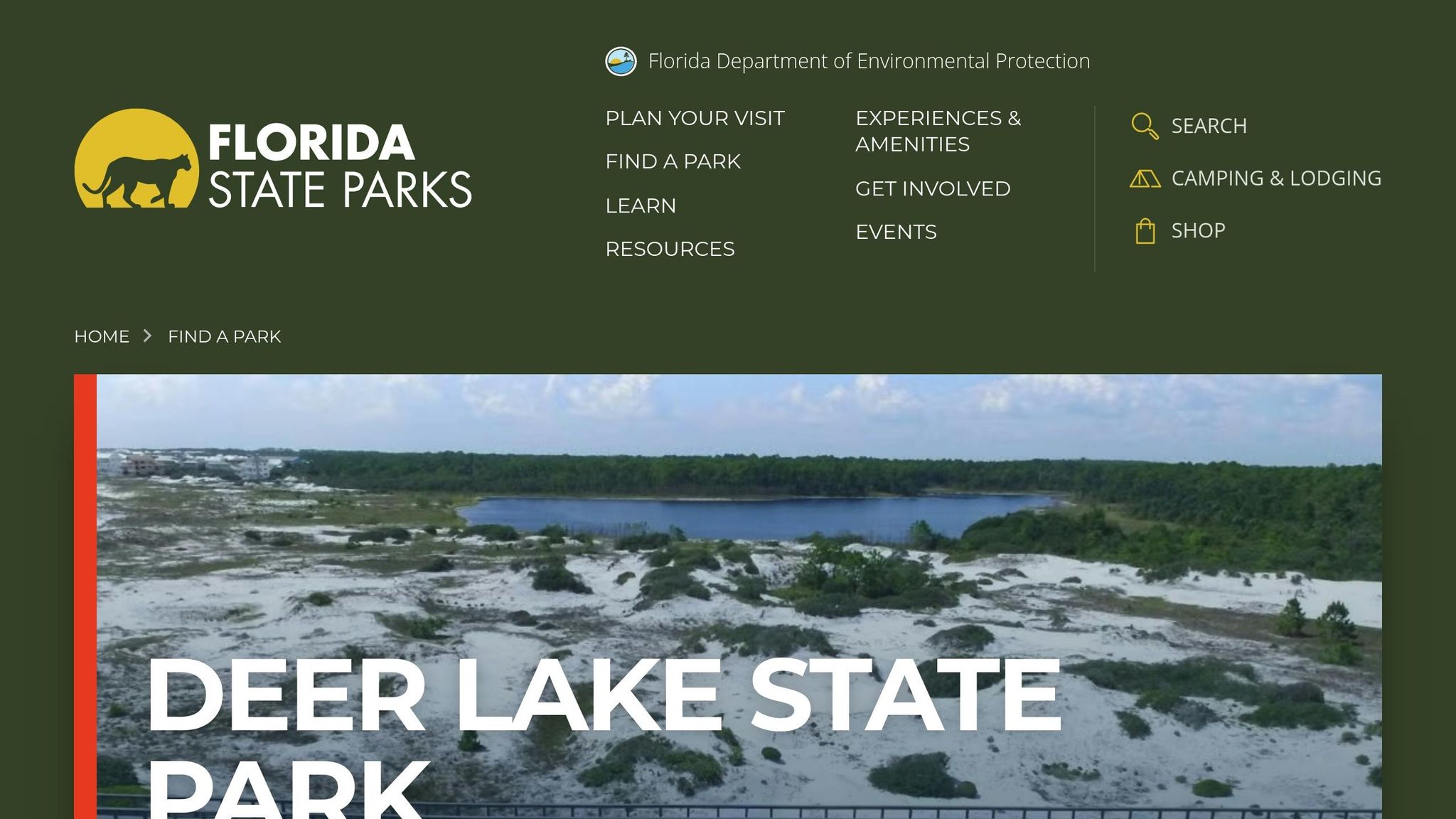
Nestled within South Walton's coastal dune lake parks, Deer Lake State Park offers a close-up look at Florida's rare and protected dune ecosystem. Covering 1,920 acres, the park is centered around a single coastal dune lake, which is preserved within an ancient dune system. This unique landscape sets it apart from other spots in the area. Entry is just $3 per vehicle, payable through an honor box, so make sure to bring exact change.
"As you walk down the boardwalk to the beach, you will take in the awe-inspiring, 360-degree view of the ancient dune system of Deer Lake State Park. It is a must-see in SoWal." – Kurt Lischka, Founder of SoWal.com
Accessibility
Deer Lake State Park reopened in late 2022 with upgraded facilities, including improved road access, parking, and restrooms. A quarter-mile ADA-compliant boardwalk connects the parking lot to the beach, making it more accessible for all visitors. For a closer look at the lake, you can take the half-mile Blue Trail, which leads to a scenic overlook of the lake's northern section. The park often fills up during peak hours, so plan to arrive shortly after its 8:00 a.m. opening to secure a spot. If you’re bringing beach gear, a wagon or cart can make the boardwalk trek easier.
Activities
Deer Lake State Park offers two main trails for visitors to explore. The one-mile Orange Trail winds through a landscape of longleaf pines and deer moss, while the Blue Trail takes you directly to a lake overlook. The park also boasts a half-mile stretch of pristine white beach, perfect for swimming, shelling, and surf fishing - just be sure to follow Florida Fish and Wildlife regulations. Nature lovers will appreciate the chance to spot endangered species like the Choctawhatchee beach mouse, piping plovers, snowy plovers, reddish egrets, and white ibis. For a more relaxed visit, enjoy the picnic pavilion near the parking area, complete with tables and a grill. While pets are welcome on a six-foot leash, they aren’t allowed on the boardwalk or beach to help preserve the sensitive environment.
Scenic Views
The park’s boardwalk offers sweeping, 360-degree views of one of the region’s most well-preserved ancient dune systems. The area is home to rare plant species, including Curtiss’ sandgrass, pitcher plants, and Gulf Coast lupine, making it a haven for botany enthusiasts. Deer Lake State Park protects 11 different natural communities and 13 imperiled species, providing a tranquil escape into nature. The lake itself occasionally connects to the Gulf through an outlet, creating a unique ecosystem that exists in only five places worldwide.
sbb-itb-d06eda6
4. Camp Helen State Park
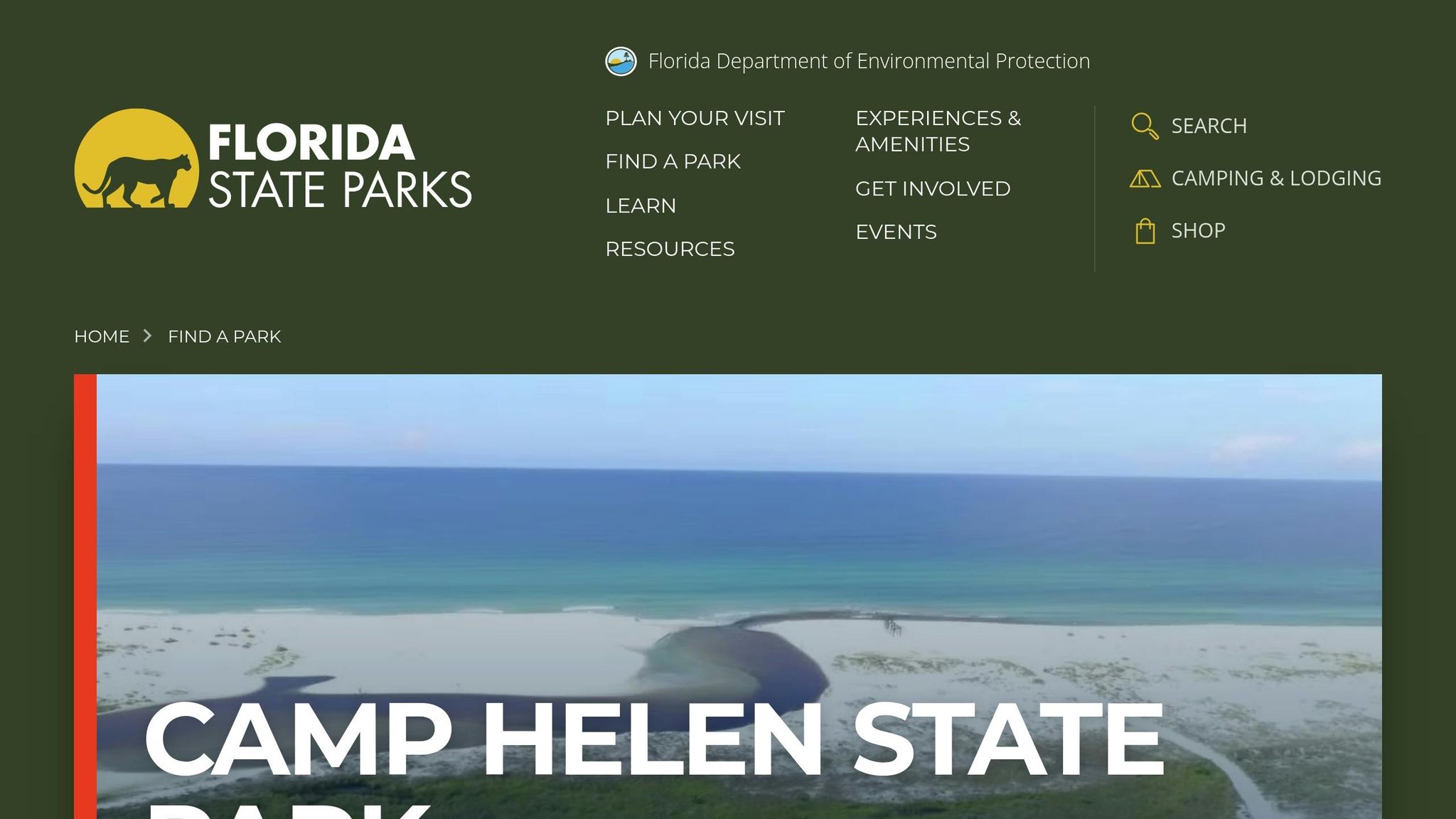
Camp Helen State Park is home to Lake Powell, the largest coastal dune lake in Florida. This 180-acre park is a day-use destination surrounded by water on three sides: the Gulf of Mexico, Phillips Inlet, and Lake Powell. This unique blend of coastal ecosystems creates a one-of-a-kind environment. The park exudes "Old Florida" charm with its restored Rainbow Cottages and a historic 40-foot water tower. Entry is affordable at just $4.00 per vehicle or $2.00 for those arriving on foot or by bike.
Accessibility
Camp Helen goes the extra mile to ensure all visitors can enjoy its natural beauty. The park features an oversized North Trail walkway designed to accommodate wheelchairs, strollers, and visitors with special needs. A 375-foot hard-surface path connects the parking lot directly to Lake Powell’s shoreline, providing easy access to the water. For those who love exploring, there are two main trails: the 1.8-mile North Trail and the shorter 0.5-mile Oak Canopy Trail. However, construction of a new Beach Trail ramp (expected to continue through April 2025) has created a 1.5-mile round-trip detour. The park opens daily at 8:00 a.m., and if the ranger station isn’t staffed, an honor box is available for entry fees.
Activities
Lake Powell’s expansive waters are perfect for paddling enthusiasts. Kayak rentals are available, with single kayaks costing $20 per hour or $50 for a half-day, and tandem kayaks and paddleboards priced at $25 per hour or $65 for a half-day. However, as of April 2025, kayak rentals were temporarily unavailable due to ongoing construction, so it’s a good idea to check ahead or bring your own gear. Fishing is another popular activity, with opportunities to catch redfish, speckled trout, mullet, and bass (a Florida fishing license is required). The North Trail runs along the lake’s edge, offering shaded benches where visitors can pause to spot wildlife like herons, egrets, river otters, and ospreys.
Scenic Views
The park’s location, surrounded by water on three sides, provides breathtaking views of diverse landscapes. From salt marshes and freshwater wetlands to sand pine scrub, the scenery is a haven for birdwatchers and nature lovers alike. For elevated views, take a stroll along the Oak Canopy Trail, which winds through an ancient forest. Alternatively, relax on the North Trail, where shaded rest areas offer peaceful spots to soak in the surroundings. The historic lodge, complete with rocking chairs, is another serene place to enjoy the views. For history buffs, archaeological features like prehistoric middens and mounds highlight the area’s rich heritage, which dates back over 4,000 years.
Amenities
Visitors will find everything they need for a comfortable day at Camp Helen. The park includes a visitor center, picnic pavilions, restrooms, and shower stations. The historic lodge houses interpretive exhibits that explore the area’s natural and cultural history. For those bringing their own kayaks or paddleboards, there’s a public launch at the North Trail trailhead - though a wheeled cart might come in handy for transport. The park also boasts a secluded beach, offering a peaceful spot for swimming and relaxation, far from the busier beaches of South Walton.
Pros and Cons
Each park provides a distinct way to experience the beauty of coastal dune lakes, offering a mix of features and challenges.
Grayton Beach State Park stands out with its boat ramp that provides direct access to Western Lake, making it a great spot for both freshwater and saltwater fishing. On the downside, its popularity means parking fills up quickly on weekends and holidays, and the regional access point lacks restroom facilities.
Topsail Hill Preserve State Park boasts a wheelchair-accessible tram, a swimming pool, tennis courts, and 3.2 miles of quiet beach. However, motorized boats are not allowed on the lakes, and getting around the large park often requires using the tram.
Deer Lake State Park offers stunning views from its 360° boardwalk that stretches over 1,920 acres. But, the quarter-mile walk to the beach can be challenging if you're carrying heavy gear, and parking is quite limited.
Camp Helen State Park adds a historical touch with its restored 1930s Rainbow Cottages and a 40-foot water tower, giving it a unique charm. The park also features wide, accessible trails and one of the most budget-friendly entrance fees at just $4.00 per vehicle. That said, its facilities are more rustic, reflecting its untamed appeal.
| State Park | Top Advantages | Main Drawbacks |
|---|---|---|
| Grayton Beach | Boat ramp access; fishing variety; over 2,000 acres | Crowded weekends; no restrooms at access |
| Topsail Hill Preserve | Accessible tram; resort-like amenities; 3.2 miles of beach | No motorized boats; tram needed for navigation |
| Deer Lake | Panoramic boardwalk; recent upgrades | Long walk to beach; limited parking |
| Camp Helen | $4 entry fee; accessible trails; historic landmarks | Fewer modern amenities |
This breakdown should help you weigh the pros and cons of each park and choose the one that matches your ideal coastal outing.
Conclusion
Each of South Walton's state parks offers its own unique way to experience the beauty of coastal dune lakes. Grayton Beach State Park is a haven for photographers and paddlers, with Western Lake as its centerpiece. This iconic 100-acre lake, easily accessible via a convenient boat ramp, is perfect for kayaking and paddleboarding adventures.
For those seeking a quieter retreat, Topsail Hill Preserve State Park boasts untouched views of Campbell, Morris, and Fuller Lakes - three serene lakes that have remained largely unchanged since the 1950s. Meanwhile, Deer Lake State Park offers a stunning quarter-mile boardwalk that leads visitors to breathtaking views of the dunes and the Gulf.
Camp Helen State Park combines natural beauty with a touch of history. It features Lake Powell, the largest of South Walton's 15 coastal dune lakes, along with charming 1930s-era structures and the shaded Oak Canopy Trail. For just $4.00 per vehicle, visitors can enjoy a blend of scenic landscapes and Old Florida heritage.
Whether you're drawn to paddling, peaceful trails, panoramic views, or historic charm, these parks provide unforgettable ways to connect with the rare and beautiful coastal dune lake ecosystems.
FAQs
What makes coastal dune lakes so special?
Coastal dune lakes are a rare gem of nature, found in just a few spots worldwide. In the United States, these unique lakes are exclusive to the Gulf Coast, with South Walton, Florida, home to an impressive 15 of them. Beyond the U.S., you’ll only find coastal dune lakes in select locations like Australia, New Zealand, Madagascar, and Oregon.
What makes these lakes so special is their ever-changing relationship with the Gulf of Mexico. Over thousands of years, wind-driven sand formed towering dunes that created these lakes. Occasionally, the lakes break through their sandy barriers, allowing water to flow between the lake and the Gulf. This natural exchange blends fresh and saltwater, creating a constantly shifting salinity that supports an incredible variety of life. These shallow ecosystems are teeming with activity, from fish nurseries and rare plants to shorebirds and even alligators.
Their rarity and ecological significance make coastal dune lakes an unforgettable part of South Walton’s landscape.
What is the best state park in South Walton for families with young kids?
Camp Helen State Park is an excellent spot for families with young children. The park boasts a wide, wheelchair-accessible nature trail that's ideal for strollers and kids of all abilities. Along the trail, you'll find shaded benches - perfect for taking a quick breather. Plus, the trail offers beautiful views of Lake Powell and the Gulf, making it a treat for parents as well.
Families will also appreciate the safe swimming areas in both the lake and the Gulf, gentle fishing spots, and plenty of sandy stretches for building castles or just playing around. These features make it a fun and convenient outing for kids. While Deer Lake State Park has flat trails and a serene boardwalk, Camp Helen stands out with its variety of activities and kid-friendly amenities, making it a top choice for family adventures.
What wildlife can I see at the state parks with dune lakes?
The state parks in South Walton, known for their coastal dune lakes, are alive with an incredible variety of wildlife. At Deer Lake State Park, you can encounter a vibrant mix of migratory and resident birds, dazzling butterflies, and rare plants like the Gulf Coast lupine and pitcher plants. Keep an eye out for alligators, too - they’re often spotted sunning themselves near the water. Just remember to keep a safe distance and stick to the park's safety guidelines.
If you’re into birdwatching, the trails at Grayton Beach and Topsail Hill Preserve won’t disappoint. These areas are favorite feeding spots for wading birds, shorebirds, and even raptors. It’s a rare chance to immerse yourself in nature and witness a wide range of species thriving in their natural environment.