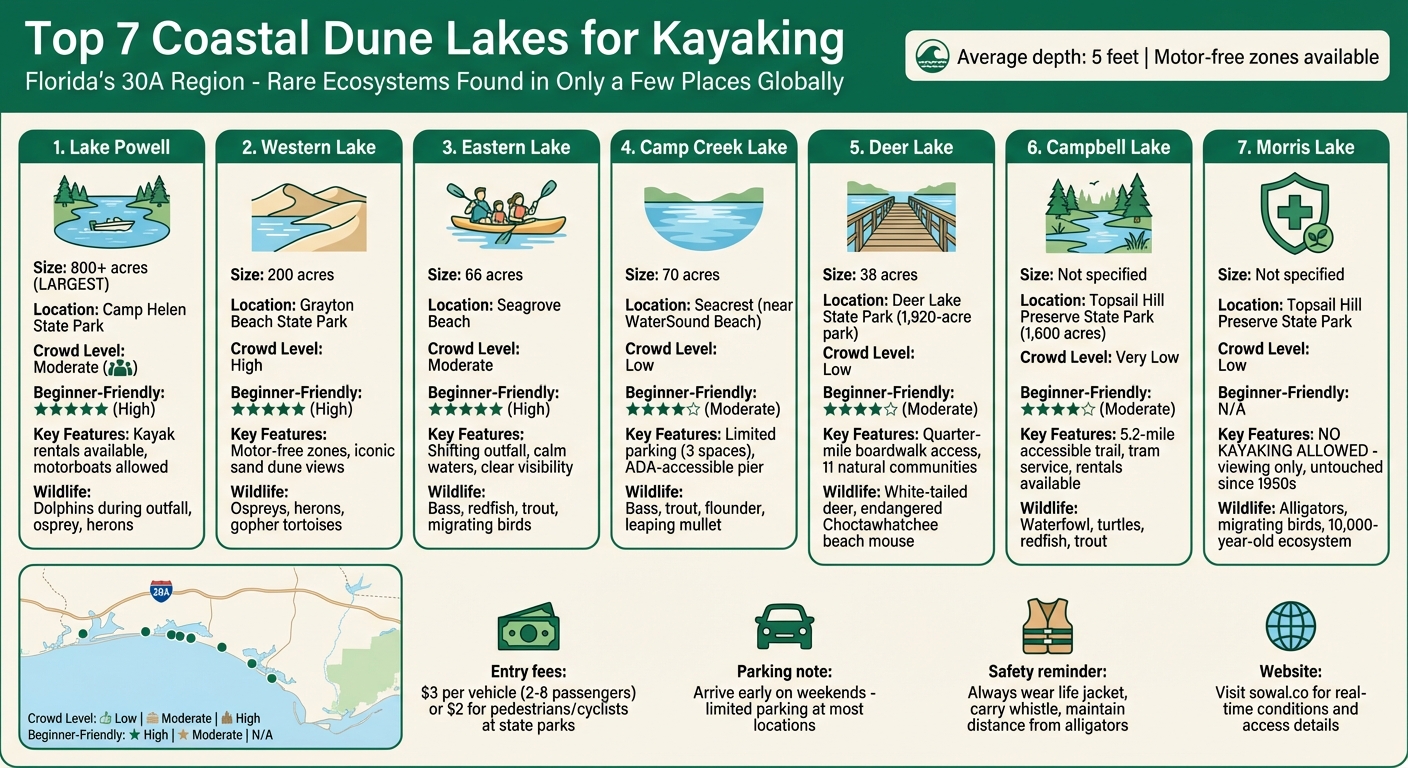
Coastal dune lakes are rare ecosystems found in only a few places globally, including Florida's 30A region. These lakes periodically connect to the Gulf of Mexico, creating a brackish mix of fresh and saltwater that supports unique wildlife and scenic paddling experiences. With calm, shallow waters averaging 5 feet deep, these motor-free lakes are perfect for kayakers of all skill levels. Here's a quick guide to the top 7 coastal dune lakes for kayaking:
- Lake Powell: Largest lake (800+ acres) with easy access at Camp Helen State Park. Offers rentals and diverse wildlife but allows motorboats.
- Western Lake: Located in Grayton Beach State Park, ideal for beginners with motor-free zones and iconic views of sand dunes.
- Eastern Lake: A smaller, family-friendly option in Seagrove Beach with calm waters and a shifting outfall.
- Camp Creek Lake: A quieter spot along 30A with limited parking but serene paddling conditions.
- Deer Lake: Situated in Deer Lake State Park, this undeveloped lake features a boardwalk and diverse ecosystems.
- Campbell Lake: Found in Topsail Hill Preserve State Park, offering tranquility and pristine surroundings.
- Morris Lake: Also in Topsail Hill Preserve, this protected lake prohibits kayaking but is worth visiting for its untouched beauty.
Each lake provides a unique experience, from vast expanses to secluded waters, making them ideal for nature enthusiasts and paddlers alike.
Quick Comparison:
| Lake | Access Point | Crowd Level | Beginner-Friendly | Key Features |
|---|---|---|---|---|
| Lake Powell | Camp Helen State Park | Moderate | High | Largest lake, rentals available, motorboats allowed |
| Western Lake | Grayton Beach State Park | High | High | Scenic views, motor-free zones |
| Eastern Lake | Seagrove Beach Access | Moderate | High | Shifting outfall, calm waters |
| Camp Creek Lake | Scenic Highway 30A | Low | Moderate | Quiet, scenic surroundings |
| Deer Lake | Deer Lake State Park | Low | Moderate | Undeveloped, boardwalk access |
| Campbell Lake | Topsail Hill Preserve State Park | Very Low | Moderate | Secluded, pristine wilderness |
| Morris Lake | Topsail Hill Preserve State Park | Low | N/A | No kayaking, untouched natural beauty |
For more details on access points and tips, visit sowal.co.
Coastal Dune Lakes Kayaking Comparison Guide - 7 Best Lakes on Florida's 30A
1. Lake Powell
Location and Accessibility
Lake Powell spans over 800 acres and sits on the border of Walton and Bay Counties near Inlet Beach. It holds the title of the largest coastal dune lake in the area and is the only one not entirely within Walton County.
Getting to Lake Powell is straightforward. Camp Helen State Park offers a public kayak launch at its North Trail trailhead, making it a popular access point. For those coming from Bay County, there's a boat launch on the west side of Panama City Beach. If you're looking to rent gear, Friends of Camp Helen State Park provides kayak and stand-up paddleboard rentals. These amenities make it easy to explore the lake and enjoy a variety of paddling adventures.
Kayaking Conditions and Skill Level
Lake Powell’s calm, shallow waters are perfect for beginners who want to practice paddling without worrying about waves. But don’t let its serene appearance fool you - experienced paddlers will find a challenge navigating its vast expanse and exploring the marshy eastern inlets near the Wild Heron development.
Keep in mind that jet skis and powerboats are allowed on Lake Powell, which can make it less peaceful compared to motor-free lakes. For a guided experience, Camp Helen State Park offers ranger-led paddling trips, including special moonlight outings.
Scenery and Unique Features
Lake Powell is a visual treat. Its tea-colored water, tinted by natural tannins, winds through striking white sand dunes that tower up to 30 feet high. This brackish lake is more than just beautiful - it’s an ecological marvel. During outfall events, when the sand berm opens to connect the lake with the Gulf, fresh and saltwater mix, creating a fascinating biological crossroads.
"One of the biggest coastal dune lakes in the country, Lake Powell is a natural treasure of the Emerald Coast and an outstanding spot for outdoor recreation."
- FloridaPanhandle.com Local Expert Team
Wildlife and Natural Highlights
Lake Powell is a haven for wildlife enthusiasts. As part of the Great Florida Birding & Wildlife Trail, it’s home to species like osprey, herons, egrets, and even river otters. During outfall periods, you might spot dolphins venturing into the lake, and the brackish water supports a mix of freshwater and saltwater fish. Be on the lookout for alligators as well, and always paddle safely with a life jacket and whistle on hand.
2. Western Lake
Location and Accessibility
Nestled between Grayton Beach and WaterColor, Western Lake spans about 200 acres. It's known for being easy to access, with the primary launch point located at Grayton Beach State Park, just 0.7 miles from Scenic CR 30A. Here, you'll find ample parking for both cars and trailers, along with picnic pavilions and restrooms for convenience. If you don't have your own gear, kayak, canoe, and stand-up paddleboard rentals are available right at the boat ramp, courtesy of the Friends of Grayton Beach and Deer Lake State Parks. For an alternative entry, head to Hotz Avenue near the Red Bar in downtown Grayton Beach. However, parking in this area is limited. Both launch points open up to calm, inviting waters perfect for paddling.
Kayaking Conditions and Skill Level
With its tranquil waters and an average depth of just 5 feet, Western Lake is an excellent spot for paddlers of all skill levels, from complete beginners to experienced kayakers. Motorized boats are only allowed on the town side of the lake, as the state park enforces a motor-free policy within its boundaries. This ensures a quiet and serene paddling experience across most of the lake. For a scenic adventure, paddle toward the outfall, a narrow channel where the lake occasionally connects to the Gulf of Mexico, offering stunning views of towering sand dunes.
Scenery and Unique Features
The lake’s tea-colored water, tinted by natural tannins from fallen leaves, gives it a distinctive appearance. The surrounding landscape is a mix of marshes, wetlands, and impressive sand dunes that can soar over 30 feet high. During periods of high water, the intermittent outfall breaches the dunes, creating a rare brackish ecosystem where fresh and saltwater meet. This unique phenomenon is found in only a few places worldwide, such as Madagascar, New Zealand, Australia, Oregon, and Florida.
Wildlife and Natural Highlights
Western Lake is a haven for a variety of wildlife, thanks to its blend of freshwater and saltwater habitats. This mix supports an unusual array of fish species, while the surrounding area attracts ospreys, herons, hawks, sandpipers, deer, foxes, and even gopher tortoises. Keep an eye out for alligators, which also call the lake home - just be sure to maintain a safe distance while paddling. Bird enthusiasts will particularly enjoy the area during migration seasons, when shorebirds make their seasonal stops.
3. Eastern Lake
Location and Accessibility
Eastern Lake is nestled in Seagrove Beach, just south of the iconic Scenic Highway 30A, spanning about 66 acres. The main launch point, Eastern Lake Park, offers a convenient boat ramp that makes setting off with a kayak a breeze. There's also a picnic area nearby, perfect for enjoying a meal after your paddle. Another access point is the Eastern Lake Neighborhood Access, located on the west side where the outfall meets the beach at the junction of South Gulf Drive and Eastern Lake Road. These features make Eastern Lake a relaxing and family-friendly destination for paddling.
Kayaking Conditions and Skill Level
Eastern Lake’s calm, shallow waters - averaging just 5 feet deep - provide an ideal setting for beginners. The clear water is a treat, letting you see fish swimming right beneath your kayak, which adds an extra layer of enjoyment. According to the FloridaPanhandle.com Local Expert Team, Eastern Lake earns a 4.5 out of 5 rating for being "ecologically unique" and "lots of fun", thanks to its ability to accommodate various activities. Non-motorized watercraft like kayaks, canoes, and stand-up paddleboards are best suited here, as the shallow depth poses challenges for powerboats.
Scenery and Unique Features
One of Eastern Lake’s standout features is its shifting outfall, which connects it to the Gulf and creates a fascinating brackish ecosystem. The lake’s naturally tinted waters and the ever-changing dunes along the shoreline make every visit feel new and exciting. The surrounding white sand dunes are constantly reshaped by wind and tides, offering a dynamic landscape that’s as beautiful as it is unpredictable.
Wildlife and Natural Highlights
The brackish waters of Eastern Lake are home to a variety of fish species, including Largemouth Bass, Redfish, Speckled Trout, Black Snapper, Black Drum, Mangrove Snapper, and Flounder.
"One of the better aspects of fishing here - you never know what is going to be at the other end of the line"
- Captain Larry, SoWal.com Featured Blogger
For bird enthusiasts, Eastern Lake is a prime spot. It serves as a critical freshwater source for migrating birds, making it one of the top birding locations among the dune lakes. The shoreline is lined with native plants like sawgrass, saltbush, and sand cordgrass, which not only filter the water but also provide essential habitats for local wildlife. While exploring, keep an eye out for alligators, and always maintain a safe distance if you happen to spot one.
4. Camp Creek Lake
Location and Accessibility
Nestled in Seacrest, just east of WaterSound Beach, Camp Creek Lake spans about 70 acres. This coastal dune lake stretches from Deer Lake State Park in the north and flows southward under Scenic Highway 30A toward the Gulf. If you’re looking to launch a kayak, the eastern shore along Camp Creek Lake Road is your go-to spot, located a short distance north of 30A. This access point features a dock, a dedicated launch area for kayaks, canoes, and paddleboards, as well as an ADA-accessible pier. However, parking is extremely limited - there are only three spaces available. Arriving early, especially on weekends, is a smart move to ensure you can enjoy a hassle-free start to your paddle.
Kayaking Conditions and Skill Level
Camp Creek Lake is highly regarded for its calm, beginner-friendly waters, earning a 4 out of 5 rating from the FloridaPanhandle.com Local Expert Team. They describe it as an "absolute treasure" for those seeking a peaceful paddling experience. With a shallow depth of just 5 feet and a ban on motorboats, the lake guarantees a tranquil outing. The water here is brackish, thanks to an intermittent Gulf outfall, which creates a rich environment for aquatic life. Keep in mind, fishing in these waters requires both freshwater and saltwater licenses. The lake’s naturally tea-colored water, caused by tannins from fallen leaves, adds to its unique character - it’s not pollution, just nature at work.
Scenery and Unique Features
The southern edge of Camp Creek Lake is framed by towering dunes that act as a natural barrier to the Gulf, while the northern part seamlessly merges with the untouched parklands of Deer Lake State Park. This blend of landscapes offers a mix of seclusion and scenic beauty. As noted by the FloridaPanhandle.com Local Expert Team:
"Perhaps nothing is more serene than paddling out to the middle of this lake in your kayak. From there, you can take in the gorgeous views in awe while simply enjoying the peaceful atmosphere all around."
One of the lake’s standout features is its dual ecosystem, where paddlers can glide from freshwater zones into brackish tidal areas as they approach the Gulf. It’s a journey that feels like transitioning between two worlds.
Wildlife and Natural Highlights
Camp Creek Lake is a haven for anglers and nature enthusiasts alike. It’s home to a variety of fish, including bass, trout, flounder, and the ever-energetic leaping mullet. Bird watchers will also find plenty to enjoy, as the lake serves as an essential stopover for migrating birds. While exploring, it’s important to stay mindful of the local wildlife - alligators are native to the area, so always keep a safe distance if you spot one. The surrounding vegetation, such as sawgrass and native dune plants, not only supports a thriving ecosystem but also helps filter the water, ensuring the lake remains a vibrant natural habitat.
5. Deer Lake
Location and Accessibility
Deer Lake sits within the 1,920-acre Deer Lake State Park, located on Scenic Highway 30A between Seagrove Beach and WaterSound Beach. Unlike many other coastal dune lakes, this one remains untouched by development, offering a truly tranquil paddling experience. Its protected status ensures a natural and serene environment. The park provides convenient amenities, including a paved access road, parking, restrooms, and picnic shelters.
To reach the water, you'll take a quarter-mile boardwalk that winds through the dunes. Entry fees are collected via an honor system - $3 per vehicle (2 to 8 passengers) or $2 for pedestrians and cyclists. Be sure to bring exact change. The park operates daily from 8 a.m. until sundown, making early arrival a smart choice, especially during weekends when it can get busier. The peaceful surroundings create an ideal setting for kayaking.
Kayaking Conditions and Skill Level
Spanning about 38 acres, Deer Lake offers a calm, beginner-friendly paddling experience. The water averages a depth of around 5 feet, and with motorized boats prohibited, the lake maintains a quiet and undisturbed atmosphere. Its tea-colored water, tinted by tannins from fallen leaves, adds to the lake's natural charm. One of the most captivating features is the lake's periodic outfall, where it breaks through the dunes to exchange water with the Gulf of Mexico.
Scenery and Unique Features
What truly sets Deer Lake apart is its sense of seclusion. Unlike more developed lakes, it feels like a hidden gem. As one park manager describes:
"The sand is sugar white and the waters of the Gulf of America are emerald green, and it's a good time to experience the solitude of Deer Lake State Park."
The park's landscape is ever-changing, with dunes advancing about one foot per year. It also boasts 11 distinct natural communities, ranging from beach dunes to swamps, creating a diverse and dynamic environment. Deer Lake is one of only 15 coastal dune lakes in Walton County, part of a rare natural phenomenon found in just a few places worldwide, including New Zealand, Australia, Madagascar, and parts of Oregon and Florida.
Wildlife and Natural Highlights
Deer Lake is a haven for nature lovers. It's home to one of Florida's largest populations of Curtiss' sandgrass, as well as endangered pitcher plants and Gulf Coast lupine. Bird enthusiasts can spot great egrets, ospreys, and red-shouldered hawks, while migratory birds frequently stop here during their journeys. Along the shoreline, white-tailed deer are a common sight, and butterflies often dance over the water. The park also protects the habitat of the endangered Choctawhatchee beach mouse, so visitors must stick to marked trails and boardwalks to help preserve these delicate ecosystems.
sbb-itb-d06eda6
6. Campbell Lake
Location and Accessibility
Nestled within the 1,600-acre Topsail Hill Preserve State Park in Santa Rosa Beach, Florida, Campbell Lake is a gem easily accessible from the west end of Scenic Highway 30A. This park has been celebrated by Visit South Walton as "the most pristine piece of coastal property in Florida". Reaching the lake is straightforward, thanks to the Campbell Lake Nature Trail - a 5.2-mile paved and wheelchair-accessible loop. Amenities like parking, restrooms, a tram service to the lake, and kayak and canoe rentals are available onsite. These features make Campbell Lake a welcoming destination for paddlers seeking a serene escape within South Walton’s scenic 30A area.
Kayaking Conditions and Skill Level
Campbell Lake offers an ideal setting for beginners, with its average depth of about 5 feet and a strict ban on motorized boats ensuring calm waters. These tranquil conditions allow new paddlers to practice their skills without worrying about rough waves or strong currents. The lake’s tea-colored water, tinted by natural tannins, reflects its healthy ecosystem. During heavy rains, the lake may experience an outfall, briefly connecting with the Gulf of Mexico and creating a fascinating brackish water environment.
Scenery and Unique Features
Surrounded by bald cypress swamps and towering sand dunes that reach up to 25 feet, Campbell Lake is a visual treat. The lake sits within a protected area that supports 14 different plant communities, with some parts of the ecosystem dating back thousands of years - between 2,000 and 10,000 years, to be exact. As you paddle, you’ll notice the untouched shoreline, a testament to the park’s dedication to conservation. This pristine environment not only captivates visitors but also provides a vital habitat for a variety of wildlife.
Wildlife and Natural Highlights
As part of the Great Florida Birding Trail, Campbell Lake is a haven for bird enthusiasts, offering opportunities to spot waterfowl and migratory species. During outfall events, the lake becomes a critical freshwater nursery for marine life. You might see turtles sunning themselves on logs or catch glimpses of redfish and trout swimming in the waters. However, it’s important to be cautious - alligators do inhabit the area. Always maintain a safe distance if you encounter one and stick to marked trails to ensure both your safety and the preservation of the environment.
7. Morris Lake
Location and Accessibility
Morris Lake is tucked within Topsail Hill Preserve State Park in Santa Rosa Beach, accessible from the western end of Scenic Highway 30A. This lake has remained virtually untouched since the 1950s, offering a rare glimpse into Florida's coastal heritage. To protect its pristine condition, private boating is strictly prohibited. However, if you're eager to paddle, nearby Campbell Lake offers kayak and canoe rentals within the park. While you can't boat on Morris Lake, it remains a stunning example of the area's preserved natural beauty.
Kayaking Conditions and Skill Level
While kayaking is not allowed on Morris Lake, the calm waters reflect the tranquil nature of South Walton’s coastal dune lakes. For those planning a trip, it’s always a good idea to check the latest regulations with Topsail Hill Preserve State Park.
Scenery and Unique Features
Morris Lake is framed by towering sand dunes, some reaching over 30 feet, which separate the lake from the Gulf. Its tea-colored waters, tinted by natural tannins, add to its charm. During heavy rains, the lake may experience an "outfall" event, where the freshwater breaches the sand berm and flows into the Gulf. This temporary mix of fresh and saltwater creates a unique brackish estuary, supporting a variety of aquatic species.
Wildlife and Natural Highlights
Thanks to its protected status, Morris Lake is a haven for wildlife. Alligators are known to inhabit the waters, so it’s crucial to stay on designated trails and boardwalks for safety. The area is also a hotspot for migrating birds and is home to wetland plants like sawgrass and saltbush. With an ecosystem estimated to be 10,000 years old, this lake offers a rare window into Florida's ancient landscapes. To help preserve this delicate environment, avoid stepping on the fragile dune vegetation.
Coastal Dune Lakes on Scenic Highway 30A
How to Choose the Right Lake for Your Trip
Picking the perfect coastal dune lake for your trip comes down to your paddling skills, how much time you have, and the kind of experience you're looking for. If you're new to paddling, Western Lake and Lake Powell are great starting points. Western Lake, nestled in Grayton Beach State Park, offers several boat launches, making it easy to get started. Meanwhile, Lake Powell stands out as the only lake where you can rent kayaks on-site, which is super convenient if you don’t have your own gear.
If you’re after peace and quiet, Campbell Lake and Morris Lake in Topsail Hill Preserve State Park are excellent choices. These lakes are like stepping back in time, untouched and tranquil, with very few visitors even today. Choosing the right lake means matching your skill level and vibe to the unique atmosphere each destination offers.
It’s also worth noting that water conditions can shift quickly due to rainfall or outfall events. When water levels rise, some lakes can breach the surrounding sand dunes, connecting to the Gulf. This creates brackish water and moving currents, which might affect your paddling experience. To help you decide, here’s a quick comparison of the lakes, covering access points, crowd levels, and standout features:
| Lake | Access Point | Crowd Level | Beginner-Friendly | Key Features |
|---|---|---|---|---|
| Lake Powell | Camp Helen State Park | Moderate | High | Largest lake (800+ acres); on-site kayak rentals |
| Western Lake | Grayton Beach State Park | High | High | Multiple boat launches; iconic scenery |
| Eastern Lake | Seagrove Beach Access | Moderate | High | Residential feel; public boat launch |
| Camp Creek Lake | Scenic Highway 30A | Low | Moderate | Less commercialized; scenic surroundings |
| Deer Lake | Deer Lake State Park | Low | Moderate | Quarter-mile boardwalk access; diverse ecosystem |
| Campbell Lake | Topsail Hill Preserve State Park | Very Low | Moderate | Extremely secluded; pristine wilderness |
| Morris Lake | Topsail Hill Preserve State Park | Low | Yes | Remote and pristine; excellent for nature viewing |
Since water levels and outfall activity can change, it’s smart to check the latest conditions before heading out. For up-to-date details on lake access and conditions, visit sowal.co before your trip.
Conclusion
South Walton's coastal dune lakes offer an extraordinary kayaking experience that's hard to find anywhere else in the world. As Mitchell from the Department of Environmental Protection explains, their brackish ecosystem makes them truly one of a kind. With 15 named lakes nestled along South Walton's stunning white sand beaches, these serene, motor-free waters invite paddlers to immerse themselves in nature.
Each lake has its own distinct personality. From the vast beauty of Lake Powell to the picture-perfect views at Western Lake, or the untouched serenity of Campbell and Morris Lakes, there's something for everyone. These protected waters are perfect for paddlers of all skill levels, offering both adventure and tranquility.
Ready to plan your trip? Head over to sowal.co for everything you need - access points, real-time updates, and detailed trip-planning tools. With interactive maps and local tips, you'll be fully prepared to explore these rare and precious geological wonders. Grab your paddle and discover the magic of South Walton’s coastal dune lakes for yourself!
FAQs
Why are coastal dune lakes perfect for kayaking?
Coastal dune lakes offer an extraordinary kayaking experience by combining the serene waters of inland lakes with the dynamic nature of coastal estuaries. These rare ecosystems, found in just a handful of places around the world, are a standout feature of South Walton. With an average depth of about 5 feet, they’re perfect for paddlers of all experience levels.
What makes these lakes so special is their intermittent outfalls - natural channels where freshwater flows into the Gulf and saltwater flows back in. This creates a fascinating brackish mix, supporting a wide range of wildlife, from fish and birds to the occasional alligator. The environment is constantly shifting, so one moment you might be paddling through calm freshwater, and the next, you’re navigating areas influenced by the tides, all against the backdrop of picturesque dunes and peaceful surroundings.
Since motorized boats aren’t allowed, these lakes offer a quiet retreat where you can explore hidden coves, calm lagoons, and pristine natural areas. Launching is easy, thanks to accessible spots like Grayton Beach and Topsail Hill, making it simple to enjoy a memorable kayaking adventure in South Walton’s stunning coastal dune lakes.
What’s the best coastal dune lake for beginners seeking a peaceful kayaking experience?
For those just starting out with kayaking and seeking a relaxing experience, Campbell Lake is a fantastic option. Tucked away in the picturesque Topsail Hill Preserve State Park, this lake boasts calm, glassy waters and breathtaking scenery, creating an inviting spot for beginners.
The tranquil vibe and lack of boat traffic make Campbell Lake an ideal place to soak in the serene beauty of South Walton’s coastal dune lakes while paddling at a leisurely pace.
What rules or guidelines should I follow when kayaking on South Walton's coastal dune lakes?
Kayaking on South Walton's coastal dune lakes offers a peaceful way to soak in their natural charm. However, there are a few guidelines to keep in mind to protect the environment and ensure a safe experience. For starters, only non-motorized vessels - like kayaks and canoes - are permitted on these lakes. Motorized boats are strictly off-limits. Use designated launch points or boardwalks, and avoid stepping on the dunes or disturbing the lake outfalls.
If you're fishing, make sure to follow local regulations. Secure all trash to prevent littering, and stay aware of the wildlife around you - alligators are known to inhabit these areas. Keep in mind that overnight camping and leaving equipment on the beach are not allowed. By respecting these rules, you can enjoy a serene adventure while helping to protect these one-of-a-kind ecosystems for future visitors.