Sea turtles face serious challenges on South Walton beaches, including light pollution, marine debris, and obstacles like sandcastles and beach holes. These issues disrupt nesting and endanger hatchlings. South Walton Turtle Watch, active during the May 1–October 31 nesting season, works to protect turtles by monitoring nests, addressing threats, and educating the community.
Kids can get involved through free programs like Wild Sea Turtle Wednesdays and Jr. Ocean Ranger activities. These hands-on experiences teach children how to protect turtles by keeping beaches clean, dark, and flat. In 2025, the group helped 4,975 hatchlings reach the ocean, showing how small actions can make a big difference. Families can join these efforts to learn, contribute, and create memorable experiences while supporting conservation.
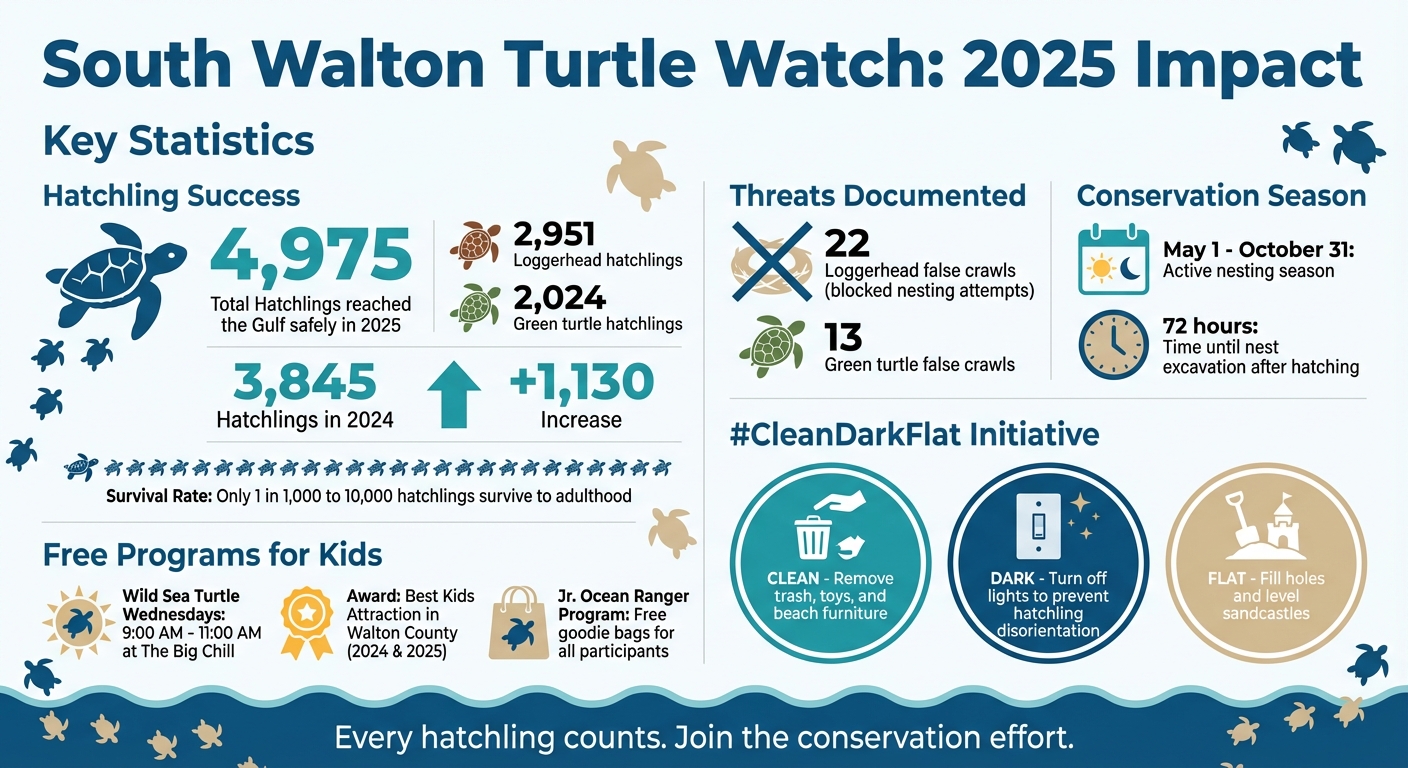
South Walton Turtle Watch 2025 Impact: Hatchling Success & Conservation Statistics
What Threatens Sea Turtles in South Walton
Habitat Loss and Human Impact
The development of beaches and the influx of visitors bring a host of challenges for sea turtles. Activities like digging sand holes or leaving behind items such as umbrellas, poles, and chairs can block nesting paths. These obstacles often result in "false crawls", where turtles attempt to nest but are forced to turn back without laying eggs. In 2025, South Walton reported 22 Loggerhead false crawls and 13 Green turtle false crawls. Such barriers not only disrupt nesting but can also cause physical harm to the turtles, further reducing their chances of successful reproduction. Adding to these issues, artificial lighting creates another major hurdle for these creatures.
Light Pollution and Hatchling Disorientation
Artificial lighting from beachfront properties, hotels, and streetlights poses a severe threat to hatchlings. Baby turtles rely on the natural glow of moonlight reflecting off the Gulf to guide them to the ocean. However, artificial lights often overpower this natural cue, leading hatchlings toward dangerous, brightly lit areas instead. Zone Leader Tonia Fralin highlights the importance of awareness:
I enjoy educating the public that are out on the beach usually using a flashlight - which during turtle season is prohibited.
This disorientation leaves hatchlings vulnerable to dehydration, exhaustion, and predators, resulting in countless deaths each year.
Pollution and Marine Debris
Pollution, especially plastic waste and discarded fishing gear, endangers turtles at all stages of life. Turtles often mistake plastic for food, leading to ingestion issues, while fishing nets and other debris can entangle them. Studies reveal that litter and tar tend to gather in "frontal zones" where young turtles grow. The South Walton Turtle Watch underscores the broader significance of this issue:
Sea turtles are a keystone species and can indicate the overall health of our oceans and beach ecosystems.
The organization also points out that pollution, combined with shrimp trawling and accidental capture, continues to threaten Loggerhead turtles, keeping them on the endangered species list.
CONNECTING KIDS TO CONSERVATION: THE SEA TURTLE'S TALE
What South Walton Turtle Watch Does

South Walton Turtle Watch holds a Florida Marine Turtle Permit issued by the FWC, allowing them to protect sea turtles along Walton County's beaches (excluding state parks). Following strict guidelines set by the FWC, the team collects and reports data - like nest success rates, measurements, and stranding details - to both the FWC and research organizations. By combining detailed monitoring efforts with educational initiatives, the program addresses threats to sea turtles in practical ways.
Daily Nest Monitoring and Protection
Every year, from May 1 to October 31, trained staff and volunteers head out at dawn to survey the beaches for turtle tracks. When a nest is discovered, it’s carefully marked with stakes and yellow flagging tape to protect it during the incubation period. Throughout the nesting season, the team also conducts night patrols to monitor for light pollution, which can disorient hatchlings. After a nest hatches, volunteers excavate it 72 hours later, counting empty shells to evaluate success and releasing any remaining hatchlings. These efforts have safeguarded thousands of hatchlings each year.
In addition to nest monitoring, the program responds to stranded sea turtles - whether they’re sick, injured, or deceased. Volunteers collect data and samples during these encounters, and live turtles are transported to licensed rehabilitation centers for care. These hands-on efforts form the backbone of the organization’s mission to protect sea turtles and inspire community involvement.
Educational Outreach for Families and Kids
Beyond their work on the beaches, South Walton Turtle Watch makes a lasting impact through interactive educational programs. One of their standout initiatives is Wild Sea Turtle Wednesdays at The Big Chill in Watersound, where families can learn about nesting habitats, see life-size turtle shells, and meet dedicated volunteers. Kids attending these events receive a Jr. Ocean Ranger goodie bag filled with fun items like a badge, activity book, and marine-animal-shaped crayons.
For a more intimate experience, the program also hosts sea turtle story times at The Hidden Lantern in Rosemary Beach on Tuesdays and Thursdays, welcoming attendees of all ages.
Through the Volunteer Beach Ambassador (VBA) program, students get hands-on experience with activities like simulated turtle crawling, digging egg chambers, and participating in beach cleanups. These workshops and school partnerships emphasize the importance of keeping beaches "Clean, Dark, Flat" - free from trash, darkened with turtle-friendly lighting, and leveled to avoid hazards. Dr. Robbin Trindell, Sea Turtle Management Program Leader at FWC, highlights the importance of these efforts:
In order to keep sea turtles and our beaches and oceans healthy, it's important for all of us to be good neighbors and do our part.
sbb-itb-d06eda6
How Kids Can Join Turtle Watch
Kids can participate in Turtle Watch programs completely free, giving them a chance to play an active role in protecting sea turtles while learning about conservation.
Wild Sea Turtle Wednesdays
Every Wednesday morning from 9:00 AM to 11:00 AM during nesting season, families are invited to The Big Chill in Watersound Beach for Wild Sea Turtle Wednesdays. This free event has been recognized as the "Best Kids Attraction" in Walton County for both 2024 and 2025. Additionally, The Hidden Lantern bookstore hosts sea turtle storytime on Tuesdays or Thursdays, welcoming kids of all ages. These activities naturally transition into engaging beach programs, where children can take part in hands-on conservation efforts.
Hands-On Activities and Beach Programs
Kids can dive into a variety of fun and educational activities, including turtle crawling games, egg-chamber dig demonstrations, and beach cleanups to help protect nesting sites. One of the most memorable experiences is participating in nest excavations, or "digs", which occur 72 hours after a nest hatches. Families join volunteers to count empty shells and guide any remaining hatchlings safely to the Gulf. Nine-year-old Selina Mount shared her excitement during a dig:
Don't squish it! Look, there's a whole bunch of turtles.
Becoming a Jr. Ocean Ranger
To build on these experiences, the Jr. Ocean Ranger program gives kids a more structured way to learn about conservation. Every child who attends Wild Sea Turtle Wednesdays receives a free Jr. Ocean Ranger goodie bag, which includes a badge, an activity book, and crayons shaped like marine animals made from recycled materials. This program encourages kids to take pride in their conservation efforts and share their knowledge with others. As Jr. Ocean Rangers, children learn to identify turtle tracks - resembling large tractor marks - understand the dangers of holes in the sand, and promote the #LeaveNoTrace initiative. Barbara Van Stern, Area Coordinator for South Walton Turtle Watch, highlights the key message:
The most important things to remember are to keep the beaches clean, dark and flat.
Why Kids Should Join South Walton Turtle Watch
Building Awareness and Responsibility
Getting involved with South Walton Turtle Watch gives kids the chance to become caretakers of their local environment. They learn firsthand how small, everyday choices can make a big difference in protecting wildlife. For instance, kids discover that sea turtles are a keystone species, meaning their well-being reflects the overall health of both the ocean and beach ecosystems. By understanding simple actions - like filling in beach holes or turning off lights at night - they begin to take ownership of their role in preserving nature.
Valerie Lofton, the South Walton Turtle Watch Coordinator, highlights the importance of starting young:
"When you're young, you're a little sponge. And there are definitely things that you learn when you're young that you say, 'Oh my gosh, I remember this from when I was young, and I have a passion for that.' Little kids are coming and they're having a good time and they're seeing these big species and they're just going to take it forward with them."
The program also emphasizes the #CleanDarkFlat principles, which encourage kids to take practical steps like knocking down sandcastles, removing beach toys before sunset, and keeping lights off at night. These small actions foster a growing sense of responsibility and lead to real conservation efforts.
Making a Real Difference for Sea Turtles
Through South Walton Turtle Watch, kids actively contribute to protecting sea turtles. Their involvement has already shown results. For example, the 2025 nesting season saw a noticeable increase in hatchlings safely reaching the Gulf compared to 2024, thanks in part to youth participation. Activities like beach cleanups and nest monitoring directly improve the survival chances of these endangered turtles.
Creating Memorable Learning Experiences
The hands-on experiences offered by Turtle Watch leave a lasting impact on young participants. Whether it’s helping with nest excavations, witnessing hatchlings make their way to the Gulf, or learning to identify different turtle species, these moments go beyond standard lessons - they create lifelong memories.
The program’s efforts haven’t gone unnoticed. It was named the "Best Kids Attraction" in Walton County for both 2024 and 2025. By engaging in activities like distinguishing Loggerheads from Green turtles, understanding nesting habits, and spotting false crawls, kids not only gain practical knowledge but also develop communication skills to share what they’ve learned about conservation.
Conclusion
Sea turtles in South Walton face challenges like light pollution and obstacles on the beach, which can interfere with their nesting habits. To combat these issues, South Walton Turtle Watch promotes the #CleanDarkFlat initiative, encouraging practices that protect these remarkable creatures.
In 2025, volunteers successfully guided 4,975 hatchlings - 2,951 Loggerheads and 2,024 Greens - safely to the Gulf. This marked an increase from 3,845 hatchlings in 2024. Given that only one in 1,000 to 10,000 hatchlings survives to adulthood, every single one makes a difference.
Kids play an active role in this conservation effort, turning education into action. Through free weekly programs like Wild Sea Turtle Wednesdays at The Big Chill (9:00 AM – 11:00 AM), children can earn their Jr. Ocean Ranger badge and participate in engaging, hands-on activities. Dr. Robbin Trindell from the Florida Fish and Wildlife Conservation Commission emphasizes the importance of community involvement:
In order to keep sea turtles and our beaches and oceans healthy, it's important for all of us to be good neighbors and do our part.
The success of these efforts highlights the power of youth involvement. Whether your child is curious about marine life or simply enjoys the beach, South Walton Turtle Watch offers plenty of ways to make a difference. Nesting season, which runs from May 1 through October 31, is a perfect time for families to connect with nature and contribute to conservation efforts. For more details on South Walton's beaches and family-friendly activities, visit https://sowal.co and explore everything this vibrant coastal community has to offer.
FAQs
How can kids get involved with South Walton Turtle Watch?
Kids in South Walton can play an active role in protecting sea turtles by participating in Wild Sea Turtle Wednesdays, a family-friendly event held at popular spots like The Big Chill. These events offer guided beach walks, opportunities to spot turtle tracks, and fun, educational activities that teach kids how to keep beaches "clean, dark, and flat" - essential for helping nesting turtles. Children can also pitch in by filling sand holes and learning about the incredible journey hatchlings take to reach the ocean.
For a more hands-on experience, kids can join the Friends of South Walton Sea Turtles program as Volunteer Beach Ambassadors. They’ll take on simple but meaningful tasks like measuring turtle tracks, documenting false crawls, and participating in beach clean-ups. Schools and community groups also organize interactive events where kids can dive into nesting science, monitor turtle nests, and even assist with post-hatch excavations. Families can check local resources for event schedules and volunteer opportunities to get involved.
What are the biggest dangers sea turtles face on South Walton beaches?
Sea turtles in South Walton face numerous challenges, many of which stem from human activity. Coastal development has led to habitat loss, reducing the sandy beaches essential for nesting. Pollution, such as discarded trash, can entangle hatchlings, while artificial lighting confuses baby turtles, often guiding them away from the ocean instead of toward it. Additionally, the illegal harvesting of eggs and turtles continues to be a serious issue.
Even seemingly harmless actions by beach visitors can create problems. Leaving holes in the sand, disturbing nests, or using bright lights near nesting areas can negatively impact both adult turtles and hatchlings. However, small changes can make a big difference. By embracing the South Walton Turtle Watch's motto - "#CleanDarkFlat" - families can help protect these amazing creatures. This means turning off beach lights, filling in sand holes, and keeping a respectful distance from turtles and their nests.
Why is it important to keep beaches clean, dark, and smooth for sea turtles?
Keeping South Walton’s beaches clean, dark, and smooth plays a vital role in safeguarding sea turtles throughout their life cycle.
Clean beaches are essential for allowing nesting females and hatchlings to move freely. Obstacles like trash, sandcastles, or holes can trap or block them, making their journey difficult or even dangerous.
Dark beaches guide hatchlings to the ocean by allowing them to follow the natural glow of the moon. Artificial lighting, such as streetlights or porch lamps, can confuse them, causing them to head in the wrong direction, away from the water.
Smooth beaches provide the right conditions for nesting. Uneven or compacted sand can make it hard for mothers to dig stable nests and may even harm the eggs.
By taking simple actions - cleaning up trash, turning off unnecessary lights, and flattening sand structures - we can help ensure sea turtles have a safe path to nest, hatch, and reach the ocean.