The Underwater Museum of Art (UMA) is the first permanent underwater sculpture garden in the U.S., located near Grayton Beach State Park, Florida. Accessible only to certified open-water SCUBA divers, it combines art and marine conservation. Here's what you need to know before visiting:
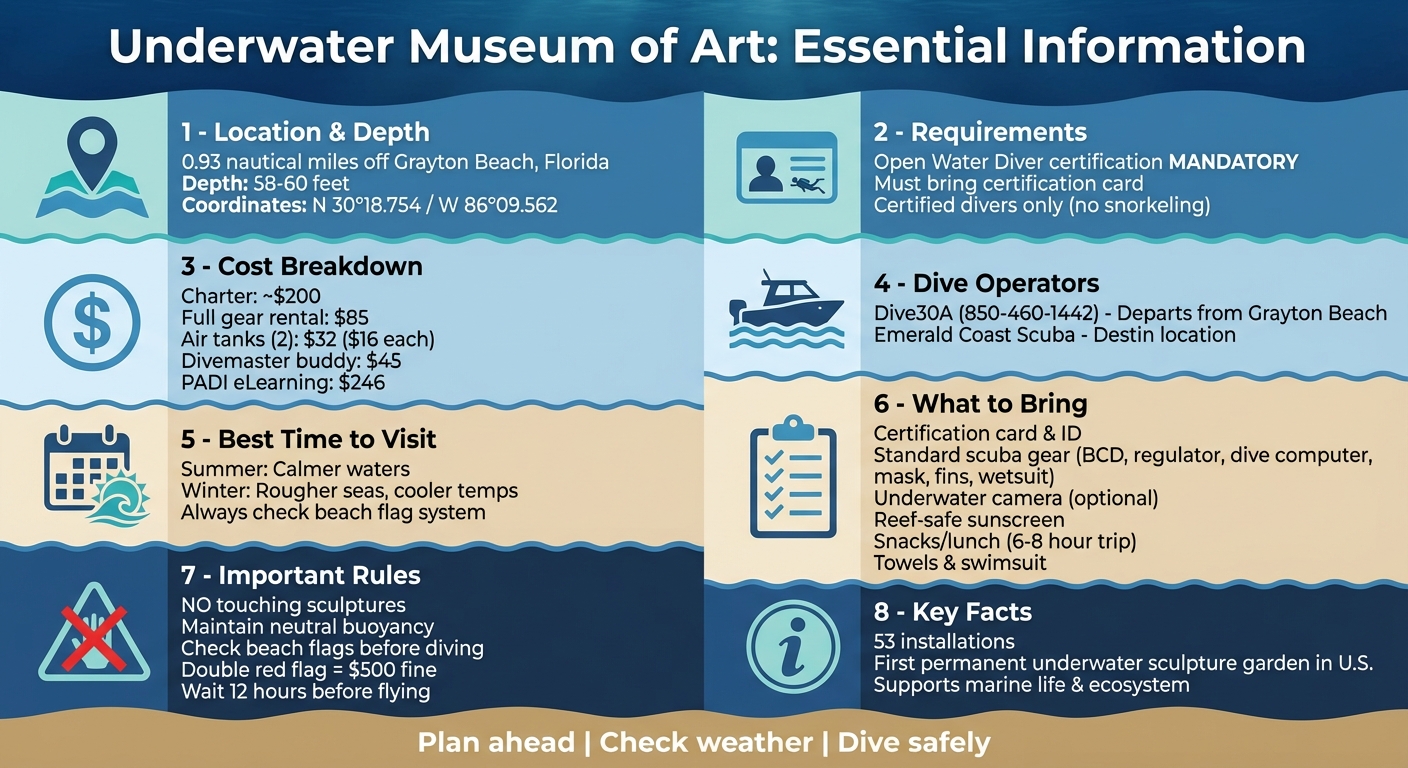
- Location: 0.93 nautical miles off Grayton Beach in the Gulf of Mexico, with sculptures at 58–60 feet depth.
- Access: Certified divers can book trips with operators like Dive30A or Emerald Coast Scuba. Expect costs around $200 for charters, with gear rentals starting at $85.
- Requirements: Open Water Diver certification is mandatory. Bring your certification card, and check health and fitness levels before diving.
- Best Times: Summer offers calmer waters, but always check weather and Gulf conditions before heading out.
- Rules: Maintain buoyancy, avoid touching sculptures, and follow local safety guidelines, including beach flag warnings.
UMA features 53 installations designed to support marine life, transforming barren sand flats into thriving ecosystems. Plan ahead to ensure a safe and enjoyable dive.
Underwater Museum of Art Quick Reference Guide for Divers
Basic Information Before You Visit
Location and How to Get There
The Underwater Museum of Art (UMA) is situated in the Gulf of Mexico, just off the coast of Walton County near Grayton Beach State Park. Specifically, the center sculpture, the SWARA Skull, is located at coordinates N 30°18.754 / W 86°09.562, while the Super Reef Anchor Point is at N 30°18.754 / W 86°09.521. It's 0.93 nautical miles offshore, making it accessible only by boat.
If you're driving, Grayton Beach State Park provides convenient amenities like parking, restrooms, showers, and a beach walkover. From there, you can connect with dive operators such as Dive30A (850-460-1442), which departs directly from Grayton Beach, or Emerald Coast Scuba in Destin, which offers scheduled trips, private charters, and Open Water Diver certification classes at the museum site.
For those bringing their own boat, anchoring near the Super Reef Anchor Point is highly recommended. This helps protect the sculptures from accidental damage. The UMA Interactive Map emphasizes this:
"Out of respect for the art, boaters are asked to anchor on or near the Super Reef Anchor Point to protect the sculptures from unintended contact or damage".
Visitor Requirements
To explore the museum, you must be a certified open water SCUBA diver. With a depth of 58 feet and the dynamic conditions of the Gulf, proper training and experience are essential. Snorkelers won’t be able to see the sculptures from the surface. Before booking, assess your physical fitness and any health concerns to ensure a safe and enjoyable dive.
Best Times to Visit and Weather
While knowing the location and diving requirements is important, staying informed about the weather is just as crucial. Gulf conditions can change quickly, impacting water temperature, visibility, and overall safety. Always check the official beach flag system for current conditions before heading out.
In South Walton, summer usually brings calmer waters, though afternoon thunderstorms can occur. Winter, on the other hand, often means rougher seas and cooler water temperatures. For the best experience, reach out to your dive operator for seasonal insights and real-time updates before planning your trip.
Certifications, Permits, and Rules
Diving Certification Requirements
To dive at the Underwater Museum of Art (UMA), you'll need an Open Water Diver certification, as the site is located at a depth of around 58 to 60 feet. If you haven't earned your certification yet, you can complete an Open Water Diver course through a local operator offering practical dives at UMA. This process includes eLearning (priced at approximately $246.00 for PADI eLearning), pool training sessions, and four open water dives. Since Gulf conditions at these depths can sometimes limit visibility, some operators suggest diving with a Divemaster buddy for extra guidance, which typically costs about $45.00 per diver. Make sure to have your physical or digital certification card ready when visiting the dive shop.
Choosing a Dive Operator
Once you're certified, the next step is selecting a trusted dive operator to ensure your trip is both safe and enjoyable. Two popular operators for UMA dives include Dive30A, which departs directly from Grayton Beach (contact: 850-460-1442), and Emerald Coast Scuba in Destin, offering scheduled trips, private charters, and training classes. Expect to pay around $200.00 for a typical dive charter, with additional fees for equipment rentals if needed. Full gear rental packages, which include air, cost about $85.00, while individual air tanks can be rented for approximately $16.00 each (most dives require two tanks). When choosing an operator, inquire about group sizes, whether guided trips are available, and if a Divemaster buddy is provided for less experienced divers. This ensures all safety and environmental guidelines are followed.
Permits and Environmental Protection
While you don't need a specific diving permit to visit UMA, there are rules in place to protect its marine environment and ensure the sculptures continue to support marine life. Underwater, practice strict buoyancy control and follow a no-touching policy to avoid disrupting the natural growth of marine organisms on the sculptures. Before diving, always check the beach flag system - entering the water during double red flag conditions is strictly forbidden and can result in a $500 fine along with criminal charges.
What to Pack and Bring
Required Diving Equipment
Make sure you have your standard scuba gear ready: BCD, regulator set, dive computer, mask, fins, and a wetsuit suited for the weather. Since the sculptures are located 58 to 60 feet underwater, this equipment is absolutely necessary for a safe and enjoyable dive. Keep in mind that tanks and weights aren't included in the $200.00 charter fee. You can rent two tanks for about $16.00 or opt for a full gear package, which costs around $85.00.
Before finalizing your booking, double-check with your dive operator - whether it’s Dive30A or Emerald Coast Scuba - about what’s included in the charter. Some operators offer full rental packages, while others require you to bring your own gear. It’s also a good idea to confirm whether Divemaster guidance is provided, especially since visibility can sometimes be limited underwater.
Once your essential gear is sorted, think about adding a few extras to make the experience even better.
Optional but Helpful Items
An underwater camera is a great addition for capturing the sculptures and marine life. Compact and durable options like the GoPro or DJI Osmo Action are popular among divers. Since red light diminishes at 60 feet, a red color correction filter for blue water will help bring out natural tones in your photos and videos. Pair your camera with a floating hand grip to avoid losing it, and shoot in 4K or 5.3K resolution to extract high-quality still images from your footage later.
Consider bringing a dive light to illuminate the intricate details of the sculptures and spot marine life hiding in crevices, especially in areas where visibility might be reduced. A reef-safe defogger is another handy item to keep your mask clear without harming the artificial reef environment. Although not mandatory, a surface marker buoy (SMB) is a smart safety tool for open-water dives.
Personal Items for the Boat
UMA trips typically last between 6 and 8 hours, so pack enough snacks or even a full lunch, as most boats only provide water and ice. Don’t forget essentials like your dive certification card, ID, towel, swimsuit, waterproof bag, reef-safe sunscreen, and a hat. Skip wearing jewelry to avoid losing it during the trip. Plan to check in about an hour before departure.
After your dive, you can freshen up at Grayton Beach State Park, which has showers, restrooms, and changing rooms available before you head home.
sbb-itb-d06eda6
Dive Day Tips and Proper Behavior
Before Departure
Double-check the launch location and departure time to ensure a smooth start to your dive. Most trips leave from Grayton Beach State Park, with the museum positioned about 0.93 nautical miles offshore at a bearing of 198°. If you're heading out on your own boat, use the coordinates for the SWARA Skull (the central sculpture) at N 30°18.754 / W 86°09.562, or navigate to the Super Reef Anchor Point at N 30°18.754 / W 86°09.521.
Be sure to complete any required health forms, especially if you have conditions like ear problems, respiratory concerns, or anxiety. It's also critical to stay sober - being under the influence of alcohol can lead to trip cancellation without a refund. Fuel your body with a good meal beforehand to ensure you're ready for the day. These steps will help you kick off your dive adventure safely and efficiently.
On the Boat
Pay attention during the safety briefing. This will cover emergency protocols, site conditions, and visibility updates. Keep your gear secure and store any personal belongings in a dry bag to protect them from water exposure. Once in the water, always stay within sight of the boat for your safety.
Underwater Behavior
When you're underwater, focus on maintaining neutral buoyancy and avoid touching anything. This helps protect both the sculptures and the marine ecosystem, as the installations are designed to evolve into thriving reefs. Andy McAlexander, President of SWARA, beautifully captures this idea:
"When you see small fish taking refuge inside a piece of art you see more than just the beauty of the Art, you experience the beauty of life in general and how each of us has a part to play in preserving something so fragile".
Some sculptures offer unique interactive experiences. For instance, you can release air through the small ports at the base of the Three Wishes genie lamp and watch it escape from the spout. Or, you can ring the bell inside the Ring My Bell tower using the attached striker.
Finally, if you’re planning to fly after your dive, make sure to wait at least 12 hours after your last dive before boarding your flight. This precaution is essential for your safety.
Scuba diving the Underwater Museum of Art
More Resources for South Walton
The Underwater Museum of Art (UMA) turns barren sand flats into thriving marine habitats, creating essential shelter and breeding areas where none existed before. As artist Zachery Long describes it:
"The Underwater Museum of Art is more important than we all know... It is a positive movement in the right direction leading by example to create net positives for our oceans."
Over time, UMA's sculptures transform into living reefs, drawing in algae, coral, and fish populations that rely on these habitats. Beyond its artistic appeal, the site serves as a vital research hub. Marine scientists and students study the effects of artificial reefs on the Gulf's ecosystem, making it a unique blend of art and science.
But UMA is just one of many reasons to explore South Walton. The Cultural Arts Alliance of Walton County oversees the "Art in Public Spaces" initiative, which features the UMA as well as land-based installations scattered across the area. South Walton is also home to rare coastal dune lakes - natural formations found in only a few places around the world. Together, these elements create a rich mix of art, nature, and local culture, making a visit to South Walton an unforgettable experience.
To help plan your trip, visit sowal.co for practical resources like real-time beach cams, an events calendar, and detailed guides to South Walton's charming beach neighborhoods. The site also features community forums where locals share tips on dining, shopping, and hidden treasures. Don’t miss upcoming events like the 17th Annual Swamp Writer Music Festival (January 16–18, 2026) and the Night of Hope concert (January 30, 2026), both of which showcase the area’s vibrant cultural scene.
FAQs
When is the best time to visit the Underwater Museum of Art for diving?
The best time to explore the Underwater Museum of Art is from April to September, when water temperatures are warmer, and visibility is generally clearer. These months offer optimal conditions for a memorable diving experience.
However, weather can be unpredictable, so it’s wise to review the forecast and local diving updates before setting out. Make sure you’re equipped with the right gear and have the necessary permits to follow local guidelines.
What should I know to have a safe and enjoyable dive at the Underwater Museum of Art?
To have a safe and unforgettable experience diving at the Underwater Museum of Art, located 58 feet below the surface near Grayton Beach, FL, keep these tips in mind:
- Get certified and stay confident: This dive is only for certified scuba divers who are comfortable in open-water conditions. If you’re not certified yet, consider completing an Open Water Diver course before planning your visit.
- Opt for a guided dive: Partner with a trusted local dive operator. They'll handle crucial details like equipment, safety briefings, and navigating the site. Plus, they’ll make sure you follow local rules, such as anchoring only at designated spots to protect the underwater sculptures.
- Check your gear: Make sure all your equipment - mask, fins, wetsuit, and regulator - is in good shape and fits you properly. Don’t skip a thorough pre-dive safety check to ensure everything is ready.
- Plan your day: Arrive early at Grayton Beach State Park to take advantage of parking, showers, and restrooms. This will make gearing up for your dive and cleaning up afterward much easier.
For more details on diving rules, parking, and tide schedules, check local resources like sowal.co to stay up-to-date and well-prepared.
What gear do I need to dive at the Underwater Museum of Art?
To explore the Underwater Museum of Art, you must be a certified Open Water scuba diver and have the right scuba gear. Your equipment should include a tank, regulator, buoyancy control device (BCD), mask, fins, and a wetsuit. Before heading out, double-check that your gear is in excellent working order and appropriate for the water conditions to make your dive both safe and enjoyable.