This guide covers key details for camping at Topsail Hill, a 1,640-acre park in Santa Rosa Beach, FL, known for its towering sand dunes, rare coastal dune lakes, and three miles of white-sand Gulf beaches. Whether you're staying in an RV, tent, or cabin, use this checklist to prepare for your trip and make the most of your visit.
Key Highlights:
-
Camping Options:
- 156 full-hookup RV sites (up to 45 feet).
- 22 tent platforms, including hammock camping.
- 32 cabins and bungalows with kitchens and porches.
-
Amenities:
- Swimming pool, laundry, hot showers, camp store, tram to the beach, and ADA-accessible facilities.
-
Activities:
- Hiking (15 miles of trails), biking, fishing, kayaking, and wildlife viewing.
-
Reservations:
- Book up to 11 months in advance via Florida State Parks.
- Pricing: $42/night for RVs, $24/night for tents (plus fees). Discounts available for seniors and certain residents.
-
Packing Essentials:
- Tent/RV gear, lightweight bedding, insect repellent, sunscreen, and a first-aid kit.
- Beach gear: chairs, umbrellas, and reef-safe sunscreen.
- Hiking gear: sturdy shoes, hydration packs, and trail maps.
-
Rules:
- Quiet hours: 10 p.m.–6 a.m.
- Pets allowed at campsites (not in cabins or on the beach).
- Stay on trails and boardwalks to protect wildlife and dunes.
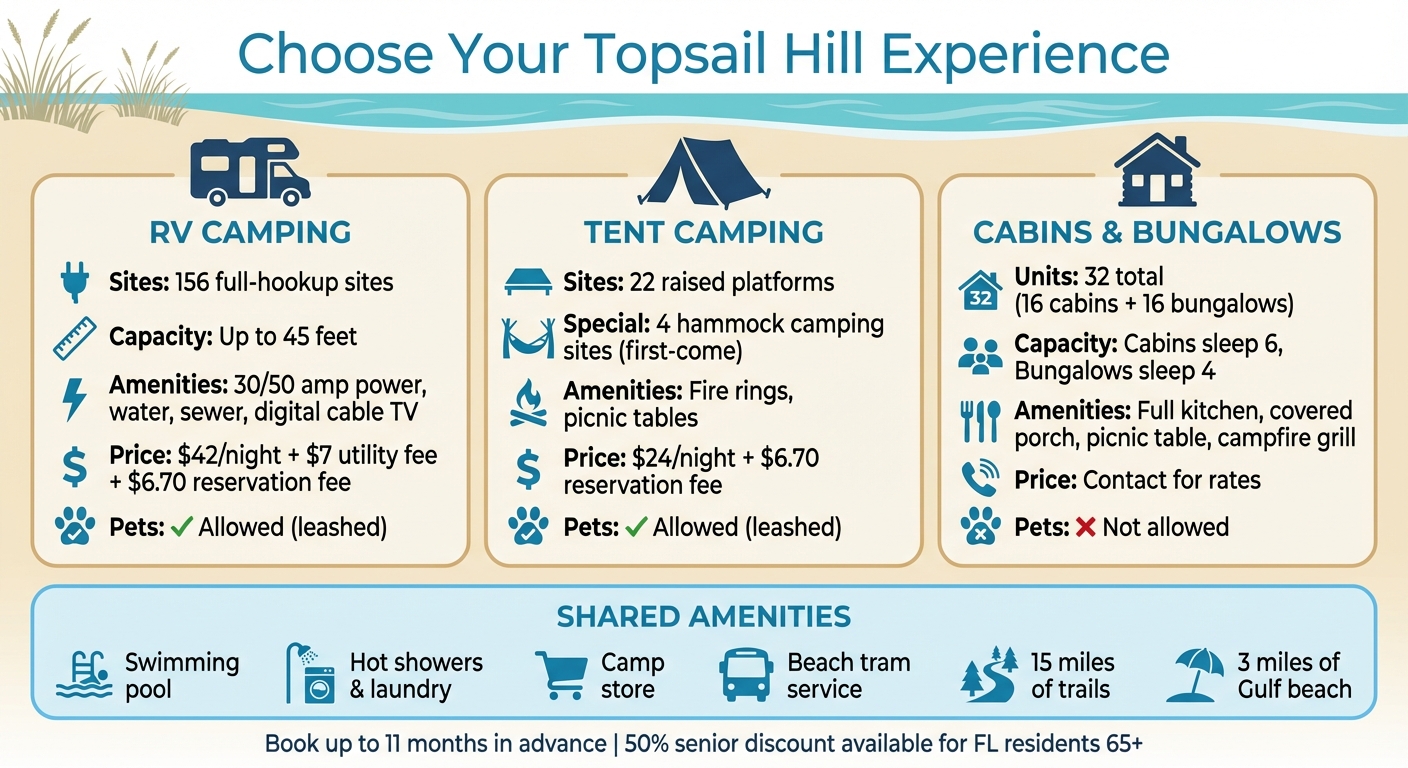
Topsail Hill Campground Options and Pricing Comparison
Reservations and Campground Information
Available Facilities and Amenities
The Gregory E. Moore RV Resort at Topsail Hill offers a variety of camping options to suit different preferences. For RV enthusiasts, there are 156 full-hookup sites that can accommodate vehicles up to 45 feet. These sites include 30/50 amp power, water, sewer, and digital cable TV. Tent campers can choose from 22 raised platforms, with four designated for first-come hammock camping. If you prefer more comfort, there are 32 fully furnished accommodations - 16 cabins and 16 bungalows. Cabins sleep up to six people, while bungalows are designed for four. Both feature kitchens, covered porches, picnic tables, and campfire grills. Keep in mind, these are non-smoking and do not allow pets.
The resort also boasts several amenities to enhance your stay, including a swimming pool, hot showers, self-serve laundry facilities, and a camp store stocked with rentals and souvenirs. A tram service provides convenient access to the beach. Other features include picnic areas, vending machines, drinking water stations, ADA-accessible facilities, and a small coffee shop with a market.
Pre-Trip Planning Checklist
Once you’re familiar with the facilities, it’s time to plan ahead to secure your reservation and prepare for your visit.
Reservations can be made through the Florida State Parks system up to 11 months in advance, and spots tend to fill quickly during peak seasons. RV sites are priced at $42 per night (plus tax), with an additional $7 utility fee and a $6.70 nonrefundable reservation fee. Tent sites cost $24 per night, also with the $6.70 fee. Florida residents aged 65 or older, or those with qualifying disability certificates, can receive a 50% discount on the base fee with proper documentation.
Before you arrive, double-check the size and type of your reserved site, especially if your RV is close to the 45-foot limit. Tent campers should be ready to carry their gear from the parking area to their site. Be aware of quiet hours, typically from 10 p.m. to 6 a.m., and review the park’s pet policies. Pets are allowed at RV and tent sites but must be leashed and cleaned up after. However, they are not permitted in cabins or on the beach.
The park operates daily from 8 a.m. until sundown, with gates closing at sunset. If you plan to arrive after 5 p.m., call 850-267-8330 to get gate codes and late-arrival instructions. The campground is located at 7525 W County Hwy 30A, Santa Rosa Beach, FL 32459. For directions, take Exit 85 from I-10 and head south on US-331 for 27 miles. Turn right onto US-98 and drive 5 miles west, then turn left onto Highway 30A. The entrance will be on your right after 0.25 miles. Use the western entrance for direct access to the campground. To make your arrival smoother, download park maps and check the tram schedule ahead of time.
Campsite Setup Checklist
Shelter and Sleeping Gear
Your shelter and sleeping gear depend on how you’re camping - whether you’re in a tent or an RV. Tent campers using the 22 raised platforms should bring a sturdy, weather-ready tent equipped with a rainfly and footprint. For extra stability on sandy soils, pack additional stakes and guylines. Since you'll need to carry your gear up to 100 yards from the parking area to your pod, it’s better to use backpacks or a folding wagon instead of heavy bins.
RV campers staying at one of the 156 full-hookup sites should come prepared with leveling blocks, wheel chocks, and adapters for 30/50-amp electrical hookups. For sleeping, Florida’s warm and humid nights (usually between 60–80°F) call for lightweight sleeping bags or quilts, along with a sleeping pad or air mattress and full-size pillows. A ground tarp and a small entry rug can help keep sand and dirt out of your sleeping space. For shade during the intense Gulf Coast afternoons, a pop-up canopy or awning is a must-have.
Once your shelter is set up, you can focus on making your campsite more comfortable and functional.
Comfort and Utilities
Since most sites offer water, sewer, and electric hookups, RV campers should bring essentials like freshwater hoses, a water pressure regulator, a sewer hose with an elbow attachment, and heavy-duty extension cords designed for RVs. Both tent and RV campers will benefit from having camping chairs, a folding table, and outdoor rugs to reduce sand tracking into your space.
For lighting after dark, pack a battery-operated or rechargeable lantern, headlamps, and backup flashlights. Stay hydrated by bringing refillable water jugs for camp use and insulated bottles for hot days. To keep your gear organized, use plastic storage totes, hanging organizers for toiletries, and hooks or carabiners. A clothesline with clips is also handy for drying swimsuits and towels after enjoying the beach or pool.
Safety and Tools
A well-stocked first-aid kit is a campsite essential. Include bandages, antiseptic, tweezers, pain relievers, blister care, allergy medications, and any personal prescriptions. Bring a multi-tool or pocketknife, along with a repair kit that includes duct tape for quick fixes.
For campfires in designated rings, pack fire starters like waterproof matches, lighters, or firestarter sticks, as well as a collapsible bucket or extra water to fully extinguish fires when you’re done. It’s also smart to have an emergency whistle, a flashlight for each sleeping area, and a printed campground map with park contact numbers in case of power outages or phone service issues. To keep wildlife like raccoons at bay, store food and scented items in sealed containers inside your vehicle or RV. Don’t forget insect repellent and citronella candles to ward off mosquitoes, especially during dawn and dusk.
Topsail Hill Preserve State Park, Campground Review and Things to Do
Activity-Specific Packing Lists
Make your trip to Topsail Hill more enjoyable by preparing for specific activities with the right gear. Here's what you should bring for different adventures.
Beach Gear
Topsail Hill's stunning three miles of white-sand Gulf beach are accessible by tram or a longer walk, so lightweight and portable gear is a must. Pack collapsible beach chairs and a sturdy umbrella - or a canopy with reliable sand anchors. Large, quick-dry beach towels, reef-safe sunscreen (SPF 30+), a wide-brim hat, and polarized sunglasses will help protect you from the sun’s glare reflecting off the sand and water. Don’t forget to reapply sunscreen every two hours or after swimming.
Consider using a beach cart with durable wheels or a backpack-style beach bag to make hauling gear easier. A soft-sided cooler with ice packs is perfect for keeping snacks and drinks cold, and be sure to bring plenty of water. Families might want to add sand toys, a collapsible bucket, and a mesh bag to shake out sand easily. Other useful items include waterproof phone pouches, wet bags for swimsuits, and clip-on towel clamps or umbrella anchors to secure your setup during sudden coastal storms.
Once you've got your beach essentials covered, think about what you'll need for hiking and biking.
Hiking and Biking Gear
The trails at Topsail Hill take you through old-growth pine forests, sandy scrub, dunes, wetlands, and rare coastal dune lakes, so sturdy footwear is key. Opt for closed-toe trail shoes or lightweight hiking boots with good traction - flip-flops won’t cut it on these uneven surfaces. Florida’s heat and humidity can be intense, so carry 1–2 liters of water per person in bottles or a hydration pack, and consider adding electrolyte packets for longer hikes.
A small daypack is handy for carrying essentials like a printed or downloaded trail map, a fully charged phone, insect repellent for wetland areas, reef-safe sunscreen, and a lightweight rain jacket or poncho for sudden downpours. If you’re into bird-watching or wildlife photography, pack binoculars and a camera. For biking, choose a bike suited for mixed terrain. Wear a well-fitted helmet, and equip your bike with front and rear lights, along with high-visibility clothing for safety during evening rides or busier paths. A saddle bag with a spare tube, tire levers, a mini-pump, and a multi-tool ensures you’re prepared for minor repairs.
If water activities are on your itinerary, here’s what you’ll need.
Water Activities
Topsail Hill’s Gulf beach and freshwater coastal dune lakes are perfect for kayaking and paddleboarding. Bring a sit-on-top kayak or a stable stand-up paddleboard (SUP), along with adjustable paddles, SUP leashes, and carrying straps to help you transport gear from parking areas or tram stops. Don’t forget a U.S. Coast Guard–approved PFD (Type III is recommended).
Water shoes or sturdy sandals are great for navigating sandy or shelly launch points. Pack a whistle, sun-protective clothing, and a secure wide-brim hat to handle sudden weather changes. Since Gulf conditions can shift quickly, it’s wise to carry a dry bag, a compact first-aid kit, and extra water. Always check local flag warnings and park advisories for rip currents or closures before heading out. For calmer waters, the dune lakes are an excellent option, especially for beginners and families - but the same safety practices, including wearing a PFD, apply. If you’d rather not transport your own gear, local outfitters in South Walton and along 30A (check guides like sowal.co) offer rentals for kayaks, SUPs, and bikes.
sbb-itb-d06eda6
Clothing and Personal Items
The weather at Topsail Hill in Florida's Gulf Coast can be a mixed bag, with hot and humid summers and cooler winter evenings. Summer days often hit highs above 90°F, while winter nights can drop into the 40s°F–50°F range. To stay comfortable, packing layers that you can adjust to the conditions is a smart move. With a stunning white-sand beach and coastal dune lakes right there, quick-dry fabrics and sun-protective clothing are your best friends.
Clothing for Florida Weather
For a weekend trip, pack 2–3 lightweight, moisture-wicking T-shirts or tank tops, and for a week, aim for 4–6. Pair these with quick-dry shorts and bring along at least two swimsuits. To shield yourself from the sun while enjoying the beach or hiking the trails, consider UPF-rated long-sleeve shirts, a wide-brimmed hat or cap, and polarized sunglasses. Since mosquitoes tend to be active around the forests and wetlands during dawn and dusk, lightweight long pants and breathable long-sleeve shirts are a practical choice to keep the bugs at bay without overheating.
Florida weather can be unpredictable, so a compact rain jacket is a must for sudden downpours, along with a warm layer like a fleece, hoodie, or light puffer for cooler evenings. For footwear, bring three options: water-friendly sandals for the beach and lakes, closed-toe trail shoes or light hiking boots for exploring nature paths, and flip-flops or shower sandals for campground restrooms or pool areas. Don’t forget broad-spectrum SPF 30+ sunscreen, and reapply every two hours to protect against the intense UV rays reflecting off Topsail's towering dunes, which can rise over 25 feet.
Once you’ve sorted your clothing, make sure to pack key health and protection items to stay prepared.
Health and Protection Items
Your kit should include sunscreen (SPF 30+), SPF lip balm, and after-sun lotion to guard against the strong sun exposure on the beaches. Mosquitoes and other insects are common in Florida’s coastal wetlands, so bring an EPA-registered insect repellent with DEET, picaridin, or oil of lemon eucalyptus. Anti-itch cream and sting relief wipes can come in handy, too. A small first-aid kit stocked with essentials like bandages, blister care, antiseptic wipes, and pain relievers is a wise addition.
If you take prescription medications, keep them in their original containers. It’s also helpful to bring over-the-counter basics like antihistamines and antacids. While Topsail Hill’s campground has restrooms and showers, pack personal toiletries like a toothbrush, toothpaste, biodegradable soap and shampoo, deodorant, and a quick-dry towel. Florida’s humidity can be tough, so consider adding facial wipes, anti-chafe powder, and hand sanitizer to your list. For longer stays, take advantage of the campground’s laundry facilities by packing fewer clothes and bringing a small bottle of travel detergent.
Documents and Electronics
To stay organized and secure, keep important documents like photo ID, reservation details, vehicle registration, insurance, and health cards in a waterproof pouch. Carry some cash and cards for purchases at the camp store or local businesses. Cell coverage at Topsail Hill is generally reliable with major carriers, so bring your smartphone, chargers, and a high-capacity power bank to stay connected during your adventures. If you’re camping in a tent or away from powered sites, a solar charger and an LED headlamp can be lifesavers. Lastly, protect your electronics from sand and rain by using water-resistant cases or dry bags.
Food, Cooking, and Camp Store
When it comes to meal prep at Topsail Hill, balancing Florida’s heat with practical cooking arrangements is key. RV sites come with full hookups, while tent platforms are equipped with fire rings and picnic tables, though you’ll need to walk a short distance from the parking area. If you’re staying in one of the cabins, you’re in luck - they come with fully stocked kitchens, including pots, pans, dishes, and silverware. That means cabin guests only need to bring groceries and seasonings to whip up their meals.
Cooking Equipment
To tackle the Gulf Coast heat and cook comfortably, having the right tools is crucial. If you’re camping in an RV or tent, a two-burner propane stove or portable grill is a must, along with plenty of propane canisters to last your trip. Don’t forget to pack a frying pan, pots with lids, heatproof utensils, a cutting board, and a sharp knife. Florida’s warm temperatures, often hovering between 80°F and 90°F, make two coolers essential - one for drinks and another for food - to help maintain better temperature control. For cleanup, bring biodegradable dish soap, a sponge, a dish tub, and microfiber towels for use at designated washing areas. And here’s an important tip: store all food in your vehicle or in hard-sided containers to avoid attracting raccoons and other wildlife to your campsite.
Meal Planning
Now that your gear is ready, focus on meals that are simple and heat-friendly. Breakfasts that require no cooking, like yogurt with granola and fresh fruit, are ideal. For lunch, think portable options like wraps, sandwiches, and trail mix. When it’s time for dinner, stick to one-pot meals such as pasta with sauce, rice and beans, or foil packets filled with vegetables and pre-cooked sausage. To minimize reliance on constant ice replenishment, pack shelf-stable items like peanut butter, tortillas, tuna packets, and instant rice. Most importantly, stay hydrated. Bring multiple gallons of drinking water and electrolyte packets, especially if you’re planning to hike the park’s 15 miles of trails or spend hours soaking up the sun on the beach. These preparations will help you spend less time cooking and more time enjoying everything the park has to offer.
What to Buy at the Camp Store
The on-site market at Topsail Hill is a convenient spot for camping essentials. You’ll find snacks, ice, firewood, propane, lighter fluid, and other basics like biodegradable soap or matches. However, it’s best to treat the camp store as a backup for last-minute needs or forgotten items. For your main groceries, specialty foods, or specific brands, plan a shopping trip to Santa Rosa Beach or nearby 30A towns before arriving at the park. While the camp store is handy, its prices are higher than standard supermarkets, so bringing most of your food from home will save you money and ensure you have everything you need for a smooth and enjoyable stay.
Park Rules, Wildlife, and Checkout
Park Rules and Guidelines
Topsail Hill Preserve State Park spans 1,640 acres of stunning coastal habitat, featuring dunes over 25 feet tall and rare coastal dune lakes. To protect this delicate ecosystem, the park has a few important rules in place. Quiet hours are observed from 11:00 p.m. to 7:00 a.m., so avoid loud music, generators, or any disruptive noise during these times. While pets are welcome on trails and in the campground, they must be kept on a leash no longer than 6 feet. Keep in mind, pets are not allowed on the beach or in park buildings to safeguard nesting shorebirds and the endangered Choctawhatchee beach mouse.
Stick to designated boardwalks and trails when heading to the beach or exploring the park. Walking on dunes or venturing into roped-off areas can harm fragile vegetation that anchors the sand and supports at least 13 endangered species. Campfires are allowed only in provided fire rings - keep them small, attended, and make sure they’re completely extinguished with water before leaving or going to bed. If you’re enjoying a drink, remember that alcohol is permitted only at your campsite and not in public day-use areas. By following these rules, you help protect the park’s natural beauty and its wildlife.
Wildlife Safety
Raccoons are notorious for raiding food supplies at Topsail Hill, so store all food, pet food, and scented items in your vehicle, RV, or a hard-sided cooler. Dispose of trash daily in campground dumpsters, and clean up food residue from picnic tables and grills to reduce odors. Feeding wildlife, whether birds or squirrels, is strictly prohibited - it can make animals aggressive or sick.
If you’re hiking or biking, stay on marked trails to avoid startling deer or encountering snakes hidden in tall grass. Around the dune lakes and beach, give resting shorebirds plenty of space, especially in roped-off nesting areas. If you’re near wetlands at dusk, insect repellent and light long sleeves can help keep mosquitoes at bay.
Departure Checklist
To ensure a smooth departure, plan ahead. Florida State Parks campgrounds require checkout by 1:00 p.m., so give yourself enough time to pack up without rushing. Clear your campsite of all trash, including small items like bottle caps and twist ties, and double-check for any belongings you might have left behind. Don’t forget to fully extinguish and cool your campfire before leaving.
If you rented bikes, kayaks, or beach gear, return them as agreed upon with the camp store or concessionaire. Lastly, do a final check of your tent, cabin, or RV to make sure nothing is left behind. These steps not only help you leave on good terms but also keep Topsail Hill a clean and welcoming destination for future visitors.
Conclusion
With this checklist in hand, you're all set for an unforgettable camping trip at Topsail Hill Preserve State Park. From securing your reservation to packing the right gear for Florida's coastal climate, you've got everything covered. Whether you're pitching a tent, parking your RV with full hookups, or relaxing in a cozy cabin, good preparation ensures you can fully enjoy the park's stunning 3 miles of white-sand beaches, rare coastal dune lakes, and scenic trails perfect for hiking and biking.
By respecting park rules, you're also helping protect the 13 endangered species that thrive within this 1,640-acre preserve. So, print this checklist, pack wisely, and get ready to explore everything Topsail Hill has to offer.
Once your gear and plans are sorted, remember that a little local knowledge can make your trip even better. For insider tips on South Walton and the 30A coastline - like secret beaches, must-visit dining spots, and local events - head over to sowal.co. It’s your go-to guide for experiencing this beautiful coastal area like a true local.
FAQs
What are the top activities to enjoy at Topsail Hill Preserve State Park Campground?
Topsail Hill Preserve State Park Campground is packed with activities to make your trip unforgettable. Whether you're lounging on the soft white-sand beaches, wandering through picturesque hiking and biking trails, or birdwatching for a glimpse of local wildlife, there's something for everyone.
If you're into water adventures, you’ll love swimming, kayaking, or paddleboarding in the park's tranquil coastal dune lakes. These serene waters offer the perfect backdrop for a peaceful day outdoors. And as you explore, keep an eye out for deer, turtles, and other creatures that call this beautiful park home!
When should I book a campsite at Topsail Hill Preserve?
To guarantee your spot at Topsail Hill Preserve, aim to book your campsite 3 to 6 months ahead of time, particularly during holidays and peak travel seasons. Campsites fill up fast, so early planning increases your chances of snagging your ideal dates and location.
What are the rules for bringing pets to Topsail Hill Campground?
Pets are allowed at Topsail Hill Campground in designated areas, but they must always be on a leash. It's also the owner's responsibility to clean up after their pets to keep the park clean and preserve its natural charm.
For the latest details or any specific pet-related rules, it's best to reach out to the campground directly.