- Grayton Beach State Park: Famous for Western Lake’s reflective waters, boardwalks through dunes, and a pristine Gulf shoreline.
- Topsail Hill Preserve: Known for 25-foot dunes, serene dune lakes, and quiet beaches.
- Deer Lake State Park: Features an elevated boardwalk over dunes, a rare coastal dune lake, and untouched beachfront.
- Eden Gardens State Park: Highlights include moss-draped live oaks, the historic Wesley House, and vibrant gardens.
- Point Washington State Forest: Offers pine forests, wetlands, and wildflowers, perfect for those seeking non-coastal scenes.
Tips:
- Arrive early for sunrise or stay for sunset to take advantage of golden-hour lighting.
- Entry fees range from $2 to $6 per park.
- A wide-angle lens, tripod, and polarizing filter are recommended for the best shots.
Quick Overview of Park Features
| Park | Key Features | Entry Fee |
|---|---|---|
| Grayton Beach | Dune lakes, boardwalks, Gulf beaches | $5 per vehicle |
| Topsail Hill Preserve | Tall dunes, remote beaches, trails | $6 per vehicle |
| Deer Lake | Boardwalk, coastal lake, quiet beaches | $3 per vehicle |
| Eden Gardens | Historic house, gardens, live oaks | $4 per vehicle |
| Point Washington Forest | Pine forests, wetlands, wildflowers | $2 per person |
These parks, all located along Scenic Highway 30A, showcase Florida’s natural beauty. Whether you’re drawn to coastal views, historic charm, or forested trails, 30A’s state parks offer something special for every photographer.
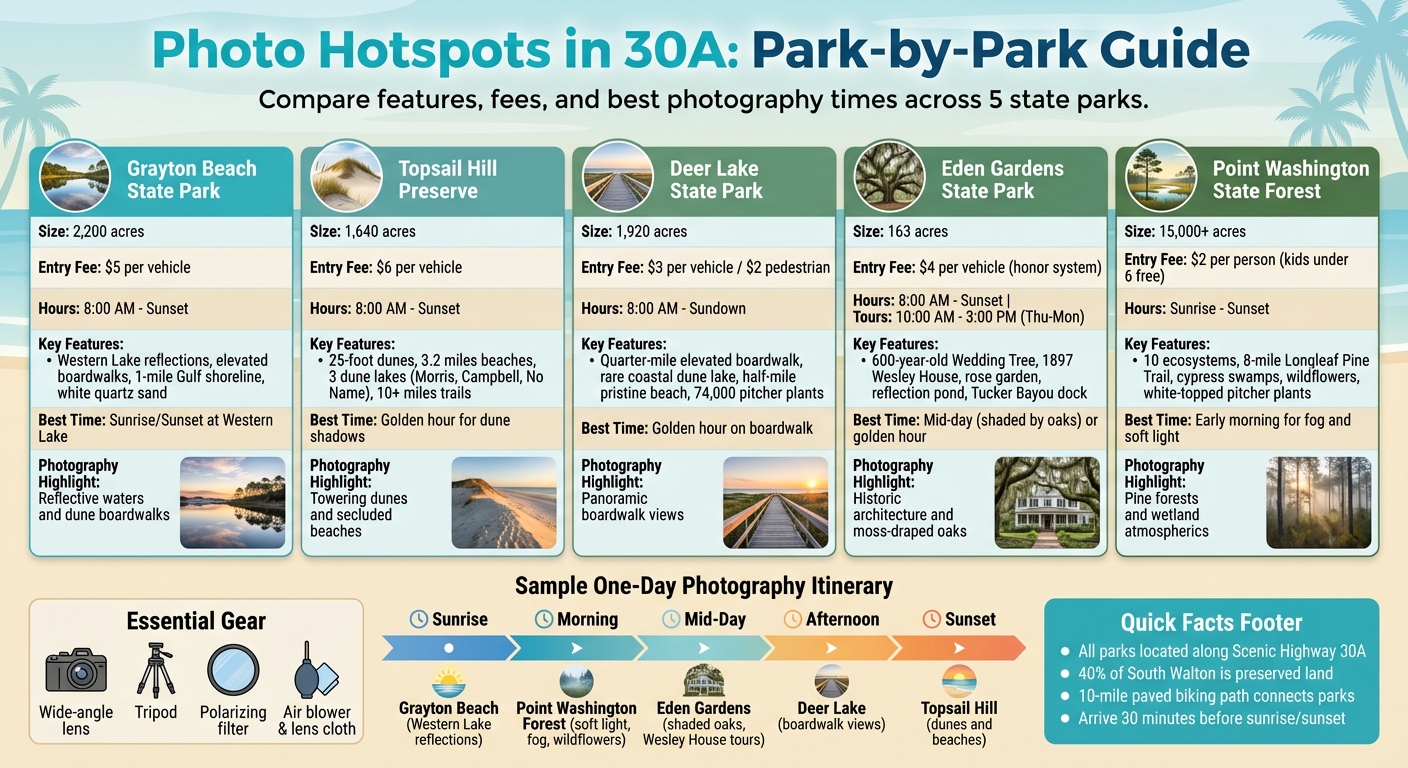
30A State Parks Photography Guide: Features, Fees, and Best Times to Visit
Western Lake on Scenic Highway 30A

Grayton Beach State Park: Beaches and Dune Lakes

Grayton Beach State Park spans 2,200 acres and is open daily from 8:00 AM until sunset, with an entry fee of $5. This park offers three distinct photography settings: the reflective waters of Western Lake, elevated boardwalks winding through the dunes, and a one-mile stretch of Gulf shoreline with soft, white quartz sand that squeaks underfoot. These diverse landscapes make it a prime spot for showcasing the natural beauty of 30A.
Western Lake at Sunrise and Sunset
Western Lake is a dream for photographers, with its glass-like surface that reflects the sky’s colors. The magic of golden hour - the hour after sunrise and the hour before sunset - brings out these reflections beautifully. As DuneLaker from Beach Fanatic shares:
Even if the gulf is choppy, the lake may be smooth and give interesting and unique reflections.
Arriving 30 to 45 minutes before sunset ensures you catch the gentle shift of light. Midday, between 11:00 AM and 2:00 PM, is best avoided due to harsh lighting and shadows. For settings, keep your ISO between 100–200 and adjust the white balance to "Cloudy" or "Shade". Stick around 15–20 minutes after sunset to capture the moody blue hour, with its pink, purple, and deep blue tones. A wide-angle lens works well for capturing the lake’s vastness, while a telephoto lens can zero in on unique features like the "Hobbit Hole" scrub oaks. These lighting and composition techniques make Western Lake a standout location, setting the stage for exploring the rest of the park.
Boardwalks Through the Dunes
The park’s elevated boardwalks provide access to the dunes while protecting their delicate ecosystem. Photographer Kayla Law highlights their appeal:
Grayton is the most popular option. It's one of the only places in 30A that has access into the dunes by designated paths, which gives us multiple backdrop options besides just the beach.
Start your journey on the "palm tree forest" trail, which winds through a shaded canopy before opening up to windswept dunes and sea oats. The boardwalks themselves serve as excellent leading lines, guiding the viewer’s eye toward Western Lake or the Gulf. The contrast of weathered wood against the white sand creates a striking visual, especially during golden hour when long shadows stretch across the landscape. To protect the dunes and adhere to park rules, always stick to the designated paths.
Wide Gulf Beaches
The park’s Gulf shoreline offers a one-mile stretch of pristine, powdery white quartz sand set against turquoise waters - a scene so vivid it hardly needs editing. Forbes Magazine even named it the "Third Most Beautiful Beach in America", citing its sand quality, water color, and breathtaking vistas. Photojournalist Manny Chavez captures the awe of first-time visitors:
Taking the boardwalk to the beach, first-timers often gasp at the beauty. They know they've arrived at the right place when they see the emerald waters lapping SoWal's sugar-white sandy beaches.
The elevated beach walkovers provide a perfect vantage point, framing the dunes against the Gulf. To make the turquoise waters really stand out, use a polarizing filter, and bring a tripod for long-exposure shots during sunrise or sunset. The beach’s western orientation makes it ideal for golden hour photography, where the interplay of light and shadows enhances the texture of the sand and sea oats.
Topsail Hill Preserve State Park: Dunes and Remote Beaches

Topsail Hill Preserve State Park stretches across 1,640 acres, showcasing towering dunes that rise up to 25 feet. Known for its rugged beauty, the park offers a quieter, more secluded experience compared to the bustling charm of other 30A destinations. Open daily from 8:00 AM until sunset, entry costs $6 per vehicle. Visitors can enjoy 3.2 miles of untouched beaches and over 10 miles of trails winding through dunes, forests, and serene dune lakes. While construction of a new Nature Walk and Visitor Center has temporarily shifted the tram stop, the park remains a haven for those seeking stunning landscapes, from sweeping dunes to tranquil lakes.
Tall Dunes and Sea Oats
The park's signature dunes provide a breathtaking backdrop. Photographer Scott Holstein shares his perspective from the Morris Lake Trail:
"The trail crested a dune, where I set up the tripod and created this image of the dunes and scrub flora. Due to my high vantage point, the Gulf of Mexico was able to peek from between the dunes."
The Morris Lake Trail takes hikers through ancient dunes and scrub habitats, offering elevated views where the rolling sand meets the Gulf. Wooden sand fences along the coastline not only help form new dunes but also create visually appealing lines for photography. For the best shots, visit during golden hour when long shadows highlight the texture and curves of the dunes. With the access road to Morris Lake closed to protect sensitive wetlands, this area offers a quieter, more intimate hiking experience.
Coastal Lakes and Wildlife
Topsail Hill is home to three dune lakes: Morris, Campbell, and "No Name." Campbell Lake stands out for being nearly 100% freshwater, rarely connecting with the Gulf, making its calm waters perfect for reflection photography. The Deer Track Trail provides elevated views of this 100-acre lake, adorned with water lilies and bordered by bald cypress trees. Sandra Friend of Florida Hikes captures its peaceful beauty:
"Hues of tangerine and lilac fade across the water as the light wanes."
Late afternoon lighting is ideal for photographing wildlife, as the softer shadows preserve fine details. Keep an eye out for flocks of white birds gliding over the lakes or white-tailed deer wandering near the forested dunes in the park’s southwest corner. If you're shooting during midday, wait for passing clouds to naturally diffuse the light, creating more balanced images.
Secluded Gulf Beach
The park’s uncrowded beach offers a serene escape from busier 30A spots. Its 3.2 miles of pristine white sand are accessible via a tram from the parking area, but the most secluded views are found by hiking the trails near Morris Lake. These areas, with restricted access, see fewer visitors, allowing photographers to capture the unspoiled beauty of the coastline. For sunrise shots, use a tripod and a polarizing filter to enhance the vibrant emerald tones of the water. The minimalist composition of sand, sea oats, and gentle surf creates a captivating scene, particularly in the early morning light.
Deer Lake State Park: Boardwalks and Quiet Beaches

Deer Lake State Park covers 1,920 acres and safeguards one of the rarest ecosystems on Earth - a coastal dune lake, found in only a handful of places worldwide. After reopening in November 2022, the park now features upgraded amenities, including a paved access road and modern restrooms. Entry fees are $3 per vehicle and $2 for pedestrians or bicyclists, with the park welcoming visitors daily from 8:00 AM until sundown. Its three standout features - the raised boardwalk, the serene dune lake, and the untouched beachfront - offer unparalleled opportunities for photographers.
Elevated Dune Boardwalk
Stretching a quarter mile above the dunes, the boardwalk provides a panoramic view of the park's natural beauty. From this elevated vantage point, photographers can capture the rolling dunes, swaying sea oats, and the endless Gulf of Mexico - all while preserving the fragile vegetation below. The boardwalk itself adds a striking element to photos, with its length and lines creating a natural frame for minimalist compositions. Locals often describe the scenery here as "other-worldly."
"Think of this as the beach boardwalk less traveled." - 30A.com
For the most dramatic shots, visit during golden hour when the soft light highlights the textures of the sea oats. The boardwalk is also an excellent spot for capturing rare native plants like Gulf Coast lupine and carnivorous pitcher plants. The park has worked to reintroduce over 74,000 pitcher plants into its wet prairies, making it a haven for nature enthusiasts and photographers alike.
Coastal Dune Lake
The park’s coastal dune lake is a dream for reflection photography, especially on calm mornings. Access the best views via the Blue Trail, located north of Highway 30A. Framed by scrub oaks and magnolias, the lake often mirrors its surroundings, creating stunning compositions. A polarizing filter can help bring out the contrast between the emerald-green water and the blue sky. For optimal results, scout the area during daylight hours and return in the evening for softer, more diffused lighting.
Natural Beachfront
The park’s half-mile stretch of undeveloped, sugar-white sand offers a pristine setting for minimalist photography. Here, you can focus on the interplay of textures - the smooth sand, the flowing curves of sea oats, and the gentle waves. Without the distractions of beach amenities, the scene feels untouched and timeless. This protected area also draws migratory birds like piping plovers and snowy plovers, adding an extra layer of interest for wildlife photographers looking to capture the park’s coastal charm.
sbb-itb-d06eda6
Eden Gardens State Park: Historic Grounds and Gardens

Eden Gardens State Park stretches across 163 acres in a picturesque spot on Tucker Bayou. This serene destination combines historic charm, lush gardens, and waterfront vistas. Admission is $4.00 per vehicle, based on an honor system, and the park is open daily from 8:00 AM until sunset. With its moss-covered oaks, the iconic Wesley House, and beautifully maintained gardens, the park embodies the essence of Old Florida. Photographer Jordan West once said:
Eden Gardens State Park is truly a hidden gem... it truly looks like it's right out of a Southern Living Magazine.
Live Oak Trees with Spanish Moss
The park's landscape is defined by its majestic live oaks and rich history. Among these is "The Wedding Tree", a Virginia live oak believed to be over 600 years old. Its sweeping branches, draped in Spanish moss, create a natural, cathedral-like canopy. Positioned in front of the Wesley House, this tree offers a stunning backdrop for photos. For the best lighting, aim to shoot during golden hour, when the soft glow highlights the moss and the house’s columns. Beneath the oaks, the manicured lawns and picnic areas provide additional settings for softer, more intimate compositions.
The Wesley House
At the heart of the park lies the Wesley House, a striking example of Southern sophistication. Built in 1897, this two-story, white-columned estate showcases classic Southern architecture and boasts the second-largest collection of Louis XVI furniture in the country. Its symmetrical design, complete with wrap-around porches, pairs beautifully with the surrounding moss-draped trees. The house’s white exterior reflects light wonderfully, making it a favorite for portrait photography. Nearby, a reflection pond filled with lilies and koi fish offers opportunities for capturing mirror-like images of the stately home. Guided tours, available Thursday through Monday, cost $4.00 per adult and $2.00 per child. These tours allow visitors to explore the home’s antique interiors and intricate historic details.
Gardens and Tucker Bayou
Eden Gardens also features several unique garden spaces, including a historic rose garden, a "secret garden" known for its winter camellias, and a butterfly garden. The gardens are at their most vibrant from October to May, with March offering particularly brilliant displays. The reflection pond near the Wesley House provides an ideal setting for close-ups of water lilies and other flora. For those drawn to waterfront views, the dock on Tucker Bayou offers a perfect spot to capture sunsets where the calm waters meet Choctawhatchee Bay. Wildlife enthusiasts will appreciate the chance to photograph bald eagles, brown pelicans, river otters, and even alligators - using a telephoto lens can help capture these moments from a safe distance.
Point Washington State Forest: Pine Forests and Wetlands

Point Washington State Forest offers a refreshing change of scenery from the coastal views of 30A. Spanning over 15,000 acres, this protected area is home to longleaf pine forests, cypress swamps, and seasonal wetlands, making it a haven for photographers looking for something different. The forest preserves 10 distinct ecosystems, including wet flatwoods, wet prairies, and basin swamps. Entry is budget-friendly at just $2.00 per person, while kids under six get in free. For those eager to capture more than just beach scenes, this forest offers a wealth of unique textures, lighting conditions, and compositions. Its diverse landscapes add depth to 30A's visual offerings, making it a go-to spot for photographers chasing unconventional natural beauty.
Pine Forest Trails
The Longleaf Pine Greenway Trail spans eight miles, weaving through dense pines and native plants. The trail’s switchbacks naturally create leading lines, while the pine needle-covered ground and scrub oak canopies set a moody, atmospheric tone. Photojournalist Manny Chavez highlights the striking beauty of areas recently treated with prescribed burns, saying, “traversing the trail following a burn, though a little on the stinky side, is nothing short of fantastic, bringing the landscape to dreamy proportions”. Another standout is the Eastern Lake Trail System, which offers loops of 3.5, 5, and 10 miles. The southeastern loop leads directly to Eastern Lake, providing a stunning waterfront backdrop. Early morning light filtering through the towering pines and sandy paths creates perfect conditions for dramatic depth in your shots.
Wetlands and Wildflowers
Step off the pine trails, and you’ll find the forest’s wetlands opening up a whole new world of photographic opportunities. On the Cassine Trail, you’ll encounter a sprawling cypress swamp with wooden bridges that make for excellent vantage points. Chavez describes this swamp as “a must see”. During dry spells, you can explore around the cypress knees for up-close, ground-level compositions. In the summer, the wet prairies come alive with vibrant wildflowers like the white-topped pitcher plant and Curtiss sandgrass, which boasts the world’s largest population. Misty mornings are ideal for capturing the ethereal quality of the wetlands, while macro lenses are perfect for zooming in on fungi and insects along the trails. After heavy rains, keep an eye out for rare mud-crack formations - an unusual sight for such a lush environment, more commonly seen in deserts. Don’t forget mosquito spray and waterproof boots if you venture off-trail.
Planning Your Photography Trip
The convenience of having multiple parks located close together along the Scenic Highway 30A makes planning a one-day photography tour a breeze. Most state parks in the area open their gates at 8:00 AM and stay open until sunset, giving you plenty of time to explore and capture stunning shots. For those who love early mornings, Point Washington State Forest opens even earlier, at sunrise, offering a head start for golden-hour enthusiasts.
Sample Park Combinations
Kick off your day at Grayton Beach State Park, where the sunrise over Western Lake creates stunning mirror-like reflections - worth every bit of that early alarm clock. By mid-morning, head over to Point Washington State Forest to photograph the soft light filtering through pine trees and the atmospheric fog lingering in the wetlands. Midday is perfect for a stop at Eden Gardens State Park, where moss-draped oak trees create a dreamy, shaded setting. If you're interested in photographing the historic Wesley House interior, plan your visit between 10:00 AM and 3:00 PM to align with the available tour times. As the day winds down, capture the sunset at either Deer Lake State Park, known for its dunes and coastal lakes, or Topsail Hill Preserve, where 25-foot dunes and pristine beaches await.
This suggested itinerary provides a flexible framework to help you make the most of your photography-filled day.
| Time of Day | Recommended Location | Photography Highlight |
|---|---|---|
| Sunrise | Grayton Beach State Park | Reflective waters of Western Lake and golden dunes |
| Morning | Point Washington State Forest | Soft light, wildflowers, and fog in pine flatwoods |
| Mid-Day | Eden Gardens State Park | Wesley House, ornamental gardens, and mossy oaks |
| Afternoon | Deer Lake State Park | Boardwalk views of coastal dune lakes |
| Sunset | Topsail Hill Preserve | Towering dunes and secluded white sand beaches |
Practical Tips for Park Visits
Visiting these parks is not only rewarding but also easy on the wallet. For example, Grayton Beach State Park charges just $5.00 per vehicle, while access to Point Washington State Forest is only $2.00. Parks like Deer Lake and Eden Gardens rely on honor boxes for fee collection, so make sure to carry exact change.
To make the most of your photography, pack essential gear such as a wide-angle lens, tripod, and polarizing filter to capture expansive landscapes and enhance sky colors. Don’t forget an air blower and lens cloth to keep your equipment clean. If you're feeling adventurous, consider biking between parks on the 10-mile paved path along Scenic Highway 30A. Arrive at least 30 minutes before sunrise or sunset to scout your location and set up your gear for the perfect shot.
Conclusion: Photographing 30A's State Parks
From the glassy reflections of Western Lake to the towering 25-foot dunes of Topsail Hill, South Walton’s state parks deliver a stunning array of photographic opportunities, all within a short distance of each other. Whether it’s the rare coastal dune lakes, the ancient live oaks draped in Spanish moss at Eden Gardens, or the sprawling pine flatwoods of Point Washington State Forest, these parks showcase the natural beauty that defines 30A. With 40% of South Walton preserved, these landscapes remain unspoiled and ready for photographers eager to capture their charm.
"Our parks are what set us apart from any other beach destination." – SoWal Staff
Each park offers something special, from the salt-wind-shaped scrub oaks to the elevated boardwalk views at Deer Lake, or even the stately Greek Revival architecture of the Wesley House. Open year-round from 8:00 AM until sunset, these parks provide ample time to explore and photograph their distinct features, making them a haven for both hobbyists and seasoned photographers.
With budget-friendly entry fees and convenient access, you can focus on capturing the intricate details that make this area so captivating. To make the most of your visit, check out sowal.co for tips on hidden gems, local happenings, and live beach updates. The site’s guides, forums, and beach cams are invaluable resources for planning your photography outings and discovering what makes this stretch of Florida’s Gulf Coast truly unforgettable.
FAQs
What gear should I bring to capture amazing photos in 30A's state parks?
To truly capture the breathtaking beauty of 30A's state parks - think pristine white sand dunes, lush forests, and tranquil beaches - you’ll want to pack the right photography gear. Start with a mirrorless or DSLR camera that offers fast autofocus and performs well in low light. This will ensure you can capture vibrant landscapes and wildlife with clarity. Pair your camera with a few key lenses: a wide-angle lens (14-24mm) for those sweeping vistas, a standard zoom lens (24-70mm) for versatile everyday shots, and a telephoto lens (70-200mm or longer) to photograph wildlife or distant subjects.
A sturdy tripod is a must, especially for steady shots during golden hour or low-light conditions. Adding a polarizing filter can help cut glare from water or wet sand, making your shots even more striking. Don’t forget the essentials: extra batteries, high-capacity memory cards, and a weatherproof camera bag to keep your gear safe for a full day of exploring. If you’re planning to shoot along the shoreline or under the water - like at Grayton Beach State Park - consider a GoPro or a waterproof phone case. Accessories such as anti-fog spray, a float strap, and a neutral-density filter are also handy for long-exposure or water-based photography.
Looking for inspiration or guidance on where to shoot? Check out sowal.co’s guide to South Walton. It’s packed with tips on the best photo spots and trails to help you make the most of your photography adventures along 30A’s stunning coastline!
What’s the best park along 30A for capturing sunrise or sunset photos?
Grayton Beach State Park stands out as a favorite spot for capturing both sunrise and sunset along 30A. In the morning, the calm western lake transforms into a natural mirror, reflecting the soft hues of dawn. As the day winds down, the vast white-sand beach and rolling dunes set the stage for vibrant, wide-open views of the evening sky. Whether you're drawn to the quiet beauty of early mornings or the vivid colors of twilight, this park offers an incredible setting to photograph nature at its finest.
What unique features or ecosystems in 30A state parks should photographers focus on?
Each 30A state park offers breathtaking landscapes and ecosystems, making them a haven for photographers. Deer Lake State Park stands out with its rare coastal dune lake, where freshwater meets the Gulf. This unique setting creates stunning mirror-like reflections, especially during sunrises and sunsets - perfect for capturing nature's beauty. Over at Grayton Beach State Park, you'll find Western Lake, another coastal dune lake, paired with immaculate white-sand beaches and sea oats. These elements make for striking wide-angle shots.
If you're drawn to forested scenes, Point Washington State Forest is the place to be. Its towering longleaf pines and misty trails are particularly enchanting when morning fog rolls in. Across the parks, the dynamic coastal dune ecosystems - complete with shifting sand dunes, blooming plants, and sea oats - offer ever-changing backdrops for your photos. Add to that the wildlife, from pelicans and dolphins to migratory birds like snowy plovers, and you've got endless opportunities to capture life in motion. For photographers, the 30A parks are nothing short of a dream.