Stunning bioluminescent displays light up 30A's Gulf waters, with peak viewing months from June to October. These glowing phenomena are caused by dinoflagellates (tiny plankton) and comb jellies, creating electric blue and soft shimmering lights. The best conditions include warm water, calm seas, and minimal moonlight during new moon phases. Here's when to visit:
- June-August: Brightest displays due to warm Gulf waters and high plankton activity. Best during new moon weeks (e.g., June 7–21, July 7–21, August 5–19).
- September-October: Quieter beaches with excellent viewing conditions. October also features both dinoflagellates and comb jellies.
- Winter (Dec-Feb): Comb jellies dominate, offering a gentler glow. Visit during new moon nights for the clearest views.
Top spots include Grayton Beach State Park, Dune Allen, and Western Lake. For a peaceful experience, avoid peak summer crowds and plan around weather and moon phases. Check local updates for water quality and red tide alerts.
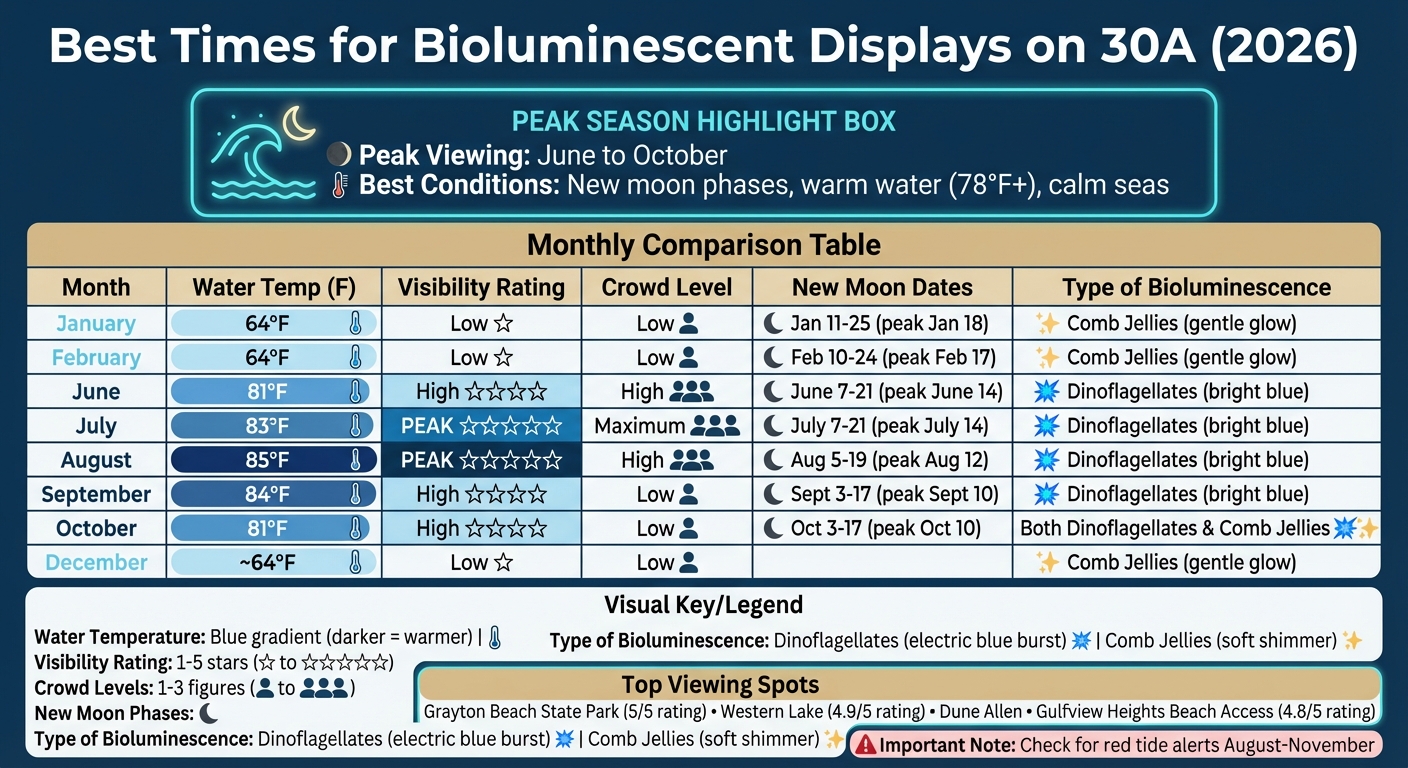
Best Months for Bioluminescence Viewing on 30A: Temperature, Visibility and Crowd Levels
1. June
Warm Waters and Ideal Conditions
As June rolls in along the 30A coast, the Gulf waters warm up to the upper 80s°F, creating perfect conditions for dinoflagellates to thrive. This increase in their reproduction leads to a more vibrant bioluminescent display. The typically calm surf during this time further enhances the experience. Evening viewing conditions are often ideal, as afternoon thunderstorms usually clear up by nightfall. However, keep in mind that heavy rain can temporarily dilute the glowing effect.
"Researchers say you have the best chance of seeing bioluminescent waters during Florida's summer months, from June to September. That's because dinoflagellates reproduce when the weather starts getting hot." - Shannon Serpette
Best Moon Phases for Viewing
The new moon on June 14, 2026, offers a prime opportunity for viewing the bioluminescent waters. The reduced moonlight during the window from June 7th to 21st makes the blue-green glow stand out even more. While the phenomenon can still be seen outside this timeframe, darker skies enhance the experience.
Managing Crowds and Finding Quiet Spots
June marks the start of the busy season for 30A beaches, which means larger crowds, especially at popular spots like Rosemary Beach. If you're looking for a quieter experience, consider heading to less crowded areas like Santa Rosa Beach or Dune Allen. To secure accommodations, it's a good idea to book well in advance.
2. July
New Moon Phases for Minimal Moonlight
July 2026 offers one of the year’s top chances to witness bioluminescence, thanks to the new moon on July 14th. The best period for minimal moonlight runs from July 7th to July 21st. During this phase, the absence of moonlight makes the glowing waters appear even more vibrant, creating a breathtaking display. If you’re planning a visit, aim for the week surrounding July 14th to enjoy the darkest skies.
Water Temperature and Calm Conditions
July in the Gulf means scorching heat, with air temperatures often soaring into the 90s°F, paired with high humidity. These conditions are perfect for rapid dinoflagellate growth, which amplifies the bioluminescent effect. The warm and still waters of July provide an ideal setting to admire the neon-blue glow, though you’ll want to keep an eye on the weather - afternoon thunderstorms are frequent. For the best experience, choose nights with calm waters, as choppy waves can reduce the visibility of the glowing organisms.
Plankton Activity Levels
The intense heat of July creates peak conditions for bioluminescence in Florida. Ashley Ferrer from USA TODAY NETWORK – Florida highlights:
"The peak months to see bioluminescence in Florida are July and August... summer is the best time due to the warmer water temperatures, which enhance visibility".
With July’s soaring temperatures, dinoflagellate concentrations reach their highest levels, resulting in some of the most dazzling glow displays of the year. While nature’s show is at its finest, the popularity of this season means larger crowds, which can affect the overall experience.
Crowd Levels and Ease of Access
July is one of the busiest months along 30A, with packed beaches, heavy traffic, and peak rental prices. Accommodations and guided tours for the new moon dates sell out quickly, so it’s crucial to book early. To avoid the hassle of traffic, consider using bikes or walking to reach the best viewing spots. Guided bioluminescence tours generally cost between $67 and $98 per person, depending on the type of vessel you choose.
3. August
New Moon Phases for Minimal Moonlight
August 2026 brings excellent conditions for viewing bioluminescence, with the new moon falling on August 12th. The best time to experience the darkest skies stretches from August 5th to August 19th, giving you a two-week window to enjoy the glowing waters. With minimal moonlight, the electric blue sparkles stand out vividly against the dark water. Following July's favorable lunar conditions, August offers a similar advantage, with slight changes in visitor patterns.
Warm Waters and Calm Conditions
During August, 30A sees air temperatures in the 90s°F and exceptionally warm Gulf waters. These high water temperatures encourage the growth of dinoflagellates, the tiny organisms responsible for bioluminescence, creating perfect conditions for the glowing displays.
However, August is part of hurricane season, and the region is prone to red tide events during this time. These can affect water clarity and may cause minor health irritations. Statistics show that around 87% of minor hurricanes and 96% of major hurricanes in the area occur between August and October. Be sure to check local water quality reports before heading out and pack insect repellent to manage biting flies.
High Plankton Activity
August mirrors July in terms of peak dinoflagellate activity, thanks to the intense heat. Each night, the warm waters light up with bursts of neon-blue as movements in the water trigger bioluminescence. The brightness remains consistently high throughout the month, ensuring that even less-than-ideal conditions can still deliver an incredible experience.
Changing Crowds and Easier Access
While August starts as a busy month on 30A due to summer vacations, crowd sizes begin to dwindle as schools reopen later in the month. This shift works to your advantage, combining peak bioluminescence with less crowded beaches and easier access to accommodations. If your schedule allows, visiting after mid-August can mean lower rental costs and fewer people vying for the best viewing spots. With warm waters and clear skies, August continues to deliver breathtaking bioluminescent displays along 30A.
4. September
New Moon Phases for Minimal Moonlight
September 2026 brings an ideal time for bioluminescence viewing, with the new moon falling on September 10th. The darkest nights, perfect for seeing the glowing waters, span from September 3rd to September 17th. During this period, the absence of moonlight lets the electric blue sparkles stand out vividly against the dark waters of the Gulf.
With these prime lunar conditions in place, the warm waters further contribute to the bioluminescence magic.
Water Temperature and Calm Conditions
September’s water temperatures remain inviting, with daily highs reaching the mid-80s°F and lows dipping into the upper 60s°F. These warm conditions encourage the rapid reproduction of dinoflagellates, the plankton responsible for the glowing effect. However, it’s worth keeping an eye on local forecasts, as September’s peak tropical storm season and occasional red tide blooms can impact water quality.
Plankton Activity Levels
While September signals the end of peak plankton activity, the warm waters still support vibrant bioluminescent displays. As journalist Shannon Serpette explains:
"Researchers say you have the best chance of seeing bioluminescent waters during Florida's summer months, from June to September".
The combination of active plankton and fewer visitors makes September an appealing time to visit.
Crowd Levels and Ease of Access
By September, the summer rush has faded, creating a quieter and more relaxed environment along 30A. With Labor Day marking the end of the busy season, tourist numbers drop significantly once schools reopen. This means beach access becomes much easier, traffic clears up, and parking is far less of a headache compared to July and August. Plus, vacation rental rates tend to drop during this time.
If you’re planning a visit, don’t forget insect repellent - some locals even recommend cactus juice to ward off black flies.
5. October
New Moon Phases for Minimal Moonlight
October's new moon on October 10th opens up an ideal timeframe for bioluminescence viewing, stretching from October 3rd to 17th. As Venture Outdoors Florida explains:
"On new moon nights (when there's no moon), the water looks like it's sparkling with stars. These are often the most awe-inspiring nights to paddle."
This lack of moonlight allows the glowing waters to truly shine, creating an unforgettable experience.
Water Temperature and Calm Conditions
October brings a perfect blend of warm waters and clear skies. The Gulf hovers around 80°F, with lower humidity enhancing visibility and making the bioluminescent display even more striking. These calm conditions also encourage the activity of bioluminescent organisms, setting the stage for a magical night on the water.
Plankton and Comb Jelly Activity Levels
October is a fascinating transitional period for bioluminescence. The warm water continues to support the neon-blue sparkles of dinoflagellates, while the cooling temperatures invite comb jellies to make their appearance. This overlap means you could see both types of glowing organisms in one outing: the quick, shimmering flashes of plankton alongside the larger, rhythmic glow of comb jellies. It’s a rare chance to witness two distinct light shows working in harmony.
Crowd Levels and Ease of Access
As summer fades, October unveils a quieter, more relaxed side of 30A. A contributor from SoWal.com shares:
"October is the best month of the year! It edges out May, because the water is warmer, and there are fewer tourists."
With the summer rush over, schools back in session, and winter visitors not yet arriving, the beaches feel more tranquil. Parking is easier, traffic is lighter, and beach access is hassle-free. This peaceful atmosphere, paired with warm Gulf waters, makes October an ideal time for an intimate, crowd-free bioluminescence adventure.
sbb-itb-d06eda6
6. December to February
Water Temperature and Calm Conditions
Winter along the 30A coastline offers a completely different vibe. Daytime temperatures hover in the 50s or 60s°F, occasionally dipping near freezing at night. The Gulf’s waters become too chilly for most swimmers unless they’re equipped with a wetsuit. However, the cold brings something magical: the water turns incredibly clear. As SoWal Weather puts it:
"The beaches are mostly deserted, windy, and brilliant with clear, cold waters."
This enhanced clarity makes the subtle winter glow easier to spot. If you’re not a fan of braving the cold, consider enjoying the view from a kayak - it’s a perfect way to take in the scenery without getting wet. The season’s unique glow feels quieter and more understated, yet still captivating.
Comb Jelly Activity Levels
Winter is when comb jellies take center stage. These fascinating, gelatinous creatures light up with a soft, sparkly glow when touched. Lauren Garrick-Keyes from BK Adventure describes the phenomenon:
"In the winter months, we see a bioluminescence produced by comb jellies."
Unlike the bold neon flashes of summer, comb jellies create a gentle blue-green shimmer that feels almost otherworldly. Their activity peaks from January through March, making this a prime time to experience their glow. For 2026, plan your visit around the darkest nights - new moon windows from January 11–25 (new moon on January 18) and February 10–24 (new moon on February 17).
Crowd Levels and Ease of Access
Winter on 30A is all about peace and quiet. By January, the beaches are practically empty, making parking and access a breeze. This is also the most budget-friendly time of year, with rental prices at their lowest and restaurants frequently offering deals like 2-for-1 dinner specials. While some businesses may have limited hours during this off-season, the trade-off is a serene, crowd-free experience. You’ll have plenty of space to enjoy the natural beauty without the usual hustle and bustle.
Viewing Conditions That Matter
Getting the best out of your bioluminescence viewing experience depends on three key factors: the moon phase, water conditions, and weather. Planning your visit with these in mind can dramatically boost your chances of seeing this incredible natural phenomenon.
Darkness is key. The week surrounding a new moon provides the darkest skies, making the glowing water stand out even more. As Venture Outdoors Florida puts it:
"The darker the sky, the brighter the bioluminescence will appear. On new moon nights (when there's no moon), the water looks like it's sparkling with stars."
If you're visiting during a full moon, try finding natural barriers like trees or cliffs to block out the moonlight. Combining these factors with the guidance in monthly updates will help you experience the full magic of bioluminescence.
Warm water and calm conditions are ideal. Temperatures above 78°F encourage rapid reproduction of dinoflagellates, the tiny organisms responsible for the neon-blue glow. Calm nights are best, as any disturbance in the water can trigger the glowing effect. While light rain might enhance the activity, heavy storms or hurricane season (which peaks in September) can disrupt your plans.
Here’s a breakdown of how conditions typically look throughout 2026:
| Month | Avg Water Temp | Visibility Rating | Crowd Level |
|---|---|---|---|
| January | 64°F | Low (Comb Jellies) | Low |
| February | 64°F | Low (Comb Jellies) | Low |
| June | 81°F | High (Dinoflagellates) | High |
| July | 83°F | Peak (Dinoflagellates) | Max |
| August | 85°F | Peak (Dinoflagellates) | High |
| September | 84°F | High (Dinoflagellates) | Low |
| October | 81°F | High (Dinoflagellates) | Low |
Heads up: From August through November, red tide blooms can occur. These algae blooms may irritate your respiratory system and affect water quality. Always check local conditions before heading out, especially during late summer and fall.
Where and How to View on 30A
Now that you know the best time to visit, let’s explore some of the top spots along 30A to witness the mesmerizing glow.
Grayton Beach State Park and Topsail Hill Preserve State Park are standout locations for accessing calm waters where bioluminescence thrives. Grayton Beach State Park provides direct entry to Western Lake, a coastal dune lake perfect for paddling. Western Lake is a favorite among visitors, boasting a 4.9/5 rating for its serene waters and picturesque surroundings, while the park itself scores a 5/5 for its convenient parking and accessibility. These areas consistently offer tranquil conditions, making them prime spots for enjoying the natural light show.
For a quieter experience, head to Gulfview Heights Beach Access, which is rated 4.8/5. This spot features a viewing deck and parking tucked away from busier areas. Other great options include Ed Walline Beach and Dune Allen, where the gentle motion of waves can reveal brilliant flashes of bioluminescent light.
Even a simple walk along the shoreline can create a magical experience. Many visitors find that disturbing the wet sand with their feet or hands triggers the glow. As one local beachgoer described:
"I was at Ed Walline and then I went down by Stinky’s, and it was lighting up offshore. They say in Destin it’s in the wave break up close, and you can make it light up when you rub your feet or hands in the sand." - Alyoopster, Beach Lover
Before you head out, check sowal.co for real-time updates on local conditions, sightings, and tips on accessing less crowded spots. Their community forums and beach access guides are excellent resources for finding the darkest, most secluded areas. Plus, you’ll get alerts about potential issues like seaweed ("June Grass") or red tide that might impact water quality during your visit.
Conclusion
Timing and conditions play a crucial role in witnessing the bioluminescent wonders of 30A. The vibrant neon-blue glow shines brightest from June through September, while the cooler months bring the gentle shimmer of comb jellies instead. No matter the season, aim to visit during a new moon for the darkest skies and the most vivid displays.
For the best experience, plan your trip around new moon phases like June 7–21 or August 5–19. The darker the night, the more dramatic the bioluminescence appears against the pitch-black water. October is another great option, offering warm waters, fewer crowds, and budget-friendly rental rates.
If you’re looking for a quieter, more serene experience, consider visiting in September or during the winter months. These off-peak times often mean nearly empty beaches, giving you a peaceful, uninterrupted view of the glowing waters.
With thoughtful planning and up-to-date local tips from sowal.co, your 30A trip is bound to be a magical and memorable adventure.
FAQs
What causes the glowing water along 30A beaches at night?
The enchanting glow lighting up the waters along 30A beaches at night comes from bioluminescent plankton, specifically microscopic organisms known as dinoflagellates. These tiny creatures produce light through a natural chemical reaction, creating that magical blue-green sparkle in the waves.
This breathtaking display is easiest to see on calm, dark nights with little to no light pollution. If you’re hoping to catch this natural spectacle, aim for a visit during the warmer months, as that's when bioluminescent activity is at its highest.
What is the best time to see bioluminescence along the 30A coastline?
The prime time to witness bioluminescence along the 30A coastline is during the summer, with July and August being the standout months. This is when plankton activity reaches its height, creating the perfect conditions for this mesmerizing glow. For the most striking experience, aim to visit on a new moon night or evenings with little to no moonlight, as the darker skies amplify the luminous effect.
Although summer offers the best chance, bioluminescent displays can sometimes be seen during other warm months. To maximize your opportunity, keep an eye on local weather and tidal conditions before heading out to catch this extraordinary natural light show.
How do moon phases impact the visibility of bioluminescence along 30A?
Moon phases significantly influence how well you can observe bioluminescent displays along the 30A coastline. On nights with a new moon or very little moonlight, the darker skies provide the perfect canvas for the glowing plankton to shine brightly. On the other hand, a full moon or nights with abundant moonlight can diminish the effect, making the bioluminescence less visible.
To truly enjoy the spectacle, try to plan your visit during a new moon or when moonlight is at its faintest. This timing will give you the best chance to witness these mesmerizing natural light shows in all their glory!