Planning a trip or event along 30A? Here’s what you need to know about the weather and how it affects dining and outdoor activities:
- Winter (Dec–Feb): Mild days (61–65°F) and cool nights (42–48°F). Perfect for quiet events and cozy meals. Pack layers for chilly evenings.
- Spring (Mar–May): Warmer temps (70–83°F) with breezy days. Great for patio dining and outdoor gatherings. Watch for occasional rain.
- Summer (Jun–Aug): Hot and humid (87–90°F). Best for early morning or evening plans to avoid midday heat and frequent afternoon showers.
- Fall (Sep–Nov): Cooler weather (69–87°F) and warm Gulf waters. Ideal for festivals, weddings, and sunset dining. Early fall can bring rain.
Quick tips:
- Spring and fall offer the most comfortable weather for outdoor activities.
- Summer requires shade and hydration, with backup plans for rain.
- Winter is calm with fewer crowds, perfect for intimate gatherings.
For dining, choose shaded patios in summer, covered setups in spring, and heaters or blankets in winter. Always check local weather updates to refine your plans.
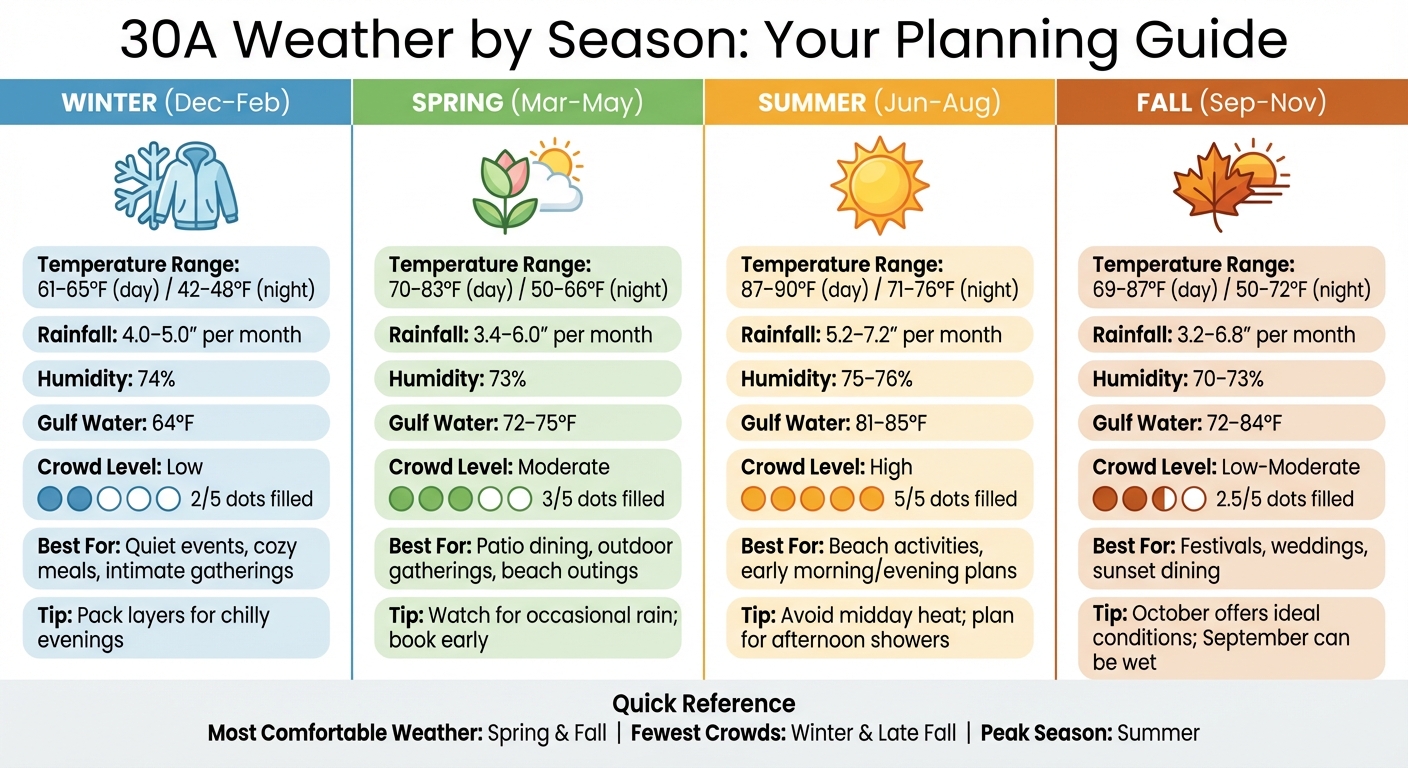
30A Weather Guide by Season: Temperature, Rainfall, and Best Activities
Weather Patterns by Season
Winter (December to February)
Winter along 30A delivers mild days, with average highs ranging from 61°F to 65°F and cooler nights dipping between 42°F and 48°F. Rainfall averages about 4.0″ to 5.0″ per month, and humidity hovers around 74%. The Gulf's water temperature drops to around 64°F, making it less appealing for swimming but perfect for peaceful beach walks. This season sees fewer visitors, creating a calm and laid-back vibe that’s especially popular with snowbirds escaping colder northern climates. With smaller crowds and easier parking, it’s the ideal time for cozy dinners and quieter events. Just remember to pack layers for the chilly evenings.
Spring (March to May)
Spring brings warmer days to 30A, with temperatures climbing from around 70°F in March to about 83°F by May. Overnight lows range between 50°F and 66°F, while rainfall varies from 3.4″ to 6.0″ per month. Humidity averages around 73%. The Gulf begins to warm, reaching 72°F in April and the mid-70s by May, making it a great time for outdoor activities. Moderate crowds enjoy the pleasant weather, making patio dining and beach outings particularly enjoyable. This season naturally sets the stage for lively outdoor events and gatherings.
Summer (June to August)
Summer heats up along 30A, with daytime highs soaring to 87°F–90°F and nighttime lows staying between 71°F and 76°F. Monthly rainfall peaks at 5.2″–7.2″, often accompanied by brief afternoon thunderstorms. Humidity rises to around 75%–76%, and the Gulf waters reach a warm 81°F to 85°F. This is the busiest season, drawing large crowds to beaches and local venues. To make the most of your visit, plan outdoor activities around the midday heat and those quick summer showers.
Fall (September to November)
Fall offers a refreshing change as temperatures gradually cool, with highs dropping from about 87°F in September to around 69°F by November. Nighttime lows range from 72°F to 50°F. Rainfall varies between 3.2″ and 6.8″, with September often being the wettest month, while humidity eases to 70%–73%. Gulf waters remain warm, ranging from 72°F to 84°F, making early fall perfect for beach days. After Labor Day, the crowds thin out, creating a more relaxed atmosphere. October stands out with warm Gulf waters, vibrant sunsets, and ideal weather for festivals, outdoor weddings, and harvest-themed dinners. These seasonal highlights make fall an inviting time for dining and special events.
Dining Recommendations by Season
When exploring dining options along 30A, the changing seasons bring unique opportunities to enjoy meals in a way that complements the weather. Here’s how to make the most of your dining experiences throughout the year.
Winter Dining
Winter days along 30A can still be enjoyable for outdoor dining - especially during midday when the sun warms south- or west-facing patios by 5–10°F. For breakfast and late dinners, cozy up indoors while still enjoying those beautiful Gulf views. Keep in mind that as evening temperatures dip into the 40s°F, outdoor heaters may struggle against the windchill. If you’re dining outside, don’t hesitate to ask for extra blankets to stay comfortable.
Spring Dining
Spring’s mild temperatures make it an ideal season for outdoor dining. March and April bring pleasant days in the 70s°F, perfect for brunch or lunch al fresco. By May, as highs reach the low 80s°F, early dinners from 5:00–7:00 p.m. are a great choice to enjoy the softer evening light. With spring showers delivering 4.5–6 inches of rain, it’s smart to pick restaurants with covered patios or retractable awnings. Around busy times like Easter and spring break, double-check that indoor seating is available as a backup.
Summer Dining
Summer heat can be intense, with midday temperatures soaring to 87–90°F. To beat the heat, stick to air-conditioned spaces or shaded patios with strong ceiling fans during peak hours (11:00 a.m. to 3:00 p.m.). As the sun sets and temperatures cool, Gulf-view terraces become an inviting option. Keep in mind that afternoon thunderstorms are common, with 6–7 inches of rainfall each month. Choose restaurants that offer covered seating and ensure they can quickly accommodate guests indoors if needed.
Fall Dining
Fall brings a gradual transition from summer’s heat to cooler, comfortable evenings. In September, shaded patios are perfect for sunset dining as highs hover around 86–87°F. By October, with highs near 80°F and reduced humidity, Gulf-front dining becomes even more appealing. Village squares also provide a charming setting for gatherings during this season of crisp, refreshing air.
sbb-itb-d06eda6
Event Planning by Season
When organizing events on 30A, it’s crucial to align your plans with the changing seasons. Each season brings unique weather patterns, so tailoring your event to these conditions can make all the difference in comfort and success.
Winter Events
Winter is perfect for smaller gatherings that can easily move between indoor and outdoor settings. With mild temperatures during the day and cooler evenings, aim to schedule events around midday to take advantage of the warmth. If you’re planning something like a sunset beach ceremony, prepare for the chill by providing portable heaters or cozy blankets for guests. Shorter daylight hours mean ceremonies should be planned earlier to capture natural light for photos. Venues with features like covered patios, retractable walls, or heated porches are ideal. Plus, winter offers perks like lower lodging costs and fewer crowds, making it a great time for intimate weddings, elopements, or milestone celebrations.
Spring Events
Spring is often considered one of the best seasons for outdoor events on 30A. The pleasant temperatures and stunning coastal views are ideal for beach ceremonies, lawn receptions, and outdoor festivals. However, the season’s popularity can lead to crowded venues and tight lodging availability, so early booking is essential. Check local event calendars on resources like sowal.co to avoid scheduling conflicts with major festivals. Keep in mind that March and April often bring higher rainfall, so having a backup plan is a must. Options like reserving a tent with sides, choosing venues with covered patios, or selecting properties that offer both indoor and outdoor spaces can save the day. For optimal lighting and guest comfort, schedule ceremonies mid-afternoon to just before sunset to capture the golden-hour glow without overheating attendees.
Summer Events
Summer is peak season for beach and water-centric events, thanks to warm Gulf waters and long daylight hours. However, high temperatures and frequent afternoon thunderstorms require thoughtful planning. Outdoor events are best scheduled in the early morning or evening to avoid the intense midday heat. Provide shaded areas and plenty of hydration to keep guests comfortable. Since short but heavy storms are common in July and August, have a contingency plan in place, like moving to a covered or indoor space. For water-based activities such as paddleboarding or boat outings, plan them for earlier in the day before storms typically roll in. A sample summer schedule might include a sunrise beach vow exchange, a midday indoor lunch in air-conditioned comfort, and a sunset reception under a shaded tent.
Fall Events
Fall, particularly October and November, offers a sweet spot with pleasant weather and fewer crowds compared to summer. The Gulf often remains warm enough for swimming through October, making it an excellent time for destination weddings, culinary festivals, and corporate retreats. Early fall, however, can bring rainfall and the risk of tropical storms, as September is one of the wettest months, and hurricane season peaks from late August to October. For events during this time, suggest travel insurance, include weather-related clauses in vendor contracts, and secure backup indoor options. By late October and November, the weather tends to stabilize, offering dry and calm conditions perfect for outdoor weddings, concerts, and open-air layouts. For the latest local tips and venue ideas, visit sowal.co.
Conclusion
Every season on 30A brings its own charm, offering plenty of opportunities for dining and events. With average temperatures ranging from the low 60s°F in winter to about 90°F in summer, and Gulf waters remaining inviting throughout much of the year, outdoor plans are feasible almost anytime you visit. However, it’s wise to consider seasonal shifts in heat, humidity, rain, and wind when planning.
Spring and fall provide comfortable weather, perfect for patio dining and formal gatherings. Summer, while ideal for beach activities, often calls for early-morning or evening plans to avoid the heat and occasional afternoon showers. Winter, on the other hand, offers a tranquil atmosphere with cooler breezes, making layered outfits and flexible indoor-outdoor setups a smart choice. These seasonal insights help ensure your plans align with the best conditions.
Since factors like humidity, sun exposure, and wind can influence your experience, staying updated with real-time weather reports from sowal.co can help you adapt your plans as needed.
Whether you're organizing a beachfront brunch, hosting a special celebration, or simply soaking in the beauty of the Emerald Coast, understanding 30A’s seasonal weather patterns allows you to make the most of your time. For more tips, local updates, and dining recommendations, check out sowal.co.
FAQs
When is the best time for outdoor dining along 30A?
The prime months for outdoor dining along 30A stretch from March to October. During this time, the warm weather creates the perfect setting for enjoying meals in the open air.
Spring and fall stand out as favorite seasons for al fresco dining. The mild temperatures and reduced humidity make these periods particularly inviting. Whether you're savoring fresh seafood at a beachfront spot or relaxing with cocktails under a starry sky, the enjoyable weather adds an extra layer of charm to every meal outdoors.
How can I prepare for 30A’s seasonal weather when planning an event?
When preparing for 30A’s seasonal weather, it’s smart to keep an eye on local forecasts and pack for a mix of conditions. Make sure to include light layers, rain gear, and sun protection to stay comfortable no matter what the day brings. If the forecast hints at rain or cooler temperatures, think about choosing venues with indoor or covered spaces. To stay flexible, build a little extra time into your schedule to accommodate any weather surprises. Tapping into local resources for updates can make it easier to adjust your plans without a hitch.
When is the best time to enjoy the beach on 30A during summer?
The ideal times to hit the beach on 30A during the summer are in the early mornings or late afternoons. These times offer cooler temperatures and a gentler sun, making outdoor activities much more enjoyable.
For the best experience, aim to visit the beach between sunrise and 10 a.m. or after 4 p.m. This way, you can skip the midday heat and soak in a more peaceful and comfortable atmosphere.