Topsail Hill vs. Other Florida Parks: Conservation Efforts
Compare Topsail Hill's coastal dune-lake conservation, species protection, and community education with other Florida parks facing development and habitat threats.

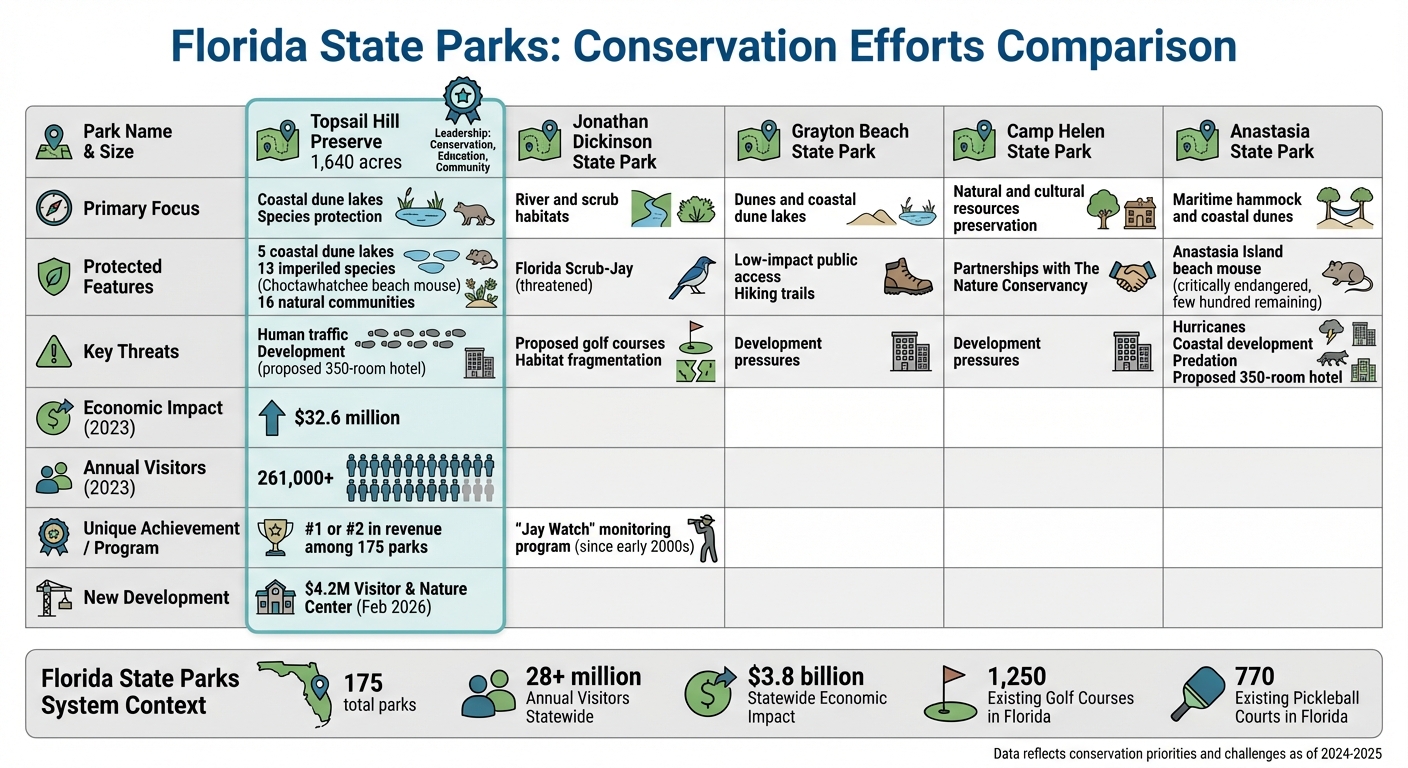
- Topsail Hill Preserve: Focuses on five coastal dune lakes, 13 at-risk species, and 16 natural communities. It limits development and educates visitors through programs and a new Visitor Center opening in February 2026.
- Jonathan Dickinson: Protects river habitats and the Florida Scrub-Jay, facing threats from proposed golf courses.
- Grayton Beach: Similar focus on dune and lake preservation, with low-impact public access.
- Camp Helen: Balances natural and historical resources while resisting development pressures.
- Anastasia: Prioritizes maritime hammock habitats and the endangered Anastasia Island beach mouse.
Quick Comparison
| Park Name | Primary Focus | Key Threats |
|---|---|---|
| Topsail Hill | Coastal dune lakes, species protection | Human traffic, development |
| Jonathan Dickinson | River and scrub habitats | Golf courses, fragmentation |
| Grayton Beach | Dunes and lakes | Development pressures |
| Camp Helen | Preservation & history | Development pressures |
| Anastasia | Maritime hammock, beach mouse | Hurricanes, predation |
Topsail Hill leads by combining conservation, education, and community support, setting a strong example for Florida’s parks.
Florida State Parks Conservation Comparison: Topsail Hill vs Other Major Parks
Topsail Hill Preserve State Park: Conservation Methods
Protecting Coastal Dune Lakes and Rare Habitats
Topsail Hill Preserve is home to five coastal dune lakes - Stallworth, Campbell, Morris, and two unnamed - that are carefully preserved to maintain their delicate hydrology. These lakes experience a natural balance of freshwater and saltwater. For example, Morris Lake breaches annually, allowing saltwater to mix in, while Campbell Lake remains almost entirely freshwater (99.9%) year-round. To deepen their understanding of these ecosystems, park staff have studied Campbell Lake's spring-fed potential.
The park spans 1,640 acres and boasts 16 distinct natural communities, ranging from old-growth pine forests to scrublands and wetlands. A key focus of conservation is stabilizing the park’s dunes, which are anchored by sea oats. These plants, legally protected, make up more than 85% of the dune vegetation. Their root systems spread both vertically and horizontally, securing the striking white quartz dunes that can rise as high as 25 feet above sea level. Visitors are reminded to avoid walking on the dunes to prevent erosion and preserve their integrity.
Beyond preserving habitats, the park also prioritizes the protection of threatened species.
Managing Threatened Species
Topsail Hill Preserve safeguards 13 species classified as imperiled, including the Choctawhatchee beach mouse. These small creatures play a vital role in the ecosystem by spreading seeds and supporting vegetation growth, which helps combat beach erosion. Florida is home to six federally protected species of beach mice, and Topsail Hill is one of the few state parks providing a secure habitat for them. Additionally, the park protects carnivorous pitcher plants and other vulnerable species that have been lost in many developed coastal areas.
Community Participation and Education
Topsail Hill’s conservation efforts extend beyond the natural environment to include community engagement and education. The Friends of Topsail Hill Preserve State Park play a central role in this effort, organizing volunteer activities and fundraising initiatives. A new Visitor and Nature Center, supported by local funding and community involvement, is set to open in late 2025. This facility will host up to 100 guests for workshops and feature exhibits on the Choctawhatchee beach mouse and the park’s coastal dune lakes.
"Interpreting Florida's natural resources is a key aspect of our mission, and this new center will be a great asset for Topsail Hill and our dedicated park rangers who interact with the public every day." – Chuck Hatcher, Director, Florida State Parks
Park rangers also lead educational programs, such as the Coastal Dune Lakes Workshop, which teach visitors about these globally rare ecosystems. In 2023, over 261,000 people visited the park, benefiting from these initiatives. Kathleen Brennan, Board President of the Florida State Parks Foundation, emphasized that such programs help visitors form meaningful connections with the park’s unique natural features. On top of its ecological contributions, the park generated an impressive $32.6 million economic impact in 2023, showing how conservation and tourism can thrive together when managed thoughtfully.
Topsail Hill Preserve’s integrated approach to conservation, education, and community involvement serves as a powerful example for other state parks across Florida.
Conservation Efforts at Other Florida Parks
Jonathan Dickinson State Park: River Habitat Restoration
Jonathan Dickinson State Park focuses on preserving river and scrub ecosystems, setting it apart from Topsail Hill's wildlife at coastal dune lakes. Since the early 2000s, the park has been running the "Jay Watch" program to monitor and protect the threatened Florida Scrub-Jay. This bird depends on the park's fire-maintained scrub habitat, which faces threats from proposed golf courses that could fragment its environment. Collaborations with the Florida Department of Environmental Protection play a key role in protecting these natural areas. While Topsail Hill prioritizes coastal habitats, Jonathan Dickinson emphasizes the unique needs of its scrub and river ecosystems.
Grayton Beach State Park: Dune and Lake Conservation
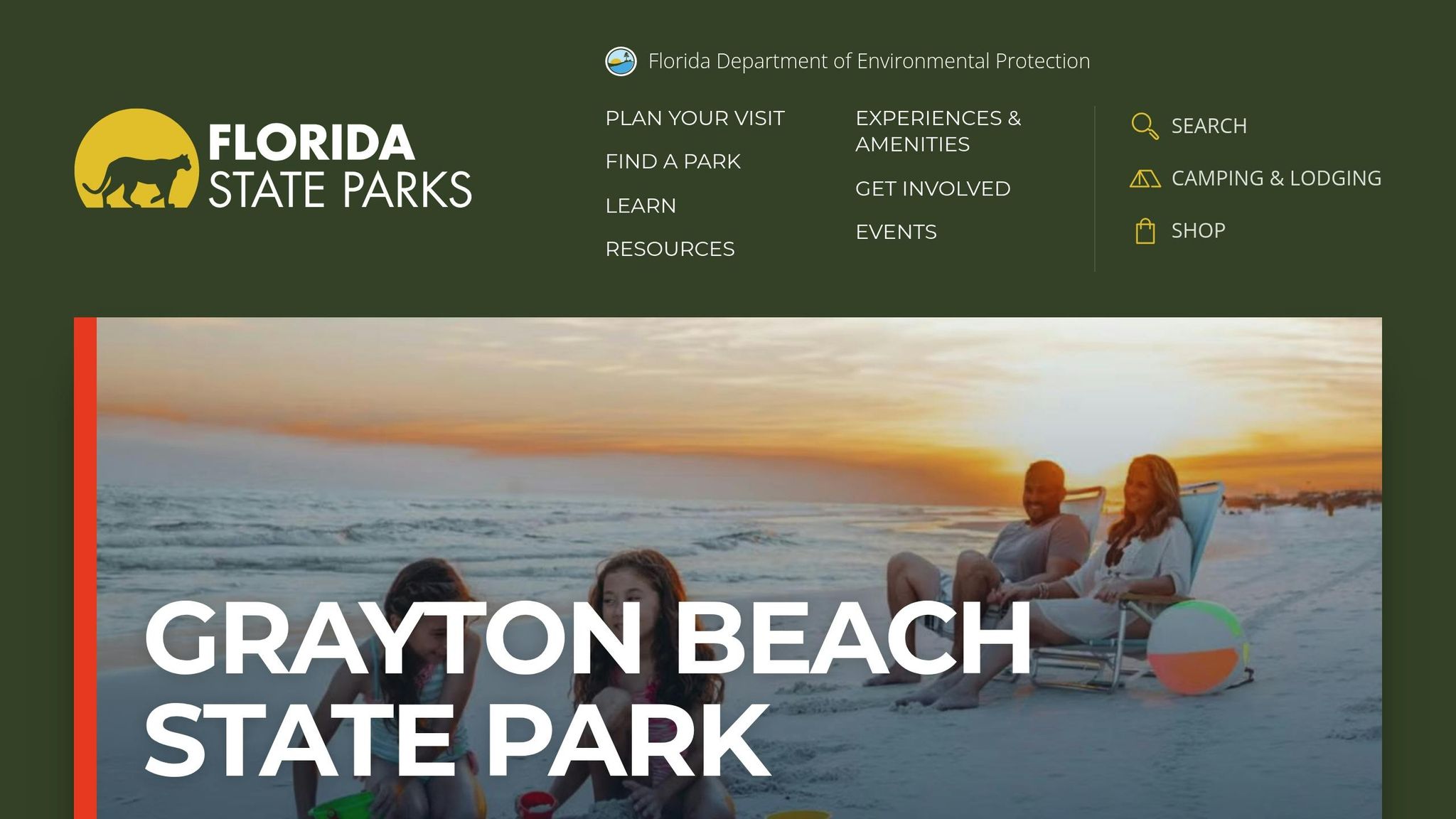
Grayton Beach State Park shares Topsail Hill's commitment to safeguarding coastal dune lakes and dune systems but operates under different development pressures. Conservation efforts here focus on stabilizing dunes and providing public access through low-impact amenities like hiking trails. Florida's state parks collectively welcome over 28 million visitors annually, contributing $3.8 billion to the state's economy. Greg Knecht, Executive Director of The Nature Conservancy in Florida, highlighted the importance of these parks:
"Our state parks are an investment in our future. More than 28 million people visit Florida's state parks each year creating $3.8 billion in economic impact. That's why we must continue to protect them for their primary purpose: to conserve ecologically essential lands."
Grayton Beach, much like Topsail Hill, strives to balance public enjoyment with the critical need to protect fragile ecosystems.
Camp Helen State Park: Balancing Cultural and Natural Resources
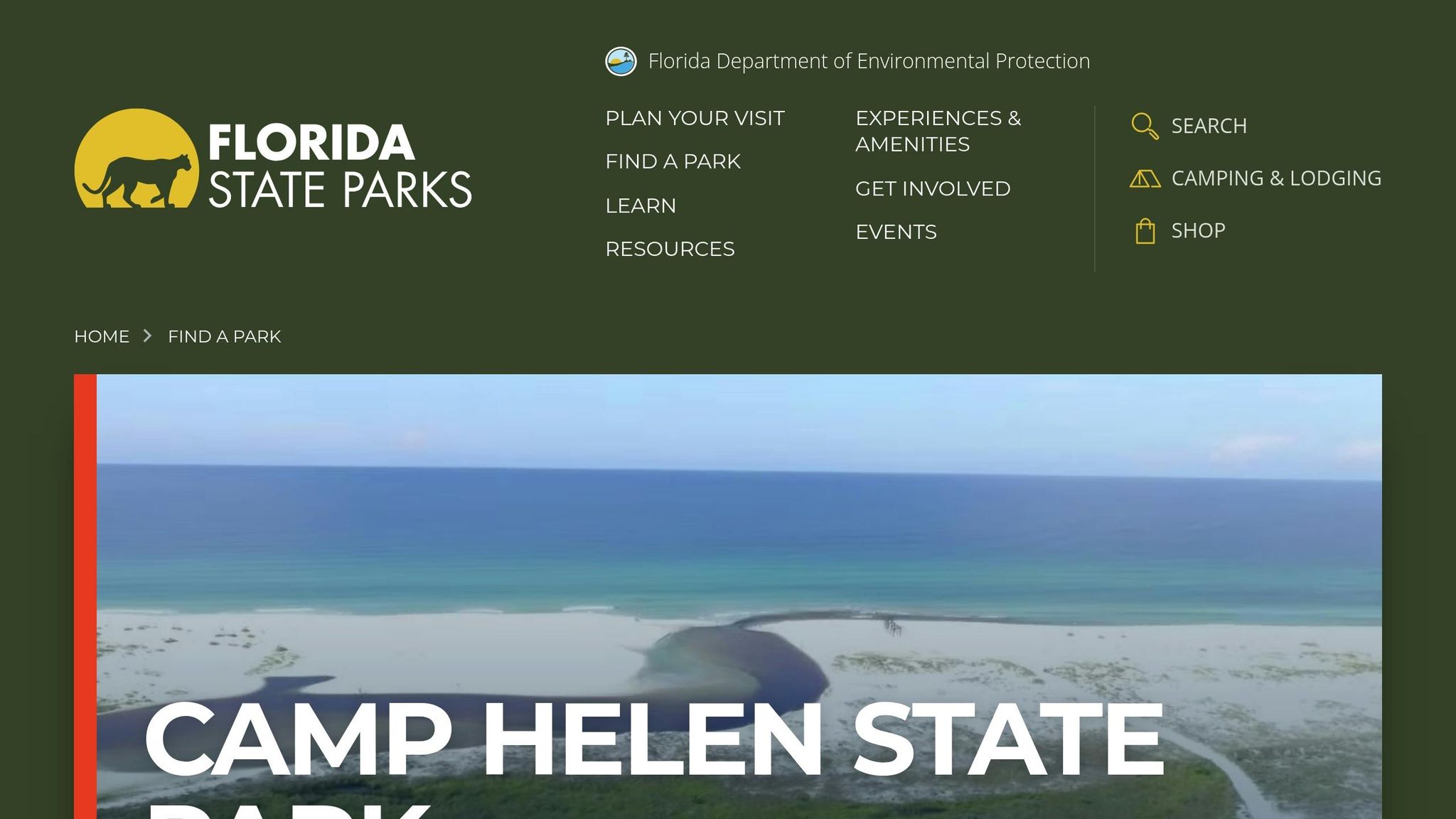
At Camp Helen State Park, both natural and cultural resources are managed together. The park benefits from partnerships with organizations like The Nature Conservancy, which help acquire land for conservation purposes. Florida parks often face tensions between development and preservation. For instance, the 2024 "Great Outdoors Initiative" proposed extensive hotel and golf course developments in several parks. However, public backlash led to the withdrawal of the proposal on August 29, 2024. This incident highlights the importance of public involvement in conservation planning. While some parks, such as Camp Helen, balance cultural and natural priorities, others, like Anastasia State Park, focus exclusively on protecting rare species.
Anastasia State Park: Maritime Hammock Protection
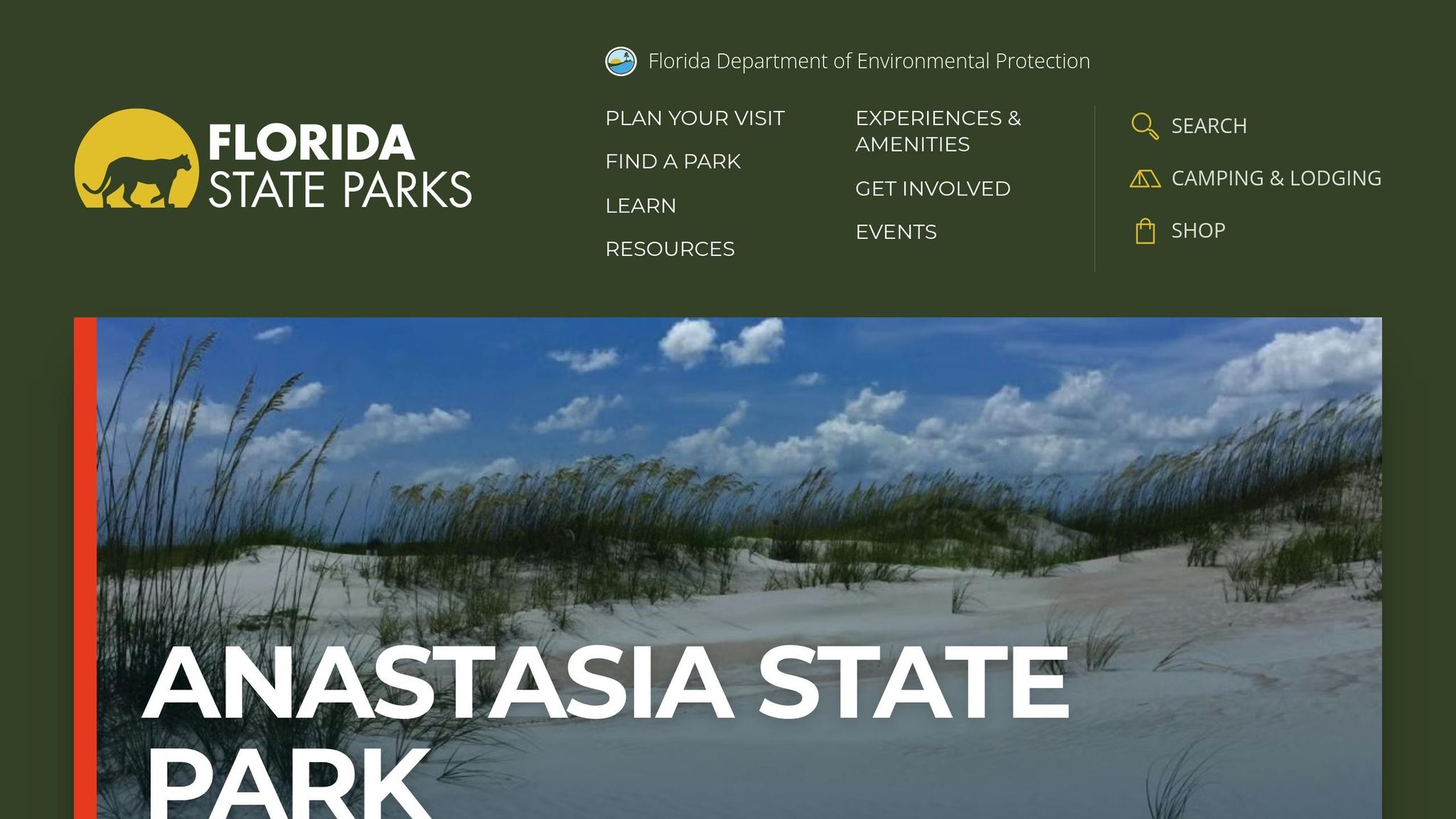
Anastasia State Park is dedicated to preserving maritime hammock and coastal dune habitats. It serves as a haven for the critically endangered Anastasia Island beach mouse, which now numbers only a few hundred individuals. The park faces challenges from hurricanes, coastal development, and predation - issues that resonate across Florida's parks.
| Park Name | Primary Conservation Focus | Key Challenge/Threat |
|---|---|---|
| Jonathan Dickinson | River and Scrub-Jay habitat | Proposed golf courses; habitat fragmentation |
| Anastasia | Coastal dunes and Beach Mouse | 350-room hotel proposal; hurricane damage; predation |
| Topsail Hill | Coastal dune lakes and rare habitats | Proposed 350-room hotel; increased human traffic |
Panama City Republican Senator Jay Trumbull expressed concerns about commercial development in state parks, stating:
"Our state parks should not be in the business of competing with private enterprise to provide lodging or other commercial amenities"
This sentiment reflects a broader acknowledgment that Florida's existing 1,250 golf courses and 770 pickleball courts already saturate the market, making additional developments in protected parks unnecessary.
What We Can Learn from Topsail Hill's Conservation Work
Topsail Hill Preserve's Strengths and Achievements
Topsail Hill Preserve stands out for its dedication to preserving Florida’s natural beauty. Acquired specifically to safeguard its rare coastal dune lakes and diverse habitats, the park has become a beacon of conservation, as highlighted by Director Chuck Hatcher. Today, it protects 13 imperiled species, 16 natural communities, 1,640 acres, and five rare coastal dune lakes.
Its financial success is just as impressive. According to Hatcher, "Topsail is always #1 or #2 in revenue generated" among Florida’s 175 state parks. This financial strength has enabled the park to secure a $4.2 million Visitor and Nature Center, funded through a mix of sources. These include $285,000 from Walton County's Tourist Development Tax, contributions from private foundations like the J.W. Couch Foundation, and $80,000 raised by the park’s Citizen Support Organization.
Common Challenges and Opportunities for Collaboration
Despite its successes, Topsail Hill faces challenges that are all too familiar to Florida’s state parks. Development pressure, habitat fragmentation, and invasive species threaten the park’s ecosystems. These challenges highlight the importance of unified efforts to protect such irreplaceable environments. Topsail Hill’s approach to multi-stakeholder funding offers a roadmap for other parks struggling with limited budgets.
For example, the park’s Citizen Support Organization raised over $26,000 during a "Tapas & Tunes" event in 2025 and secured an additional $30,000 donation from South Walton Mosquito Control and Teen Mobile. These efforts are a testament to the power of community involvement.
The Future of Conservation in Florida Parks
Topsail Hill’s success demonstrates that conservation and economic growth can go hand in hand. Kathleen Brennan, Florida State Parks Foundation Board President, captured this balance perfectly when she said:
"The new visitor and nature center will transform the experience of visiting this park and help you plan a South Walton itinerary and help visitors create meaningful connections with the unique ecosystems found here".
Looking ahead, the park’s upcoming state-of-the-art nature center, set to open in mid-February 2026, will play a pivotal role in educating visitors. By showcasing the rarity of coastal dune lakes and the vulnerability of species like the Choctawhatchee beach mouse, the center aims to inspire more people to advocate for their protection.
The Secret Plan to Sell Off Florida's Wild Lands
FAQs
How does Topsail Hill Preserve balance protecting nature with welcoming visitors?
Topsail Hill Preserve strikes a thoughtful balance between preserving its natural environment and welcoming visitors. The park manages crowd levels with daily hours from 8 a.m. to sundown and charges a modest $6 vehicle entrance fee, which also supports upkeep and conservation efforts.
A new $4.2 million Visitor and Nature Center is set to enhance the experience, thanks to contributions from community partnerships and private donors. This center will feature interactive exhibits and ranger-led workshops aimed at educating visitors about the preserve’s unique features, such as its rare coastal dune lakes and endangered wildlife. These activities promote a deeper understanding of the park’s 1,640 acres, which include stunning 25-foot-tall dunes and serene freshwater lakes.
Through education and careful management, Topsail Hill Preserve fosters a sense of responsibility among visitors, ensuring its breathtaking landscapes remain protected and accessible for future generations.
What makes conservation at Topsail Hill Preserve State Park more challenging than at other Florida parks?
Topsail Hill Preserve State Park is home to a rare natural treasure: coastal dune lakes, a type of ecosystem found in only a handful of places worldwide. These lakes are incredibly sensitive, relying on a complex interplay of rainfall, groundwater, and occasional connections to the Gulf of Mexico. Even small disruptions to the surrounding dunes or water quality can throw this delicate system off balance, threatening its survival.
The park's unspoiled beaches and wetlands face additional challenges, particularly from development proposals that could interfere with the area’s unique hydrology. Adding to the complexity, Walton County permits private ownership of beachfront property up to the mean high-water line. This policy complicates public access and poses hurdles for conservation along the park’s 3.2 miles of shoreline. Together, these issues make protecting Topsail Hill’s ecosystem far more intricate than the efforts required for most other state parks in Florida.
How does the local community support conservation efforts at Topsail Hill Preserve?
The local community is deeply involved in preserving the natural beauty of Topsail Hill Preserve. Through the nonprofit organization Friends of Topsail Hill Preserve State Park, residents, businesses, and visitors come together to take part in meaningful projects like beach cleanups, trail upkeep, and wildlife habitat monitoring. These collective efforts play a crucial role in protecting sea turtle nesting areas, safeguarding the park’s rare coastal dune lakes, and ensuring the environment remains unspoiled.
Beyond hands-on work, the community also contributes through fundraising and donations. One standout achievement is the $4.2 million Visitor & Nature Center, made possible by these generous efforts. By blending volunteer activities, educational initiatives, and financial contributions, the community not only strengthens conservation efforts but also enhances the overall experience for everyone who visits the park.