If you manage a 30A vacation rental website, your main goal is clear: attract travelers searching for properties like “30A beachfront house with pool” or “Seaside pet-friendly rental” directly to your site. This reduces reliance on platforms like Airbnb or Vrbo, saving you thousands in commission fees. Here’s how to do it:
- Target Local Keywords: Use location-specific search terms like “Seagrove 4BR rental” or “Rosemary Beach Gulf-front house.”
- Create Helpful Content: Write guides about 30A neighborhoods, activities, and dining to engage travelers early in their planning process.
- Optimize Booking Pages: Ensure property pages are detailed, fast-loading, and mobile-friendly with clear “Book Now” buttons.
- Focus on Technical SEO: Use HTTPS, clean URLs, XML sitemaps, and schema markup to improve rankings.
- Leverage Mobile Design: Over 70% of rental searches happen on phones - your site must load in under 3 seconds and be easy to navigate.
- Track Performance: Use tools like Google Analytics to monitor traffic, conversions, and booking revenue.
Vacation Rental SEO: How to Increase Online Visibility & Direct Bookings
How Travelers Search for 30A Rentals
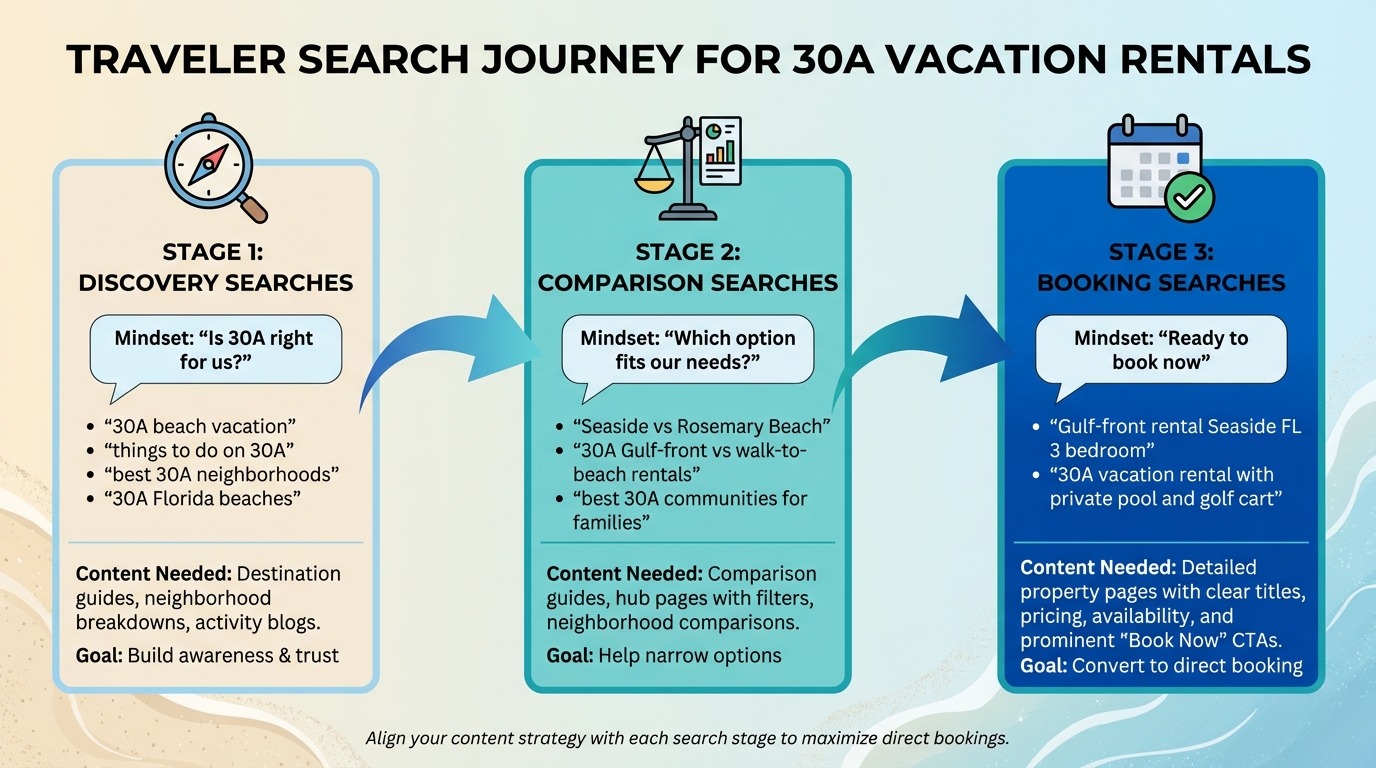
How Travelers Search for 30A Vacation Rentals: Discovery to Booking Journey
Understanding how travelers search for 30A vacation rentals is key to turning website visitors into actual bookings. Guests typically go through three main stages: discovery, comparison, and booking. Each stage reflects a different mindset, and your content needs to guide them seamlessly from their first search to clicking that "Book Now" button.
Travelers don’t all start at the same point. Some begin by figuring out if 30A is the right destination for them. Others dive straight into comparing neighborhoods or specific properties, and many focus on finding rentals that fit their dates and needs. By creating content for each stage, you can build trust and increase the likelihood of conversions. Let’s break down how travelers refine their search and what they’re looking for at each step.
Discovery Searches
In the discovery phase, travelers are figuring out if 30A matches their vacation plans. They’re asking broad questions like, "Is 30A good for families?" or "What’s the vibe of the area?" Common search terms include phrases like "30A beach vacation", "things to do on 30A", "best 30A neighborhoods", and "30A Florida beaches." At this stage, they’re gathering information about the destination itself.
To capture this traffic, focus on creating helpful, informative content. Think destination guides, neighborhood breakdowns, and blog posts about activities. For instance, a guide titled "Best 30A Neighborhoods for Families" or "Top Things to Do on 30A with Kids" demonstrates local expertise and answers their questions. Collaborating with local resources like sowal.co - a site that covers South Walton travel tips, hidden beaches, and dining options - can also add depth and credibility to your content.
The key here is to be helpful, not overly promotional. Whether you’re sharing a guide to the area’s state parks, a list of the best beachfront restaurants, or a calendar of seasonal events, offering real value encourages travelers to return to your site when they’re ready to take the next step.
Comparison Searches
Once travelers decide 30A is their destination, they start comparing options to find the best fit for their trip. They’re asking questions like, "Should we stay in Seaside or Rosemary Beach?" or "Is a Gulf-front property worth it, or is a short walk okay?" Their searches become more specific, with phrases like "Seaside vs Rosemary Beach", "30A Gulf-front vs walk-to-beach rentals", or "best 30A communities for families."
To meet this need, create comparison guides and hub pages that tackle these questions directly. For example, a page titled "Seaside vs Rosemary Beach: Which 30A Town Fits Your Style?" can offer an honest breakdown of factors like walkability, atmosphere, and typical costs. Hub pages that compare neighborhoods or filter properties by amenities - like pet-friendly rentals or homes with private pools - can also help travelers narrow their options while linking them to relevant property listings.
Booking Searches
Once travelers have compared their options, they’re ready to book. At this stage, their searches are highly specific, often including details like property type, location, bedroom count, and amenities. Examples include queries like "Gulf-front rental Seaside FL 3 bedroom" or "30A vacation rental with private pool and golf cart." These users are looking for precise details, availability, and pricing.
Your property pages should match this intent perfectly. Use clear, descriptive titles like "Gulf-Front 4-Bedroom 30A Vacation Rental with Heated Pool – Seagrove Beach." In the descriptions, highlight key details such as bedroom and bathroom counts, proximity to the beach, pool features, parking options, pet policies, and standout amenities like rooftop decks or golf carts. Make sure your booking engine is fast, easy to use on mobile, and includes clear calls to action like "Check Availability" or "Book Now." Transparent pricing in U.S. dollars and clear policies also go a long way in building trust and reducing hesitation.
Technical SEO Basics for 30A Rental Websites
Before travelers can discover your property listings, search engines need to crawl, index, and understand your site. Think of technical SEO as the backbone that supports everything else. Without it, even the most compelling property descriptions and stunning images won't reach potential guests searching for 30A rentals.
Start with the essentials that impact Google's rankings. HTTPS is non-negotiable - it encrypts booking data and builds trust with users. Google prioritizes secure sites, and since over 70% of searches for services like vacation rentals happen on mobile devices, non-HTTPS sites can face ranking penalties. Installing a valid SSL certificate not only protects user information but also helps reduce bounce rates during the booking process.
Your site's structure should be clean and easy to navigate. Use descriptive URLs like /30a-beachfront-rental-seaside instead of vague ones like /property123. This helps search engines understand your content better. Submit an XML sitemap through Google Search Console that includes all your property pages, neighborhood guides, and blog posts. Configure your robots.txt file to allow crawling of key pages, such as /30a-vacation-rentals, while blocking irrelevant areas like admin sections. This way, search engines focus on the content that matters most for queries like "30A beachfront rentals." To further improve your site's visibility, implement rich snippets using schema markup.
Schema markup makes your listings pop in search results. Use LocalBusiness and LodgingBusiness schema to display rich snippets featuring star ratings, prices in dollars, and availability directly in Google. These details make your listings more appealing for searches like "WaterColor 30A vacation rentals" or "Rosemary Beach rental homes." Validate your schema using Google’s Structured Data Testing Tool to ensure everything displays correctly. Combined with a logical site structure, these elements strengthen the technical foundation of your site.
Address technical issues that could hurt your rankings. Fix broken links to property pages as soon as possible, add descriptive alt text to all images of beaches and properties, and ensure your site loads in under three seconds. Google considers Core Web Vitals - metrics like Largest Contentful Paint, First Input Delay, and Cumulative Layout Shift - when ranking sites. Speed up your site by compressing images of local beaches and interiors, enabling browser caching, and using a content delivery network (CDN) to serve pages quickly to travelers in Florida and beyond.
Mobile Design and Fast Load Times
If you're targeting travelers searching for 30A rentals, remember this: most of them are browsing on their phones. Over 70% of vacation rental searches happen on mobile devices, especially during peak seasons when last-minute bookings surge. With Google’s mobile-first indexing, your mobile site - not your desktop version - determines your search rankings. This makes mobile design a critical factor for boosting both SEO and conversion rates.
Speed is just as important as design. If your site takes 3 seconds to load, bounce rates can jump by 32%. Stretch that to 5 seconds, and you’re looking at a staggering 90% increase in bounces. When travelers are comparing properties in popular spots like Rosemary Beach or WaterColor, a slow-loading site can easily push them toward competitors or back to OTAs.
To keep users engaged, your mobile design needs to be clean and user-friendly. Use responsive single-column layouts, readable fonts (at least 16px), and large, easy-to-tap buttons. Make sure key information like nightly rates in USD, availability calendars, and the "Book Now" button is visible above the fold. And steer clear of intrusive pop-ups - they frustrate users and can hurt your Page Experience signals.
Optimizing your media assets is another must for a fast mobile site. Images often make up 75% of a page’s weight, so compress your property photos into modern formats like WebP and use lazy loading for images below the fold. Aim for a mobile page size of 1–1.5 MB and hit Core Web Vitals benchmarks: an LCP under 2.5 seconds, CLS below 0.1, and FID/INP under 200 milliseconds. Tools like Google’s PageSpeed Insights and Mobile-Friendly Test can help you identify and fix issues before they impact your bookings.
A fast, mobile-optimized site isn’t just about better rankings - it’s about driving more conversions. According to Deloitte and Google, improving mobile site speed by just 0.1 seconds can increase conversions by 8–10% on travel sites. For 30A property managers looking to secure direct bookings and avoid OTA fees of 15–25%, a seamless mobile experience isn’t optional - it’s essential. Invest in reliable hosting to handle traffic spikes, enable caching, and minimize third-party scripts to keep your site running smoothly.
Booking Engine Integration
A fast, mobile-friendly site is just the start - your booking engine plays a key role in turning visitors into confirmed guests. If your reservation system is clunky or unreliable, potential customers might head back to platforms like Airbnb or Vrbo, where you'll lose not only 15–20% in commission fees but also control over your brand. Plus, search engines notice when users abandon their bookings, which can hurt your SEO by signaling that your site isn’t meeting expectations.
Prioritize security and U.S.-specific formatting. Your booking engine needs to display U.S. currency (e.g., $500/night), use the MM/DD/YYYY date format (e.g., 12/15/2025), and show 12-hour time with AM/PM, defaulting to Eastern Time. On top of that, ensure it includes SSL encryption, PCI DSS compliance, and daily backups. This is especially critical during peak seasons, like summer, when luxury rentals in hotspots such as Rosemary Beach or Seaside see a surge in bookings.
Mobile responsiveness is non-negotiable. Your booking calendar should load instantly and work seamlessly on smaller screens. Features like one-click bookings, real-time availability updates, and user-friendly date pickers make the process smoother and keep users engaged. These elements not only enhance the user experience but also support better SEO and higher conversion rates.
Properly embedding your booking engine also opens the door to structured data markup. Adding schema for reservations helps search engines better understand your booking functionality, which can lead to rich snippets for searches like "WaterColor vacation rentals available this weekend." This technical integration strengthens your site’s overall optimization, aligning with your broader SEO strategy. To maximize results, include strategic "Book Direct" calls-to-action, which can improve both rankings and conversions.
sbb-itb-d06eda6
Core Technical SEO Features
To make your 30A vacation rental site stand out in search rankings, having a strong technical foundation is just as important as offering great booking engines and mobile-friendly design. Four main components - clean URL structures, XML sitemaps, SSL certificates, and image compression - play a crucial role in helping search engines understand, trust, and prioritize your site. Here’s a closer look at each one.
Clean, descriptive URLs make a difference. Instead of using URLs with generic parameters like "/property?id=12345", go for descriptive paths such as "/30a-vacation-rentals-seaside-beachfront." These types of URLs not only make it clear what your page is about but also improve click-through rates and boost local SEO for searches like "WaterColor vacation homes" or "Rosemary Beach rentals". Aim to keep URLs under 60 characters, and if you’re using WordPress, set your permalink structure to "Post name." If you need to update older URLs, don’t forget to set up 301 redirects to preserve your existing SEO value.
XML sitemaps ensure every property gets indexed. An XML sitemap acts as a roadmap for search engines, listing all your site’s pages along with their priority and update frequency. This is especially helpful for sites with a large number of property listings or seasonal pages, ensuring important rentals don’t get overlooked during peak booking times. SEO plugins like Yoast SEO can automatically generate and maintain your sitemap. Assign high priority (0.8–1.0) to key property pages, and submit the sitemap to Google Search Console. Including image sitemaps for your property photos can also increase the chances of rich snippets appearing in local search results.
SSL certificates build trust and boost rankings. HTTPS is a ranking factor for Google, and it’s critical for any booking site. Without an SSL certificate, your site may display "Not Secure" warnings, which can increase mobile bounce rates by up to 30%. Many hosting providers offer free SSL options like Let’s Encrypt, while paid certificates from services such as Cloudflare provide perks like automatic renewal. Once installed, set up HTTPS redirects and use tools like Google’s SSL checker to ensure the padlock icon displays properly across your site.
Image compression keeps your site fast and user-friendly. With over 70% of vacation rental searches happening on mobile, slow-loading image galleries can hurt your booking rates. Tools like TinyPNG, ImageOptim, or ShortPixel can shrink image sizes by 30–50% without losing quality. For even better performance, consider converting images to formats like WebP or AVIF, keeping hero images under 100KB, and enabling lazy loading with attributes like loading="lazy". These optimizations can help your pages load in under 2 seconds, meeting Google’s Core Web Vitals standards and improving user experience.
Optimizing Property and Community Pages
Enhancing technical SEO and mobile design is just the start. To truly boost direct bookings for 30A vacation rentals, optimizing your property and community pages is a must. Every detail - keyword selection, page layout, and internal linking - should work toward driving more bookings.
Keyword Research for 30A Topics
Start by creating a keyword matrix that aligns your property features with specific 30A communities. Highlight features like pet-friendly, Gulf-front, private pool, sleeps 10, or walk-to-beach, and pair them with neighborhoods such as Grayton Beach, Seaside, WaterColor, Rosemary Beach, Blue Mountain Beach, Seagrove, Seacrest, and Inlet Beach. Use tools like Google Keyword Planner, SEMrush, or Ahrefs to uncover phrases like "Grayton Beach pet-friendly rental" or "WaterColor 30A rental with pool." Don’t forget to check Google autocomplete and Google Maps suggestions for additional keyword ideas.
Focus on keywords that directly match your inventory and indicate booking intent. Terms like "rental", "condo", "house", or "book direct" are great examples. Instead of chasing highly competitive keywords, aim for mid-level difficulty phrases with decent search volume. For each area, target 1–2 broad terms (e.g., "WaterColor 30A vacation rentals"), 3–5 long-tail phrases combining property type, features, and location (e.g., "Grayton Beach 4-bedroom rental with private pool"), and branded searches for your company name.
Once you’ve nailed down your keywords, use them strategically to shape your property page content.
Structuring Property Pages
Craft a booking-focused title tag under 60 characters, and match it with an H1 that emphasizes location and property type, such as "Grayton Beach Pet-Friendly 3BR Gulf-View Rental | [Brand Name]". Use H2 headings to organize sections like "Property Overview", "Amenities", "Location on 30A", "Walkable Attractions & Beach Access", and "Policies & Pet Rules", naturally incorporating your target keywords.
Write 500–900 words of original content that answers common guest questions, steering clear of generic descriptions pulled from OTAs. Add optimized images with alt text like "Gulf-front balcony view from 30A condo in Seacrest Beach", and embed a local map for added context. Place your primary call-to-action (e.g., "Check Availability" or "Book Direct") prominently above the fold and repeat it after key sections.
For internal linking, direct users to community hub pages with text like "View all Rosemary Beach vacation rentals on 30A." Include a "similar properties" section that links to 3–6 related homes, using descriptive anchor text like "pet-friendly Rosemary Beach vacation home" instead of generic phrases like "click here".
Once your property pages are polished, apply the same principles to create robust community hub pages.
Creating Location Hub Pages
Location hub pages for areas like Seaside, WaterColor, and Rosemary Beach act as parent pages, capturing broader travel search traffic and guiding users to specific properties. Start with a keyword-rich introduction, such as "Explore Seaside, Florida vacation rentals along Scenic Highway 30A - colorful cottages, Gulf-front homes, and walkable beach access". Provide 800–1,500 words covering the community’s highlights, including beach access, dining, shopping, and typical rental options.
Incorporate visual filters or tags to help users quickly find rentals by categories like "Gulf-front", "pet-friendly", or "private pool." Dynamically display matching properties below the descriptive content. High-quality images, a simple map, and clear CTAs like "View all WaterColor vacation homes" can further enhance the page.
Link hub pages to one another with "nearby communities" connections - like Seaside ↔ WaterColor ↔ Grayton Beach - making it easier for undecided users to explore their options. This structure not only improves navigation but also strengthens your site’s authority on each community, helping boost engagement and SEO performance.
Using Local Content to Attract Travelers
Creating local guides and sharing activity tips is a great way to attract travelers during the early stages of their trip planning. While technical SEO and optimizing property pages help boost your rankings, localized content plays a key role in turning website traffic into bookings. When someone searches for "things to do on 30A" or "best restaurants near Seaside", they’re looking for information and forming their first impressions of the area. By answering these questions directly on your site, you position your properties as the obvious next step in their journey. This local approach complements the technical and property page optimizations already in place.
Local SEO Signals
Make sure your NAP (Name, Address, Phone) details are consistent across your website’s footer, contact page, and Google Business Profile. This consistency helps search engines confirm your location. With more than 70% of local searches happening on mobile devices, travelers frequently search for terms like "30A vacation rentals near me", whether they’re already in the area or planning ahead. Embedding Google Maps on key pages can highlight nearby attractions such as Grayton Beach State Park, WaterColor Town Center, and Seaside. Including proximity details, like "5-minute walk to Gulf via boardwalk" or "2 miles to WaterColor farmers market", helps guests quickly understand how close your properties are to popular spots. You can also add step-by-step driving directions from nearby airports, such as Destin–Fort Walton Beach Airport or Northwest Florida Beaches International Airport, to emphasize your local relevance.
Seasonal and Activity-Based Content
Tailoring your content to match seasonal trends and popular activities is another way to engage potential guests. For example, a guide like "Best 30A Spring Break Rentals for Families" can attract visitors during March and April, while "Romantic 30A Getaways for Couples" appeals to those planning anniversaries or Valentine’s Day trips. Posts focused on activities, such as "Top Paddleboard Spots on 30A with Nearby Rentals" or "30A Biking the Timpoochee Trail: Where to Stay", allow you to highlight properties close to outdoor adventures. Each guide should include 2–3 relevant rentals with a clear "Check Availability" call to action. This type of targeted content not only draws in travelers but also sets the stage for stronger local partnerships, which we’ll explore in the next section.
Collaborating with sowal.co
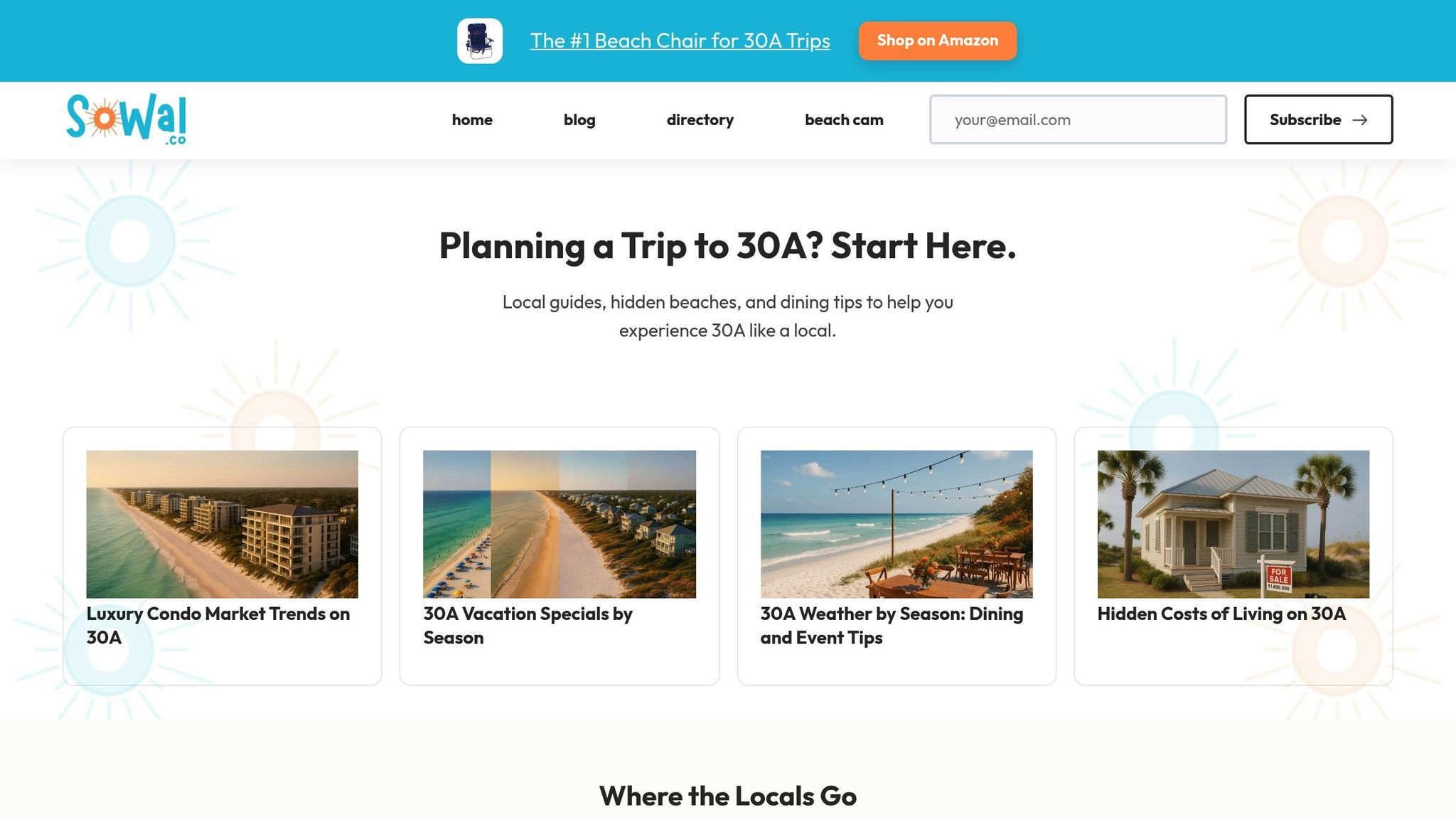
Tap into sowal.co’s local expertise to boost credibility. For instance, you can reference their detailed guides on beach access or dining recommendations to enhance your authority. Offering exclusive rental discounts to sowal.co readers in exchange for guest posts or backlinks can further improve your local SEO signals. Plus, it builds trust with travelers eager to experience South Walton like a true local.
Measuring and Improving SEO Performance
Once you've streamlined your technical setup and booking processes, it's time to focus on tracking performance. The ultimate goal? Turning organic traffic into direct bookings and boosting booking revenue. It's not just about getting more visitors to your site - it's about converting those visitors into paying guests. Tools like Google Analytics 4, paired with cross-domain tracking, can help you monitor the entire guest journey, from their first organic search session all the way to checkout.
Key Metrics for Direct Booking Success
To drive revenue, focus on the metrics that matter most. Keep tabs on organic traffic, user engagement (like time spent on a page, scroll depth, and clicks on "Book Now"), and conversions - both small (email sign-ups, saved favorites) and large (completed bookings).
Pay special attention to high-intent pages, such as individual property listings or your main "All 30A Rentals" page. These pages should see higher engagement and conversion rates compared to general blog traffic. For instance, a well-optimized property page for Seaside should have longer session durations and more "Book Now" clicks than less-targeted pages.
Micro-conversions are also critical. Actions like email sign-ups, contact form submissions, and click-to-call interactions are especially valuable since many guests prefer to discuss details before committing to a high-cost 30A rental. On the macro side, track completed bookings, total revenue from organic search, average booking value, and organic conversion rates. Comparing revenue from organic search to revenue from OTAs can help you measure the return on your SEO efforts and justify further investment.
Reviewing Search Terms and Landing Pages
Google Search Console is your go-to tool for understanding which search terms bring traffic to your site - and where you might be missing out. Look for queries related to "30A", "Rosemary Beach", "Seaside", or "Grayton Beach" that show impressions but low rankings or click-through rates. Phrases like "pet friendly 30A rentals", "30A beachfront house with pool", or "WaterColor vs Seaside for families" often indicate untapped content opportunities.
Group search terms by intent: planning searches (e.g., "30A itinerary 7 days"), comparison searches (e.g., "Seaside vs Rosemary Beach rentals"), and booking searches (e.g., "book 30A vacation rental"). Then create or improve landing pages tailored to each stage of the decision-making process.
In Google Analytics, regularly review your top 10–20 organic landing pages. For each page, check organic sessions, conversion rates, and revenue. If a page has strong traffic but weak conversions, it might need better calls-to-action, clearer pricing, or more engaging property photos. Internal site search reports can also reveal gaps in your content - if users frequently search for terms like "golf cart included", "heated pool", or "30A October festivals", consider creating dedicated pages to address those needs. These insights can help you refine your SEO strategy ahead of peak tourism periods.
Optimization Schedule for 30A Tourism Patterns
Timing is everything when it comes to content. Plan three to six months ahead of key travel seasons - spring break (Feb–Apr), summer (Jun–Aug), fall breaks, and year-end holidays - to capture early bookings. Adjust your strategy quarterly based on performance.
- September–October: Focus on spring break content, like family activity guides, teen-friendly options, and beach parking tips. Start promoting early summer deals.
- November–January: Update summer content with fresh property photos, new rates, and "book early and save" campaigns.
- March–April: Shift to fall and holiday content, such as Thanksgiving and Christmas beach getaway ideas.
- July–September: Analyze the year's performance, refine your 30A keyword targets, and expand content around popular neighborhoods like Seaside, Rosemary Beach, and WaterColor.
Conclusion
Securing more direct bookings for your 30A vacation rental revolves around aligning your content with what travelers are searching for at every stage of their journey. For discovery searches, focus on creating engaging location guides and blog posts that highlight communities like Seaside and Rosemary Beach, as well as the 30A lifestyle. When it comes to comparison searches, make sure your property pages are well-organized, offering filters, clear pricing in USD, and important details like square footage and proximity to the beach. For booking searches, prioritize fast page loading, a prominent "Book Now" button, and a secure checkout process. Each page should serve a single, clear purpose, and regular reviews of your Google Search Console data can help ensure you're ranking for the right queries. This method ties together the discovery, comparison, and booking phases seamlessly.
Technical SEO plays a key role in this strategy. Your website needs to load quickly, work flawlessly on mobile devices, and handle traffic spikes during busy times like spring break and summer vacations. A secure HTTPS setup, user-friendly navigation, and a crawlable booking engine are crucial for building trust with both search engines and potential guests.
Localized content is another powerful tool. Highlight the unique charm of the 30A region by using local measurements, phrases, and themes in your property descriptions. Build hub pages for each community you serve, and create seasonal guides that cover events and activities, from spring break adventures to fall festivals and holiday celebrations. Incorporate local terms like "Gulf-front", "Scenic Highway 30A", and "bike paths" to connect with Florida travelers while strategically linking to your booking pages.
Local partnerships can also boost your site's authority. Platforms like sowal.co offer travel tips, hidden gems, restaurant recommendations, and event calendars that align with what your guests are searching for. Collaborating on content, earning local backlinks, or being featured in trusted 30A guides strengthens your credibility and helps you reach travelers already planning their visits.
FAQs
What are the best ways to use local keywords to improve SEO for my 30A vacation rental website?
To improve your website's SEO and attract the right audience, incorporate local keywords that emphasize the unique charm of the 30A area. Phrases like "30A vacation rentals", "South Walton beachfront homes", or even the names of specific neighborhoods can be strategically placed in your page content, meta tags, and headings.
You can also integrate these location-focused terms into blog posts, property descriptions, and image alt text. This not only enhances your chances of reaching travelers looking for local experiences but also makes your content more relevant to their searches. Additionally, make sure your Google Business Profile is fully optimized with accurate location details and well-chosen keywords. This step can significantly boost your visibility in local search results, helping you attract more traffic and secure direct bookings for your vacation rentals.
What are the most important technical SEO strategies for my 30A vacation rental website?
To get your 30A vacation rental site noticed by search engines, start by ensuring fast page load speeds, a mobile-friendly design, and a secure HTTPS connection. These elements not only improve user experience but also boost your site's ranking potential.
Make your URLs clear and descriptive, and use schema markup to highlight local business details and reviews - this can make your site stand out in search results. An XML sitemap is another must-have to help search engines navigate your site efficiently. To avoid confusion for search engines, use canonical tags to manage duplicate content properly.
Keep an eye on your site's performance with tools like Google Search Console. It can help you spot and fix technical issues before they impact your rankings. By following these steps, you'll be better positioned to rank higher and draw more direct bookings for your 30A vacation rentals.
How can I make my vacation rental website more mobile-friendly to boost direct bookings?
To make your site more user-friendly for mobile visitors, start with a responsive design that adapts effortlessly to various screen sizes. Prioritize fast loading times - nobody likes waiting for a slow site, and delays can send users elsewhere. Keep navigation simple by using large, easy-to-tap buttons and straightforward menus. Also, make sure all text is legible without the need for zooming.
It's a good idea to test your site regularly on different devices to spot and fix any usability problems. Features like click-to-call buttons and interactive maps can be game-changers, making it easier for users to contact you or find your location. These small touches can enhance their experience and encourage direct bookings.