
Handicap Beach Access Points on 30A
Seven of eight 30A beach access points are ADA-friendly with ramps, mats, restrooms and seasonal free beach wheelchairs (Mar–Sep); check parking and availability.

On Florida’s scenic 30A, seven out of eight regional beach access points are wheelchair-friendly, offering ramps, mobility mats, ADA-compliant restrooms, and accessible parking. From March 1 to September 30, free beach wheelchairs with sand tires are available daily through the South Walton Fire Department. Whether you prefer lively spots near dining or quiet, natural retreats, there’s an access point to suit your needs. Popular options include Miramar Beach for its proximity to restaurants and Ed Walline for its Mobi-Mats and nearby shops. Quieter areas like Dune Allen and Inlet Beach provide a more peaceful experience. Planning ahead for parking, amenities, and wheelchair availability ensures a smooth visit.
Key Highlights:
- 7 Accessible Beaches: Miramar Beach, Dune Allen, Fort Panic, Ed Walline, Van Ness Butler Jr., Santa Clara, and Inlet Beach.
- Free Beach Wheelchairs: Available during peak season (March 1 - September 30) from 10:30 a.m. to 5 p.m.
- Accessibility Features: ADA ramps, restrooms, mobility mats, and parking.
- Best for Convenience: Miramar Beach and Ed Walline (near dining and shops).
- Best for Quiet: Dune Allen and Inlet Beach.
Plan your trip early to secure parking and confirm wheelchair availability with the South Walton Fire District.
Dune Allen Beach Access, 5707 W County Hwy 30A, Santa Rosa Beach, FL
What Makes a Beach Access Point Wheelchair-Friendly
An accessible beach isn’t just about the view; it's about ensuring everyone can enjoy it comfortably and safely. Key features like designated parking, continuous ramps or boardwalks, mobility mats, ADA-compliant restrooms, and seasonal services all play a role. Let’s dive into what makes these elements so important.
Accessible Parking and Drop-Off Areas
Accessible parking is where it all begins. ADA-compliant parking spots are designed with extra width to accommodate side-loading ramps and wheelchair transfers. These spots connect seamlessly to access routes via curb cuts and smooth, paved surfaces - no steps or gravel to navigate. Many regional beach access points place these parking spaces near their main entrances for convenience. However, during peak season, these spots can fill up fast, so arriving early is a good idea.
Ramps, Boardwalks, and Mobility Mats
Getting to the sand should be just as smooth as the parking experience. Accessible routes often include wide ramps or boardwalks equipped with handrails and non-slip surfaces. Mobility mats, which are brightly colored, textured strips, are sometimes laid across the sand to create a firm surface. These mats make it easier for manual and power wheelchairs, scooters, and even strollers to roll closer to the water. Some locations rely on paved paths or ramps with these mats, but not all beaches install them. It’s worth checking ahead to confirm if they’re available at your destination.
ADA-Accessible Restrooms and Facilities
ADA-compliant restrooms are a must for an accessible beach. These restrooms typically feature wider doors, grab bars, roll-under sinks, and enough space for wheelchairs to maneuver easily. Many regional beach access points list these facilities as part of their amenities. You might also find extras like outdoor showers or rinse stations, shaded pavilions, and benches near the main boardwalk. To avoid surprises, checking resources like sowal.co before your trip can confirm which amenities are available.
Beach Wheelchair Availability
For those who need extra support on the sand, the South Walton Fire District offers free all-terrain beach wheelchairs. These chairs come with large balloon-style tires, perfect for rolling over soft sand. They’re available daily during the main season, from March 1 to September 30, between 10:30 a.m. and 5:00 p.m. Since they’re offered on a first-come, first-served basis at select regional access points, getting there early is a smart move. Bringing personal transfer aids or cushions can also make the experience more comfortable, as these wheelchairs are functional but basic.
Seasonal Lifeguards and Safety Systems
Safety is a key part of accessibility. Many regional access points have lifeguards on duty during the season, along with a beach flag warning system to help visitors understand water conditions. Lifeguards can assist with safe water entry or transfers and provide guidance on the day’s conditions. The flag system, displayed on signage and flagpoles, uses different colors to indicate conditions like strong surf. Checking these flags before heading into the water is crucial for a safe and enjoyable visit.
Wheelchair-Accessible Beach Access Points on 30A
The 30A area is home to several beach access points designed to accommodate wheelchair users, with seven out of eight regional access points meeting ADA standards. These locations range from bustling spots near restaurants and shops to quieter, more serene areas surrounded by nature. Here’s a closer look at each access point and what makes them stand out.
Miramar Beach Regional Access
Found at 2375 Scenic Gulf Drive in Miramar Beach, this access point is fully ADA-compliant and conveniently located near the western entrance to 30A. Designated ADA parking spaces are situated close to the entrance, making it easy to reach the boardwalk. Paved pathways connect the parking lot to the restrooms and the beach, ensuring smooth navigation for both manual and powered wheelchairs. Restrooms near the entrance are also wheelchair accessible. With its location near restaurants, shops, and the lively Scenic Gulf Drive, this spot is ideal for visitors looking to combine beach time with nearby dining and activities.
Dune Allen and Fort Panic Access Points
Heading west along 30A, Dune Allen Regional Beach Access offers a more tranquil atmosphere compared to Miramar. It features paved paths and ramps that connect the parking area, ADA restrooms, and the beach, making it easy to get around. Restrooms are conveniently close to parking, though it’s a good idea to bring snacks or drinks, as there aren’t many nearby services. Known as the first wheelchair-accessible public beach access on 30A, Dune Allen is a favorite for its peaceful setting.
Fort Panic Regional Beach Access provides a different experience with its long, wide ramps and elevated views of the dunes and Gulf. The ramp design makes it easy for wheelchair users to navigate, and the access also includes ADA-compliant restrooms and ample parking. It’s a great spot for visitors who appreciate scenic views paired with accessible features.
Ed Walline and Van Ness Butler Jr Access Points
Located in the heart of 30A, Ed Walline Regional Beach Access is one of the most wheelchair-friendly spots in the area. Situated at Gulf Place, this access features ramps that lead directly to the sand, as well as Mobi-Mats that improve traction and make rolling over the sand easier. Visitors can also take advantage of ADA-accessible restrooms, shaded pavilions, and seating areas. With Gulf Place just across the street, guests have easy access to restaurants, shops, and live music, all within rolling distance.
Van Ness Butler Jr Regional Access, located between Seaside and WaterColor at 1931 E. County Highway 30A, offers a wide, zigzag ramp from the dune-top parking area down to the beach. The ramp’s multiple landings and gentle slopes make it easier for wheelchair users and their companions to navigate. Its elevated design also provides stunning Gulf views before reaching the sand. With ample ADA parking and its proximity to popular dining and shopping areas, this access point combines convenience with accessibility.
Santa Clara and Inlet Beach Regional Accesses
On the eastern side of 30A, Santa Clara Regional Beach Access in Seagrove (1931 E. County Highway 30A) features step-free ramps, ADA-accessible restrooms, on-site parking, and a beach flag warning system. The continuous ramp system connects parking to the dune-top area and down to the beach, making it a practical choice for visitors staying in Seagrove or nearby rentals. This spot offers a laid-back, residential vibe away from the busier parts of 30A.
Inlet Beach Regional Access, located at 438 South Orange Street in Inlet Beach, serves as the eastern gateway to 30A. This access point includes ADA-compliant parking, restrooms, and a flag system, with parking spaces oriented toward the Gulf for scenic views right from your vehicle or wheelchair. Known for its quiet and uncrowded atmosphere, Inlet Beach offers accessible amenities in a peaceful setting.
How to Plan Your Accessible Beach Visit
Check Seasonal Availability of Amenities
Before heading out, contact the South Walton Fire District (SWFD) to confirm the availability of beach wheelchairs and lifeguards. Typically, the SWFD provides beach wheelchairs at major regional access points from March 1 through September 30, between 10:30 a.m. and 5:00 p.m. However, availability can vary depending on weather, staffing, and demand. Be sure to ask which access points offer chairs, whether reservations are required, and what form of ID you'll need. Outside of peak beach season, ramps and restrooms are generally open, but lifeguards and beach wheelchairs might not be available. Double-checking these details can make your visit much smoother.
Parking and Arrival Tips
Once you've confirmed the amenities, plan your arrival carefully. Arriving early is key to securing an accessible parking spot, especially during busy times like spring break, summer, or holiday weekends. Regional access points like Miramar Beach, Ed Walline, and Van Ness Butler Jr. tend to have more parking spaces and are better suited for vehicles with ramps or side-entry systems. However, these lots fill up quickly as the day progresses. If possible, consider alternative transportation to avoid parking challenges altogether. It’s also smart to have a backup plan with two or three other ADA-accessible spots in case your first choice is full.
What to Bring for Comfort and Accessibility
Make sure to pack your primary mobility aids, such as wheelchairs, transfer boards, or cushions, since local all-terrain beach chairs provide only basic support. To protect against Florida’s intense sun, bring broad-spectrum sunscreen, a wide-brim hat, and UV-protective clothing - the white sand can make sun exposure even stronger. Staying cool is critical in the heat, so pack a beach umbrella or canopy, cooling towels, and plenty of cold water. Keep in mind that metal parts and dark cushions on chairs can heat up quickly. Pressure-relief cushions, a change of dry clothes, and waterproof seat covers can help prevent discomfort or skin issues during extended beach visits. For quieter spots like Dune Allen and Fort Panic, where nearby amenities are limited, don’t forget to pack your own snacks and drinks.
Summary and Comparison Table
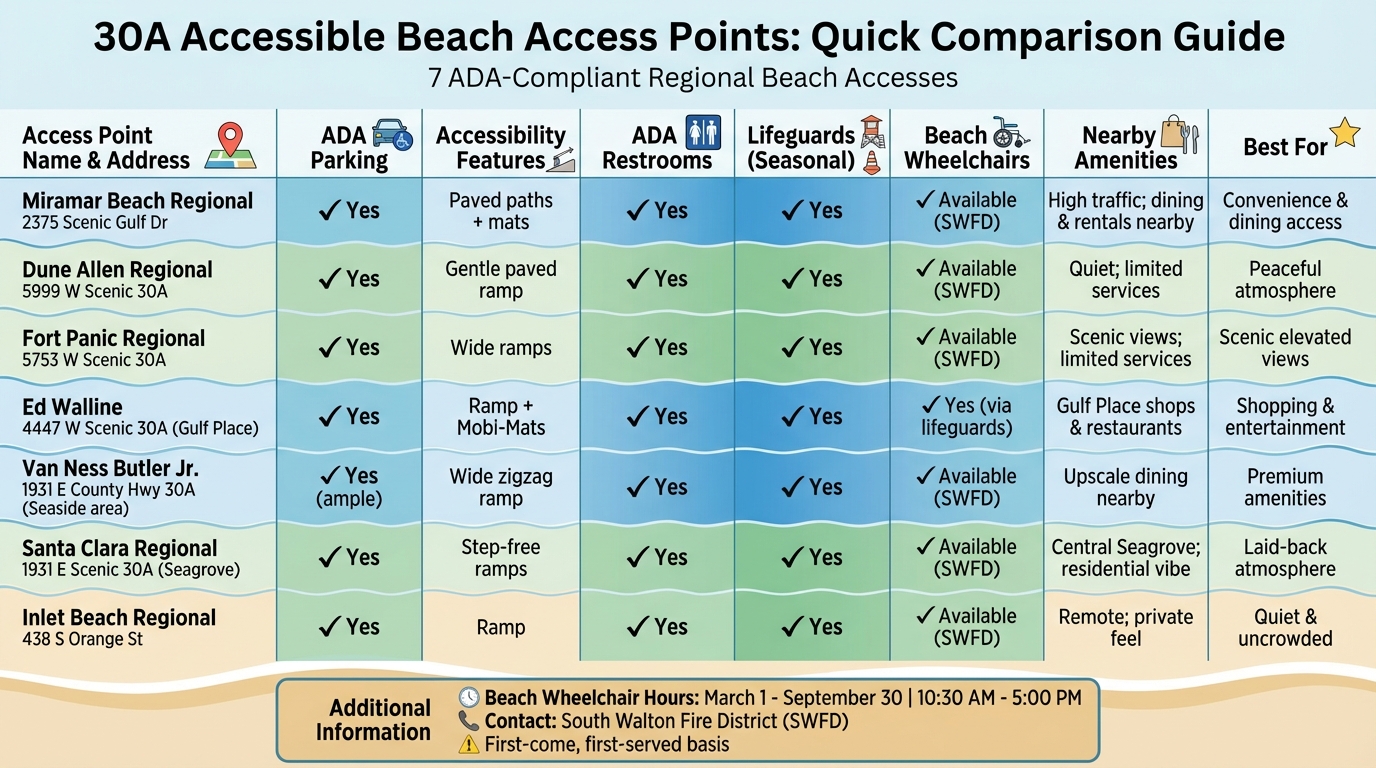
30A Wheelchair-Accessible Beach Access Points Comparison Guide
Overview of Accessible Options
Along the scenic 30A route, there are seven main regional access points designed with wheelchair accessibility in mind: Miramar Beach, Dune Allen, Fort Panic, Ed Walline, Van Ness Butler Jr., Santa Clara, and Inlet Beach. These spots feature ADA-compliant parking, smooth pathways, accessible restrooms, and seasonal lifeguard services. Miramar Beach, Ed Walline, and Van Ness Butler Jr. stand out for their lively atmosphere, nearby dining, and water activities. On the other hand, Dune Allen, Fort Panic, and Inlet Beach cater to those seeking quieter, more natural environments.
Beach wheelchairs and other ADA features make these locations more accessible, especially during peak seasons. However, factors like soft sand, slopes near the waterline, and crowd sizes can differ. Mobility mats and beach wheelchairs are helpful but may not always reach the hard-packed sand or water’s edge, depending on conditions. For those looking to avoid crowds, quieter spots like Dune Allen and Inlet Beach are easier to navigate, while busier locations like Miramar Beach and Ed Walline offer more amenities but can feel congested during peak times.
Below is a comparison table highlighting the key features of each access point to help with your planning.
Beach Access Points Comparison Table
| Access Point | ADA Parking | Ramp/Mat/Boardwalk | ADA Restrooms | Seasonal Lifeguards | Beach Wheelchairs | Nearby Services |
|---|---|---|---|---|---|---|
| Miramar Beach Regional (2375 Scenic Gulf Dr) | Yes | Paved paths + mats | Yes | Yes | Available (SWFD) | High traffic; nearby dining and rentals |
| Dune Allen Regional (5999 W Scenic 30A) | Yes | Gentle paved ramp | Yes | Yes | Available (SWFD) | Quiet area; limited services |
| Fort Panic Regional (5753 W Scenic 30A) | Yes | Wide ramps | Yes | Yes | Available (SWFD) | Scenic; limited services |
| Ed Walline (4447 W Scenic 30A) | Yes | Ramp + Mobi-Mats | Yes | Yes | Yes (via lifeguards) | Gulf Place shops/restaurants |
| Van Ness Butler Jr. (Seaside area) | Yes (ample) | Wide zigzag ramp | Yes | Yes | Available (SWFD) | Upscale dining options nearby |
| Santa Clara Regional (3468/1931 E Scenic 30A) | Yes | Ramp | Yes | Yes | Available (SWFD) | Central Seagrove area |
| Inlet Beach Regional (438 S Orange St) | Yes | Ramp | Yes | Yes | Available (SWFD) | Remote; private feel |
Before heading out, it’s wise to check with local authorities for updates, as staffing, equipment availability, and rules can change due to funding, weather, or policy shifts. Resources like sowal.co often provide helpful insights into parking, crowd levels, and lesser-known access points, which can be especially useful during busy times like spring break, summer, or holiday weekends. The table above serves as a handy guide for planning your accessible beach visit.
FAQs
How do I reserve a beach wheelchair along 30A?
If you're looking to reserve a beach wheelchair on 30A, your best bet is to contact local beach access points or public facilities directly. Since availability and reservation procedures can differ, it's a good idea to reach out ahead of time to get all the details.
Some public beach access locations might even provide wheelchair rentals at little to no cost. Be sure to ask about these options while planning your trip to make your visit as smooth as possible.
What is the best beach access point on 30A to avoid crowds?
If you’re after a more tranquil beach day, Seaside Beach Access Point might be just the spot for you. It’s typically less busy, making it an ideal escape for those seeking a calm and relaxing atmosphere.
Plan to arrive early, especially during peak season, as parking can fill up fast. Also, amenities differ depending on the location, so it’s wise to check in advance to ensure your needs are met.
What should I pack for a wheelchair-accessible beach trip?
For a relaxing day at the beach, don’t forget to pack sun protection essentials like sunscreen, a wide-brimmed hat, and sunglasses. Staying hydrated is key, so bring plenty of water. A small towel or blanket can come in handy, and if you want extra comfort, consider a portable cushion. Make sure your wheelchair is ready for the terrain - padded seating or durable tires can make navigating sand much easier. Comfortable shoes and any personal items you need will round out your preparations for an enjoyable outing.


