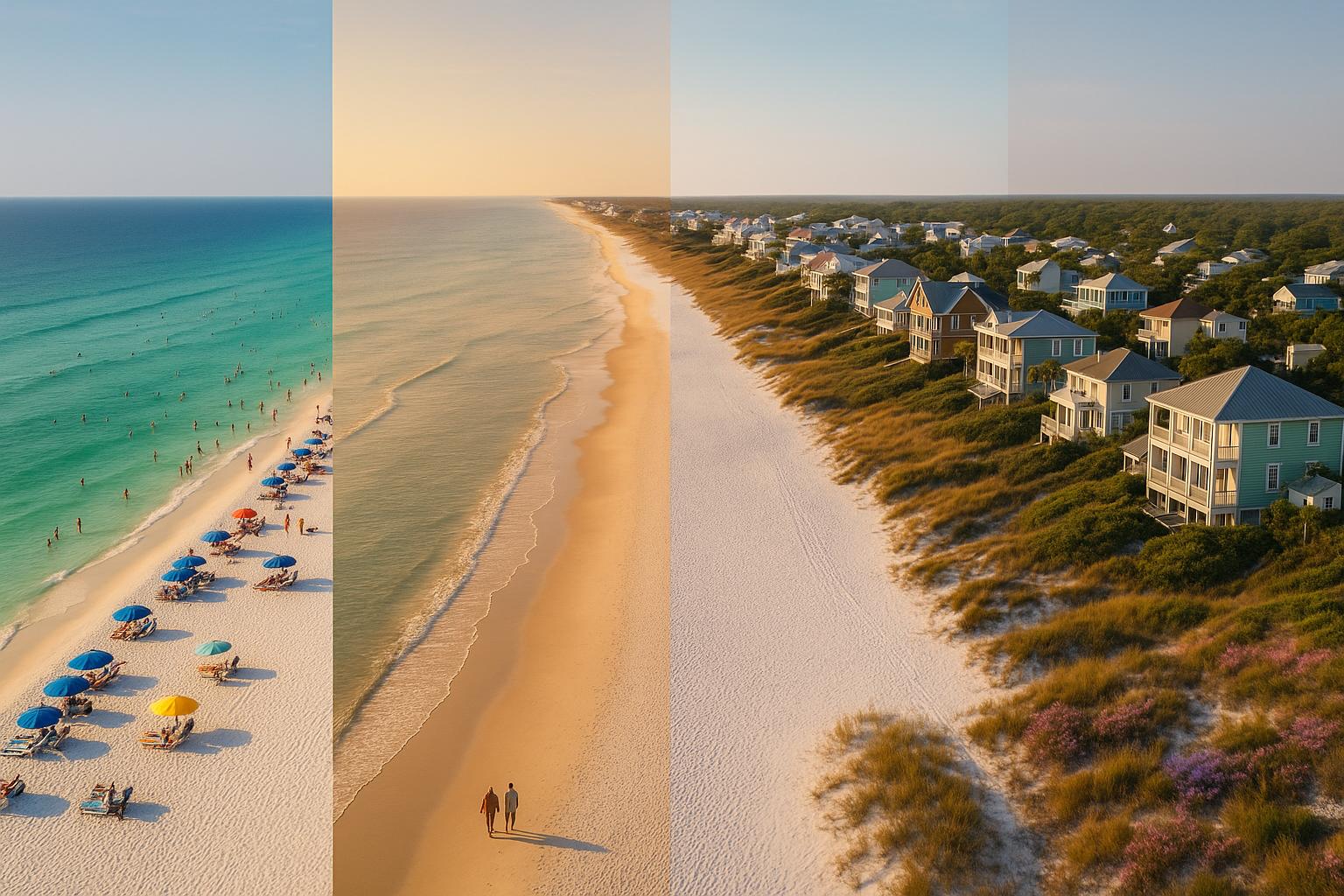
When planning a trip to 30A, you’ll likely face a key decision: family suites or vacation homes? Each option offers unique benefits depending on your family’s size, budget, and preferences. Here’s a quick breakdown:
- Family Suites: Best for smaller families or short stays. They offer amenities like daily housekeeping, resort pools, and on-site dining. However, space is limited, and costs can add up for larger groups.
- Vacation Homes: Ideal for bigger families or longer trips. They provide multiple bedrooms, full kitchens, and private outdoor spaces. While they lack hotel services, they often offer better value per bedroom and more privacy.
Quick Tip: Suites are great for convenience, while vacation homes excel in space and flexibility. Your choice depends on your priorities: hotel-like services or home-like comfort.
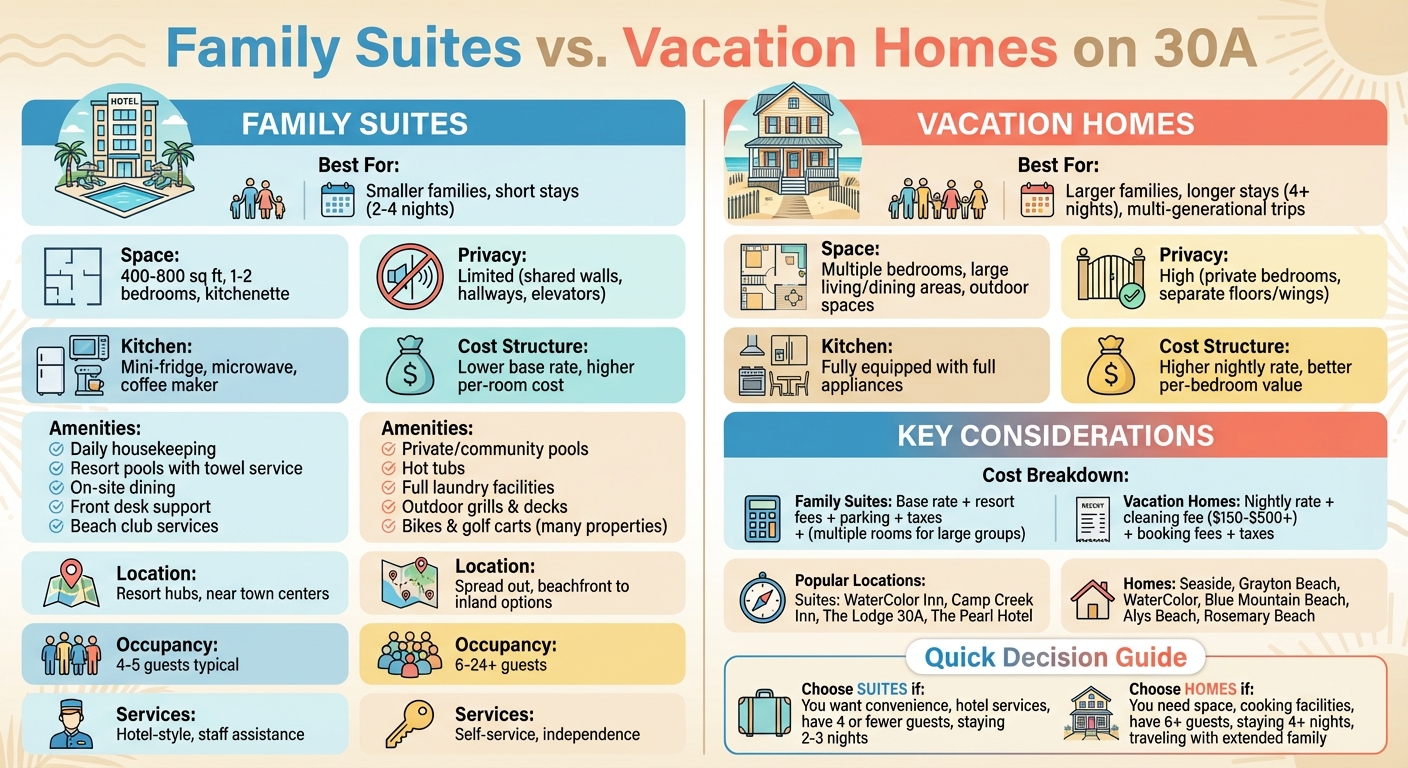
Family Suites vs Vacation Homes on 30A: Complete Comparison Guide
What Is 30A In Florida?! | Bucket List Destination | Ultimate 30A Guide
Quick Comparison
| Feature | Family Suites | Vacation Homes |
|---|---|---|
| Space | 1-2 bedrooms, shared living areas | Multiple bedrooms, large spaces |
| Privacy | Limited, shared walls | High, private areas |
| Kitchen | Basic kitchenette | Fully equipped |
| Cost | Higher per room | Better value per bedroom |
| Amenities | Resort pools, housekeeping | Private pools, full kitchens |
| Location | Near resort hubs | Spread out, often beachfront |
Both options book quickly during peak seasons, so plan ahead to secure your ideal stay.
Family Suites on 30A
What Family Suites Offer
Family suites on 30A are designed with comfort and convenience in mind, offering multiple rooms to accommodate both adults and children. These suites typically include separate sleeping areas, a shared living room, and often a small kitchenette equipped with essentials like a mini-fridge, microwave, and coffee maker. Unlike standard hotel rooms, they provide more space and functionality, making them a popular choice for families. You’ll find these suites at select resort-style properties such as WaterColor Inn, Camp Creek Inn, The Lodge 30A, and The Pearl Hotel. Each property offers unique layouts and kitchen setups, allowing families to choose what best fits their needs. Many of these suites are conveniently located near the beach and central areas like WaterColor Town Center or Rosemary Beach's Main Street, making it easy for families to explore local attractions on foot.
Benefits of Family Suites
The standout feature of family suites is the combination of extra space with hotel-style services. Parents can enjoy the luxury of daily housekeeping, which takes care of tidying up, making beds, and refreshing towels - lightening the load during vacation. Resorts often include family-friendly amenities like pools with splash zones, lazy rivers, and zero-entry designs, which are perfect for keeping little ones entertained. Beach access is a breeze thanks to private boardwalks or beach club services that often include chairs and umbrellas, saving families the hassle of bringing their own.
Another advantage is the support offered by on-site staff. Whether you need a crib, help with restaurant reservations, or a quick fix for an A/C issue, the front desk is ready to assist. For example, WaterColor Inn is known for its full-service resort experience, featuring remodeled rooms and access to a family-friendly pool complex. The walkable locations of these suites, near restaurants, ice cream shops, and playgrounds, are another big plus. Families can skip the car rides and adapt plans easily, which is especially helpful when juggling nap schedules or last-minute changes. These conveniences make family suites a compelling alternative to vacation homes on 30A, though there are some trade-offs to consider.
Downsides of Family Suites
Despite their perks, family suites do come with limitations. Space and privacy can be a concern, even in one- or two-bedroom setups. Kids' sleeping areas are often only partially separated from the living space, which can make it challenging for adults to unwind after bedtime. Outdoor space is usually limited to small balconies, and shared resort areas can sometimes feel crowded or noisy.
Kitchen facilities in these suites are typically basic, with only a mini-fridge and microwave, which restricts the ability to cook full meals or host gatherings. This can be a drawback for families who prefer to prepare their own food. Additionally, costs can climb steeply during peak travel seasons like spring break or summer. Higher nightly rates, combined with occupancy limits (most suites accommodate four to five guests), can make them less budget-friendly for larger families. In fact, bigger groups or multi-generational trips often need to book multiple suites, which not only increases expenses but also takes away from the communal experience that a vacation home might provide. These factors make it important to weigh the pros and cons when deciding between a family suite and other lodging options.
Vacation Homes on 30A
What Vacation Homes Offer
Vacation homes along 30A come in all shapes and sizes - beach houses, cottages, condos, and townhomes - spread across charming spots like Seaside, Grayton Beach, WaterColor, Blue Mountain Beach, Alys Beach, and Rosemary Beach. These rentals are tailor-made for families, often featuring multiple bedrooms and bathrooms, separate living and dining spaces, and fully equipped kitchens that make it easy to settle in and feel at home.
In Seaside, you'll find everything from cozy one-bedroom cottages to sprawling 10-bedroom Gulf-front estates. Over in Grayton Beach, the options range from sleek, modern homes to more traditional, open-concept cottages. Blue Mountain Beach offers spacious townhomes, many with private pools and multi-level layouts. Condos in the area generally have one to four bedrooms, full kitchens, and either shared or private balconies, while standalone homes provide an extra layer of privacy and outdoor space.
Amenities are a big draw for these rentals. Many properties include private or community pools, hot tubs, outdoor decks equipped with grills, and easy beach access. Some homes are perched right on the Gulf, while others are just a short walk, bike ride, or drive from the shoreline. High-end properties can host anywhere from 14 to 24+ guests and often come with perks like carriage houses, multiple decks, outdoor kitchens, and direct access to the beach. In some cases, premium rentals even include golf carts and bikes, making it simple to hop between the home, beach, and nearby attractions without relying on a car. These thoughtful setups make vacation homes a practical and inviting choice for families looking to unwind.
Benefits of Vacation Homes
One of the biggest perks of vacation homes is the space they offer. Compared to a hotel room, families get significantly more room to spread out, with multiple bedrooms and living areas that reduce any sense of being cramped. Plus, without shared hallways or close neighbors, guests can enjoy their private pool, hot tub, or balcony in complete peace.
Another major advantage is having a fully equipped kitchen. It’s perfect for whipping up home-cooked meals, accommodating dietary needs, and cutting back on dining-out expenses. For longer stays, having a washer and dryer on hand adds an extra layer of convenience. Unlike a hotel suite where services like room cleaning are standard, vacation homes focus on independence, giving guests the freedom to create their own schedule.
Community features sweeten the deal. Many rentals in areas like Seaside, WaterColor, and Watersound include complimentary bikes and golf carts, making it easy to explore nearby beaches, parks, and restaurants without needing to hop in the car every time. Access to community pools, fitness centers, and private beach clubs adds to the appeal, and when you factor in the overall cost per person, vacation homes often come out ahead compared to booking multiple hotel rooms.
Downsides of Vacation Homes
That said, vacation homes aren’t without their challenges. Many rentals operate with self-check-in systems like lockboxes or smart locks, which can be a hassle for families with young kids or those arriving late at night. Housekeeping is typically limited to between stays, so guests may need to handle light cleaning, trash, or dishes themselves during their visit.
Cleaning fees are another consideration - they can range anywhere from $150 to over $500, depending on the property’s size and location. Additionally, some rentals charge extra for things like heating the pool, bringing pets, or early check-in and late checkout, which can make shorter stays feel pricier on a per-night basis.
Access to the beach and local towns also varies widely. While some homes are Gulf-front or just a short stroll from the sand, others may require a car or bike ride to reach the water or nearby town centers. If being close to the beach is a priority, choosing a property in a walkable community like Seaside or WaterColor can help. For families looking to match their rental’s location to their vacation vibe - whether that’s a quiet escape or a lively, central spot - resources like sowal.co can be incredibly helpful.
sbb-itb-d06eda6
Family Suites vs. Vacation Homes: Direct Comparison
Let’s break down the key differences between family suites and vacation homes to help you figure out which option works best for your family’s 30A getaway.
Space and Privacy Differences
Family suites typically range from 400 to 800 square feet, offering one or two bedrooms and a small kitchenette. On the other hand, vacation homes provide multiple bedrooms, spacious living and dining areas, and often outdoor spaces like patios or yards, giving families more room to spread out.
Privacy is another major distinction. In a family suite, you’re likely to share walls, hallways, and elevators with other guests. This can be inconvenient for light sleepers or families with young children who need quiet for naps. Vacation homes, however, deliver true separation with private bedrooms, additional bathrooms, and sometimes even separate floors or wings - ideal for larger or multi-generational groups. These differences in layout and privacy also influence the available amenities and overall convenience.
Amenities and Location Convenience
Family suites are all about convenience and ease. Many come with resort-style perks like shared pools with towel service, on-site dining options, daily housekeeping, and front-desk support. For families, kid-friendly extras like lazy rivers or organized activities can be a big plus.
Vacation homes, by contrast, focus on independence. They typically include full kitchens, in-home laundry facilities, and separate living areas, allowing families to stick to their own schedules. Many homes also feature private outdoor amenities like decks, pools, or hot tubs, along with dedicated parking. While daily housekeeping isn’t included, the extra space and home-like setup make it easier to pack light and settle in for a relaxed stay.
Location is another consideration. Family suites are often situated in resort hubs or near town centers, offering quick access to beaches, dining, and shopping. Vacation homes are more spread out, with options ranging from beachfront properties to quieter neighborhoods a few blocks inland. In sought-after spots like Seaside and WaterColor, vacation rentals often boast excellent walkability to both the beach and local attractions - though these prime locations can come with a higher price tag. These differences in amenities and location also play a role in overall costs.
Cost Breakdown
Family suites generally have lower base rates, making them a good option for short stays or smaller groups. However, because suites are priced per room rather than per bedroom, larger families may need to book multiple rooms, which can bring the total cost closer to that of a vacation home.
Vacation homes often have higher nightly rates - especially for Gulf-front properties or those with private pools - but they can offer better value on a per-bedroom basis when shared among multiple travelers. Family suites may include fees like resort charges, parking, and taxes, while vacation homes typically add a one-time cleaning fee (which varies by property size), booking fees, and taxes. For longer stays of four or more nights, spreading out the cleaning fee can make vacation homes a more budget-friendly option.
Seasonality also impacts pricing. Both family suites and vacation homes see higher rates during peak periods like summer and spring break, while late fall and winter tend to offer more affordable options. To decide which choice fits your budget, compare nightly rates, additional fees, and per-person or per-bedroom costs. Flexibility with travel dates can also help you snag a better deal.
Choosing the Right Option for Your Family
Finding the perfect suite or vacation home on 30A depends on your family’s needs, travel preferences, and the ages of your kids. Here’s a breakdown of what works best for different family setups.
Families With Babies or Toddlers
Traveling with little ones can be tricky, but family suites on 30A make things a whole lot easier. With on-site dining, stroller-friendly elevators, and nearby pools, you can skip the hassle of packing up gear for every outing. These conveniences are a lifesaver when juggling nap schedules or early bedtimes.
Opt for suites with separate sleeping and living areas so you can unwind after the kids are asleep. A kitchenette equipped with a fridge, microwave, and sink simplifies warming bottles, prepping snacks, and storing baby food. Look for properties that offer cribs, high chairs, and responsive support staff - having help just a call away can make all the difference. If your kids are a bit older and craving independence, keep reading.
Families With Older Kids or Teens
For families with older children, vacation homes offer the space and flexibility you need. Multiple bedrooms and bathrooms give teens their privacy, while shared living areas keep everyone connected. Full kitchens and outdoor grills make it easy to plan meals on your schedule, and nearby bike paths allow teens to explore 30A communities like Seaside and WaterColor on their own.
Private porches, patios, and pools provide dedicated hangout spots where teens can stream shows, play games, or swim without crowding the rest of the family. Modern entertainment options keep them busy between beach trips, while walkable hubs like Seaside's Food Truck Row give them a taste of autonomy. If you’re traveling with extended family or a large group, there’s even more to consider.
Multi-Generational or Large Group Trips
When traveling with grandparents, aunts, uncles, and cousins, vacation homes with plenty of bedrooms and bathrooms are the way to go. Grandparents can enjoy quieter rooms on lower floors, while parents and kids spread out across the rest of the house. Large kitchens and dining areas make it easy to gather for meals without the hassle of reserving big tables at restaurants every night.
Spacious porches, open living rooms, and backyards or private pools offer both communal spaces and quiet corners for reading or napping. This setup is far more practical than booking multiple suites, where families might end up scattered across different floors or buildings. Plus, a single large vacation home is often more budget-friendly than reserving separate accommodations for everyone.
Conclusion
Deciding between a family suite and a vacation home on 30A comes down to your family's size, travel preferences, and what matters most to you during your trip. Family suites are ideal for smaller families or couples on shorter stays, offering the convenience of hotel-style amenities. On the other hand, vacation homes are perfect for larger families, multi-generational groups, or extended visits, providing multiple bedrooms, full kitchens, private pools, and often a better value when costs are shared.
While vacation homes might have higher nightly rates, their features - like fully equipped kitchens and on-site laundry - can lead to savings over time, especially when considering the per-person cost.
Ultimately, your choice depends on whether you value the extra space and flexibility of a vacation home or the simplicity of hotel-like services. For help exploring 30A’s communities, comparing neighborhoods, or finding family-friendly beaches and restaurants, check out sowal.co. Their local expertise can help you find the perfect fit for your family’s needs, especially during peak travel seasons when popular properties fill up months in advance.
FAQs
What are the benefits of staying in a vacation home instead of a family suite on 30A?
Vacation homes along 30A come with a range of perks that often make them a better choice than family suites, particularly for larger families or those craving more space and privacy. These homes typically offer extra room to spread out, including multiple bedrooms, a fully equipped kitchen, and outdoor areas like patios or even private pools. This added space is perfect for longer stays or family gatherings, giving everyone a chance to relax comfortably.
One standout advantage of vacation homes is the privacy and freedom they provide. Unlike family suites, you won’t be sharing common areas with other guests, and you can enjoy the flexibility of setting your own schedule for meals, activities, and downtime. For families looking to create a cozy, home-like atmosphere during their 30A trip, this option is hard to beat.
That said, family suites might still be a better fit if you value on-site perks like housekeeping, dining options, or the lively energy of a resort setting. The right choice ultimately comes down to your family’s preferences, budget, and how you envision your ideal vacation.
How do the costs of family suites compare to vacation homes on 30A during peak travel seasons?
The price of family suites and vacation homes along 30A can vary quite a bit, especially during busy travel seasons. Let’s break it down:
Family suites in hotels or resorts usually come with a fixed nightly rate. These often include perks like access to pools, housekeeping services, and on-site dining options. They’re often a more affordable option for smaller families or those planning shorter trips.
Vacation homes, by contrast, typically have higher upfront costs but can work out better for larger groups or longer stays. With features like full kitchens, multiple bedrooms, and private spaces, they offer more flexibility and can help cut down on dining and entertainment expenses. That said, you’ll want to factor in extra charges like cleaning fees or security deposits, which are common with vacation rentals.
Deciding between the two really comes down to your family’s needs - whether you prioritize convenience and amenities or prefer more space and privacy.
How do I choose between a family suite and a vacation home on 30A for a multi-generational trip?
When choosing between a family suite and a vacation home on 30A, it’s all about what suits your group’s size, budget, and preferences for privacy and amenities. Family suites are a great option for smaller groups or those who enjoy a hotel-style experience with perks like pools, housekeeping, and dining options right on-site. On the flip side, vacation homes are perfect for larger groups or families who want extra space, a full kitchen, and a more homey vibe.
For groups spanning multiple generations, a vacation home can be a great fit. It offers the flexibility of separate bedrooms for privacy and shared spaces for everyone to come together. But if being close to activities and having everything at your fingertips matters most, a family suite in a resort or hotel might be the way to go. The right choice really depends on what your group values most and how you plan to enjoy your time on 30A.