
Dune Lakes and Biodiversity on 30A
The rare coastal dune lakes along 30A host 15 brackish lakes with 180+ bird species and diverse wildlife, threatened by pollution and development.

The coastal dune lakes along 30A in South Walton, Florida, are among the rarest ecosystems on Earth. Found in only a handful of places globally, these shallow, brackish water bodies form where sand berms separate lakes from the Gulf of Mexico. Temporary outflows allow fresh and saltwater to mix, creating habitats rich in plant and animal life. With 15 named lakes spread across 26 miles, this region supports over 180 bird species, freshwater and saltwater fish, and diverse vegetation. However, these lakes face threats from pollution and development, making conservation efforts critical. Visitors can help by following local guidelines, using non-motorized boats, and supporting groups like the Choctawhatchee Basin Alliance.
Key highlights:
- 15 lakes in Northwest Florida: The highest concentration globally.
- Biodiversity hotspot: Includes migratory birds, fish nurseries, and rare plants.
- Threats: Water quality issues and development pressures.
- Protection efforts: Conservation zones, volunteer programs, and state-protected lands.
- Visiting responsibly: Stick to trails, avoid pollution, and engage with local conservation groups.
These lakes are not just scenic but vital to the region’s ecological balance. By respecting their fragility, you contribute to their preservation for future generations.
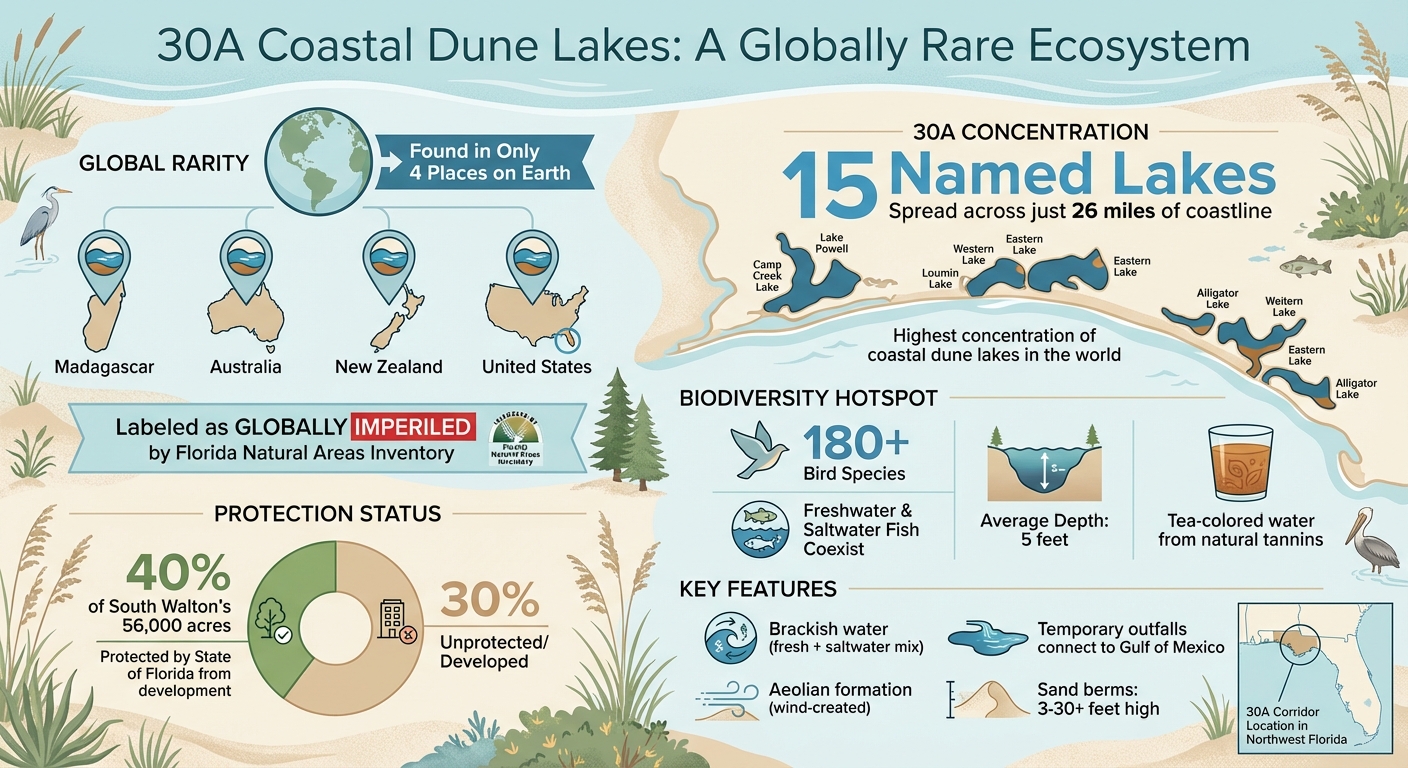
30A Coastal Dune Lakes: Global Rarity and Biodiversity Statistics
Coastal Dune Lakes on Scenic Highway 30A
What Are Coastal Dune Lakes?
Coastal dune lakes are shallow, permanent bodies of water that form when wind deposits sand into coastal basins. What makes these lakes so distinctive is their occasional connection to the ocean. When heavy rain or rising groundwater levels cause the lake to overflow, it breaches the sand berm separating it from the Gulf, creating a temporary outflow.
During these outflows, or "outfalls", freshwater flows out of the lake while saltwater flows in, resulting in a rare brackish environment. Once the water levels stabilize, the outfall naturally closes until the next significant rainfall or storm event.
The water in these lakes often has a tea-colored tint, caused by natural tannins rather than pollution. The sand dunes that separate these lakes from the Gulf can vary greatly in height, ranging from just a few feet to more than 30 feet. To fully understand these lakes, it’s essential to examine how they are formed.
How Dune Lakes Form
Coastal dune lakes are classified as "aeolian" lakes, meaning they are formed primarily by wind activity. The process begins when sand accumulates and blocks an inlet to a tidal basin or lagoon, cutting off the water body from direct tidal influence. Over thousands of years, wind continues to shape and reshape these shallow basins. The outfall areas, where water flows in and out, are especially dynamic, constantly shifting due to storms, wave action, and moving sands.
Where Dune Lakes Exist Worldwide
Coastal dune lakes are incredibly rare, so much so that the Florida Natural Areas Inventory has labeled them as "globally imperiled". These unique ecosystems can be found in only four places on Earth: Madagascar, Australia, New Zealand, and the United States.
In the U.S., they are primarily located along Northwest Florida's Gulf Coast, with smaller occurrences in Oregon and South Carolina. The 30A corridor in South Walton, Florida, is home to 15 named coastal dune lakes spread across just 26 miles of coastline, making it one of the most concentrated areas for these lakes in the world. This rare global distribution highlights the ecological importance of the 30A dune lakes.
Plant and Animal Life in 30A's Dune Lakes
The coastal dune lakes along 30A are teeming with life, thanks to their unique brackish waters. These lakes occasionally connect to the Gulf of Mexico, allowing freshwater and saltwater species to coexist. This rare combination makes South Walton one of the most biodiverse areas in North America.
With an average depth of just 5 feet, these shallow lakes are tinted a natural tea color from tannins. Despite their modest size, they support an intricate food web that sustains a variety of plant and animal life.
Native Plants Around Dune Lakes
The vegetation surrounding these lakes plays a critical role in maintaining the ecosystem’s balance and structure.
One standout is sea oats (Uniola paniculata), which make up over 85% of the dune vegetation. These plants are essential for building and stabilizing dunes, thanks to their extensive root systems.
"Sea oats are nature's dune builders and are protected by state law... This unique root system not only stabilizes the core of the dune but also adds protection to the surface from blowing sand." - Visit South Walton
Closer to the lake edges, wetland plants like sawgrass, saltbush, sand cordgrass, and duck potato help filter water while providing food and shelter for wildlife. In nearby wet prairies, species such as black needlerush, swamp rose mallow, marshay cordgrass, and water lilies flourish. Moving further inland, longleaf pine forests provide habitats for animals like the Red-cockaded Woodpecker and Gopher Tortoise.
Wildlife and Fish Species
The brackish waters of the dune lakes create a unique environment where freshwater fish like largemouth bass, bluegill, sunfish, catfish, and panfish coexist with saltwater species such as red drum, striped mullet, gray snapper, and juvenile permit. These lakes act as vital nurseries for marine life.
Birdwatchers will find plenty to marvel at here - over 180 bird species have been documented in Topsail Hill Preserve State Park, home to three of these rare lakes. The area is also an essential stopover for migratory birds.
"Bald Eagles and Osprey hunt fish in their shallows, while Northern Harrier and Red-shouldered Hawks look for prey in the marsh grasses and meadows that create important habitat." - 30A.com
Regular sightings include Great Egrets, Snowy Egrets, Pied-billed Grebes, and American Coots. The lakes also host American alligators, river otters, white-tailed deer, and foxes. On nearby beaches, loggerhead and green sea turtles nest, further emphasizing the interconnectedness of this ecosystem.
How Dune Lakes Connect to Other Ecosystems
When water levels rise and breach the sand berm, temporary outfalls form, creating brief estuaries where freshwater and saltwater mix. These outfalls exchange nutrients and serve as critical nurseries for young marine species.
"These outfalls are a natural phenomenon, estuaries where a huge variety of shorebirds hang out, as both salt and freshwater fish swim back and forth from lake to Gulf." - Ginger Jackson Sinton
Once the outfalls naturally close, the ecosystem resets, waiting for the next rainfall to reopen the connection.
Major Dune Lakes Along 30A
South Walton's 26-mile stretch of Scenic Highway 30A is home to 15 named coastal dune lakes, each boasting its own unique character and water chemistry. These ancient lakes are a testament to nature’s incredible diversity. Let’s take a closer look at some of the most accessible and ecologically important lakes along this scenic route. Each contributes its own chapter to the natural story of 30A.
Western Lakes: Alligator Lake and Draper Lake
Alligator Lake sits within the tranquil boundaries of Grayton Beach State Park. With hiking trails and non-motorized watercraft launches, it offers visitors a chance to enjoy its pristine beauty while safeguarding the delicate shoreline vegetation. Birdwatchers, in particular, are drawn here for its impressive variety of bird species.
Draper Lake is nestled in the Blue Mountain Beach area. Known for its striking "S" shape, this lake is surrounded by residential areas, limiting public access but adding to its serene atmosphere.
Central Lakes: Eastern Lake and Deer Lake
Eastern Lake, located in Seagrove Beach, stands out as one of the few dune lakes with a designated public boat launch, making it a favorite for paddlers. Its intermittent outfall connects periodically with the Gulf of Mexico, creating a fascinating blend of freshwater and saltwater ecosystems.
Deer Lake, also in Seagrove Beach, invites visitors to explore its beauty through Deer Lake State Park. A quarter-mile-long boardwalk winds through the dunes, offering a front-row seat to the area’s diverse plant and animal life while protecting delicate vegetation.
Eastern Lakes: Grayton Beach Lake and Lake Powell
Grayton Beach Lake (often referred to as Western Lake) is arguably the most photographed dune lake along 30A. Located near Grayton Beach State Park and the WaterColor community, it features two boat launch points and is a hotspot for paddleboarding and kayaking enthusiasts.
Lake Powell claims the title of the largest coastal dune lake, spanning over 800 acres and stretching into Bay County. Situated near Camp Helen State Park in Inlet Beach, it offers a sprawling shoreline perfect for exploration. Keep in mind that jet skis are strictly prohibited on all Walton County dune lakes, so visitors should stick to kayaks or paddleboards for a peaceful experience.
To make things easier, here’s a quick reference table summarizing these lakes:
| Lake Name | Location | Key Access Point | Notable Feature |
|---|---|---|---|
| Alligator Lake | Grayton Beach | Grayton Beach State Park | Rich biodiversity; ideal for birding |
| Draper Lake | Blue Mountain Beach | Scenic 30A | Iconic "S" shape near the coast |
| Eastern Lake | Seagrove Beach | Eastern Lake Rd | Public boat launch available |
| Deer Lake | Seagrove Beach | Deer Lake State Park | Scenic quarter-mile boardwalk |
| Grayton Beach Lake | Grayton Beach/WaterColor | Grayton Beach State Park | Popular for paddleboarding and kayaking |
| Lake Powell | Inlet Beach | Camp Helen State Park | Largest lake (800+ acres) |
Each of these lakes offers its own slice of natural beauty, contributing to the rich tapestry of life along 30A. Whether you’re a paddler, a birdwatcher, or just someone looking to soak up the serene surroundings, these lakes are worth a visit.
Protecting the Dune Lakes
The 15 coastal dune lakes along 30A, considered globally imperiled ecosystems, face pressing threats that demand action. These rare lakes, found within a 26-mile stretch, are unique treasures, making every effort to safeguard them essential.
A critical step in protecting these lakes is addressing water quality issues. Runoff from fertilizers and septic system overflows introduces harmful nutrients into these sensitive environments. While development pressures remain a concern, about 40% of South Walton's 56,000 acres is owned by the State of Florida and shielded from future development. Additionally, Walton County has established Coastal Dune Lake Protection Zones, which enforce regulations on building, land clearing, and landscaping near the lakes.
The Choctawhatchee Basin Alliance (CBA) has been instrumental in monitoring and restoration efforts. In 2006, the Florida Department of Environmental Protection funded the CBA to create a volunteer monitoring program. This initiative established three monitoring stations at each of the 15 lakes to collect baseline water quality data. The program, ongoing to this day, is supported by Florida Lakewatch - a University of Florida initiative - and relies on citizen volunteers who conduct monthly water quality tests.
"Wise use and management of coastal dune lakes and their connection to the sea is important to the integrity of the coastal ecosystem." - Gail Carmody, Field Supervisor, Fish and Wildlife Service
Community participation plays a pivotal role in protecting these ecosystems. Volunteering with groups like the CBA or Florida Lakewatch helps sustain water quality monitoring efforts. Residents can also contribute by reducing fertilizer use and maintaining their septic systems. The Walton County Coastal Dune Lakes Advisory Board, which includes local residents and county employees, encourages community involvement to preserve these extraordinary lakes. These collective efforts highlight the dedication to safeguarding the natural heritage of 30A.
How to Visit Responsibly
Visiting the 30A's coastal dune lakes is a privilege, but it comes with a responsibility to protect these rare and fragile ecosystems. With 15 coastal dune lakes spread across just 26 miles of coastline, every visitor plays a role in ensuring these habitats remain intact for future generations.
Observe Wildlife Without Disturbing It
Stick to marked trails and boardwalks to prevent damage to sensitive dune vegetation like sea oats, which are critical for stabilizing dunes and are legally protected. If you spot wildlife - whether shorebirds near the outfalls or alligators along the lake’s edge - admire them from a safe distance. Tools like binoculars or a zoom lens on your camera can help you get a closer look without causing harm. The outfalls, where the lakes connect to the Gulf, are vital estuaries, supporting fish and bird populations. For water exploration, opt for non-motorized options like kayaks or paddleboards. These create less noise and wake, preserving the shallow lake beds, which average about 5 feet in depth.
Pack Out What You Pack In
Leave no trace behind. Take all your belongings with you, as local rules strictly prohibit leaving items in these areas. The lakes’ distinctive tea-colored waters, caused by tannins, are sensitive to pollution. Using reusable containers instead of single-use plastics can go a long way in keeping these brackish ecosystems clean and healthy.
Support Local Conservation Groups
Engaging with local conservation groups is a meaningful way to help preserve these natural wonders. The Choctawhatchee Basin Alliance (CBA) offers opportunities for citizen scientists to assist in monitoring water quality at three stations on each of the 15 lakes. Volunteers receive training and equipment to contribute effectively. The CBA also organizes shoreline planting and reef-building projects that directly benefit the lakes.
Other groups like the South Walton Turtle Watch patrol the beaches from May through October to protect sea turtle nests and host educational walks. Meanwhile, organizations such as the Friends of Grayton Beach and Deer Lake State Parks hold cleanup events and educational programs to promote ecosystem protection. Whether through volunteering, donating, or participating in these activities, even small efforts can make a big difference in conservation.
Conclusion
The coastal dune lakes of 30A are rare treasures, found in only a few places on the planet, and they face significant threats to their survival. Thankfully, with nearly 40% of South Walton's 56,000 acres protected from development, the community has shown a deep commitment to safeguarding these fragile ecosystems.
These lakes play a vital role in filtering and storing water, serving as essential fish nurseries, and providing habitats for a wide variety of wildlife. Their unique brackish waters create an environment where freshwater and saltwater species coexist, forming a dynamic and thriving ecosystem.
When you visit, your actions can make a real difference. By following conservation tips - like sticking to designated trails, using non-motorized boats, properly disposing of waste, and supporting organizations such as the Choctawhatchee Basin Alliance - you actively contribute to protecting these ecosystems. Even your vacation spending helps sustain local conservation efforts, supporting biodiversity and water quality in the region.
The dune lakes are more than just scenic views; they are living, breathing ecosystems that are incredibly rare. Approach them with curiosity and care, knowing that your thoughtful choices help preserve these habitats for generations to come. By respecting their uniqueness, you become part of their ongoing conservation story.
FAQs
What makes the dune lakes along 30A so special?
The dune lakes along 30A are a rare natural phenomenon, found in just a handful of spots around the globe - places like New Zealand, Madagascar, Australia, Oregon, and the Florida Panhandle. South Walton holds the distinction of having the most concentrated collection, with 15 of these lakes dotting its coastline. These shallow basins, formed thousands of years ago by wind-driven sand, sit just a stone's throw from the Gulf of Mexico.
What makes these lakes so special is their intermittent outfall - a process where the lakes occasionally connect to the Gulf. After heavy rainfall or a rise in groundwater levels, fresh water flows from the lakes into the Gulf. In turn, high tides can send salty seawater back into the lakes. This constant exchange creates a dynamic environment where freshwater and marine ecosystems blend. The result? A thriving habitat for a diverse range of species. From largemouth bass and Gulf killifish to bald eagles and over 180 bird species, the biodiversity here is truly stunning. The ever-changing salinity and vegetation make these lakes some of the most ecologically distinctive habitats in the United States.
What can visitors do to help protect the coastal dune lakes on 30A?
Visitors can help protect the rare coastal dune lakes along 30A by adopting a few mindful habits. Start by sticking to designated trails and boardwalks - this helps prevent damage to the dunes and native plants, which play a vital role in filtering runoff into the lakes. Avoid digging or altering the natural outfall channels that connect the lakes to the Gulf, as these channels are essential for maintaining the fragile mix of fresh and saltwater.
Remember to pack out all trash and leftover food to keep the area clean and safeguard local wildlife. If you plan to fish, follow local regulations, stay alert for alligators, and opt for non-motorized watercraft like kayaks or paddleboards instead of motorized boats. Additionally, avoid leaving personal belongings on the beach overnight, as they can harm wildlife and contribute to pollution.
By embracing these practices, you’ll help protect the unique biodiversity and natural beauty of these extraordinary ecosystems, ensuring they remain a treasure for generations to come.
How do dune lakes support biodiversity along 30A?
Dune lakes are rare coastal ecosystems where freshwater meets saltwater, creating brackish conditions that support an impressive array of life. These lakes serve as natural nurseries for fish and other aquatic creatures, offering a safe, nutrient-rich space for young species to grow before venturing into the Gulf. The constantly shifting salinity levels make it possible for both freshwater and saltwater species to coexist, making these habitats truly one of a kind.
These lakes are teeming with wildlife. Over 180 bird species, including Bald Eagles, Ospreys, and Pied-billed Grebes, call them home. The plant life is equally vibrant, with species like black needlerush and sawgrass providing essential shelter for amphibians and insects. Fish such as largemouth bass and striped mullet further underscore the ecological value of these environments. Safeguarding these lakes is crucial to maintaining the natural beauty and rich biodiversity of the 30A area.


