
Beach Flags and Jellyfish: 30A Safety Tips
Quick guide to 30A beach flag meanings, jellyfish risks, prevention tips, and first-aid for stings to keep your beach day safe.

Want to enjoy the beach safely? Pay close attention to the beach flag warning system and jellyfish activity along 30A in South Walton, Florida. Here's what you need to know:
-
Beach Flags:
- Green: Low hazard, calm waters.
- Yellow: Moderate hazard, stronger surf or currents.
- Single Red: High hazard, strong rip currents.
- Double Red: Water closed, entry prohibited.
- Purple: Dangerous marine life (e.g., jellyfish).
-
Jellyfish Safety:
- Purple flags often indicate jellyfish presence.
- Wear protective swimwear and avoid murky waters.
- If stung, rinse with vinegar or saltwater, remove tentacles carefully, and soak in warm water for pain relief.
-
Stay Updated:
- Check daily flag conditions via the 30A app or text alerts.
- Monitor safety flags at beach access points.
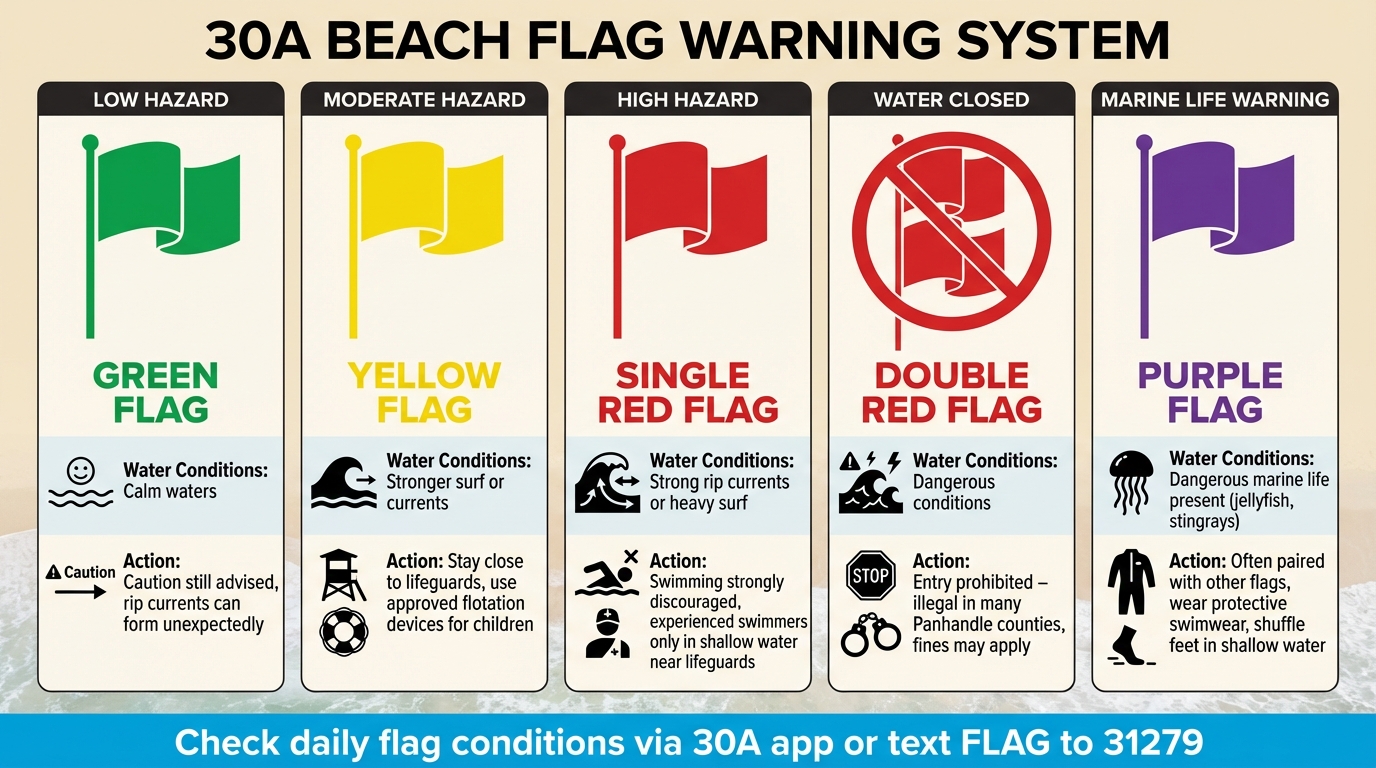
30A Beach Flag Warning System Guide
Beach Flag Warning System on 30A
What Each Beach Flag Color Means
South Walton uses a five-color flag system to keep beachgoers informed about current hazards. A green flag means low hazard, with calm conditions prevailing. However, rip currents can still form unexpectedly, so it’s wise to stay cautious, especially with children or inflatable toys in the water.
A yellow flag signals moderate hazard, where stronger surf or currents may pose challenges, especially for kids or less experienced swimmers. Stick close to lifeguards, use approved flotation devices for children, and keep non-swimmers in shallow areas.
A single red flag warns of high hazard conditions, such as strong rip currents or heavy surf. Swimming is strongly discouraged, and only experienced swimmers should consider venturing into shallow water near lifeguards. Many families opt to stay onshore when red flags are displayed.
Double red flags indicate the Gulf is closed due to dangerous conditions. Entering the water during this time is not just risky - it’s often illegal in many Panhandle counties and could result in fines.
A purple flag highlights the presence of dangerous marine life, like jellyfish or stingrays. It’s often paired with another flag (e.g., yellow + purple) to communicate both water conditions and marine life risks.
Understanding these flag meanings is key to staying safe. Make sure to stay updated on daily conditions to enjoy your time at the beach responsibly.
Check Beach Conditions Before You Go
Before heading out, take a moment to check the current beach conditions for a safer outing. You can verify the flag status online or sign up for local text alerts from the South Walton Fire District. Don’t forget to review weather and surf forecasts, as sunny skies can sometimes hide dangerous water conditions. For those unfamiliar with the area, a resource like sowal.co can be helpful. It offers detailed 30A beach access information, seasonal safety advice, and local practices to help you choose the best beach and timing for your visit.
Monitor Flags and Hazards Throughout the Day
Beach conditions on 30A can change quickly, so staying alert is crucial. Lifeguards update flags as conditions shift. When you arrive, locate the nearest flag station - these are typically near dune walkovers, restrooms, or parking lots with access signs. Many primary South Walton access points also feature community boards with maps showing lifeguard-monitored zones and emergency access locations.
Make sure everyone in your group understands the flag system and leaves the water immediately if conditions worsen. Additionally, if severe weather or lightning approaches - even under a green or yellow flag - leave the beach immediately. Wait at least 30 minutes after the last thunder before returning.
How to Avoid and Handle Jellyfish Encounters
Jellyfish Season and Activity Patterns on 30A
Jellyfish activity along 30A tends to peak from late spring through early fall, as warm waters and shifting currents bring them closer to shore. Storms, strong onshore winds, and changing tides can also push jellyfish into the surf unexpectedly, increasing the chances of spotting them in the water or washed ashore. Even during the cooler months, scattered jellyfish or similar marine hazards can still appear, so it’s wise to stay alert year-round. Before heading out, check local flag updates provided by the South Walton Fire District or Visit South Walton for the latest conditions. Pay close attention to purple flags, as they play a key role in guiding your decision to enter the water during jellyfish season.
Swimming When Purple Flags Are Posted
Purple flags signal the presence of dangerous marine life, including jellyfish, and sometimes accompany green, yellow, or red flags to indicate additional surf hazards. If you see a purple flag, take extra precautions, especially if you’re swimming with young children, older adults, or anyone with allergies or heart and lung conditions, as they may be more vulnerable to stings or severe reactions. In many cases, staying in shallow water - or even onshore - might be the safer option.
Protective swimwear, like long-sleeve rash guards, leggings, or thin wetsuits, can help shield your skin from jellyfish tentacles. Avoid weed lines and murky water patches, as these are common gathering spots for jellyfish. If you do venture into deeper water, keep your time brief so you can exit quickly if needed.
Spotting Jellyfish in Water and on Shore
In the water, look for the telltale signs of jellyfish: bell-shaped, nearly transparent bodies with trailing tentacles. If you spot blue or purple floating clusters with long tentacles, you may be near a Portuguese man-of-war - a species you’ll want to steer well clear of. On the shore, resist the urge to touch washed-up jellyfish, as their stinging cells can remain active even out of the water. Keep children and pets at a safe distance from any jellyfish or tentacles tangled in seaweed.
If you notice a large number of jellyfish scattered along the waterline, consider moving farther up the beach or heading to a different access point - this often indicates recent or ongoing jellyfish activity. When wading in shallow water, try the “stingray shuffle” by sliding your feet gently along the sand. This can help alert stingrays to your presence and reduce the risk of accidental stings.
Treating Jellyfish Stings
First Steps After a Sting
If you're stung by a jellyfish, the first thing to do is leave the water calmly and head to shore. Once there, rinse the affected area with vinegar (4–6% acetic acid) for at least 30 seconds. This helps neutralize the stinging cells. If vinegar isn't available, salt water works as a backup. Avoid using fresh water - like bottled or tap water - as it can cause the stinging cells to release more venom.
After rinsing, carefully remove any visible tentacles. Use fine-tipped tweezers or a credit card to gently scrape them off. If those aren't handy, a gloved hand can work, but never use bare fingers, towels, or sand, as they can worsen the sting. These quick actions can help limit the venom's impact and set the stage for further treatment.
Relieving Pain and Swelling
Once the tentacles are gone, your next priority is managing pain and swelling. Soak the affected area in warm water - between 104–113°F (40–45°C) - for 20–45 minutes. This heat helps break down venom proteins and provides some relief from the pain.
After the soak, apply a 1% hydrocortisone cream to the sting site. You can also take an oral antihistamine, like diphenhydramine or cetirizine, to ease itching and swelling. For pain, over-the-counter options like ibuprofen or acetaminophen can help. Whatever you do, avoid scratching the sting, as it can make things worse.
When to Get Emergency Medical Help
Certain situations call for immediate medical attention. Dial 911 if the person experiences severe allergic reactions, such as difficulty breathing, chest tightness, swelling of the face or throat, dizziness, fainting, rapid heartbeat, nausea, or vomiting. Seek emergency help for stings that cover a large area, are on sensitive areas like the face or genitals, or if the victim is very young, elderly, or has a known allergy to marine stings.
If the person has an epinephrine auto-injector (EpiPen) prescribed, use it right away while waiting for emergency responders. Keep them calm and as still as possible until help arrives.
Ocean Conditions by Season on 30A
What to Expect Each Season
Spring (March–May): The water hovers between 60–70°F, offering a mix of calm and choppy days. Yellow flags are the norm, but occasional red flags may appear when late-season fronts roll in. As the water warms, jellyfish start to show up.
Summer (June–August): Water temperatures peak at 80–85°F, accompanied by frequent afternoon thunderstorms. Calm days often bring green and yellow flags, but sudden storms can quickly change conditions. This is also the height of jellyfish season.
Fall (September–November): Swells from hurricanes can lead to red or double red flags. The water cools down into the 70s°F, and jellyfish activity decreases as temperatures drop.
Winter (December–February): The water chills to the mid-50s°F, with higher surf and stronger winds. Swimming isn’t ideal, but it’s a great time for beach walks. Families looking for warmer waters usually visit between May and October, though these months carry a higher risk of jellyfish and storms.
Since conditions change with the seasons, checking daily updates is a must.
Check Ocean Conditions Daily
Before heading out, make sure to check surf height, wave periods, and rip-current risks. On moderate days, swim only near lifeguards, and avoid the water entirely when red or double red flags are posted. Summer storms can be unpredictable, so keep an eye on thunderstorm and lightning forecasts.
For the latest beach flag updates, text FLAG to 31279 or use the 30A app for real-time alerts. Stay updated throughout the day, and always follow lifeguard instructions, especially during storm warnings.
Once you’ve checked conditions, follow these safety tips to keep your family safe on the beach.
Beach Safety Rules for Families
Set clear water-depth limits based on the flag colors:
- On green flag days, young children should stay in shallow water - shin- to knee-deep - within arm’s reach of an adult. Older kids can venture into waist-deep water but should swim in pairs and stay within easy calling distance.
- When yellow flags are posted, all children and weaker swimmers must stick to water no deeper than knee- to mid-thigh, with direct adult supervision. Avoid relying on inflatables or boogie boards; proper life jackets are a safer choice.
- On red flag days, only strong adult swimmers should enter, and even then, only up to waist-deep water near a lifeguard. Children and weaker swimmers should remain onshore.
- Double red flags mean the water is closed - no one should enter the Gulf.
Review these rules with your family before each visit to ensure everyone knows how to stay safe.
Where to Find Beach Safety Information
Real-Time Beach Flag and Condition Updates
Staying informed about beach conditions is essential for a safe and enjoyable visit. Start by checking official beach safety pages and the Florida Beach Warning Flag Program every morning and again later in the day - conditions can shift quickly. For instant updates, you can text FLAG to 31279 and receive South Walton beach flag alerts straight to your phone. Additionally, lifeguards update the physical flags at public beach access points as hazards arise.
The 30A app is another handy resource, providing up-to-date flag information and links to South Walton Fire District updates. Many local vacation rentals also send daily flag updates via email. For deeper insights, sowal.co explains seasonal patterns, including surf trends, jellyfish activity by month, and family-friendly beach access points. Once you’re on the sand, always check the flag nearest your access point and ask a lifeguard about current rip current risks or recent jellyfish sightings. With real-time updates, you can plan your day and pack accordingly.
Beach Safety Packing List
Using the latest safety updates, you can assemble a smart beach kit tailored to the day’s conditions. If jellyfish are active, pack vinegar or a sting solution to neutralize stings immediately. Tweezers or a credit card can help remove tentacles gently without causing further irritation. Basic first-aid essentials - like adhesive bandages, sterile gauze, antiseptic wipes, and an elastic wrap - are also a must for minor injuries.
Rash guards or long-sleeve UV shirts are great for sun protection and can minimize discomfort from minor jellyfish encounters in the water. Don’t forget water-resistant sunscreen with a high SPF (reapply every 80 minutes or after swimming), plenty of drinking water, electrolyte drinks to stay hydrated, and wide-brim hats or polarized sunglasses for glare protection.
Summer calls for extra preparation, as jellyfish activity tends to increase. Pack additional vinegar, rash guards, and water to stay comfortable. A small dry bag is helpful for securing phones and IDs, especially since afternoon thunderstorms can pop up unexpectedly. In spring and fall, cooler water and stronger winds may require a light wetsuit top or extra towels to keep kids warm. Finally, adjust your gear based on the morning flag updates - bring flotation toys for green-flag days or plan more shore activities if double-red flags are flying. Tailoring your packing to the conditions ensures a safer and more enjoyable beach outing.
Stay Safe on 30A | South Walton Beach System Explained
Conclusion
A fun and safe day at the beach along 30A starts with paying attention to the beach flag system, your go-to guide for water safety. Check the flag at your beach access point when you arrive and keep an eye on it throughout the day, as conditions can change quickly. Here's a quick rundown: a double red flag means the Gulf is off-limits - don’t enter the water. A single red flag indicates strong currents and high surf, so only experienced swimmers should venture in. Yellow flags suggest caution, especially near lifeguards or in shallow areas, while green flags indicate calmer waters, though supervision is still a must. If you see a purple flag flying alongside another color, it warns of marine life hazards like jellyfish or stingrays. In this case, shuffle your feet in the shallows, stay alert, and keep a basic sting kit nearby for emergencies.
If you do get stung, act quickly. Step out of the water immediately, rinse the affected area with saltwater, and carefully remove any tentacles using tweezers or the edge of a credit card. For serious symptoms like difficulty breathing, rapid swelling, or chest pain, call 911 right away. For most stings, soaking the area in hot (but not scalding) water or applying a warm compress can help relieve the pain once the tentacles are gone.
FAQs
How can I tell if there are jellyfish in the water at the beach?
To spot jellyfish at the beach, keep an eye on the beach warning flags. A purple flag is your signal that dangerous marine life, such as jellyfish, may be in the area. You might also notice jellyfish washed up on the shore, which often indicates their presence in the water.
If you're uncertain, check with a lifeguard or a local beach official for the latest updates on jellyfish activity. It's always wise to stay cautious and avoid swimming when jellyfish are around to reduce the risk of stings or injuries.
What does a double red flag mean at the beach, and what should I do?
A double red flag signals that the water is off-limits to everyone because of dangerous conditions like powerful currents, rough surf, or other serious hazards. Swimming or even stepping into the water is not allowed.
To stay safe, always follow the flag warnings. When double red flags are up, stick to activities on the beach itself and keep an eye on updates about the conditions.
What should I do if I get stung by a jellyfish on 30A beaches?
If a jellyfish sting catches you off guard while enjoying the 30A beaches, don’t panic - here’s what to do. Start by gently rinsing the sting with vinegar or saltwater to help neutralize the venom. Skip fresh water - it can make the sting feel worse. Next, carefully remove any tentacles you see using tweezers (gloves are a good idea to avoid additional stings). To ease pain and swelling, apply a cold pack or wrap some ice in a cloth and hold it against the area. If the pain doesn’t let up or symptoms escalate, don’t hesitate to get medical help.


